
ISSUE GUIDE
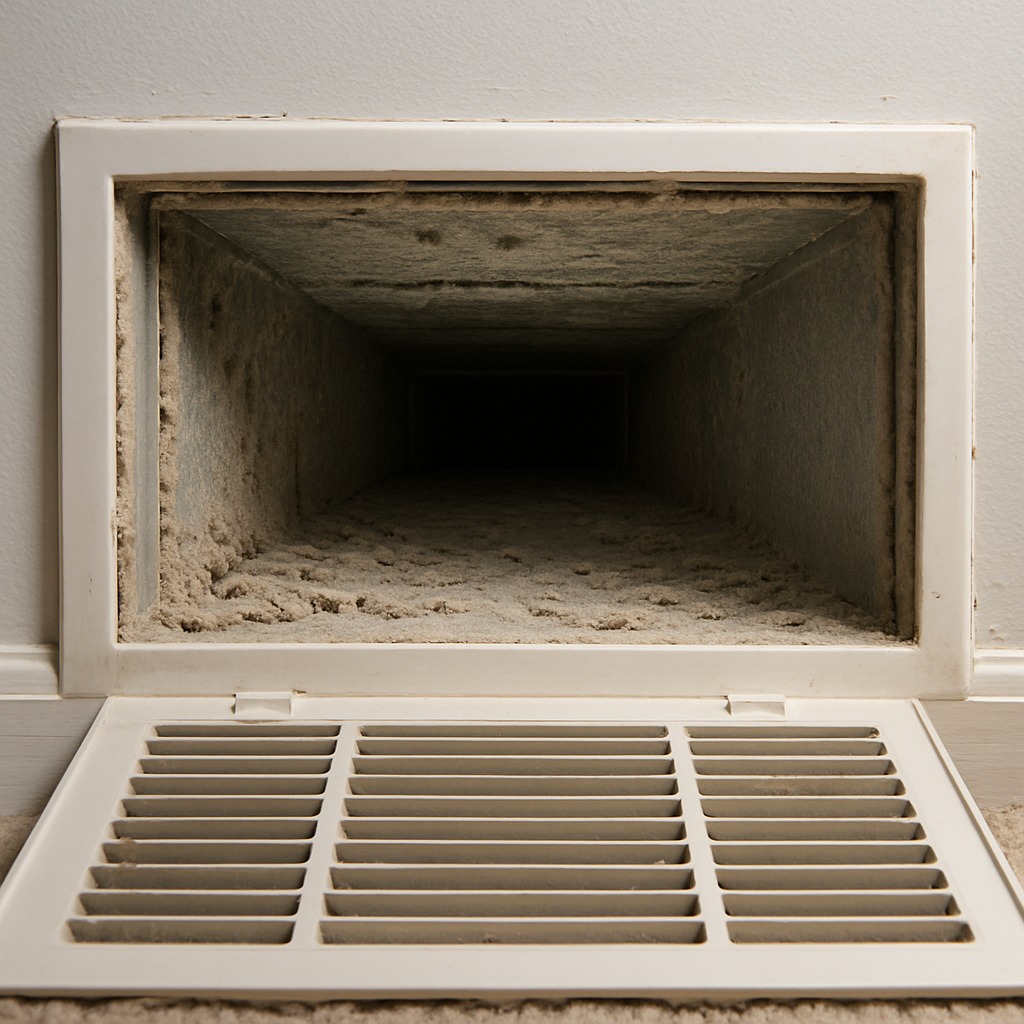
When the air moving through your home starts carrying musty odors, visible dust clouds from vents, or triggers allergy symptoms that seem worse indoors than out, your ductwork is likely telling you something important. Dirty or contaminated air ducts are one of the most overlooked causes of poor indoor air quality, reduced HVAC efficiency, and unexplained respiratory irritation — yet many homeowners don't connect the dots until the problem has been building for years. Your duct system is essentially the circulatory system of your home's heating and cooling. When those pathways accumulate layers of dust, pet dander, mold spores, or even pest debris, every cycle of your furnace or air conditioner pushes those contaminants directly into the air your family breathes. The first clues homeowners typically notice are a stale or musty smell when the system kicks on, dust settling back on furniture shortly after cleaning, increased allergy or asthma flare-ups, or visible gray or black buildup around vent registers. Some notice their energy bills creeping upward without explanation, or rooms that used to heat and cool evenly now feel inconsistent. The cause of contamination usually falls into a few patterns worth narrowing down before calling a professional. Heavy dust buildup is typically a maintenance issue — filters changed too infrequently or improper filter ratings. Musty or earthy odors often point toward moisture intrusion and mold colonization inside the ducts, particularly in humid climates. A sharp, unpleasant animal smell may suggest pest nesting. Dark staining around vent openings can indicate both mold and combustion byproducts mixing into the airstream. Prompt attention matters because contaminated ducts don't improve on their own — they accumulate further and can contribute to long-term health consequences, equipment strain, and hidden moisture damage that spreads beyond the HVAC system itself.
If you suspect mold inside your ductwork, do not attempt to spray bleach or any cleaning solution into the ducts yourself. Liquid applied to fibrous duct lining can drive mold deeper into the material and create additional moisture that accelerates regrowth. Avoid using a standard household vacuum inside duct openings — without a HEPA filtration system, a regular vacuum will exhaust mold spores and fine particulates directly into your breathing air in a concentrated burst. If you remove a vent register and see dark, fuzzy growth on duct walls, replace the cover, avoid running the HVAC system, and call a professional before further disturbing the area. Do not use ozone generators or foggers inside ductwork marketed as DIY mold solutions — these can leave harmful residues on duct surfaces and inside your air handler that then circulate through the home. If you have a gas furnace and notice any smell resembling combustion byproducts or soot around registers, treat this as a potential heat exchanger or flue issue and call for HVAC service immediately rather than assuming it is routine dust — carbon monoxide risk is a real possibility in that scenario.
The most common cause of severely dirty air ducts is simply infrequent filter maintenance combined with years of normal system operation. Every time your HVAC system runs, it pulls household air — carrying skin cells, pet dander, cooking particles, construction dust, and outdoor pollutants — across the filter and through the duct network. When filters are changed too infrequently or are the wrong rating for your system's airflow, fine particles bypass the filter and deposit along duct walls, gradually building into thick layers. In humid climates or homes with any history of moisture intrusion near the air handler or ductwork, those dust layers become a food source for mold, and contamination shifts from a cleanliness issue to a genuine health hazard. Pest contamination — mice, insects, or birds entering through deteriorated duct connections or exterior vents — is the third most common cause and often goes undetected for long periods because it occurs in areas of the system that are never visually inspected.
Before calling a professional, there are several simple, no-tool observations you can make to better understand the condition of your ductwork and give your technician a clearer picture. These checks are safe for any homeowner and require nothing more than your senses, a flashlight, and a few minutes of careful attention. Documenting what you find — even with a phone photo — can help a pro assess severity before arriving.
While full duct cleaning requires professional equipment, there are meaningful damage-control steps you can take right now to reduce contamination spread, protect your household, and prepare your home for a professional cleaning. Think of these actions as stabilizing the situation — not fixing it — so that conditions don't worsen before your technician arrives and so that your family has cleaner air in the interim.
Right now, replace your air filter with a fresh MERV 8 or higher rated filter to immediately reduce further debris circulation through your duct system.
Calling a licensed HVAC technician for duct cleaning and inspection is the right move any time your self-checks reveal visible mold growth, heavy debris accumulation beyond the first few inches of the duct opening, or evidence of pest activity such as droppings, nesting material, or a persistent animal odor. You should also call a professional if your household includes members with asthma, chronic respiratory conditions, allergies, or compromised immune systems — in those cases, the health stakes of continued contaminated air circulation are too significant to manage with DIY measures alone. Additionally, if your home has never had ductwork professionally cleaned and is more than five to seven years old, a professional inspection is warranted even if symptoms seem mild. A technician has the camera equipment to see what you cannot, the negative-pressure machinery to dislodge and capture debris without spreading it into living spaces, and the knowledge to identify whether mold remediation or pest exclusion services are needed alongside the cleaning itself.
Certain situations require faster response rather than routine scheduling. If you detect a strong musty or moldy smell coming from multiple registers simultaneously, this may indicate widespread mold colonization inside the duct lining — a condition that worsens with every system cycle and poses immediate air quality risks. Dark staining that appears to grow or spread around multiple vent openings is another urgent sign. If any household member develops worsening respiratory symptoms, headaches, or fatigue that correlates with the HVAC system running, stop using the system and call an HVAC professional and, if symptoms are severe, consult a physician promptly. Pest infestations discovered inside ductwork also warrant urgent attention since animal waste carries pathogens that require safe professional removal.
Calling a licensed HVAC technician for duct cleaning and inspection is the right move any time your self-checks reveal visible mold growth, heavy debris accumulation beyond the first few inches of the duct opening, or evidence of pest activity such as droppings, nesting material, or a persistent animal odor. You should also call a professional if your household includes members with asthma, chronic respiratory conditions, allergies, or compromised immune systems — in those cases, the health stakes of continued contaminated air circulation are too significant to manage with DIY measures alone. Additionally, if your home has never had ductwork professionally cleaned and is more than five to seven years old, a professional inspection is warranted even if symptoms seem mild. A technician has the camera equipment to see what you cannot, the negative-pressure machinery to dislodge and capture debris without spreading it into living spaces, and the knowledge to identify whether mold remediation or pest exclusion services are needed alongside the cleaning itself.
Certain situations require faster response rather than routine scheduling. If you detect a strong musty or moldy smell coming from multiple registers simultaneously, this may indicate widespread mold colonization inside the duct lining — a condition that worsens with every system cycle and poses immediate air quality risks. Dark staining that appears to grow or spread around multiple vent openings is another urgent sign. If any household member develops worsening respiratory symptoms, headaches, or fatigue that correlates with the HVAC system running, stop using the system and call an HVAC professional and, if symptoms are severe, consult a physician promptly. Pest infestations discovered inside ductwork also warrant urgent attention since animal waste carries pathogens that require safe professional removal.
Calling a licensed HVAC technician for duct cleaning and inspection is the right move any time your self-checks reveal visible mold growth, heavy debris accumulation beyond the first few inches of the duct opening, or evidence of pest activity such as droppings, nesting material, or a persistent animal odor. You should also call a professional if your household includes members with asthma, chronic respiratory conditions, allergies, or compromised immune systems — in those cases, the health stakes of continued contaminated air circulation are too significant to manage with DIY measures alone. Additionally, if your home has never had ductwork professionally cleaned and is more than five to seven years old, a professional inspection is warranted even if symptoms seem mild. A technician has the camera equipment to see what you cannot, the negative-pressure machinery to dislodge and capture debris without spreading it into living spaces, and the knowledge to identify whether mold remediation or pest exclusion services are needed alongside the cleaning itself.
Certain situations require faster response rather than routine scheduling. If you detect a strong musty or moldy smell coming from multiple registers simultaneously, this may indicate widespread mold colonization inside the duct lining — a condition that worsens with every system cycle and poses immediate air quality risks. Dark staining that appears to grow or spread around multiple vent openings is another urgent sign. If any household member develops worsening respiratory symptoms, headaches, or fatigue that correlates with the HVAC system running, stop using the system and call an HVAC professional and, if symptoms are severe, consult a physician promptly. Pest infestations discovered inside ductwork also warrant urgent attention since animal waste carries pathogens that require safe professional removal.