
ISSUE GUIDE
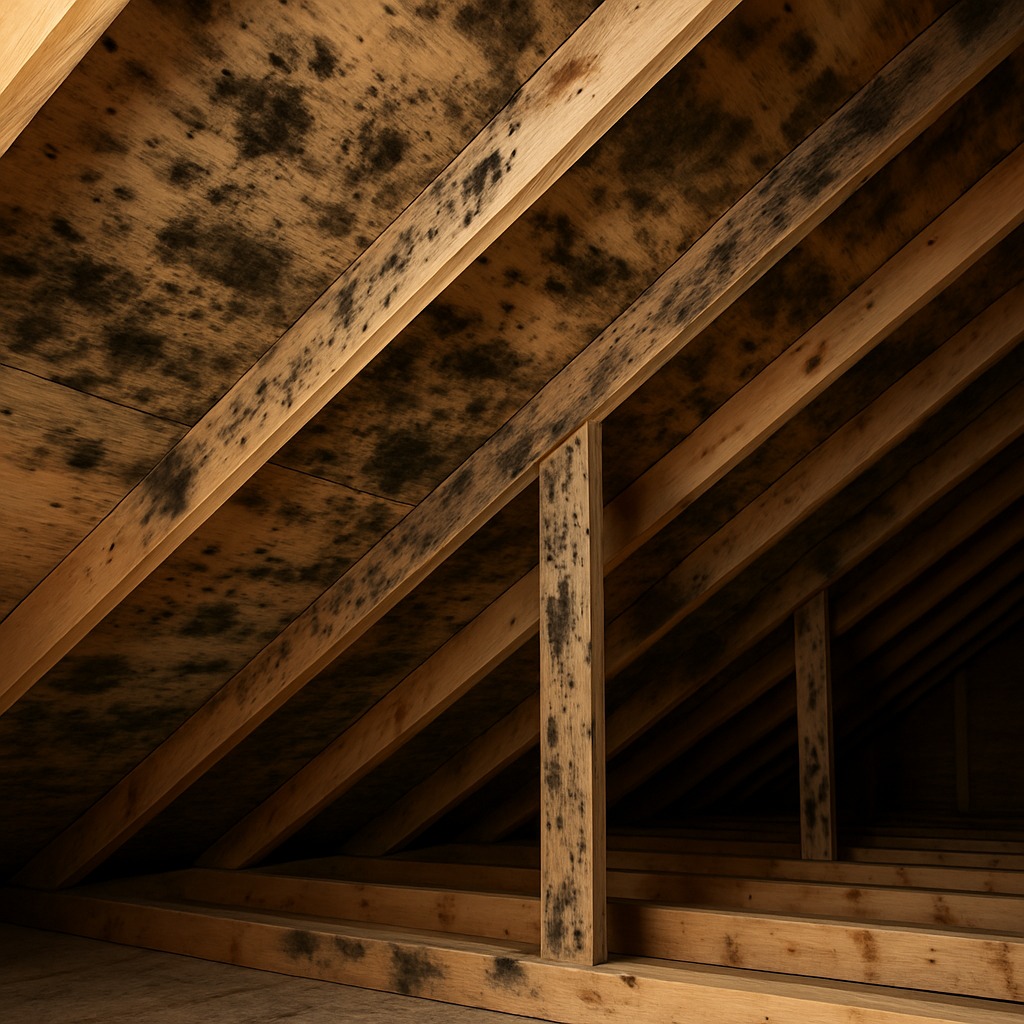
Finding dark patches, fuzzy growth, or a musty odor drifting down from your attic is one of those discoveries that can make a homeowner's stomach drop — and for good reason. Attic mold is a surprisingly common problem in homes of all ages, but it rarely announces itself until it has already had weeks or months to establish. Understanding what you're dealing with and acting quickly can mean the difference between a manageable remediation project and a costly structural repair. Mold in the attic typically appears as black, gray, green, or white discoloration on the underside of roof sheathing, along rafters, or on insulation. Homeowners often notice it first during a routine inspection, after investigating a musty smell in upper-floor rooms, or when a home inspector flags it during a real estate transaction. In some cases, peeling paint on exterior soffits or frost buildup in the attic during winter are early warning signs that conditions are ripe for mold growth. The root cause is almost always excessive moisture, but the source of that moisture narrows the problem considerably. If the mold is concentrated near the roof peak or ridge, poor ventilation is the likely culprit — warm, humid air from the living space rises and gets trapped. Mold clustered near eaves or soffit areas often points to blocked intake vents. A pattern of mold radiating outward from a single roof penetration — a vent pipe, skylight, or chimney flashing — strongly suggests an active roof leak. Widespread coverage across all sheathing surfaces typically indicates a whole-house humidity problem, sometimes tied to bathroom or kitchen exhaust fans venting into the attic rather than outside. Attic mold deserves prompt attention not just because of health concerns, but because the organic wood structure it feeds on can weaken over time, turning a mold problem into a structural one. Acting early keeps costs and complexity manageable.
Attic mold presents specific hazards that go beyond what most homeowners expect from a simple inspection. The enclosed, low-airflow nature of an attic concentrates airborne spores dramatically when surfaces are disturbed — even walking across joists can release clouds of spores from affected sheathing directly above you. Always wear a properly fitted N95 respirator or better before entering any mold-affected attic; a basic dust mask is not adequate protection. Eye protection is essential because spores that land on mucous membranes can cause irritation and infection. Loose-fitting clothing that can be removed at the attic hatch is strongly advised to avoid tracking spores into living areas. Never use a household fan or shop vacuum to dry out the attic or blow air through the space — this dramatically increases spore dispersal throughout the home. Do not use bleach on porous wood surfaces; it does not penetrate into the wood grain where mold roots, and the resulting moisture can worsen the condition. If you have cut or disturbed any mold-covered material, seal it in a heavy plastic bag before disposing of it. Heat in attics during summer months can exceed 130 degrees Fahrenheit, so limit all inspection visits to early morning hours and exit immediately if you feel lightheaded or overheated.
The overwhelming majority of attic mold cases trace back to a ventilation imbalance combined with elevated indoor humidity — not necessarily a dramatic roof leak or catastrophic failure. Modern homes built or renovated with better air sealing in the living space sometimes inadvertently trap more moisture in the attic, because warm humid air that once escaped through small gaps in the ceiling now finds fewer exit points. When that air reaches the cold underside of the roof sheathing in winter, it condenses, and persistently damp wood is exactly what mold spores need to germinate and grow. Bathroom exhaust fans mistakenly routed into the attic rather than to the exterior are a textbook example: a single bathroom fan can inject several gallons of moisture-laden air into the attic every day, creating a localized microclimate that sustains mold year-round even if the rest of the attic is adequately ventilated.
What the visible surface mold tells you about hidden damage depends heavily on how long the conditions have existed. A light, powdery surface growth that wipes away easily suggests the moisture problem is relatively recent — likely one season — and the underlying wood may still be structurally sound. Dense, deeply pigmented black or greenish colonies with a velvety texture indicate longer-term colonization, and in those cases the mold has almost certainly penetrated beyond the wood's surface layer. When sheathing boards show cupping, warping, or delamination alongside the mold, structural degradation is already underway. Mold that has progressed to this stage on roof sheathing frequently coincides with compromised rafter connections, degraded insulation with reduced R-value, and in severe cases, partial roof deck replacement — costs that escalate well beyond standard surface remediation.
Before calling anyone or spending any money, a careful visual inspection of your attic can give you — and any professional you later hire — enormously useful information. You don't need tools, and you should not disturb or touch any surfaces you suspect contain mold. The goal here is observation only: document what you see, note the patterns, and gather clues about the source. Bring a flashlight, wear an N95 mask and safety glasses as a basic precaution, and limit your time inside to a few minutes.
If you've confirmed mold is present in your attic, your immediate goal is not to clean it yourself — attic mold remediation involving more than a few square feet should be handled by a professional. Your job right now is to stop adding moisture to the problem and to prepare the space for proper assessment and repair. Taking these steps promptly limits the spread and gives any remediation professional a better starting point to work from.
Put on an N95 mask and go check right now whether your bathroom exhaust fans vent outside or terminate inside the attic.
A professional water damage restoration specialist or certified mold remediation contractor should be called any time attic mold covers an area larger than ten square feet — which, in practice, is most attic mold situations. At that scale, disturbance during cleaning releases significant spore counts into the air, which can spread contamination into the living space below if the work is not properly contained. You should also call a pro if you have any household members with asthma, allergies, immune system conditions, or respiratory sensitivities, as even small mold colonies pose elevated health risks in those cases. If your home inspection has flagged attic mold during a real estate transaction, a professional assessment and written remediation report is almost always required by the buyer or lender before closing. Additionally, if you suspect your mold is related to an active roof leak, a roofing contractor should be engaged alongside the remediation specialist — addressing the moisture source and the mold simultaneously prevents recurrence and avoids paying for remediation twice.
Certain signs indicate the situation has progressed to a higher level of urgency. If roof sheathing boards feel soft, spongy, or crumble when touched, structural wood rot has set in and a structural assessment is needed before remediation work begins. If mold is visible on the tops of ceiling drywall panels or in the framing around the attic hatch, contamination has likely already migrated into the living areas of the home. A sharp, pervasive musty odor throughout the upper floors — not just in the attic — suggests widespread spore distribution and warrants same-week professional evaluation. In these scenarios, delaying even a few additional weeks can meaningfully increase both the remediation scope and the total repair cost.
A professional water damage restoration specialist or certified mold remediation contractor should be called any time attic mold covers an area larger than ten square feet — which, in practice, is most attic mold situations. At that scale, disturbance during cleaning releases significant spore counts into the air, which can spread contamination into the living space below if the work is not properly contained. You should also call a pro if you have any household members with asthma, allergies, immune system conditions, or respiratory sensitivities, as even small mold colonies pose elevated health risks in those cases. If your home inspection has flagged attic mold during a real estate transaction, a professional assessment and written remediation report is almost always required by the buyer or lender before closing. Additionally, if you suspect your mold is related to an active roof leak, a roofing contractor should be engaged alongside the remediation specialist — addressing the moisture source and the mold simultaneously prevents recurrence and avoids paying for remediation twice.
Certain signs indicate the situation has progressed to a higher level of urgency. If roof sheathing boards feel soft, spongy, or crumble when touched, structural wood rot has set in and a structural assessment is needed before remediation work begins. If mold is visible on the tops of ceiling drywall panels or in the framing around the attic hatch, contamination has likely already migrated into the living areas of the home. A sharp, pervasive musty odor throughout the upper floors — not just in the attic — suggests widespread spore distribution and warrants same-week professional evaluation. In these scenarios, delaying even a few additional weeks can meaningfully increase both the remediation scope and the total repair cost.
A professional water damage restoration specialist or certified mold remediation contractor should be called any time attic mold covers an area larger than ten square feet — which, in practice, is most attic mold situations. At that scale, disturbance during cleaning releases significant spore counts into the air, which can spread contamination into the living space below if the work is not properly contained. You should also call a pro if you have any household members with asthma, allergies, immune system conditions, or respiratory sensitivities, as even small mold colonies pose elevated health risks in those cases. If your home inspection has flagged attic mold during a real estate transaction, a professional assessment and written remediation report is almost always required by the buyer or lender before closing. Additionally, if you suspect your mold is related to an active roof leak, a roofing contractor should be engaged alongside the remediation specialist — addressing the moisture source and the mold simultaneously prevents recurrence and avoids paying for remediation twice.
Certain signs indicate the situation has progressed to a higher level of urgency. If roof sheathing boards feel soft, spongy, or crumble when touched, structural wood rot has set in and a structural assessment is needed before remediation work begins. If mold is visible on the tops of ceiling drywall panels or in the framing around the attic hatch, contamination has likely already migrated into the living areas of the home. A sharp, pervasive musty odor throughout the upper floors — not just in the attic — suggests widespread spore distribution and warrants same-week professional evaluation. In these scenarios, delaying even a few additional weeks can meaningfully increase both the remediation scope and the total repair cost.