
ISSUE GUIDE
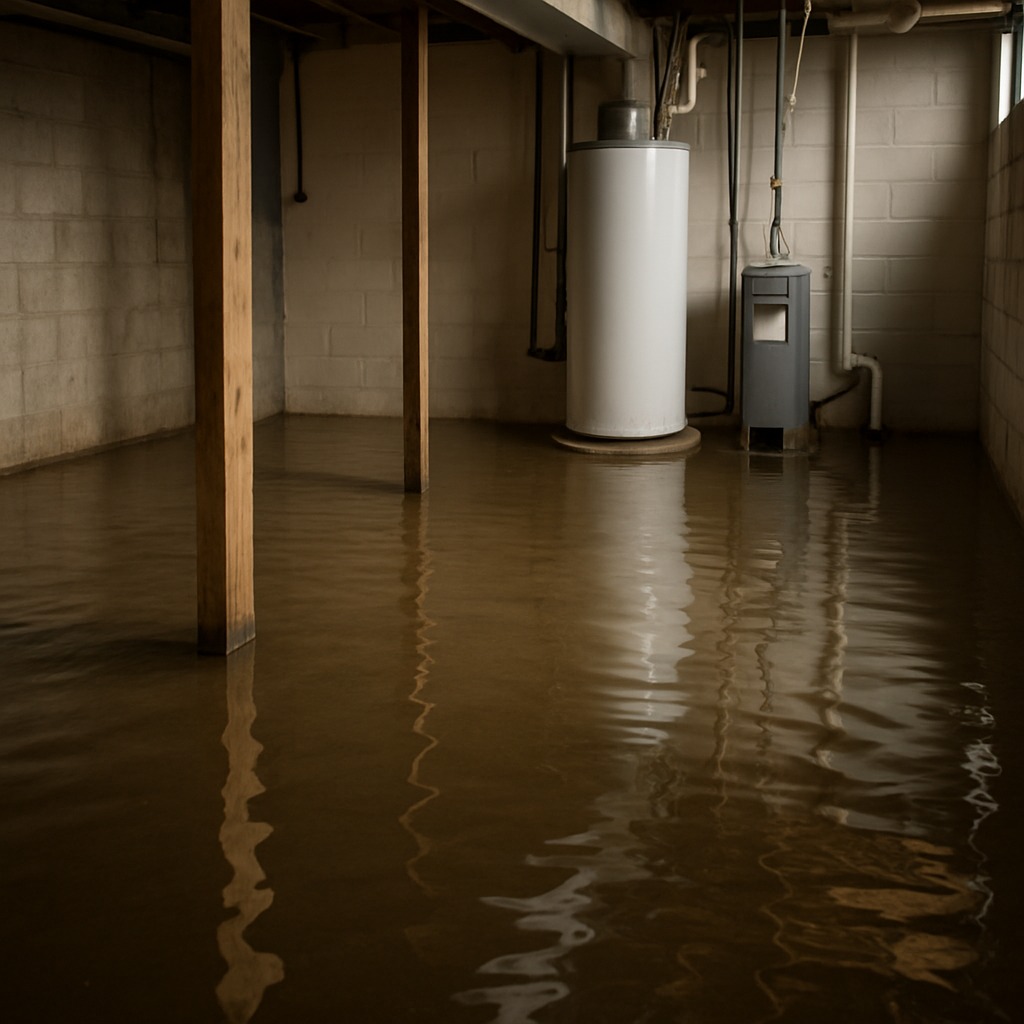
Water in your basement is one of those problems that announces itself in the worst possible ways — a soaked carpet, a musty smell you can't ignore, or the sinking feeling of stepping onto a wet concrete floor after a heavy rain. Basement flooding isn't just an inconvenience; it's a signal that something in your home's waterproofing, drainage, or structural envelope has failed, and the consequences of ignoring it compound quickly. Mold can begin growing within 24 to 48 hours of a water intrusion event, and repeated flooding weakens foundations, destroys stored belongings, and can render finished basement spaces uninhabitable. Homeowners typically notice the problem in one of three ways: standing water after a storm, a gradual dampness that worsens over seasons, or the unmistakable smell of mildew that seems to come from nowhere. Each of these patterns tells a slightly different story. Standing water following heavy rain usually points to surface water intrusion — overwhelmed gutters, grading that slopes toward the house, or a failed window well drain. Seeping walls that are consistently damp after mild weather suggest hydrostatic pressure from a high water table or soil saturation. Water appearing near the center of the floor, especially along floor-wall joints, often indicates a rising water table pushing through the slab or footing drain failure. The source matters enormously for choosing the right fix. A disconnected downspout extension causing pooling near the foundation is a very different problem than a failed interior drain tile system or a cracked foundation wall. Taking a few careful observations before calling anyone can save you significant time and money and help a professional diagnose the issue faster. Understanding what you're dealing with is the first and most important step in protecting your home.
Flooded basements present several specific hazards that are easy to underestimate in the stress of the moment. The most immediate danger is electrocution — water conducts electricity, and if any outlets, extension cords, a breaker panel, a water heater, a furnace, or a washer or dryer are in or near the flooded area, do not enter the water under any circumstances until the circuit breaker for that area has been shut off at the main panel. If the main panel itself is in the basement, call your utility company to cut power at the meter before entering. Sewage backups create a biohazard situation. Water that appears dark, smells foul, or entered through a floor drain during heavy rain may contain raw sewage. Avoid all direct skin contact, do not run fans that would aerosolize the water, and treat everything the water touched as contaminated until properly sanitized by a professional. After the water recedes, be cautious of mold exposure. Disturbing wet drywall, insulation, or carpet without respiratory protection can release mold spores that cause respiratory illness. Wear an N95 mask, gloves, and eye protection any time you are working in a recently flooded space. Finally, never operate gas appliances, a furnace, or a water heater that has been submerged until a licensed technician inspects them.
The most common cause of basement flooding in residential homes is surface water intrusion driven by inadequate drainage around the foundation. This typically involves some combination of gutters that are clogged or undersized and unable to move roof runoff away from the house, downspouts that discharge too close to the foundation, and grading that has settled or shifted over time to slope toward the home rather than away from it. When these three factors align during a heavy rain event, large volumes of water pool directly against foundation walls and find the path of least resistance inside — usually through cracks, mortar joints, window wells, or the floor-wall joint where the slab meets the footing. In many cases, this problem has been developing for years before it becomes visible, with water silently saturating the soil against the foundation and slowly eroding waterproofing coatings applied during original construction.
What you see on the surface almost always underrepresents the actual scope of damage. A wet carpet or a few inches of standing water typically means the wall cavity insulation, the bottom plates of any framed walls, and the subfloor have all absorbed significant moisture. Drywall that appears intact from the front face can be fully saturated and beginning to support mold growth on its paper backing within 24 hours. Concrete block foundation walls that show seepage often have hollow cores filled with standing water, and chronic moisture against a poured concrete wall accelerates carbonation that weakens the concrete over years. Even one significant flood event should prompt a professional moisture inspection of wall cavities and framing, not just visible surface drying, to ensure hidden damage is identified before mold colonies establish themselves inside your walls.
Before calling a professional or attempting any cleanup, take a few minutes to safely observe conditions around and inside your basement. These checks require no tools, no disassembly, and no contact with standing water. The goal is to gather information that will help you describe the problem accurately, identify the most likely source, and make smarter decisions about next steps. Stay out of the water if any electrical outlets, panels, or appliances are submerged or within reach of the flood.
Your priority in the immediate aftermath of basement flooding isn't to fix the source — it's to limit further damage, protect your safety, and prepare the space for professional assessment or restoration. Acting quickly in the first few hours dramatically reduces the scope of damage and the likelihood of mold taking hold. These steps focus on containment and documentation, not permanent repair, which should always be evaluated based on the root cause.
Immediately cut power to your basement at the breaker panel, then photograph all visible water damage before touching or moving anything.
You should contact a water damage restoration specialist any time the flooding involves more than a small, clearly contained area — roughly more than a few square feet of standing water or any amount of water that has been present for more than a few hours. A professional is essential when water has reached drywall, wood framing, insulation, or flooring materials, as these porous materials absorb moisture invisibly and become breeding grounds for mold behind walls and under subfloors. If you suspect the source is a failed sump pump, a cracked foundation wall, a failed drain tile system, or a backed-up municipal sewer line, these are not DIY repairs. A licensed contractor or structural engineer may be needed to properly diagnose and address the root cause. Homeowners should also call a pro if the basement flooding is recurring — meaning this isn't the first time water has entered the same area — because repeated intrusion indicates a systemic failure that cosmetic fixes will not solve.
Certain conditions demand faster, same-day response rather than a scheduled appointment. Call immediately if the flooding is caused by a sewage backup, as gray or black water carries dangerous pathogens and requires specialized remediation equipment and protective protocols. If you notice the water is rising continuously rather than receding, if your sump pump has failed during an active storm, or if you see visible cracks in your foundation wall that are actively leaking under pressure, these are emergencies that can escalate into structural damage within hours. Any flooding that has been present for more than 24 hours where mold may already be growing also warrants an urgent professional response to prevent health hazards from spreading through your home's air supply.
You should contact a water damage restoration specialist any time the flooding involves more than a small, clearly contained area — roughly more than a few square feet of standing water or any amount of water that has been present for more than a few hours. A professional is essential when water has reached drywall, wood framing, insulation, or flooring materials, as these porous materials absorb moisture invisibly and become breeding grounds for mold behind walls and under subfloors. If you suspect the source is a failed sump pump, a cracked foundation wall, a failed drain tile system, or a backed-up municipal sewer line, these are not DIY repairs. A licensed contractor or structural engineer may be needed to properly diagnose and address the root cause. Homeowners should also call a pro if the basement flooding is recurring — meaning this isn't the first time water has entered the same area — because repeated intrusion indicates a systemic failure that cosmetic fixes will not solve.
Certain conditions demand faster, same-day response rather than a scheduled appointment. Call immediately if the flooding is caused by a sewage backup, as gray or black water carries dangerous pathogens and requires specialized remediation equipment and protective protocols. If you notice the water is rising continuously rather than receding, if your sump pump has failed during an active storm, or if you see visible cracks in your foundation wall that are actively leaking under pressure, these are emergencies that can escalate into structural damage within hours. Any flooding that has been present for more than 24 hours where mold may already be growing also warrants an urgent professional response to prevent health hazards from spreading through your home's air supply.
You should contact a water damage restoration specialist any time the flooding involves more than a small, clearly contained area — roughly more than a few square feet of standing water or any amount of water that has been present for more than a few hours. A professional is essential when water has reached drywall, wood framing, insulation, or flooring materials, as these porous materials absorb moisture invisibly and become breeding grounds for mold behind walls and under subfloors. If you suspect the source is a failed sump pump, a cracked foundation wall, a failed drain tile system, or a backed-up municipal sewer line, these are not DIY repairs. A licensed contractor or structural engineer may be needed to properly diagnose and address the root cause. Homeowners should also call a pro if the basement flooding is recurring — meaning this isn't the first time water has entered the same area — because repeated intrusion indicates a systemic failure that cosmetic fixes will not solve.
Certain conditions demand faster, same-day response rather than a scheduled appointment. Call immediately if the flooding is caused by a sewage backup, as gray or black water carries dangerous pathogens and requires specialized remediation equipment and protective protocols. If you notice the water is rising continuously rather than receding, if your sump pump has failed during an active storm, or if you see visible cracks in your foundation wall that are actively leaking under pressure, these are emergencies that can escalate into structural damage within hours. Any flooding that has been present for more than 24 hours where mold may already be growing also warrants an urgent professional response to prevent health hazards from spreading through your home's air supply.