
ISSUE GUIDE
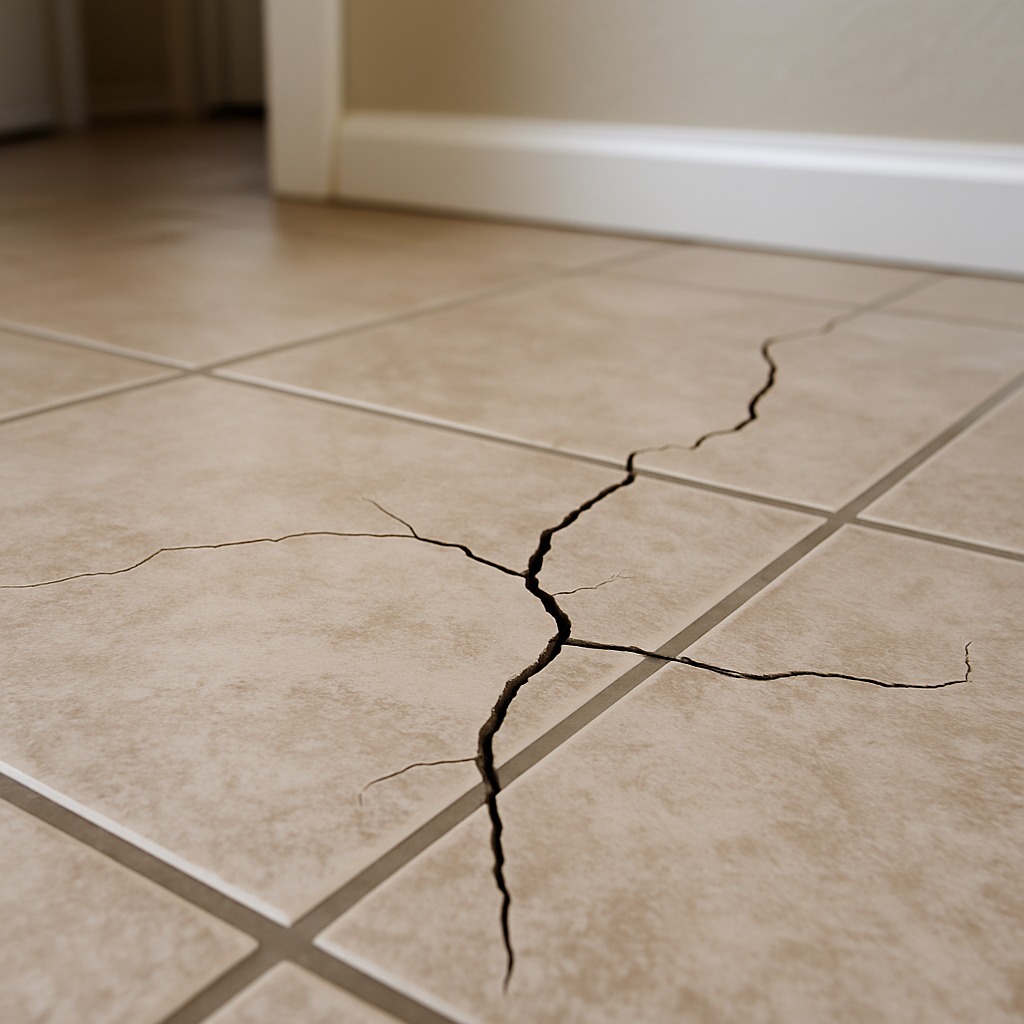
Cracked floor tiles are more than just an eyesore — they're a signal that something has gone wrong beneath your feet, and ignoring them can lead to costly consequences down the road. Whether you notice a single hairline fracture running across a bathroom tile or a full break with sharp, lifted edges, every crack deserves attention. Homeowners typically spot the problem first by sight, catching a jagged line across the tile surface, a missing chip, or a grout joint that has separated wider than normal. Sometimes it's the sound that gives it away — a hollow, clicking noise when you walk across the floor, indicating the tile has lost its bond with the subfloor beneath it. Cracked floor tiles can result from several causes: subfloor movement, improper installation, heavy impact damage, thermal expansion and contraction, or even foundational settling. In bathrooms and kitchens, water is often the hidden threat. Once a tile cracks, the protective surface seal breaks, allowing moisture to seep into the grout, adhesive layer, and eventually the subfloor. Left untreated, this moisture pathway can trigger mold growth, wood rot, and structural subfloor damage that turns a minor tile repair into a major renovation project. Patterns matter when diagnosing tile cracks. Diagonal cracks running corner to corner often suggest subfloor deflection or settling. Multiple cracked tiles in a line may point to a failing expansion joint or a seam in the underlayment shifting underneath. Random cracks across several tiles can indicate that the wrong tile adhesive was used or the subfloor wasn't adequately prepared during installation. Cracks concentrated near walls or doorways frequently point to thermal movement or seasonal humidity changes. The good news is that addressing cracked floor tiles promptly is usually straightforward and affordable when caught early. Understanding what the cracks are telling you is the critical first step.
Cracked floor tiles present several genuine safety hazards that homeowners must take seriously before attempting any inspection or temporary repair. Sharp tile fragments and raised broken edges can cause deep lacerations to bare or socked feet, particularly in high-traffic areas like bathrooms and kitchens — always wear shoes in the affected area until repairs are complete. Avoid pressing down on or wiggling broken tile pieces, as they can shift unpredictably and cause cuts or further subfloor damage. In wet areas, cracked tiles significantly increase slip risk because water pools unevenly across broken surfaces and seeps beneath tiles where it can create a slick film under adjacent flooring. Never attempt to remove cracked tile using hammers or chisels without proper eye protection and heavy gloves — ceramic and porcelain tile shatter into sharp shards that travel considerable distances. If you suspect the crack is related to a plumbing leak beneath the floor, do not pour water or cleaning solutions into the area, and consider shutting off the water supply to affected fixtures until the source is identified. When photographing or examining tile damage, avoid kneeling directly on broken tile edges.
The most common cause of cracked floor tiles is subfloor deflection — the subtle flexing or movement of the floor structure beneath the tile as people walk across it. Tile is a rigid material, and it depends entirely on a firm, stable substrate for support. When the subfloor flexes even slightly under load, the tile cannot bend with it and cracks instead. This is especially common in older homes where subfloors have softened over time, in areas where tile was installed over an inadequately thick subfloor, or where no cement backer board was used before tiling. Impact damage from dropped heavy objects is another leading cause, creating a starburst or radial crack pattern that originates from a single point. Improper installation practices — including insufficient thinset coverage, failure to back-butter large-format tiles, or skipping expansion joints near walls — also cause premature cracking as the tile system lacks the support or flexibility it needs to perform long-term.
What you can see on the surface is often just a fraction of the actual damage. A single cracked tile frequently signals that the adhesive bond between the tile and subfloor has failed across a broader area — tiles that sound hollow when tapped are already debonded even if they haven't cracked yet, and they are vulnerable to cracking next. In wet areas, a cracked tile means the waterproof membrane beneath has very likely been compromised, even if no visible water damage is apparent from above. Moisture working its way through a crack in a shower floor or bathroom can silently rot a wooden subfloor for months before the damage becomes visible from below. Multiple cracked tiles in a row or spreading outward from a central zone are a reliable indicator of subfloor damage, settlement, or structural movement that will continue to crack replacement tiles unless the underlying issue is corrected first.
Before calling a professional or attempting any repairs, take a few minutes to carefully observe the affected area. These simple visual and tactile checks require no tools and will help you understand the scope of the problem, gather useful information for a contractor, and identify any immediate safety concerns worth addressing right away.
While full tile replacement should typically be left to an experienced tile installer, there are important damage-control and preparation steps you can take right away to prevent the problem from worsening, protect household members from injury, and set yourself up for a smoother professional repair. These steps focus on containment and documentation, not permanent fixes.
Right now, cover sharp tile edges with heavy tape and photograph every cracked tile to document the full extent of damage before conditions worsen.
You should contact a licensed tile contractor or flooring professional any time you discover more than one or two isolated cracked tiles, when cracks appear in a pattern suggesting subfloor movement, or when you notice that tiles sound hollow across a significant area of the floor. If the cracked tile is located in a bathroom, laundry room, or kitchen where water exposure is frequent, professional repair is especially important — moisture infiltrating through broken tile and compromised grout can quickly damage the subfloor, backer board, and structural framing below. A professional can also assess whether the cracks stem from a deeper problem, such as an underprepared subfloor, missing expansion joints, improper tile sizing for the substrate, or foundation settling — issues that will cause any DIY patch to fail quickly without addressing the root cause first. If the damaged tile is large-format, natural stone, or part of a heated floor system, professional handling is essential to avoid further damage or system failures during repair.
Treat the situation as higher urgency if you notice cracks appearing suddenly after a plumbing leak, flooding event, or significant rainstorm — water beneath the floor can spread rapidly and cause mold growth within 24 to 48 hours. Similarly, if multiple tiles are cracking or popping up across a wide area simultaneously with no obvious impact cause, this may indicate significant subfloor deterioration or foundation movement that needs structural assessment before any tile work begins. Cracks accompanied by a musty odor, visible mold in grout lines, soft spots when pressing on adjacent tiles, or any signs of water damage on the ceiling of the floor below are all indicators that immediate professional inspection is warranted to prevent escalating structural damage and health hazards.
You should contact a licensed tile contractor or flooring professional any time you discover more than one or two isolated cracked tiles, when cracks appear in a pattern suggesting subfloor movement, or when you notice that tiles sound hollow across a significant area of the floor. If the cracked tile is located in a bathroom, laundry room, or kitchen where water exposure is frequent, professional repair is especially important — moisture infiltrating through broken tile and compromised grout can quickly damage the subfloor, backer board, and structural framing below. A professional can also assess whether the cracks stem from a deeper problem, such as an underprepared subfloor, missing expansion joints, improper tile sizing for the substrate, or foundation settling — issues that will cause any DIY patch to fail quickly without addressing the root cause first. If the damaged tile is large-format, natural stone, or part of a heated floor system, professional handling is essential to avoid further damage or system failures during repair.
Treat the situation as higher urgency if you notice cracks appearing suddenly after a plumbing leak, flooding event, or significant rainstorm — water beneath the floor can spread rapidly and cause mold growth within 24 to 48 hours. Similarly, if multiple tiles are cracking or popping up across a wide area simultaneously with no obvious impact cause, this may indicate significant subfloor deterioration or foundation movement that needs structural assessment before any tile work begins. Cracks accompanied by a musty odor, visible mold in grout lines, soft spots when pressing on adjacent tiles, or any signs of water damage on the ceiling of the floor below are all indicators that immediate professional inspection is warranted to prevent escalating structural damage and health hazards.
You should contact a licensed tile contractor or flooring professional any time you discover more than one or two isolated cracked tiles, when cracks appear in a pattern suggesting subfloor movement, or when you notice that tiles sound hollow across a significant area of the floor. If the cracked tile is located in a bathroom, laundry room, or kitchen where water exposure is frequent, professional repair is especially important — moisture infiltrating through broken tile and compromised grout can quickly damage the subfloor, backer board, and structural framing below. A professional can also assess whether the cracks stem from a deeper problem, such as an underprepared subfloor, missing expansion joints, improper tile sizing for the substrate, or foundation settling — issues that will cause any DIY patch to fail quickly without addressing the root cause first. If the damaged tile is large-format, natural stone, or part of a heated floor system, professional handling is essential to avoid further damage or system failures during repair.
Treat the situation as higher urgency if you notice cracks appearing suddenly after a plumbing leak, flooding event, or significant rainstorm — water beneath the floor can spread rapidly and cause mold growth within 24 to 48 hours. Similarly, if multiple tiles are cracking or popping up across a wide area simultaneously with no obvious impact cause, this may indicate significant subfloor deterioration or foundation movement that needs structural assessment before any tile work begins. Cracks accompanied by a musty odor, visible mold in grout lines, soft spots when pressing on adjacent tiles, or any signs of water damage on the ceiling of the floor below are all indicators that immediate professional inspection is warranted to prevent escalating structural damage and health hazards.