
ISSUE GUIDE
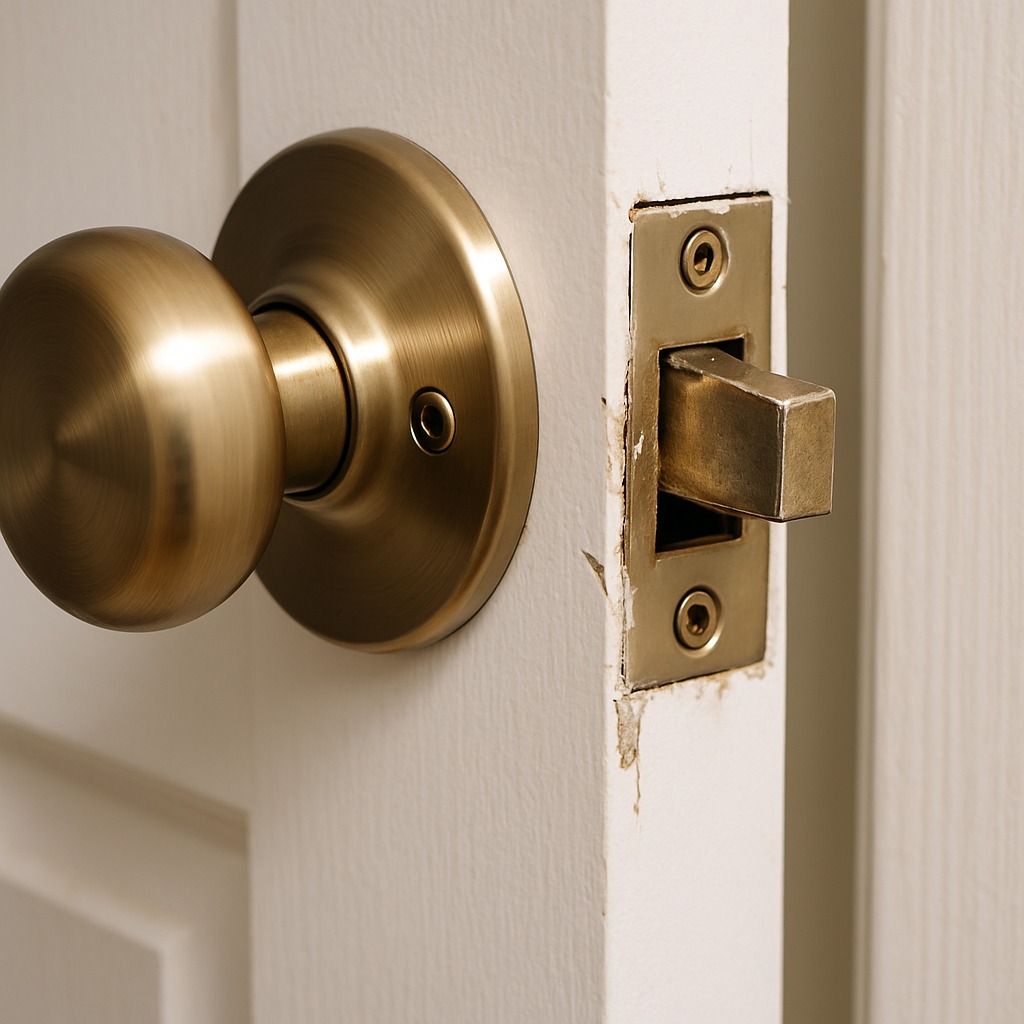
When a door lock stops working properly, it can range from a minor inconvenience to a genuine security emergency. Whether your lock refuses to turn, the key won't insert, the deadbolt won't extend, or the latch fails to catch, something in the locking mechanism has broken down — and your home's first line of defense is compromised. Homeowners typically notice the problem in one of a few ways: a key that suddenly feels stiff or won't rotate, a deadbolt that turns but doesn't move, a handle that spins freely without releasing the latch, or a smart lock that clicks but doesn't engage. Sometimes the door itself has shifted, and sometimes the hardware has simply worn out or been damaged. This matters more than most people realize in the moment. A lock that doesn't fully engage leaves your home vulnerable even if the door appears closed. Insurance policies can deny break-in claims if evidence suggests a lock was not functioning properly. Beyond security, a jammed or broken lock can trap family members inside during an emergency — a risk no homeowner should take lightly. The clues that surface before total failure often tell a clearer story than the failure itself. A lock that has been getting stiffer over months points to lubrication failure or internal corrosion. A deadbolt that suddenly stopped working after a temperature swing suggests door frame movement or warping. A lock that failed right after a storm, forced entry attempt, or contractor visit has a different root cause than one that simply wore out over years. Noticing when the problem started, whether it affects one lock or several, and whether the door itself opens and closes smoothly are all pieces of information a professional will ask for — and observations you can make right now to speed up the diagnosis and repair process.
Never attempt to force a lock cylinder by applying heavy torque with pliers, a drill, or improvised tools. Doing so can shatter internal components, send metal fragments into your eyes, and leave the door permanently unsecured until fully replaced. If you suspect forced entry or tampering, treat the situation as a potential crime scene — avoid touching surfaces near the lock, do not invite entry, and consider contacting local non-emergency police before a repair professional, particularly if valuables may be at risk. Do not assume a door is secure simply because it appears closed; a failed deadbolt that isn't visibly extended offers zero resistance to entry. For electronic and smart locks that are behaving erratically, disconnect power or remove batteries before attempting any manual override — electrical faults in locking hardware are rare but can cause unpredictable mechanical behavior. Finally, if the lock failure involves a fire exit or a door required for emergency egress from a sleeping area, treat access restoration as an immediate life-safety priority and do not delay repair until a convenient time.
The single most common cause of a door lock not working is internal wear of the lock cylinder's pin tumbler mechanism. Over years of use, the small spring-loaded pins inside the cylinder wear down unevenly, making it harder for the correct key to lift them to precisely the right height. This shows up first as occasional stiffness, then as a key that requires extra jiggling, and finally as a lock that simply will not turn at all. Lubrication failure accelerates this process — most residential locks receive no maintenance for their entire installed life, leaving metal pins and springs to corrode and bind. The second most common cause is door frame movement: homes settle, wood swells seasonally with humidity, and even minor foundation shifts can move a door enough that the bolt or latch no longer aligns with the strike plate opening it was installed to match.
What the visible signs tell you about hidden damage matters when estimating repair scope. A lock that shows external scratch marks around the keyhole almost always has internal cylinder damage from pick attempts or improper key use — the cylinder itself likely needs replacement, not just lubrication. A deadbolt that moves stiffly but still travels its full throw suggests the strike plate or frame is the problem, not the lock hardware, meaning even a brand-new lock would behave identically until the alignment is corrected. A handle that spins freely without engaging the latch almost always means a broken spindle or cam inside the lockset body — a component failure that requires full hardware replacement. Catching these distinctions early determines whether you're looking at a $75 lubrication and adjustment service or a $350 full replacement and frame repair.
Before calling anyone or touching any hardware, take a few minutes to observe and gather information. Many lock problems have visible clues that point directly to the cause, and knowing what you're dealing with helps you communicate clearly with a professional — and occasionally reveals a fix you can handle yourself without any tools at all. Work through these checks carefully and note what you find.
Unless you have direct locksmithing experience, the goal at this stage is not to fix the lock yourself but to stabilize the situation, protect your security, and set yourself up for an efficient professional repair. Attempting to force a broken lock can damage the door, the frame, and the lock cylinder itself — turning a straightforward repair into a full replacement. Take these steps in order before your appointment.
Test the lock from both sides of the door right now and note exactly which motion fails — this single observation guides everything that follows.
A licensed handyman or locksmith should be contacted whenever the basic safe checks and containment steps don't resolve the problem or reveal an obvious simple fix. Specifically, call a professional if the lock cylinder is visibly damaged or has been tampered with, if a key fragment is stuck inside the mechanism, if the deadbolt turns but the bolt doesn't move in or out, if the door latch no longer catches the strike plate even when the door is properly closed, or if a smart lock continues failing after a battery replacement and factory reset. Rekeying — changing which key operates the lock — always requires a professional, as does any situation where you've moved into a home and cannot confirm who holds copies of the existing keys. Frame realignment, which is sometimes the actual cause of a lock that won't engage, also falls outside safe DIY territory.
Some lock failures require faster response than a standard appointment window. If you suspect a break-in attempt based on scratch marks around the keyhole, a bent door frame, or a lock that was working fine until this morning, treat it as an urgent security situation and call immediately — do not leave the property unsecured overnight. Similarly, if a malfunctioning lock is your only means of securing an exterior door, or if someone is currently locked inside a room because of a failed interior lock, prioritize same-day service. Children, elderly family members, or pets trapped behind a failed door lock constitute an emergency that may warrant calling a locksmith's emergency line rather than scheduling a standard appointment.
A licensed handyman or locksmith should be contacted whenever the basic safe checks and containment steps don't resolve the problem or reveal an obvious simple fix. Specifically, call a professional if the lock cylinder is visibly damaged or has been tampered with, if a key fragment is stuck inside the mechanism, if the deadbolt turns but the bolt doesn't move in or out, if the door latch no longer catches the strike plate even when the door is properly closed, or if a smart lock continues failing after a battery replacement and factory reset. Rekeying — changing which key operates the lock — always requires a professional, as does any situation where you've moved into a home and cannot confirm who holds copies of the existing keys. Frame realignment, which is sometimes the actual cause of a lock that won't engage, also falls outside safe DIY territory.
Some lock failures require faster response than a standard appointment window. If you suspect a break-in attempt based on scratch marks around the keyhole, a bent door frame, or a lock that was working fine until this morning, treat it as an urgent security situation and call immediately — do not leave the property unsecured overnight. Similarly, if a malfunctioning lock is your only means of securing an exterior door, or if someone is currently locked inside a room because of a failed interior lock, prioritize same-day service. Children, elderly family members, or pets trapped behind a failed door lock constitute an emergency that may warrant calling a locksmith's emergency line rather than scheduling a standard appointment.
A licensed handyman or locksmith should be contacted whenever the basic safe checks and containment steps don't resolve the problem or reveal an obvious simple fix. Specifically, call a professional if the lock cylinder is visibly damaged or has been tampered with, if a key fragment is stuck inside the mechanism, if the deadbolt turns but the bolt doesn't move in or out, if the door latch no longer catches the strike plate even when the door is properly closed, or if a smart lock continues failing after a battery replacement and factory reset. Rekeying — changing which key operates the lock — always requires a professional, as does any situation where you've moved into a home and cannot confirm who holds copies of the existing keys. Frame realignment, which is sometimes the actual cause of a lock that won't engage, also falls outside safe DIY territory.
Some lock failures require faster response than a standard appointment window. If you suspect a break-in attempt based on scratch marks around the keyhole, a bent door frame, or a lock that was working fine until this morning, treat it as an urgent security situation and call immediately — do not leave the property unsecured overnight. Similarly, if a malfunctioning lock is your only means of securing an exterior door, or if someone is currently locked inside a room because of a failed interior lock, prioritize same-day service. Children, elderly family members, or pets trapped behind a failed door lock constitute an emergency that may warrant calling a locksmith's emergency line rather than scheduling a standard appointment.