
ISSUE GUIDE
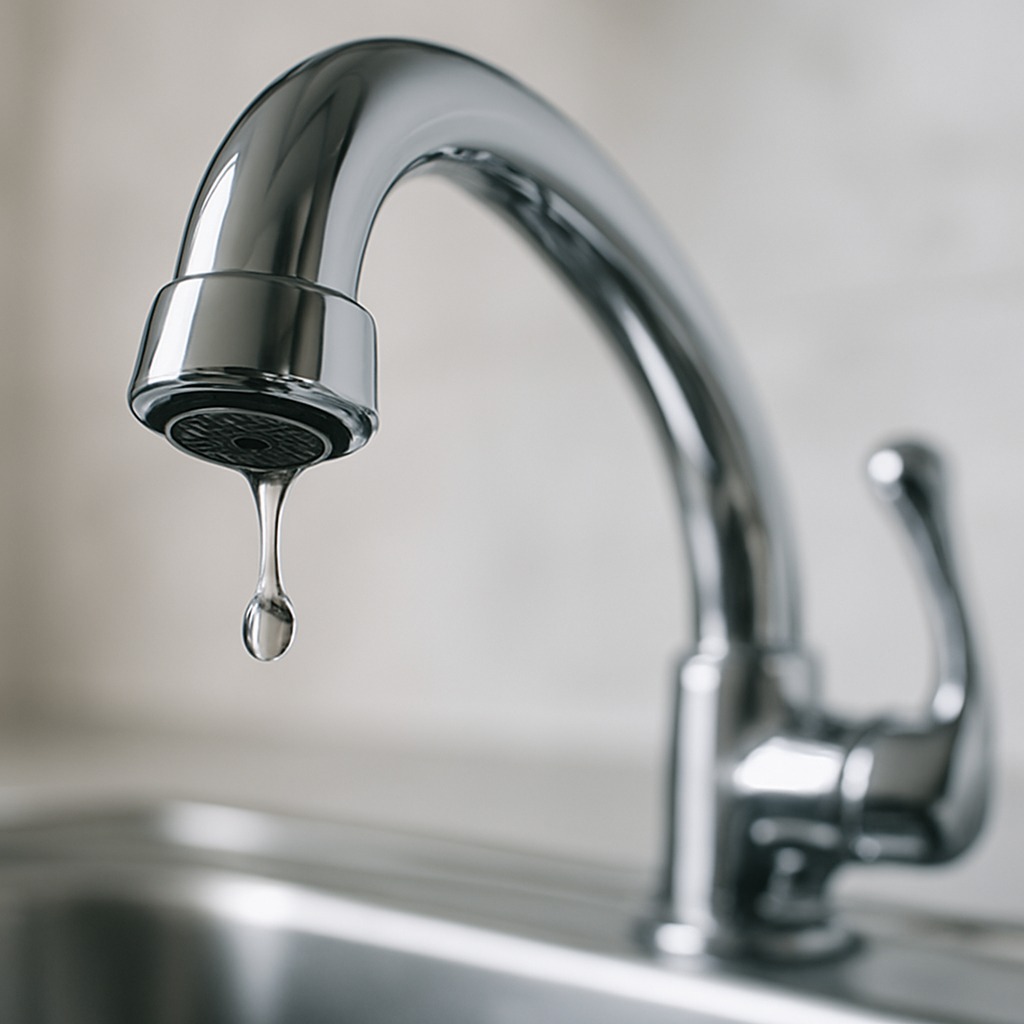
A dripping faucet is one of those household problems that starts as a minor annoyance and quietly escalates into something worth real concern. That rhythmic tick-tick-tick from the kitchen or bathroom sink isn't just noise — it's water, money, and potentially the early warning of a larger plumbing issue working against you. Most homeowners first notice a dripping faucet by sound, especially at night when the house is quiet, or by spotting mineral stain rings forming around the drain from repeated water contact. Others catch it when their water bill creeps upward without an obvious explanation. A single dripping faucet can waste anywhere from 3,000 to 20,000 gallons of water per year depending on the drip rate, so the urgency is real even if the symptom feels minor. What the drip actually means depends heavily on the faucet type and where the water is emerging. A drip from the spout itself usually points to worn internal components — washers, O-rings, cartridges, or ceramic discs — that no longer create a watertight seal when the handle is closed. A drip or seep from around the base of the spout or handle suggests a different failure point entirely, typically involving O-rings that seal the rotating or pivoting parts of the fixture. Ball-style faucets, cartridge faucets, compression faucets, and ceramic disc faucets each have distinct failure patterns and different repair approaches. Pay attention to whether the drip happens only when a specific handle is open or closed, whether water temperature affects the drip rate, and whether you notice any discoloration in the dripping water. Rust-tinged drips may indicate internal corrosion. A sudden increase in drip speed after years of slow dripping often means a component has failed more completely. Prompt attention protects your fixture, your water bill, and the cabinet or wall materials beneath the sink.
Working around a dripping faucet carries specific risks that homeowners often underestimate. The most immediate danger is attempting to close a corroded or neglected shutoff valve beneath the sink with excessive force — old valves can snap at the stem or crack the supply line connection, instantly turning a minor repair into an emergency requiring the main house shutoff. Never use pliers or a wrench on a shutoff valve handle; hand pressure only, and if it resists, stop. If you do shut off the main water supply to work on the faucet, know exactly where your main shutoff is before you begin, not during a crisis. Water that has been pooling unnoticed under a sink cabinet can harbor black mold within 24 to 48 hours, so wear gloves and avoid direct skin contact with any visibly discolored or slimy surfaces. If you choose to disassemble the faucet yourself, keep all small parts together in a container immediately — a dropped cartridge spring or O-ring going down the drain creates a second plumbing problem. Finally, never work on a faucet connected to a garbage disposal without also switching off the disposal's power at the circuit breaker first.
The single most common cause of a dripping faucet is the failure of a small internal sealing component that wears down through ordinary use over time. In compression faucets — the style with separate hot and cold handles that you tighten to close — this is almost always a rubber washer at the base of the stem that hardens, cracks, or deforms after years of being pressed against a metal seat. In cartridge faucets, which are now the most prevalent type in homes built after the 1990s, the cartridge itself contains all the sealing surfaces, and when any one of those surfaces degrades, the entire cartridge typically needs replacement rather than individual component repair. Ball faucets, common in single-handle kitchen designs, rely on small springs, rubber seats, and O-rings that each have a finite service life. Ceramic disc faucets are the most durable type but can develop drips when debris scratches the disc surface or when the silicone seals around the disc deteriorate.
What a persistent drip tells you about hidden damage depends on how long it has been occurring. A drip that is caught within weeks likely means a straightforward component replacement with no secondary damage. A drip that has been present for months, however, often means the metal valve seat inside the faucet body has been eroded by the imperfect closure, and replacing only the washer or cartridge will not stop the drip permanently — the seat itself may need resurfacing or the entire faucet body may need replacement. Under-sink cabinet damage from humidity and slow water contact is another hidden consequence: pressed-wood cabinet bases can delaminate and grow mold long before any visible water pooling appears. A plumber inspecting a long-standing drip will evaluate all of these factors before recommending the most cost-effective repair path.
Before touching a single tool or shutting off any water supply, there is a surprising amount of useful diagnostic information you can gather just through careful observation. Taking five to ten minutes to study the drip pattern, the faucet's condition, and the surrounding environment will help you describe the problem accurately to a plumber — or help you decide whether this is a straightforward fix you might tackle yourself. These checks require nothing more than your eyes, your ears, and a dry paper towel.
Fixing a dripping faucet completely requires disassembly and replaced components — that is a repair, not containment. However, there are meaningful steps you can take right now to limit water waste, prevent secondary damage, and set yourself up for a faster and cleaner repair whether you do it yourself later or a plumber handles it. Think of these steps as responsible stewardship of your home while you figure out the right path forward.
Right now, place a folded dry towel under the dripping faucet and locate your under-sink shutoff valves to confirm they turn freely.
A licensed plumber should be your first call when the dripping faucet is accompanied by any signs of water damage beneath the sink, including soft cabinet floors, mold growth, or water staining on the wall behind the fixture. You should also call a professional when the shutoff valves under the sink are corroded, stripped, or will not turn, since forcing them risks a much larger water emergency. Faucets installed in walls — such as shower valves or tub fillers — almost always warrant professional repair because accessing internal components requires working inside wall cavities where mistakes are expensive to fix. If you have attempted a DIY cartridge or washer replacement and the dripping has continued or worsened, stop and call a plumber rather than disassembling further. Older faucets on homes with galvanized or aging copper supply lines deserve professional assessment because aggressive manipulation of old fittings can trigger failures in adjacent pipe sections that were already weakened by corrosion.
Certain situations require a faster professional response rather than a routine appointment. If the drip has rapidly accelerated to a thin stream that your shutoff valve cannot fully stop, treat this as urgent and call the same day. Water seeping from the faucet body itself — not from the spout or handle — suggests the valve housing may be cracked, which can fail completely without warning. Any time you smell sulfur, notice brown or rust-heavy discoloration in the dripping water, or observe the faucet vibrating or making hammer sounds during use, these are signals of system-level issues beyond a simple worn washer. Do not delay in these cases, as what begins as a drip can become a flooded cabinet within hours.
A licensed plumber should be your first call when the dripping faucet is accompanied by any signs of water damage beneath the sink, including soft cabinet floors, mold growth, or water staining on the wall behind the fixture. You should also call a professional when the shutoff valves under the sink are corroded, stripped, or will not turn, since forcing them risks a much larger water emergency. Faucets installed in walls — such as shower valves or tub fillers — almost always warrant professional repair because accessing internal components requires working inside wall cavities where mistakes are expensive to fix. If you have attempted a DIY cartridge or washer replacement and the dripping has continued or worsened, stop and call a plumber rather than disassembling further. Older faucets on homes with galvanized or aging copper supply lines deserve professional assessment because aggressive manipulation of old fittings can trigger failures in adjacent pipe sections that were already weakened by corrosion.
Certain situations require a faster professional response rather than a routine appointment. If the drip has rapidly accelerated to a thin stream that your shutoff valve cannot fully stop, treat this as urgent and call the same day. Water seeping from the faucet body itself — not from the spout or handle — suggests the valve housing may be cracked, which can fail completely without warning. Any time you smell sulfur, notice brown or rust-heavy discoloration in the dripping water, or observe the faucet vibrating or making hammer sounds during use, these are signals of system-level issues beyond a simple worn washer. Do not delay in these cases, as what begins as a drip can become a flooded cabinet within hours.
A licensed plumber should be your first call when the dripping faucet is accompanied by any signs of water damage beneath the sink, including soft cabinet floors, mold growth, or water staining on the wall behind the fixture. You should also call a professional when the shutoff valves under the sink are corroded, stripped, or will not turn, since forcing them risks a much larger water emergency. Faucets installed in walls — such as shower valves or tub fillers — almost always warrant professional repair because accessing internal components requires working inside wall cavities where mistakes are expensive to fix. If you have attempted a DIY cartridge or washer replacement and the dripping has continued or worsened, stop and call a plumber rather than disassembling further. Older faucets on homes with galvanized or aging copper supply lines deserve professional assessment because aggressive manipulation of old fittings can trigger failures in adjacent pipe sections that were already weakened by corrosion.
Certain situations require a faster professional response rather than a routine appointment. If the drip has rapidly accelerated to a thin stream that your shutoff valve cannot fully stop, treat this as urgent and call the same day. Water seeping from the faucet body itself — not from the spout or handle — suggests the valve housing may be cracked, which can fail completely without warning. Any time you smell sulfur, notice brown or rust-heavy discoloration in the dripping water, or observe the faucet vibrating or making hammer sounds during use, these are signals of system-level issues beyond a simple worn washer. Do not delay in these cases, as what begins as a drip can become a flooded cabinet within hours.