
ISSUE GUIDE
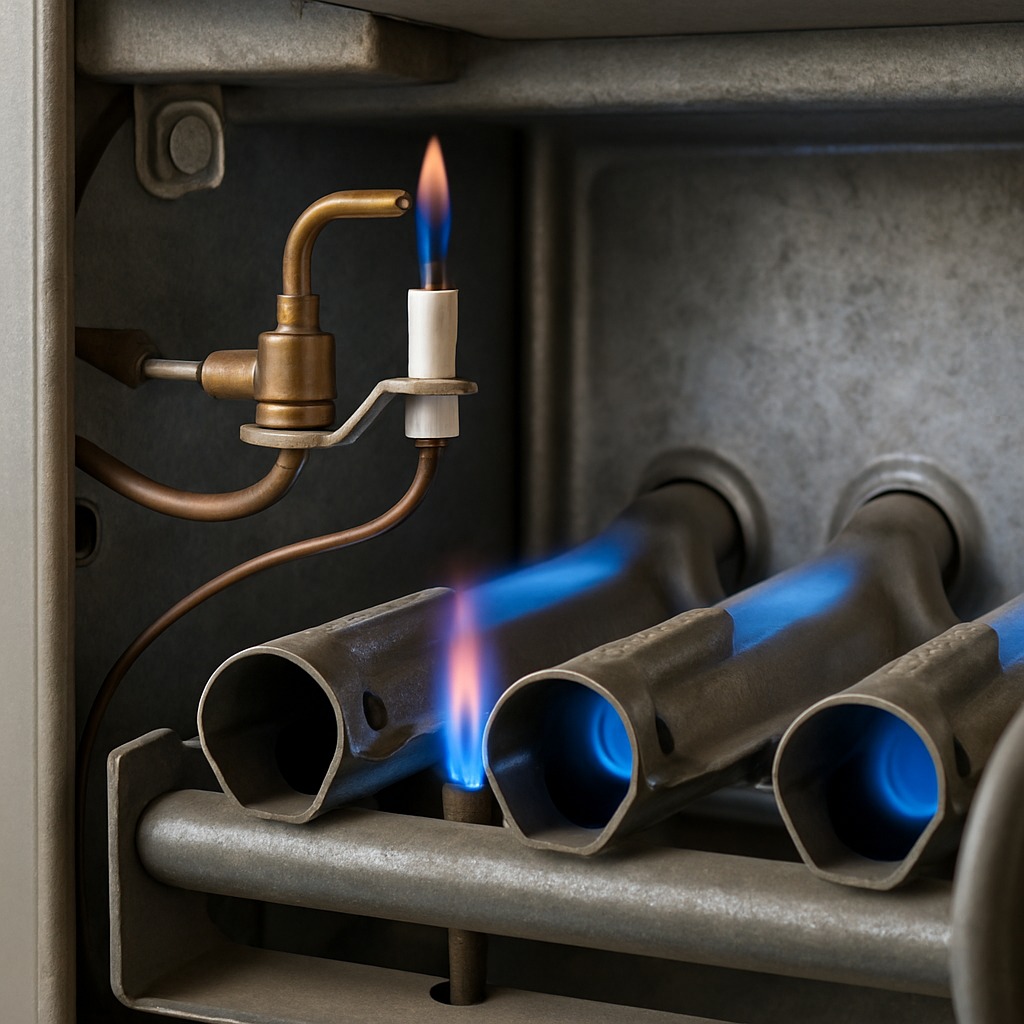
When your furnace stops producing heat, one of the most common culprits is a pilot light that has gone out. The pilot light is a small, continuously burning flame that ignites the main burner in older gas furnaces. Without it, your furnace simply cannot generate heat, leaving your home cold and your family uncomfortable — sometimes dangerously so during winter months. Most homeowners first notice the problem when the thermostat is set correctly but no warm air comes through the vents, or when the furnace cycles on briefly but shuts down without producing heat. The pilot light can go out for several reasons, and understanding the pattern of what happened helps narrow the cause considerably. A sudden extinguishing after a windy day or minor pressure change often points to a simple draft issue or a dirty pilot orifice that couldn't maintain a stable flame. If the pilot relights easily but goes out again within seconds or minutes, the thermocouple — a small safety sensor positioned in the flame — is almost certainly failing or already failed. This component senses the flame's presence and signals the gas valve to stay open; a worn thermocouple cuts the gas supply prematurely. If the pilot won't light at all despite correct procedure, a blocked orifice, a faulty gas valve, or insufficient gas pressure may be responsible. Age matters here too. Furnaces older than 15 years experience thermocouple degradation as a routine maintenance issue. Sediment, corrosion, and simple wear accumulate over time. Ignoring a repeatedly failing pilot light isn't just an inconvenience — it can mask deeper safety concerns including gas leaks or carbon monoxide risks. Addressing this promptly protects both your comfort and your household's safety, and in many cases a qualified technician can resolve it affordably and quickly.
Gas furnace work requires specific caution that goes well beyond standard home repair safety. Before attempting any pilot relight, confirm there is zero smell of gas near the furnace, in the mechanical room, or anywhere along the gas supply line — a rotten egg or sulfur odor means you must stop immediately, leave the building without operating any switches, and call your gas utility from outside. Never attempt a relight more than twice; repeated failed attempts can allow gas to accumulate in the combustion chamber, creating a dangerous flash-ignition risk when the flame does finally catch. Use only long-reach lighters or long fireplace matches — never a short match or standard lighter that puts your hand near the pilot assembly. Ensure the area around the furnace is clear of any flammable materials including cardboard, paint cans, and cleaning products. Carbon monoxide is an invisible, odorless byproduct of incomplete combustion — if your CO detector alarms during furnace troubleshooting, evacuate and call emergency services. Never bypass or tape over a CO detector. Finally, be aware that older furnaces with cracked heat exchangers can produce CO without any visible warning signs, which is exactly why professional inspection matters when pilot problems are chronic.
In the vast majority of cases, a pilot light that goes out and won't stay lit points directly to a failed or failing thermocouple. This small device — essentially a temperature-sensitive electrical sensor — sits directly in the pilot flame and generates a tiny electrical current when heated. That current signals the gas valve to remain open, allowing gas to flow to the pilot and burners. When the thermocouple wears out, it can no longer generate sufficient current, so the gas valve closes automatically as a safety measure — exactly the way it's designed to behave. Thermocouples typically last between five and ten years but can degrade faster in heavily used systems or in furnaces with inconsistent flame quality. The good news is that a straightforward thermocouple replacement is among the least expensive furnace repairs, typically falling well within the $75 to $300 range depending on your furnace model and local labor rates.
However, a chronic or repeatedly failing pilot light can sometimes be a surface symptom of deeper issues that aren't immediately visible. A dirty or partially blocked pilot orifice creates an unstable, weak flame that can't heat the thermocouple adequately — and that same sediment buildup may indicate neglected maintenance affecting other components. In older furnaces, a pilot that repeatedly struggles may reflect deteriorating gas valve performance, where the valve itself can no longer maintain precise gas pressure regulation. More seriously, a furnace that has been running with ignition irregularities for months or years has experienced thermal stress cycles that can contribute to heat exchanger fatigue. Cracks in the heat exchanger are invisible during casual inspection but allow combustion gases including carbon monoxide to mix with heated air circulating through your home — making professional inspection after chronic pilot problems genuinely important, not just a sales recommendation.
Before calling a professional or attempting any repairs, there are several safe observations you can make that will help you understand what's happening and provide useful information to a technician. None of these checks require tools, disassembly, or getting close to gas components — they're purely about gathering information through careful observation and sensory awareness. Taking five to ten minutes to work through this list can save you time, money, and help you describe the problem accurately when you do reach out for help.
Relighting a standing pilot light is one of the few furnace tasks considered safe for a careful homeowner to attempt, provided there is absolutely no smell of gas present and you follow the manufacturer's instructions precisely. The goal here is not full diagnosis or repair — it's a careful, controlled attempt to restore normal function while noting what happens so you can report it accurately if the pilot fails again. Always use your furnace's specific instructions, which are typically printed on a label inside the front panel. If the pilot relights and stays lit, monitor the system for at least 30 minutes before assuming the problem is resolved.
Check your furnace's access panel label for relight instructions and confirm there's no gas smell before attempting anything.
You should contact a licensed HVAC technician when the pilot light will not stay lit after following the relight procedure correctly two or more times. This is the most telling sign that the thermocouple has failed and needs replacement — a repair that requires proper tools, gas line knowledge, and an understanding of combustion safety. Similarly, call a professional if the pilot light won't ignite at all despite correct procedure and confirmed gas supply, since this often indicates a clogged pilot orifice, a failing gas valve, or a pressure issue that requires diagnosis and calibration. If your furnace is more than 15 years old and experiencing repeated pilot issues, a technician should also evaluate whether the heat exchanger — the component that separates combustion gases from your home's air supply — has developed cracks, which is a serious safety hazard that only a professional inspection can reliably detect.
Certain situations require faster, more urgent response. If you smell gas at any point — even faintly — leave your home immediately, avoid using any switches or electronics, and call your gas utility's emergency line from outside before contacting an HVAC technician. If your carbon monoxide detector has alarmed in conjunction with furnace problems, treat it as an emergency and evacuate before calling for service. A furnace that repeatedly cycles on and off every few minutes, a condition called short-cycling, may indicate a cracked heat exchanger allowing combustion gases to enter living spaces — this warrants same-day professional evaluation. Do not continue operating a furnace that exhibits these warning signs while waiting for a scheduled appointment.
You should contact a licensed HVAC technician when the pilot light will not stay lit after following the relight procedure correctly two or more times. This is the most telling sign that the thermocouple has failed and needs replacement — a repair that requires proper tools, gas line knowledge, and an understanding of combustion safety. Similarly, call a professional if the pilot light won't ignite at all despite correct procedure and confirmed gas supply, since this often indicates a clogged pilot orifice, a failing gas valve, or a pressure issue that requires diagnosis and calibration. If your furnace is more than 15 years old and experiencing repeated pilot issues, a technician should also evaluate whether the heat exchanger — the component that separates combustion gases from your home's air supply — has developed cracks, which is a serious safety hazard that only a professional inspection can reliably detect.
Certain situations require faster, more urgent response. If you smell gas at any point — even faintly — leave your home immediately, avoid using any switches or electronics, and call your gas utility's emergency line from outside before contacting an HVAC technician. If your carbon monoxide detector has alarmed in conjunction with furnace problems, treat it as an emergency and evacuate before calling for service. A furnace that repeatedly cycles on and off every few minutes, a condition called short-cycling, may indicate a cracked heat exchanger allowing combustion gases to enter living spaces — this warrants same-day professional evaluation. Do not continue operating a furnace that exhibits these warning signs while waiting for a scheduled appointment.
You should contact a licensed HVAC technician when the pilot light will not stay lit after following the relight procedure correctly two or more times. This is the most telling sign that the thermocouple has failed and needs replacement — a repair that requires proper tools, gas line knowledge, and an understanding of combustion safety. Similarly, call a professional if the pilot light won't ignite at all despite correct procedure and confirmed gas supply, since this often indicates a clogged pilot orifice, a failing gas valve, or a pressure issue that requires diagnosis and calibration. If your furnace is more than 15 years old and experiencing repeated pilot issues, a technician should also evaluate whether the heat exchanger — the component that separates combustion gases from your home's air supply — has developed cracks, which is a serious safety hazard that only a professional inspection can reliably detect.
Certain situations require faster, more urgent response. If you smell gas at any point — even faintly — leave your home immediately, avoid using any switches or electronics, and call your gas utility's emergency line from outside before contacting an HVAC technician. If your carbon monoxide detector has alarmed in conjunction with furnace problems, treat it as an emergency and evacuate before calling for service. A furnace that repeatedly cycles on and off every few minutes, a condition called short-cycling, may indicate a cracked heat exchanger allowing combustion gases to enter living spaces — this warrants same-day professional evaluation. Do not continue operating a furnace that exhibits these warning signs while waiting for a scheduled appointment.