
ISSUE GUIDE
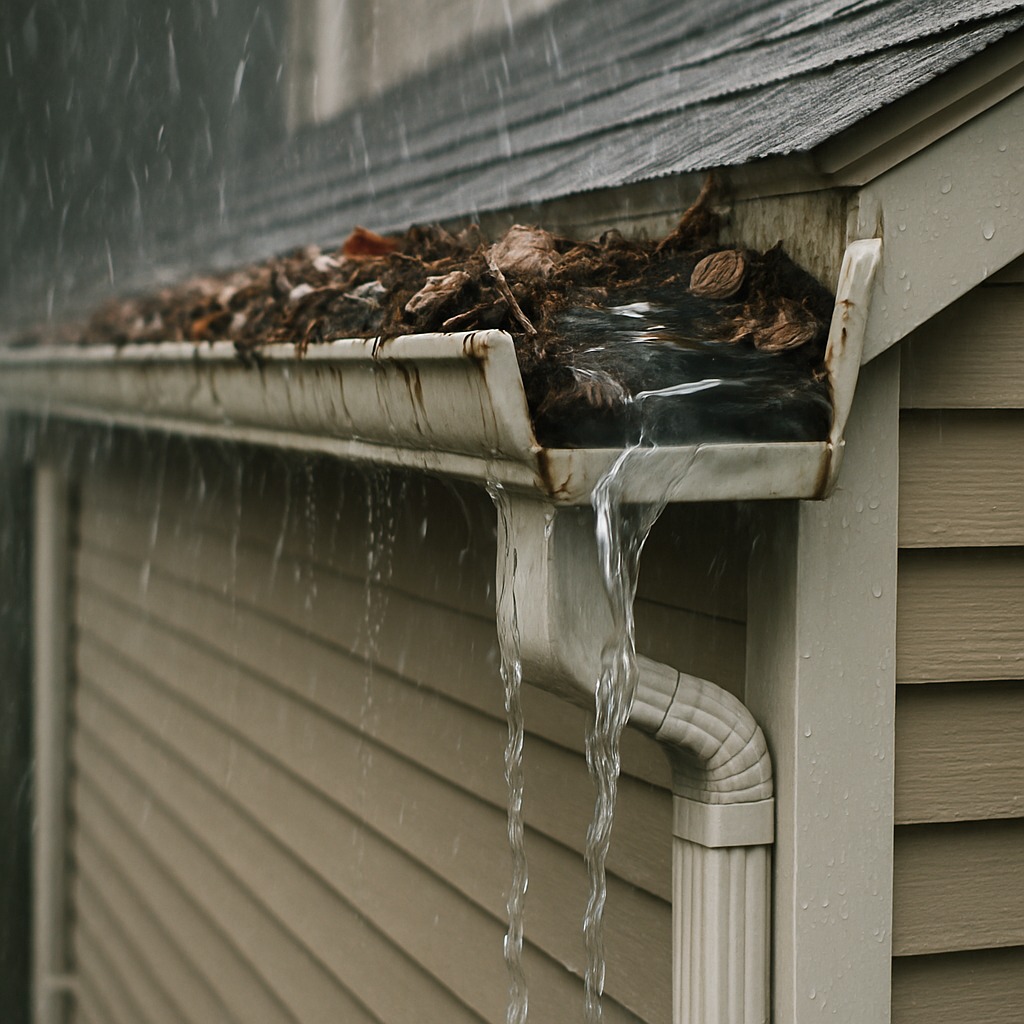
Water pouring over the edges of your gutters during a rainstorm is one of those problems that feels minor at first glance but can quietly spiral into thousands of dollars in damage if left unaddressed. Gutters exist for one reason: to channel rainwater away from your home's foundation, siding, and landscaping. When they overflow, that water has to go somewhere — and it usually goes somewhere you don't want it to. Homeowners most often notice the problem during or right after a heavy rain, spotting sheets of water cascading over the front lip of the gutter rather than flowing toward the downspout. You might also notice soil erosion along your foundation, water stains on your siding, or puddles forming directly below the roofline. These are clues that water is consistently escaping the drainage system. The cause isn't always the same, and identifying the right one matters. Clogged gutters packed with leaves, pine needles, and compacted debris are by far the most common culprit, especially after fall or following a storm. But gutters can also overflow because they're pitched incorrectly and water pools rather than flows, because the downspouts are blocked or too few in number for the roof surface area, or because the gutters themselves are too narrow or have pulled away from the fascia and tilted. In older homes, gutters may simply be undersized for modern rainfall intensity in your region. The pattern of the overflow helps narrow the cause: if water spills evenly along the entire gutter length, debris or pitch is usually the issue. If it spills near one specific point, a localized clog or downspout blockage is more likely. Either way, gutters overflowing deserve prompt attention — the damage they prevent is far more expensive than fixing the gutters themselves.
Working around overflowing gutters involves specific hazards that homeowners often underestimate. Wet gutters, wet ladders, and wet roof edges are a dangerous combination — falls from gutters are a leading cause of serious home repair injuries, and the risk multiplies significantly on a two-story home or steep roofline. Never attempt to clear gutters or inspect downspouts from a ladder during or immediately after rainfall when surfaces are wet. Even on a dry day, always use a ladder stabilizer to prevent the ladder from resting directly against the gutter, which can bend or dislodge it. Wear thick work gloves when handling gutter debris — decomposed organic material can harbor sharp metal edges, mold, and even nesting insects or rodents. If you're clearing a downspout and using water pressure, stand to the side rather than directly below in case a blockage releases suddenly and forcefully. Be aware that gutters filled with water and debris can be surprisingly heavy — a sagging gutter can detach unexpectedly. Finally, if your overflow issue involves ice damming in winter, never attempt to chip or break ice from gutters while standing on a ladder. The ice and the gutter material can both behave unpredictably.
The most common reason gutters overflow is a partial or complete blockage caused by accumulated debris. Leaves, pine needles, seed pods, shingle granules, and compacted organic matter build up over time, particularly in gutters without guards, and restrict the flow of water toward the downspout. In many cases, the gutter isn't clogged end-to-end but rather has a localized blockage at the downspout inlet — water fills the gutter faster than the restricted opening can drain it and simply spills over the nearest edge. This is especially common in fall and spring. In other cases, gutters have gradually shifted out of their correct slope due to fastener failure, thermal expansion and contraction over many seasons, or the weight of repeated debris accumulation pulling the gutter down at the center. When gutters lose their pitch, water pools and eventually overflows the lowest point regardless of whether there's a clog present.
What visible gutter overflow often reveals about hidden damage is important to understand. Chronic overflow — even if it seems minor — means water has been running down your fascia boards repeatedly, and wood rot in the fascia is a likely secondary consequence. Rotted fascia can no longer securely hold gutter hangers, which leads to further gutter detachment and worsening overflow in a self-reinforcing cycle. Water consistently hitting the same area of soil near your foundation suggests that hydrostatic pressure may already be building against your foundation wall, especially in clay-heavy soils. If overflow has been happening for more than one season, there is a reasonable chance that siding, fascia, soffit, or foundation damage exists beyond what is visible from the ground — a professional inspection often reveals more than the gutter problem alone.
Before calling anyone or grabbing a ladder, there are several useful observations you can make from the ground or from a window that will help you understand what you're dealing with. These checks require no tools, no climbing, and no disassembly — just careful observation during and after rainfall. Taking note of these details will also help you give a professional a clearer picture if you do need to call one.
The goal here isn't to fully repair your gutters on your own — it's to stop the immediate damage, gather useful information, and prepare your home while you arrange a proper fix. These steps focus on containment and smart preparation rather than permanent solutions. Taking action quickly, even in small ways, can prevent a manageable gutter problem from turning into a foundation, siding, or basement water issue.
Walk your property during the next rainstorm and note exactly where water overflows — this single observation will guide every repair decision that follows.
You should contact a licensed roofer or gutter specialist when the overflow is persistent across multiple rainstorms, when you've cleared accessible debris and the problem continues, or when the gutters appear structurally damaged — sagging, pulling away from the fascia, or visibly bent. If your home is two stories or more, any gutter work involving a ladder should be left to professionals who have proper equipment and fall protection. Gutter pitch corrections, downspout repositioning, gutter resizing, and fascia repairs all require professional skills and tools that go beyond basic homeowner maintenance. Additionally, if you notice that the gutters are undersized relative to your roof's surface area — a common issue with older homes or recent additions — a pro can assess and recommend the right solution. Damaged or rotten fascia boards discovered during the inspection also require professional carpentry repair before new or rehung gutters will hold properly.
Some situations signal higher urgency and warrant a faster call. If you're seeing water entering your basement or crawlspace following rainstorms and have simultaneous gutter overflow, the two issues are likely connected and water is already threatening your foundation. Water stains appearing on interior walls or ceilings near the roofline suggest overflow may be backing up under the roofing material. If your home recently had heavy storms or ice dam conditions and overflow started immediately after, there may be gutter damage or shingle damage contributing to the problem. In any of these cases, waiting several weeks for a routine appointment may cost you significantly more in secondary repairs — call promptly and describe the urgency clearly.
You should contact a licensed roofer or gutter specialist when the overflow is persistent across multiple rainstorms, when you've cleared accessible debris and the problem continues, or when the gutters appear structurally damaged — sagging, pulling away from the fascia, or visibly bent. If your home is two stories or more, any gutter work involving a ladder should be left to professionals who have proper equipment and fall protection. Gutter pitch corrections, downspout repositioning, gutter resizing, and fascia repairs all require professional skills and tools that go beyond basic homeowner maintenance. Additionally, if you notice that the gutters are undersized relative to your roof's surface area — a common issue with older homes or recent additions — a pro can assess and recommend the right solution. Damaged or rotten fascia boards discovered during the inspection also require professional carpentry repair before new or rehung gutters will hold properly.
Some situations signal higher urgency and warrant a faster call. If you're seeing water entering your basement or crawlspace following rainstorms and have simultaneous gutter overflow, the two issues are likely connected and water is already threatening your foundation. Water stains appearing on interior walls or ceilings near the roofline suggest overflow may be backing up under the roofing material. If your home recently had heavy storms or ice dam conditions and overflow started immediately after, there may be gutter damage or shingle damage contributing to the problem. In any of these cases, waiting several weeks for a routine appointment may cost you significantly more in secondary repairs — call promptly and describe the urgency clearly.
You should contact a licensed roofer or gutter specialist when the overflow is persistent across multiple rainstorms, when you've cleared accessible debris and the problem continues, or when the gutters appear structurally damaged — sagging, pulling away from the fascia, or visibly bent. If your home is two stories or more, any gutter work involving a ladder should be left to professionals who have proper equipment and fall protection. Gutter pitch corrections, downspout repositioning, gutter resizing, and fascia repairs all require professional skills and tools that go beyond basic homeowner maintenance. Additionally, if you notice that the gutters are undersized relative to your roof's surface area — a common issue with older homes or recent additions — a pro can assess and recommend the right solution. Damaged or rotten fascia boards discovered during the inspection also require professional carpentry repair before new or rehung gutters will hold properly.
Some situations signal higher urgency and warrant a faster call. If you're seeing water entering your basement or crawlspace following rainstorms and have simultaneous gutter overflow, the two issues are likely connected and water is already threatening your foundation. Water stains appearing on interior walls or ceilings near the roofline suggest overflow may be backing up under the roofing material. If your home recently had heavy storms or ice dam conditions and overflow started immediately after, there may be gutter damage or shingle damage contributing to the problem. In any of these cases, waiting several weeks for a routine appointment may cost you significantly more in secondary repairs — call promptly and describe the urgency clearly.