
ISSUE GUIDE
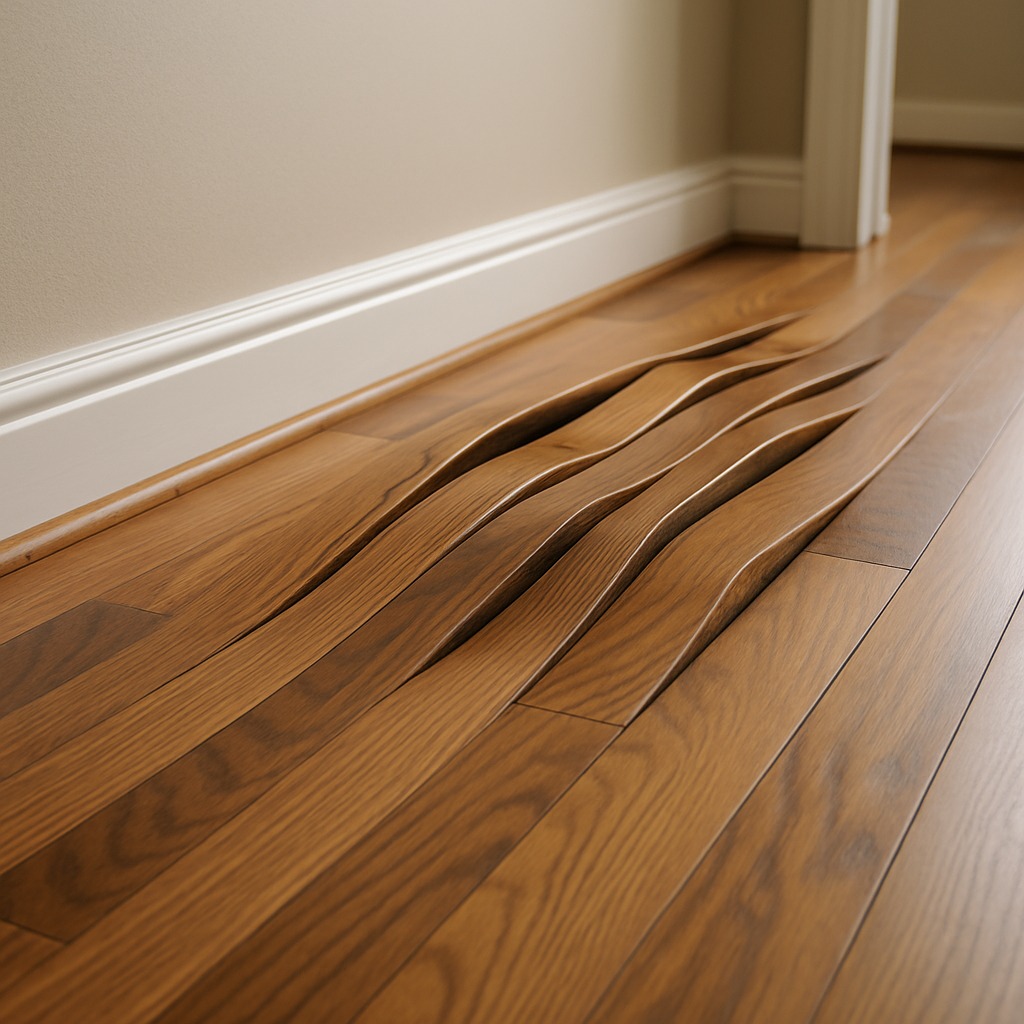
Hardwood floor buckling is one of those home issues that's impossible to ignore once it starts. You'll notice it as raised, warped, or rippling sections of your wood flooring — boards that were once flat suddenly arching upward, sometimes dramatically enough to create a trip hazard. In severe cases, boards can lift several inches off the subfloor. It looks alarming, and honestly, it should get your attention quickly. Buckling happens when hardwood boards absorb excess moisture and expand beyond the space they have available. Wood is a natural material that responds to its environment, and when water enters the picture — whether from a slow plumbing leak, flooding, high indoor humidity, or even seasonal moisture swings — the boards swell and have nowhere to go but up. The most common clue patterns homeowners notice first are boards that feel soft or spongy underfoot, a visible hump or ridge running along a seam, cupping along the edges of individual boards, or a creaking sound that wasn't there before. What makes buckling particularly urgent is that the visible surface damage is rarely the whole story. By the time your hardwood is buckling, moisture has almost certainly penetrated down to the subfloor beneath, and potentially into the structural framing below that. Mold and mildew can begin developing within 24 to 48 hours of significant moisture exposure, meaning a slow-developing problem can quietly become a serious health and structural concern. Buckling can also result from improper installation — floors laid without adequate expansion gaps, or boards acclimated incorrectly before installation. In those cases, even normal humidity changes can trigger lifting. Whatever the cause, identifying the moisture source and stopping it is always the critical first step before any repair can hold long-term. Acting quickly protects your investment and your home's structural integrity.
Hardwood floor buckling carries several safety risks that homeowners should take seriously before walking over or working near the damaged area. Raised boards create an immediate trip and fall hazard — secure the area and warn all household members, especially children and elderly individuals, before doing anything else. If the buckling was caused by flooding or a significant water intrusion event, do not enter the area without first confirming that no electrical outlets, wiring, or appliances near the floor were exposed to water. Water and electricity in proximity are a life-threatening combination. If you smell gas at any point while inspecting the area, leave the home immediately and call your gas utility company before re-entering. Avoid the temptation to pry up buckled boards yourself — doing so without knowing what's beneath can result in broken boards, fastener injuries, or disrupting a subfloor that may already be structurally weakened by moisture. If mold is visible or strongly suspected, limit time spent in the room and avoid disturbing the affected material, as mold spores become airborne easily and pose respiratory health risks. Consider wearing an N95 mask when entering the space for inspection.
The most common cause of hardwood floor buckling is prolonged or sudden moisture exposure. In the majority of cases, there is a specific source: a slow leak from a supply line under a nearby sink, a refrigerator water line, a dishwasher connection, or a toilet seal that has been failing gradually over time. Seasonal flooding, basement moisture migrating upward, or even consistently high indoor humidity without proper ventilation can also trigger buckling over time. Homes in humid climates that lack whole-house dehumidification are particularly vulnerable. Another frequent culprit is improper installation — hardwood floors require a specific acclimation period in the home's environment before being laid, and they must be installed with expansion gaps along the walls. When those steps are skipped, even normal seasonal humidity changes can generate enough board expansion to cause buckling.
What you can see on the surface almost always understates what's happening underneath. When hardwood boards buckle visibly, the subfloor below has typically been holding excess moisture for a significant period already. This means the structural plywood or OSB subfloor may be swollen, delaminated, or beginning to rot. In more serious cases, moisture has reached the floor joists beneath, which are the structural members that support your entire floor system. Soft, bouncy subfloor material that you might feel when pressing on a raised board is a direct sign of this deeper deterioration. Mold colonies can establish themselves on the underside of hardwood boards and on the subfloor surface within 24 to 48 hours of water exposure, often going undetected until boards are lifted during repair work.
Before calling anyone or touching anything, take a few minutes to walk through these safe visual and sensory observations. You don't need any tools — just your eyes, hands, and careful attention. These checks will help you understand the scope of the problem and give a professional critical information if you do need to call one in.
These steps are focused on damage control — stopping the problem from getting worse while you assess the situation and arrange professional help if needed. Do not attempt to physically force buckled boards back down or make structural repairs yourself, as that can cause additional damage to the boards and subfloor.
Right now, locate and stop any active water source near the buckled area, then set up a dehumidifier to begin drying immediately.
You should contact a licensed handyman or flooring professional as soon as possible if the buckling covers more than a small, isolated section of your floor, if there is any possibility the moisture source came from a plumbing leak, appliance failure, or flooding event, or if you can smell mold or mildew near the damaged area. A pro needs to assess not just the surface boards but the subfloor condition beneath them — a critical step that requires lifting boards and using moisture meters that homeowners typically don't have access to. If your floors were installed without proper expansion gaps or were never properly acclimated, a professional evaluation can determine whether the entire installation needs to be corrected rather than patched.
Treat this issue as higher urgency if the buckling appeared suddenly rather than gradually, if boards have lifted more than a half-inch off the subfloor, or if the affected area is near a load-bearing wall, a bathroom, a kitchen, or a basement access point where structural framing may be involved. If you notice soft spots in the subfloor when you press on the raised boards, that is a red flag for subfloor rot or deterioration that needs immediate professional attention. Any sign of black or green discoloration between boards should also be treated as urgent, as mold remediation may be required before flooring repairs can proceed safely.
You should contact a licensed handyman or flooring professional as soon as possible if the buckling covers more than a small, isolated section of your floor, if there is any possibility the moisture source came from a plumbing leak, appliance failure, or flooding event, or if you can smell mold or mildew near the damaged area. A pro needs to assess not just the surface boards but the subfloor condition beneath them — a critical step that requires lifting boards and using moisture meters that homeowners typically don't have access to. If your floors were installed without proper expansion gaps or were never properly acclimated, a professional evaluation can determine whether the entire installation needs to be corrected rather than patched.
Treat this issue as higher urgency if the buckling appeared suddenly rather than gradually, if boards have lifted more than a half-inch off the subfloor, or if the affected area is near a load-bearing wall, a bathroom, a kitchen, or a basement access point where structural framing may be involved. If you notice soft spots in the subfloor when you press on the raised boards, that is a red flag for subfloor rot or deterioration that needs immediate professional attention. Any sign of black or green discoloration between boards should also be treated as urgent, as mold remediation may be required before flooring repairs can proceed safely.
You should contact a licensed handyman or flooring professional as soon as possible if the buckling covers more than a small, isolated section of your floor, if there is any possibility the moisture source came from a plumbing leak, appliance failure, or flooding event, or if you can smell mold or mildew near the damaged area. A pro needs to assess not just the surface boards but the subfloor condition beneath them — a critical step that requires lifting boards and using moisture meters that homeowners typically don't have access to. If your floors were installed without proper expansion gaps or were never properly acclimated, a professional evaluation can determine whether the entire installation needs to be corrected rather than patched.
Treat this issue as higher urgency if the buckling appeared suddenly rather than gradually, if boards have lifted more than a half-inch off the subfloor, or if the affected area is near a load-bearing wall, a bathroom, a kitchen, or a basement access point where structural framing may be involved. If you notice soft spots in the subfloor when you press on the raised boards, that is a red flag for subfloor rot or deterioration that needs immediate professional attention. Any sign of black or green discoloration between boards should also be treated as urgent, as mold remediation may be required before flooring repairs can proceed safely.