
ISSUE GUIDE
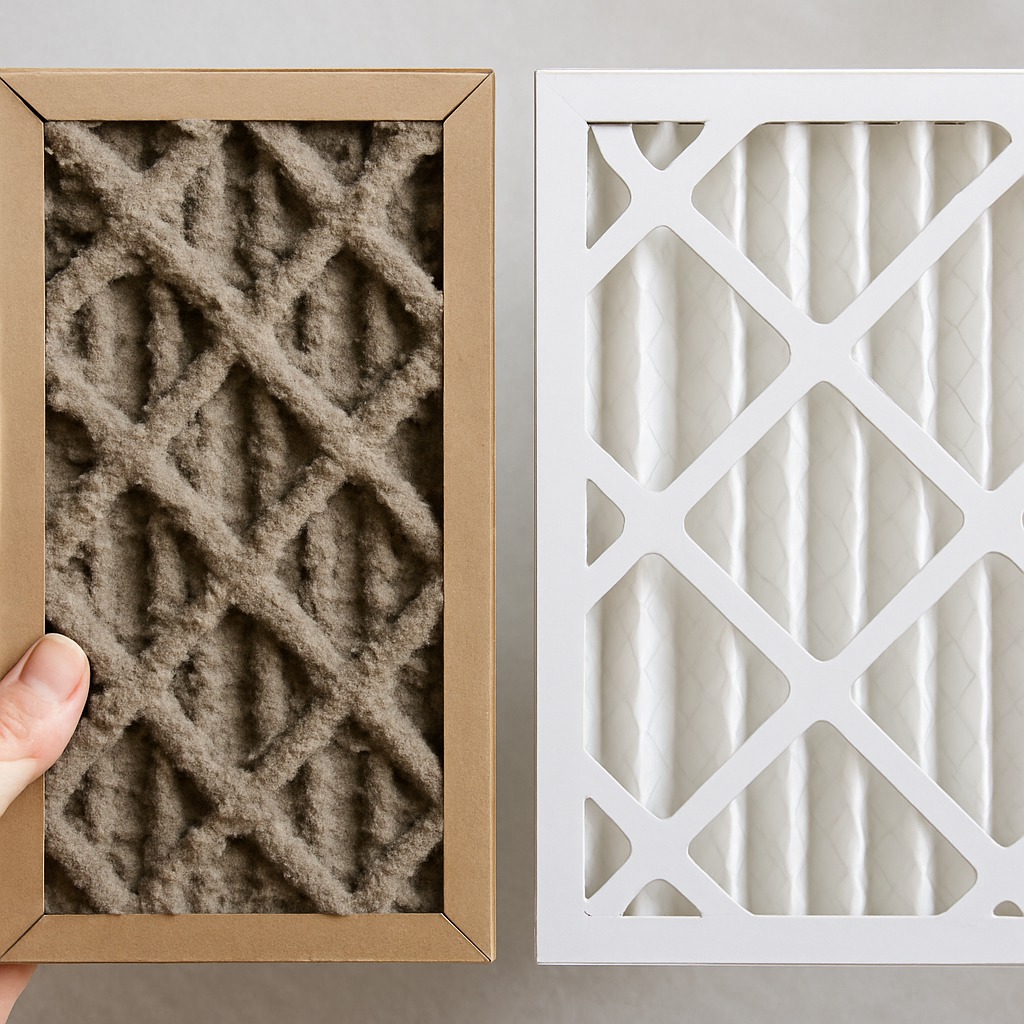
When your HVAC system starts working harder than usual — running longer cycles, struggling to reach your thermostat setting, or pushing weak airflow through your vents — a dirty or clogged filter is often the first place to look. The air filter in your heating and cooling system serves as the lungs of the entire unit, trapping dust, pet dander, pollen, mold spores, and other airborne particles before they can circulate through your home or coat sensitive mechanical components. When that filter becomes saturated, the consequences ripple throughout the whole system. Homeowners typically notice the problem in a few recognizable ways. Your energy bills creep upward without explanation. Rooms feel stuffy or unevenly heated and cooled. The system runs almost constantly but never quite satisfies the thermostat. You might notice more dust accumulating on furniture surfaces than usual, or family members with allergies suddenly experiencing more frequent symptoms. In some cases, you may detect a faint musty or dusty odor when the system kicks on. The clue patterns matter here. If the issue started gradually over weeks, a slowly clogging filter is the most likely culprit. If it came on suddenly after a renovation, construction nearby, or a period of heavy use during extreme weather, the filter may have loaded up faster than normal. Homes with pets, multiple occupants, or older ductwork tend to see faster filter degradation. This issue deserves prompt attention because a restricted filter forces your blower motor to strain against reduced airflow, accelerating wear and potentially leading to overheating, frozen evaporator coils, or compressor damage — repairs that can cost hundreds to thousands of dollars. What starts as a five-dollar fix can quietly become a major mechanical failure if left unaddressed. Checking and replacing your filter is one of the highest-return maintenance actions any homeowner can take.
Never operate your HVAC system without a filter installed, even briefly. Running the unit without filtration allows dust, pet hair, and debris to coat the evaporator coil directly, creating a stubborn buildup that is expensive to clean and significantly reduces system efficiency. When removing a severely clogged filter, wear an N95 mask and disposable gloves — a saturated filter can contain mold spores, concentrated allergens, and fine particulate matter that become airborne the moment you disturb the filter. Seal it in a plastic bag before carrying it through your living space. Do not attempt to clean and reuse a disposable fiberglass or pleated filter — they are designed for single use, and washing them destroys the fiber structure while releasing trapped contaminants. If your system has been running with a heavily clogged filter for weeks or months and you suspect ice buildup on the evaporator coil, turn the system to FAN ONLY mode for several hours to thaw before switching to cooling — running the compressor against a frozen coil risks damaging the compressor. Keep children and pets clear of the air handler area during any filter maintenance.
In the vast majority of cases, a dirty or clogged HVAC filter simply means the filter has reached the end of its useful service life and needs replacement — a completely normal and expected part of home maintenance. Most standard one-inch fiberglass filters last between 30 and 60 days under typical conditions, while higher-quality pleated filters may last 60 to 90 days. However, the rate at which a filter loads up depends heavily on your specific household conditions. Homes with multiple pets, residents who suffer from allergies, recent renovation or construction activity, older unsealed ductwork, or high foot traffic will see filters clog significantly faster. If you find your filters are consistently becoming heavily clogged in less than 30 days, that pattern itself is diagnostic — it suggests either an abnormally high particulate load in your home environment, an improperly sized return air system, or ductwork with leaks that are pulling in unconditioned air from a dusty crawl space or attic.
Before calling anyone or touching any equipment, there are several straightforward visual and sensory checks you can perform safely without tools, disassembly, or any technical knowledge. These observations will help you confirm whether a dirty filter is truly the issue and give you useful information to share with a technician if professional help turns out to be necessary. Always leave your system running normally during these checks so you can observe its actual behavior.
The goal at this stage is not necessarily to fully diagnose and solve every aspect of the problem — it is to stop the situation from getting worse and to set yourself up for either a successful DIY fix or a more informed conversation with a professional. Most homeowners can safely replace a standard HVAC filter themselves, and doing so quickly can prevent downstream damage to more expensive components. Work methodically and do not rush the process.
Right now, locate your HVAC filter, check its condition visually, and replace it immediately if it appears gray, brown, or blocked.
Even after replacing a clogged filter yourself, certain situations warrant a call to a licensed HVAC technician. If your system still underperforms after a fresh filter is installed — meaning airflow remains weak, temperatures are uneven, or the unit continues running excessively long cycles — the filter restriction may have caused secondary damage that requires professional diagnosis. This includes the possibility of a frozen evaporator coil, which can develop when airflow is restricted for an extended period and will not simply resolve on its own. You should also call a pro if you discover the filter was so heavily clogged that visible debris has accumulated on the evaporator coil surface, blower wheel, or ductwork near the return air opening. Cleaning these components requires specialized tools and knowledge to avoid damaging delicate fins or introducing moisture into the system. Additionally, if your system is making new sounds — grinding, squealing, or intermittent clicking — after prolonged filter neglect, the blower motor may have been stressed beyond its normal operating range.
Certain signs indicate a more urgent need for professional attention and should prompt you to call the same day rather than scheduling a routine appointment. If you see ice forming on the refrigerant lines or the indoor unit, shut the system off immediately and call a technician — running an iced system can destroy the compressor, turning a moderate repair into a major replacement. If your system shuts itself off repeatedly due to overheating, indicated by the high-limit safety switch tripping, continued operation risks permanent motor damage. A burning smell during operation after replacing the filter is a serious warning sign that should be treated as an emergency, as it may indicate a motor already in the process of failing from prolonged thermal stress.
Even after replacing a clogged filter yourself, certain situations warrant a call to a licensed HVAC technician. If your system still underperforms after a fresh filter is installed — meaning airflow remains weak, temperatures are uneven, or the unit continues running excessively long cycles — the filter restriction may have caused secondary damage that requires professional diagnosis. This includes the possibility of a frozen evaporator coil, which can develop when airflow is restricted for an extended period and will not simply resolve on its own. You should also call a pro if you discover the filter was so heavily clogged that visible debris has accumulated on the evaporator coil surface, blower wheel, or ductwork near the return air opening. Cleaning these components requires specialized tools and knowledge to avoid damaging delicate fins or introducing moisture into the system. Additionally, if your system is making new sounds — grinding, squealing, or intermittent clicking — after prolonged filter neglect, the blower motor may have been stressed beyond its normal operating range.
Certain signs indicate a more urgent need for professional attention and should prompt you to call the same day rather than scheduling a routine appointment. If you see ice forming on the refrigerant lines or the indoor unit, shut the system off immediately and call a technician — running an iced system can destroy the compressor, turning a moderate repair into a major replacement. If your system shuts itself off repeatedly due to overheating, indicated by the high-limit safety switch tripping, continued operation risks permanent motor damage. A burning smell during operation after replacing the filter is a serious warning sign that should be treated as an emergency, as it may indicate a motor already in the process of failing from prolonged thermal stress.
Even after replacing a clogged filter yourself, certain situations warrant a call to a licensed HVAC technician. If your system still underperforms after a fresh filter is installed — meaning airflow remains weak, temperatures are uneven, or the unit continues running excessively long cycles — the filter restriction may have caused secondary damage that requires professional diagnosis. This includes the possibility of a frozen evaporator coil, which can develop when airflow is restricted for an extended period and will not simply resolve on its own. You should also call a pro if you discover the filter was so heavily clogged that visible debris has accumulated on the evaporator coil surface, blower wheel, or ductwork near the return air opening. Cleaning these components requires specialized tools and knowledge to avoid damaging delicate fins or introducing moisture into the system. Additionally, if your system is making new sounds — grinding, squealing, or intermittent clicking — after prolonged filter neglect, the blower motor may have been stressed beyond its normal operating range.
Certain signs indicate a more urgent need for professional attention and should prompt you to call the same day rather than scheduling a routine appointment. If you see ice forming on the refrigerant lines or the indoor unit, shut the system off immediately and call a technician — running an iced system can destroy the compressor, turning a moderate repair into a major replacement. If your system shuts itself off repeatedly due to overheating, indicated by the high-limit safety switch tripping, continued operation risks permanent motor damage. A burning smell during operation after replacing the filter is a serious warning sign that should be treated as an emergency, as it may indicate a motor already in the process of failing from prolonged thermal stress.