
ISSUE GUIDE
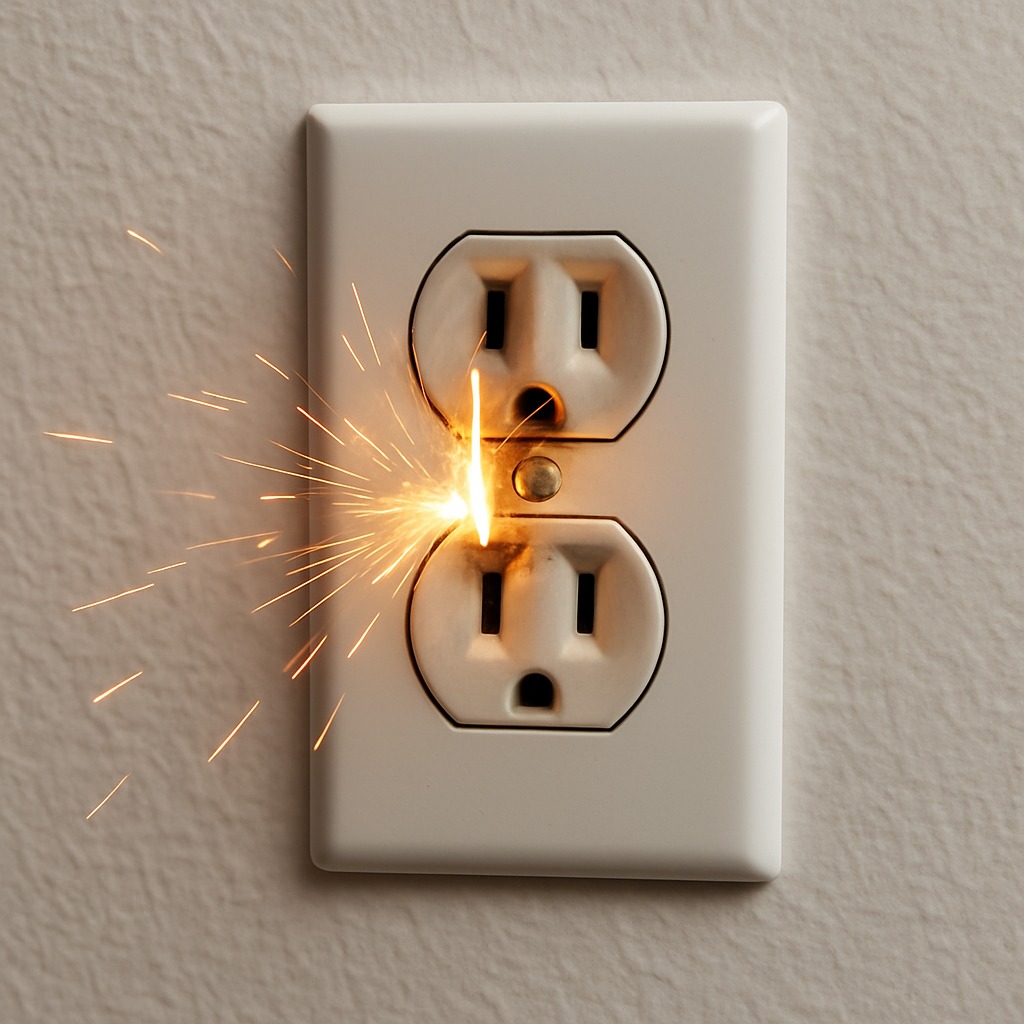
An outlet sparking is one of those moments that can genuinely shake a homeowner's confidence in their home's safety — and rightfully so. While a brief, tiny spark when plugging in a device can occasionally be normal, repeated, large, or unexpected sparking is a serious warning sign that something is wrong inside your electrical system. Understanding the difference between a harmless flicker and a dangerous fault could protect your home from fire or serious injury. Most homeowners first notice sparking when plugging in an appliance or power strip. You might see a flash of blue or white light at the outlet face, hear a popping or crackling sound, or even smell something burning or like hot plastic. In some cases, the outlet may feel warm to the touch, leave scorch marks around the plug slots, or cause the connected device to behave erratically. These are all clues that the outlet is not functioning correctly. The most common causes include loose wiring connections inside the outlet box, worn or degraded outlet components, moisture intrusion, circuit overloading, or faulty wiring that has deteriorated over time. Older homes with aluminum wiring or ungrounded two-prong outlets face elevated risk. An outlet that sparks consistently is creating conditions for an electrical arc — and arcing is one of the leading causes of residential house fires in the United States. This issue demands prompt attention. Even if the sparking seems minor or infrequent, the underlying problem is almost certainly getting worse with each use. Electrical faults do not heal themselves. The longer you wait, the greater the risk of fire, appliance damage, or electric shock. Taking immediate protective steps and contacting a licensed electrician is the safest and smartest path forward for any homeowner dealing with this issue.
Electrical fires can start inside wall cavities and burn for minutes or even hours before becoming visible — this is what makes outlet sparking particularly dangerous. Never ignore repeated sparking, even if it seems small. Do not attempt to open an outlet cover or touch any wiring while the circuit is live. Always turn off the breaker controlling that outlet before allowing anyone near it. Do not use extension cords or power strips as a workaround for a sparking outlet — this can spread the risk to other parts of your home. Water and electricity are a deadly combination: if the sparking outlet is near a sink, bathtub, or dishwasher, there is elevated risk of electric shock, and you should treat the situation as an emergency. Keep children and pets away from the affected outlet entirely. Do not use the outlet even briefly while waiting for the electrician — one additional connection can be enough to cause a fire or serious shock injury. If you ever see smoke, smell sustained burning, or feel heat through the wall surrounding the outlet, evacuate your home immediately and call 911. Your safety is always more important than saving time or money on a service call.
In the vast majority of sparking outlet cases, the root cause is a loose or degraded wiring connection inside the outlet box. Over years of use, the screw terminals or backstab connections that hold wires to an outlet can loosen due to vibration, thermal expansion and contraction, or simply aging hardware. When these connections become imperfect, electricity attempts to jump the gap — and that jump is what produces the visible spark. This type of arcing generates significant heat, which progressively damages the wire insulation, the outlet contacts, and sometimes the surrounding junction box and drywall. Other common causes include a worn-out outlet that has lost its grip on plug prongs, a circuit that is regularly overloaded beyond its rated amperage, moisture infiltration from a nearby water source, and in older homes, degraded wiring insulation that has become brittle and cracked over decades of use.
What you see on the outside of an outlet almost always understates the damage inside. Scorch marks on the outlet face, for example, suggest that arcing has occurred multiple times and that heat levels have been high enough to discolor or melt plastic — which means the wiring and insulation inside the box have experienced the same or worse. A single loose connection can cause chain-reaction damage to adjacent wiring, the circuit breaker, and in some cases wiring that runs through wall cavities to other outlets on the same circuit. This is why a sparking outlet should never be evaluated in isolation — a thorough inspection by a licensed electrician will check the full circuit, not just the visible outlet, to ensure no hidden damage has been left behind.
Before calling a professional, there are several safe, no-tools-required observations you can make to help assess the situation and give your electrician useful information. Do not remove any outlet covers, insert anything into outlets, or attempt to inspect wiring yourself. These checks are visual and sensory only — your goal is to observe and document, not to repair.
If your outlet is sparking, your immediate priority is safety and containment — not repair. The following steps are designed to minimize risk and prepare you for a professional visit. Do not attempt to open the outlet box, touch any wiring, or use the outlet again until it has been inspected and cleared by a licensed electrician.
Turn off the breaker to the affected outlet right now and stop using it until a licensed electrician inspects it.
You should call a licensed electrician any time an outlet sparks repeatedly, produces a large visible flash, emits a burning or electrical smell, feels warm to the touch, or shows scorch marks around the plug slots. If the outlet has stopped working entirely, if multiple outlets on the same circuit have failed, or if your breaker trips repeatedly when you use that circuit, these are all situations that require professional diagnosis. Homeowners in older homes — particularly those built before 1980 with aluminum wiring, two-prong ungrounded outlets, or outdated federal Pacific or Zinsco panels — should treat any sparking as an urgent matter and seek professional evaluation promptly. Even if the sparking seems minor, a licensed electrician can safely open the outlet box, inspect the wiring connections, test the circuit, and determine whether the issue is isolated to one outlet or part of a larger systemic problem throughout the home's electrical system.
Certain signs indicate a higher level of urgency and should prompt you to call an electrician the same day rather than scheduling a routine appointment. These include a burning smell that persists even after you turn off the breaker, visible charring or melting on the outlet or surrounding wall, a popping or buzzing sound coming from inside the wall near the outlet, or any situation where the sparking occurred while the outlet was not in active use. If lights in the room flicker at the same time the outlet sparks, this suggests arcing may be affecting the broader circuit — a dangerous condition that can ignite hidden fires inside wall cavities before any visible signs appear.
You should call a licensed electrician any time an outlet sparks repeatedly, produces a large visible flash, emits a burning or electrical smell, feels warm to the touch, or shows scorch marks around the plug slots. If the outlet has stopped working entirely, if multiple outlets on the same circuit have failed, or if your breaker trips repeatedly when you use that circuit, these are all situations that require professional diagnosis. Homeowners in older homes — particularly those built before 1980 with aluminum wiring, two-prong ungrounded outlets, or outdated federal Pacific or Zinsco panels — should treat any sparking as an urgent matter and seek professional evaluation promptly. Even if the sparking seems minor, a licensed electrician can safely open the outlet box, inspect the wiring connections, test the circuit, and determine whether the issue is isolated to one outlet or part of a larger systemic problem throughout the home's electrical system.
Certain signs indicate a higher level of urgency and should prompt you to call an electrician the same day rather than scheduling a routine appointment. These include a burning smell that persists even after you turn off the breaker, visible charring or melting on the outlet or surrounding wall, a popping or buzzing sound coming from inside the wall near the outlet, or any situation where the sparking occurred while the outlet was not in active use. If lights in the room flicker at the same time the outlet sparks, this suggests arcing may be affecting the broader circuit — a dangerous condition that can ignite hidden fires inside wall cavities before any visible signs appear.
You should call a licensed electrician any time an outlet sparks repeatedly, produces a large visible flash, emits a burning or electrical smell, feels warm to the touch, or shows scorch marks around the plug slots. If the outlet has stopped working entirely, if multiple outlets on the same circuit have failed, or if your breaker trips repeatedly when you use that circuit, these are all situations that require professional diagnosis. Homeowners in older homes — particularly those built before 1980 with aluminum wiring, two-prong ungrounded outlets, or outdated federal Pacific or Zinsco panels — should treat any sparking as an urgent matter and seek professional evaluation promptly. Even if the sparking seems minor, a licensed electrician can safely open the outlet box, inspect the wiring connections, test the circuit, and determine whether the issue is isolated to one outlet or part of a larger systemic problem throughout the home's electrical system.
Certain signs indicate a higher level of urgency and should prompt you to call an electrician the same day rather than scheduling a routine appointment. These include a burning smell that persists even after you turn off the breaker, visible charring or melting on the outlet or surrounding wall, a popping or buzzing sound coming from inside the wall near the outlet, or any situation where the sparking occurred while the outlet was not in active use. If lights in the room flicker at the same time the outlet sparks, this suggests arcing may be affecting the broader circuit — a dangerous condition that can ignite hidden fires inside wall cavities before any visible signs appear.