
ISSUE GUIDE
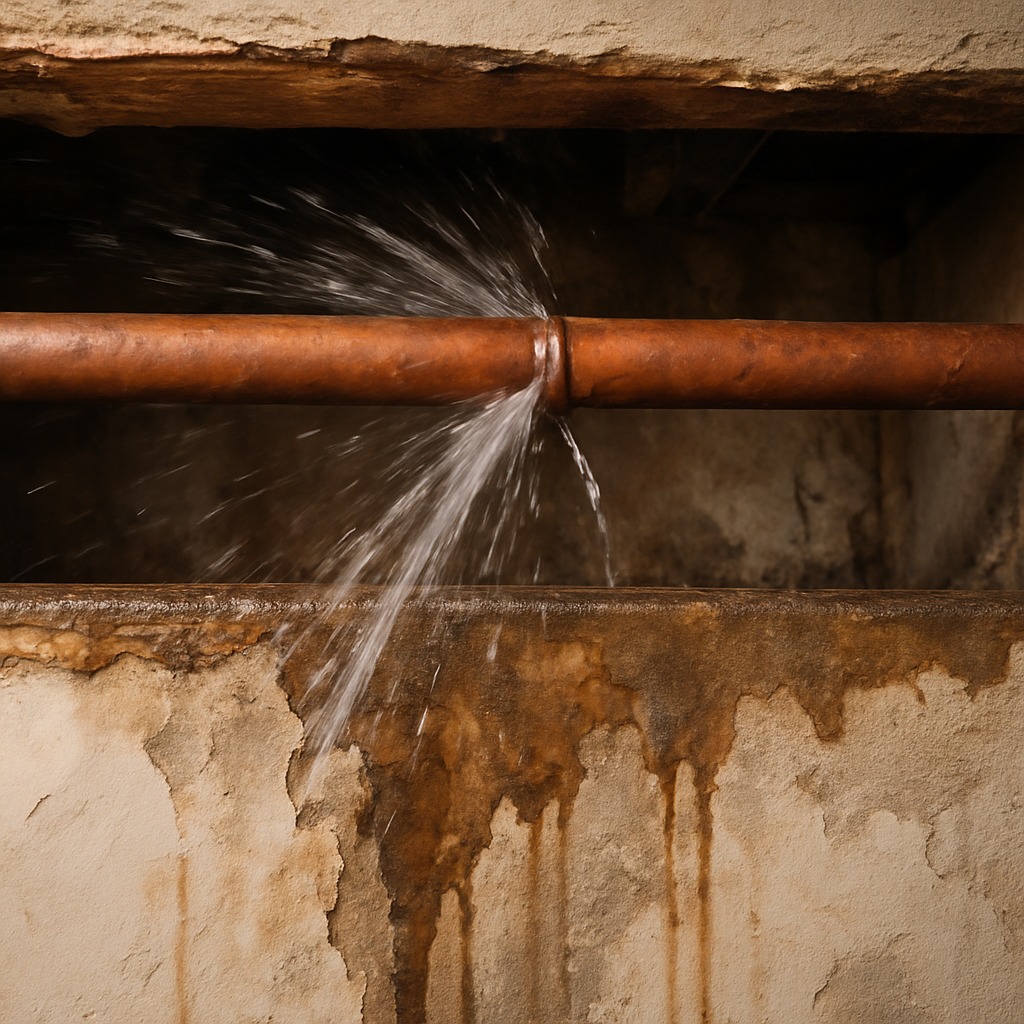
A burst pipe is one of the most alarming and damaging plumbing emergencies a homeowner can face. When a pipe fails — whether from freezing temperatures, corrosion, excessive water pressure, or physical damage — water can pour into your home at a rate that causes serious structural harm within minutes. The first signs homeowners typically notice include a sudden drop in water pressure, an unexpected sound of rushing or dripping water inside walls or ceilings, wet spots spreading across drywall, buckled flooring, or in severe cases, water actively pooling on floors or dripping from light fixtures. The location and pattern of the damage often reveal important clues about what caused the failure. Burst pipes in exterior walls or crawl spaces after a cold snap almost always point to freezing. Pipes that fail near joints or connections in older homes frequently indicate corrosion or deterioration of aged galvanized or copper lines. A sudden failure in a younger home may suggest a manufacturing defect, improper installation, or a water hammer event caused by pressure spikes. What makes pipe burst flooding especially serious is the speed at which secondary damage compounds. Within the first hour, water saturates insulation, subfloor materials, and drywall. Within 24 to 48 hours, mold can begin developing in soaked cavities. Electrical systems in contact with water become immediate safety hazards. Structural wood components begin absorbing moisture and warping. The financial consequences scale rapidly — a situation manageable at a few hundred dollars in the first hour can escalate into thousands once mold remediation, drywall replacement, and flooring repair enter the picture. Acting quickly and methodically is what separates a contained repair from a full-scale renovation emergency. Understanding what you are seeing, what you can safely do yourself, and when to hand the situation over to a licensed plumber can make an enormous difference in outcome and cost.
Water and electricity are a deadly combination, and a burst pipe situation frequently brings both into contact. Never enter a flooded room if water has reached electrical outlets, baseboards with wiring, or any plugged-in appliances. Do not attempt to switch off lights or outlets from inside a wet room — go directly to your breaker panel if it is in a dry location and cut power to the affected circuits. If your breaker panel is in a wet or flooded area, call your utility company and stay out. If the flooding involves discolored water, sewage odor, or water backing up from floor drains, treat it as a contamination hazard. Do not allow skin contact without waterproof gloves and boots, and keep children and pets entirely out of the area. In freezing conditions, be cautious of ice formation on floors and steps near the burst location. Do not use open flames, propane heaters, or heat guns near pipes, insulation, or wood framing in an attempt to thaw or dry the area — these are serious fire risks. Use fans and dehumidifiers in a well-ventilated space only once electrical safety has been confirmed. Always verify that your gas appliances have not been affected by water intrusion before relighting pilots or restoring gas service.
The most common cause of a burst pipe in a residential home is freezing. When water inside a pipe freezes and expands, it generates pressure that the pipe wall cannot contain — and the failure often occurs not at the frozen section itself, but downstream where pressure has nowhere to go. This is why you may find the burst in an unexpected location far from where ice formed. Beyond freezing, age-related corrosion is the second most common cause, particularly in homes with galvanized steel pipes older than 30 years or copper lines in areas with highly acidic water. Corroded pipes thin from the inside out, and a burst can happen without any warning event. Homes with chronically high water pressure — above 80 psi — are also at elevated risk for sudden pipe failure, particularly at joints, elbows, and connections.
What you can see on the surface almost always understates the extent of hidden damage. Drywall acts like a sponge — water that appears as a small wet patch on the visible surface may have already saturated the full thickness of the wall cavity, soaked the insulation behind it, and begun wicking into the wall framing and subfloor. A ceiling stain the size of a dinner plate can represent gallons of water pooled inside the ceiling assembly. This is why professional assessment with a moisture meter is so important after any burst pipe event. Remediation professionals can map moisture levels inside walls without full demolition and identify exactly which materials need to be dried, treated, or replaced — which ultimately prevents mold growth and structural softening that would cost far more to address later.
Before touching anything mechanical or entering flooded areas, take a few minutes to observe conditions carefully and gather information. These checks require no tools, no disassembly, and no interaction with water or electrical systems — they are purely observational and will help you describe the situation accurately when you call a professional. Move slowly, stay aware of your surroundings, and never enter a room where water is in contact with electrical outlets, panels, or appliances that may still be powered.
When dealing with a burst pipe, your immediate goal is not repair — it is containment. The actions you take in the first 15 to 30 minutes determine how much additional damage occurs before a plumber arrives. Every step below is focused on stopping the flow of water, reducing hazard exposure, and preparing the space for professional assessment. Do not attempt to patch or repair the pipe yourself under pressure — improper temporary fixes can fail and make conditions worse.
Locate your main water shutoff valve right now and turn it off completely to stop water flow before damage spreads further.
A licensed plumber should be contacted as soon as you have shut off the water supply and ensured immediate safety. Burst pipe repairs almost always require professional intervention because the damaged section of pipe must be properly located, cut out, and replaced with correctly sized and rated materials — work that requires the right tools, knowledge of local building codes, and in many jurisdictions, a licensed permit. You should also call a professional if you are unable to locate your main shutoff valve or if the valve itself has failed and water continues to flow. Any situation involving pipes inside walls, beneath a concrete slab, within a crawl space, or behind finished cabinetry requires professional access and assessment. If the burst has caused water to reach your electrical panel, outlets, or any wiring, stop all activity and call both a plumber and a licensed electrician before re-entering the affected space. If significant water has penetrated walls, ceilings, or subfloors, a water damage remediation specialist may also be needed alongside the plumber.
Certain signs indicate this is a higher-urgency situation that requires faster response — treat these as calls for same-day or emergency plumbing service. If water is actively flowing despite your shutoff attempt, your main valve may be faulty and the municipal supply line may need to be shut off by your water utility. If water is dripping from ceiling-mounted light fixtures, pooling around your electrical panel, or has reached a finished basement with expensive contents, every additional minute compounds damage and risk. Similarly, if you notice the water has a sewage odor or brownish color, you may be dealing with a failed drain or sewer line, which carries serious health hazards that demand immediate professional handling.
A licensed plumber should be contacted as soon as you have shut off the water supply and ensured immediate safety. Burst pipe repairs almost always require professional intervention because the damaged section of pipe must be properly located, cut out, and replaced with correctly sized and rated materials — work that requires the right tools, knowledge of local building codes, and in many jurisdictions, a licensed permit. You should also call a professional if you are unable to locate your main shutoff valve or if the valve itself has failed and water continues to flow. Any situation involving pipes inside walls, beneath a concrete slab, within a crawl space, or behind finished cabinetry requires professional access and assessment. If the burst has caused water to reach your electrical panel, outlets, or any wiring, stop all activity and call both a plumber and a licensed electrician before re-entering the affected space. If significant water has penetrated walls, ceilings, or subfloors, a water damage remediation specialist may also be needed alongside the plumber.
Certain signs indicate this is a higher-urgency situation that requires faster response — treat these as calls for same-day or emergency plumbing service. If water is actively flowing despite your shutoff attempt, your main valve may be faulty and the municipal supply line may need to be shut off by your water utility. If water is dripping from ceiling-mounted light fixtures, pooling around your electrical panel, or has reached a finished basement with expensive contents, every additional minute compounds damage and risk. Similarly, if you notice the water has a sewage odor or brownish color, you may be dealing with a failed drain or sewer line, which carries serious health hazards that demand immediate professional handling.
A licensed plumber should be contacted as soon as you have shut off the water supply and ensured immediate safety. Burst pipe repairs almost always require professional intervention because the damaged section of pipe must be properly located, cut out, and replaced with correctly sized and rated materials — work that requires the right tools, knowledge of local building codes, and in many jurisdictions, a licensed permit. You should also call a professional if you are unable to locate your main shutoff valve or if the valve itself has failed and water continues to flow. Any situation involving pipes inside walls, beneath a concrete slab, within a crawl space, or behind finished cabinetry requires professional access and assessment. If the burst has caused water to reach your electrical panel, outlets, or any wiring, stop all activity and call both a plumber and a licensed electrician before re-entering the affected space. If significant water has penetrated walls, ceilings, or subfloors, a water damage remediation specialist may also be needed alongside the plumber.
Certain signs indicate this is a higher-urgency situation that requires faster response — treat these as calls for same-day or emergency plumbing service. If water is actively flowing despite your shutoff attempt, your main valve may be faulty and the municipal supply line may need to be shut off by your water utility. If water is dripping from ceiling-mounted light fixtures, pooling around your electrical panel, or has reached a finished basement with expensive contents, every additional minute compounds damage and risk. Similarly, if you notice the water has a sewage odor or brownish color, you may be dealing with a failed drain or sewer line, which carries serious health hazards that demand immediate professional handling.