
ISSUE GUIDE
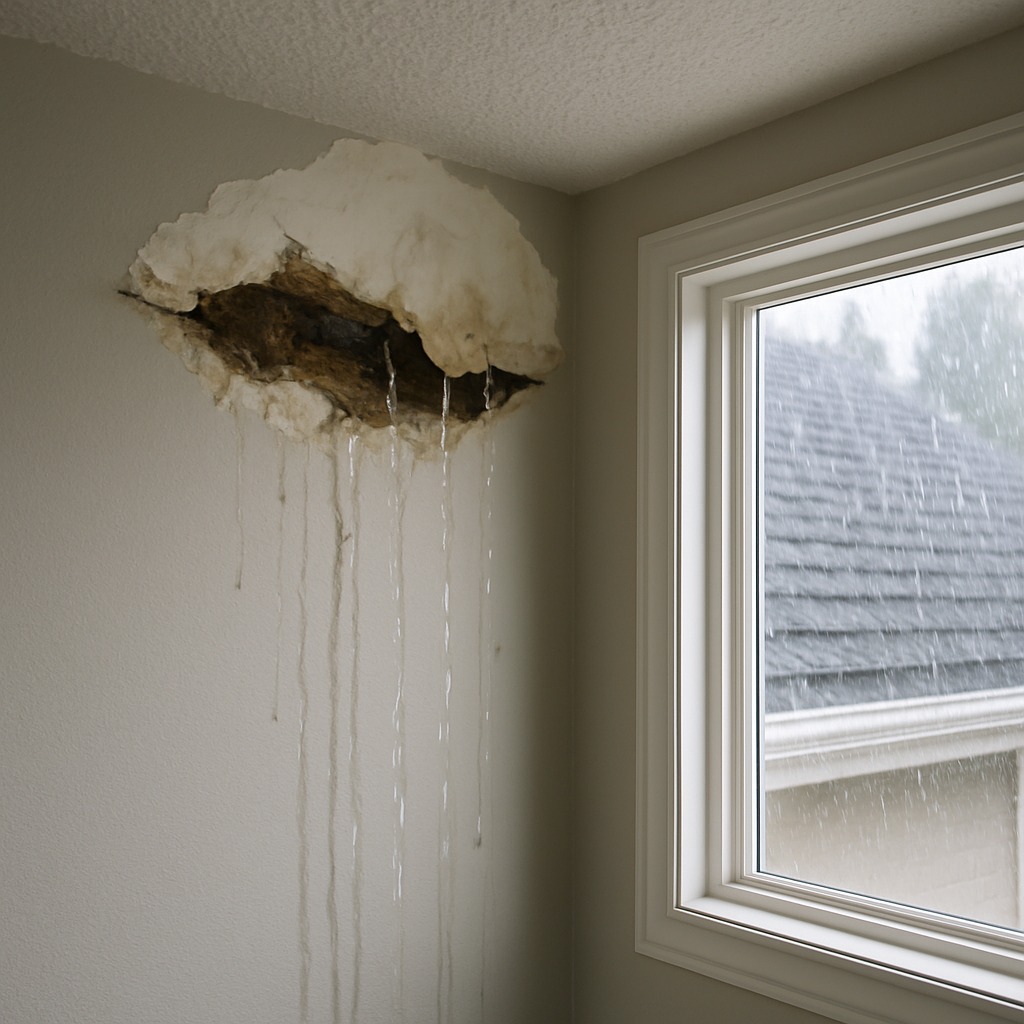
A roof leak during heavy rain is one of the most stressful situations a homeowner can face, and unfortunately, it's also one of the most common. When rain is hammering down and water starts appearing inside your home, every minute counts. What you're dealing with is a breach somewhere in your roofing system — and that breach is allowing water to travel from the exterior of your home into your living space, often traveling along rafters, insulation, and drywall before it shows up as a drip or stain where you finally notice it. Homeowners typically notice a roof leak first as water dripping from the ceiling, a spreading wet stain on drywall or plaster, bubbling or peeling paint overhead, or soggy insulation visible in the attic. Sometimes you'll hear a slow drip before you ever see visible damage. These are your early warning signals, and they deserve immediate attention. What makes roof leaks particularly tricky is that water rarely enters where it appears. A stain in the center of your bedroom ceiling might trace back to a failed flashing joint near a chimney or a cracked vent boot on the opposite side of the roof. Rain-driven leaks are especially deceptive because wind pushes water upward and sideways under shingles, through gaps that wouldn't normally leak in lighter rain. Ignoring a roof leak — even a small one — invites serious consequences. Persistent moisture leads to mold growth within 24 to 48 hours, structural rot in roof decking and rafters, compromised insulation that drives up energy costs, and potential ceiling collapse in severe cases. Electrical wiring in the attic also becomes a hazard when wet. The pattern of when the leak appears matters too. Does it only leak in hard, wind-driven rain? After hours of steady rain? In specific corners only? These clues help a licensed roofer pinpoint the source quickly and accurately.
Roof leaks present several overlapping safety hazards that homeowners must take seriously. Never attempt to access your roof during active rain, immediately after rain, or during any storm — wet roofing surfaces are extremely slippery and account for a significant number of serious fall injuries every year. Even experienced roofers wait for dry conditions before making repairs. Water and electricity are a life-threatening combination. If a leak is occurring near ceiling light fixtures, recessed lights, ceiling fans, or anywhere close to your electrical panel, treat the situation as an electrical emergency. Do not touch wet fixtures or switches. Shut off the circuit breaker for the affected area before any cleanup occurs. Water-soaked ceilings can collapse without much warning. If you see significant bulging, cracking plaster, or a ceiling that appears heavily saturated, evacuate everyone from that room immediately. Don't stand under it to inspect it. Standing water on floors creates slip hazards — use non-slip footwear when moving through affected areas and place warning markers if others are in the home. Finally, mold can begin developing in wet materials within 24 to 48 hours. Anyone with respiratory conditions should minimize time in areas with water-damaged drywall or wet insulation until professional remediation is complete.
The most common cause of a roof leak during heavy rain is failed or deteriorated flashing — the thin metal strips that seal the joints between your roof and vertical surfaces like chimneys, skylights, dormers, and vent pipes. Flashing is the most vulnerable part of any roofing system because it relies on sealants and precise installation that degrade over time. Beyond flashing, missing or cracked shingles, lifted shingle edges along roof valleys, deteriorated pipe boot seals, and clogged gutters that cause water to back up under eaves are all frequent culprits. Wind-driven rain is particularly revealing because it forces water upward and laterally into gaps that wouldn't leak under normal rainfall — so if you only notice a leak during storms with strong gusts, look closely at roof edge details and ridge cap integrity.
What the visible damage inside your home tells you about hidden damage is almost always worse than what meets the eye. A single ceiling stain that appears minor often represents insulation that has been absorbing moisture for weeks or months, losing its R-value and potentially harboring mold. Water stains on rafters or roof decking indicate that wood has been repeatedly wetted and dried, a cycle that accelerates rot and weakens structural integrity. When water reaches finished drywall ceilings, it has typically already passed through insulation, vapor barriers, and framing — all of which may need to be replaced. A small active drip can mask a much larger saturated zone spreading horizontally through your ceiling cavity. This is why professional diagnosis matters: what's visible to you is rarely the full scope of the problem, and repairs made without a thorough inspection often miss the true source entirely.
Before anyone climbs a ladder or touches a tool, there are several important observations you can make safely from inside your home. These checks help you gather critical information for a licensed roofer and give you a clearer picture of how serious the situation is. Do not attempt to access your roof during active rain or storm conditions — the information below can be gathered entirely from ground level and interior spaces.
When a roof leak is actively occurring, your immediate goal is damage control — protecting your belongings, limiting water spread, and documenting what's happening for the roofing professional you'll be calling. These are containment steps only. Do not attempt to repair the roof itself, especially during or immediately after rain when surfaces are wet and dangerously slippery. Your safety matters more than stopping a drip.
Place containers under active drips right now, then photograph all visible damage before calling a licensed roofer for an emergency inspection.
You should call a licensed roofer as soon as you identify an active roof leak — this is not a repair situation where watching and waiting is a reasonable strategy. Any time water is entering your home through the roof, a professional assessment is necessary. This is especially true when the leak is coming from near a chimney, skylight, dormer, or plumbing vent, as these flashing-dependent areas require specialized knowledge and materials to repair correctly. If you notice multiple stains in different areas of your ceiling, that suggests either widespread shingle failure or significant decking damage that only a full roof inspection can diagnose. Homeowners who recently had roofing work done and are experiencing new leaks should also call immediately, as the leak may be related to improper installation and could be covered under a workmanship warranty.
Certain signs indicate your situation is more urgent and requires same-day or emergency roofing service. If water is dripping near any electrical fixtures, panels, or wiring, leave the area and shut off electricity to that zone at your breaker box before calling — this is a potential fire and electrocution hazard. A ceiling that is visibly sagging, cracking, or threatening to collapse requires immediate evacuation of the area and an emergency call. If your attic insulation is fully saturated, mold growth is already visible, or the leak has been ongoing for more than a day or two, you face compounding structural and health risks that escalate the longer a repair is delayed. Heavy storm damage — from fallen branches, hail, or high winds — also warrants emergency roofing response rather than a routine appointment.
You should call a licensed roofer as soon as you identify an active roof leak — this is not a repair situation where watching and waiting is a reasonable strategy. Any time water is entering your home through the roof, a professional assessment is necessary. This is especially true when the leak is coming from near a chimney, skylight, dormer, or plumbing vent, as these flashing-dependent areas require specialized knowledge and materials to repair correctly. If you notice multiple stains in different areas of your ceiling, that suggests either widespread shingle failure or significant decking damage that only a full roof inspection can diagnose. Homeowners who recently had roofing work done and are experiencing new leaks should also call immediately, as the leak may be related to improper installation and could be covered under a workmanship warranty.
Certain signs indicate your situation is more urgent and requires same-day or emergency roofing service. If water is dripping near any electrical fixtures, panels, or wiring, leave the area and shut off electricity to that zone at your breaker box before calling — this is a potential fire and electrocution hazard. A ceiling that is visibly sagging, cracking, or threatening to collapse requires immediate evacuation of the area and an emergency call. If your attic insulation is fully saturated, mold growth is already visible, or the leak has been ongoing for more than a day or two, you face compounding structural and health risks that escalate the longer a repair is delayed. Heavy storm damage — from fallen branches, hail, or high winds — also warrants emergency roofing response rather than a routine appointment.
You should call a licensed roofer as soon as you identify an active roof leak — this is not a repair situation where watching and waiting is a reasonable strategy. Any time water is entering your home through the roof, a professional assessment is necessary. This is especially true when the leak is coming from near a chimney, skylight, dormer, or plumbing vent, as these flashing-dependent areas require specialized knowledge and materials to repair correctly. If you notice multiple stains in different areas of your ceiling, that suggests either widespread shingle failure or significant decking damage that only a full roof inspection can diagnose. Homeowners who recently had roofing work done and are experiencing new leaks should also call immediately, as the leak may be related to improper installation and could be covered under a workmanship warranty.
Certain signs indicate your situation is more urgent and requires same-day or emergency roofing service. If water is dripping near any electrical fixtures, panels, or wiring, leave the area and shut off electricity to that zone at your breaker box before calling — this is a potential fire and electrocution hazard. A ceiling that is visibly sagging, cracking, or threatening to collapse requires immediate evacuation of the area and an emergency call. If your attic insulation is fully saturated, mold growth is already visible, or the leak has been ongoing for more than a day or two, you face compounding structural and health risks that escalate the longer a repair is delayed. Heavy storm damage — from fallen branches, hail, or high winds — also warrants emergency roofing response rather than a routine appointment.