
ISSUE GUIDE
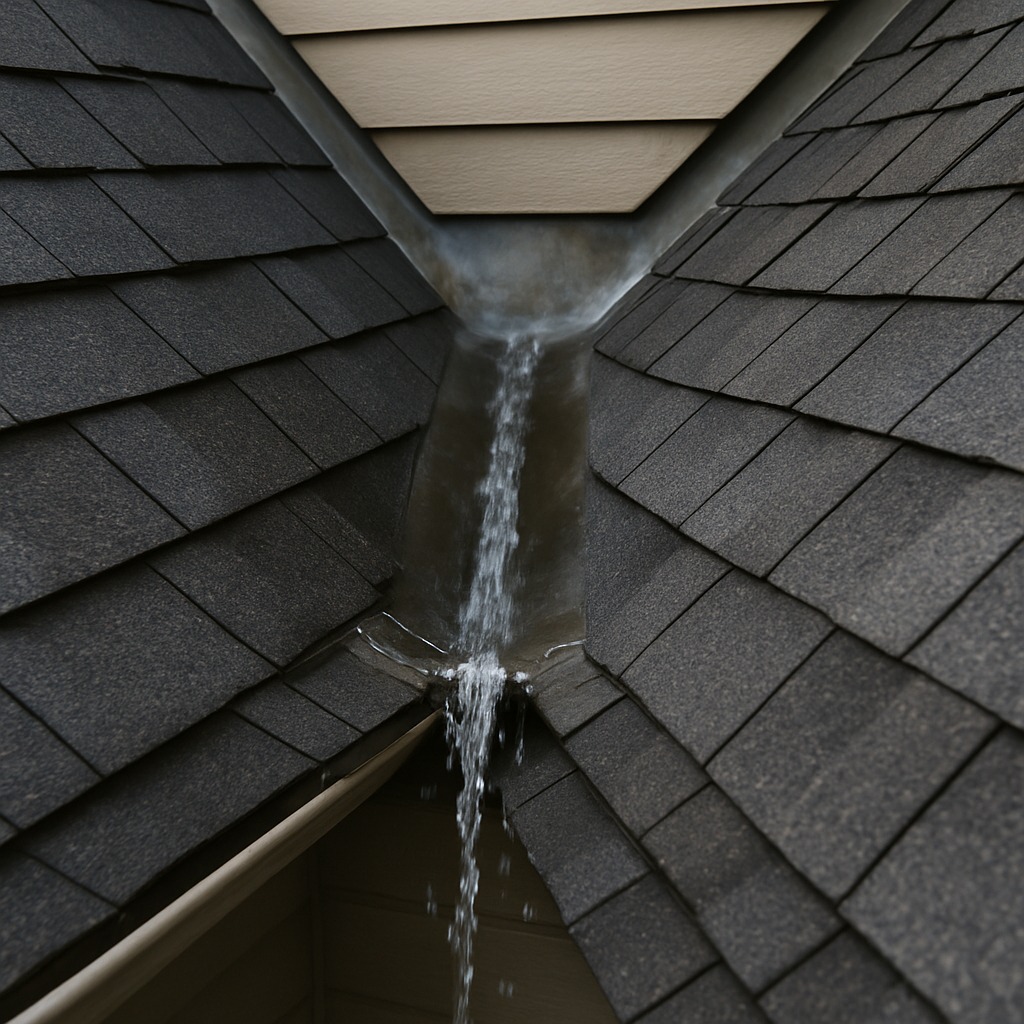
A roof valley leak is one of the most common — and misunderstood — roofing problems homeowners face. The valley of a roof is the V-shaped channel formed where two roof slopes meet, and it serves as a critical drainage highway that funnels enormous volumes of rainwater off your home. When this area fails, water doesn't just drip — it infiltrates steadily, often for months before you notice the damage inside. Homeowners typically notice a roof valley leak through water stains on interior ceilings, usually in an upstairs room or hallway directly below the valley line. The stains often appear as brown, yellowish rings that grow larger over time. You might also notice wet insulation in the attic, soft or spongy drywall, or a musty odor that develops as trapped moisture breeds mold. In winter climates, ice dams frequently form in valleys and force water under shingles, making the problem seasonal but no less serious. What makes valley leaks particularly tricky is that the entry point of the water and the visible stain inside your home are rarely in the same spot. Water travels along rafters, sheathing, and insulation before it ever drips onto your ceiling, which means the actual source of the breach could be several feet from where damage appears. This delay in detection is exactly why valley leaks cause such extensive hidden damage — rotting roof decking, saturated insulation, compromised rafters, and active mold growth are all common findings once a professional opens up the area. The causes range from deteriorated or improperly installed metal flashing, cracked or missing sealant, worn shingles along the valley edge, debris buildup creating water dams, or simply age-related breakdown of materials. Regardless of cause, a leaking roof valley is not a wait-and-see situation. Even a slow, minor leak can cause thousands of dollars in structural damage within a single rainy season if left unaddressed.
Roof valley leaks present several serious safety hazards that homeowners must understand before taking any action. First and most critically — do not attempt to walk on or access your roof under any circumstances unless you are a trained roofing professional with proper fall protection equipment. Roof valleys are among the most slippery and structurally uneven areas of any roof, and falls from rooftops are a leading cause of serious injury and fatality in home repair accidents. This warning applies even to single-story homes. If your ceiling is visibly sagging or bulging from accumulated water, do not stand directly beneath it. The weight of trapped water can cause sudden collapse. Puncture the lowest point carefully with a long-handled tool from a safe angle to drain it in a controlled manner. Inside the attic, be aware that wet insulation and wet decking may conceal unstable or rotted structural members — step only on confirmed solid joists if you must enter. Always bring a flashlight and never work alone in an attic space. If mold is visibly present in the attic or around water-damaged areas, wear an N95 or higher-rated respirator mask and disposable gloves before entering. Prolonged mold exposure can cause serious respiratory issues. Do not use fans or HVAC systems to dry out a mold-affected area, as this disperses spores throughout your home.
The most common cause of a leaking roof valley is deteriorated or improperly installed metal flashing. The valley flashing — typically a long strip of galvanized steel, aluminum, or lead — is the primary water barrier in this high-flow zone, and it is exposed to more concentrated water volume than virtually any other part of the roof. Over time, the sealant at flashing edges dries out and cracks, fasteners loosen and allow the metal to shift, or corrosion creates small pinholes that are nearly invisible from the ground but allow constant seepage. In many cases, especially on older homes, the flashing was never installed correctly to begin with — underlapping instead of overlapping, relying solely on caulk rather than proper mechanical fastening, or using materials incompatible with the roofing system. Even new construction can have valley failures if a rushed installation crew cut corners on overlap length or sealant application.
Before calling a professional or climbing on your roof, there are several safe observations you can make from inside your home and from the ground that will help you assess the situation and communicate clearly with a contractor. These checks require no tools, no ladders, and no roof access — just careful observation.
If you have confirmed or strongly suspect a roof valley leak, there are immediate damage-control steps you can take to limit water intrusion and protect your home's interior while you arrange for professional repair. These steps are about containment and documentation — not permanent fixes. Do not attempt to walk on or repair the roof yourself.
Right now, go to your attic with a flashlight and check for wet insulation, dark staining on wood, or dripping near the valley line.
You should contact a licensed roofing professional as soon as you identify or suspect a roof valley leak — this is not a repair category where waiting is safe or cost-effective. Call a pro immediately if you notice active water dripping into your living space during or after rain, if ceiling stains are large or growing rapidly, if your attic shows signs of mold or extensive moisture damage, or if you can see from ground level that flashing is visibly separated, bent, or missing. Similarly, if your home is older and the roof has not been inspected in the past five years, a valley leak is a strong signal that the entire valley system — flashing, underlayment, and shingles — may need replacement rather than spot repair. A qualified roofer can safely access the valley, identify the true source of the breach, and provide a lasting solution that protects your home's structural integrity.
Treat this as a higher-urgency situation requiring same-day or next-day contact if water is actively entering your home during an ongoing rain event, if you notice the ceiling bulging or sagging under collected water weight — which can collapse and cause injury — or if you detect a strong mold smell in your attic or living spaces. Sagging drywall holding water should be carefully punctured at the lowest point with a screwdriver to release pooled water in a controlled way before it collapses on its own. If storm damage is involved — high winds, fallen branches, or hail — call both your insurance company and a roofer simultaneously, as emergency tarping may be covered and can prevent thousands in additional damage while permanent repairs are scheduled.
You should contact a licensed roofing professional as soon as you identify or suspect a roof valley leak — this is not a repair category where waiting is safe or cost-effective. Call a pro immediately if you notice active water dripping into your living space during or after rain, if ceiling stains are large or growing rapidly, if your attic shows signs of mold or extensive moisture damage, or if you can see from ground level that flashing is visibly separated, bent, or missing. Similarly, if your home is older and the roof has not been inspected in the past five years, a valley leak is a strong signal that the entire valley system — flashing, underlayment, and shingles — may need replacement rather than spot repair. A qualified roofer can safely access the valley, identify the true source of the breach, and provide a lasting solution that protects your home's structural integrity.
Treat this as a higher-urgency situation requiring same-day or next-day contact if water is actively entering your home during an ongoing rain event, if you notice the ceiling bulging or sagging under collected water weight — which can collapse and cause injury — or if you detect a strong mold smell in your attic or living spaces. Sagging drywall holding water should be carefully punctured at the lowest point with a screwdriver to release pooled water in a controlled way before it collapses on its own. If storm damage is involved — high winds, fallen branches, or hail — call both your insurance company and a roofer simultaneously, as emergency tarping may be covered and can prevent thousands in additional damage while permanent repairs are scheduled.
You should contact a licensed roofing professional as soon as you identify or suspect a roof valley leak — this is not a repair category where waiting is safe or cost-effective. Call a pro immediately if you notice active water dripping into your living space during or after rain, if ceiling stains are large or growing rapidly, if your attic shows signs of mold or extensive moisture damage, or if you can see from ground level that flashing is visibly separated, bent, or missing. Similarly, if your home is older and the roof has not been inspected in the past five years, a valley leak is a strong signal that the entire valley system — flashing, underlayment, and shingles — may need replacement rather than spot repair. A qualified roofer can safely access the valley, identify the true source of the breach, and provide a lasting solution that protects your home's structural integrity.
Treat this as a higher-urgency situation requiring same-day or next-day contact if water is actively entering your home during an ongoing rain event, if you notice the ceiling bulging or sagging under collected water weight — which can collapse and cause injury — or if you detect a strong mold smell in your attic or living spaces. Sagging drywall holding water should be carefully punctured at the lowest point with a screwdriver to release pooled water in a controlled way before it collapses on its own. If storm damage is involved — high winds, fallen branches, or hail — call both your insurance company and a roofer simultaneously, as emergency tarping may be covered and can prevent thousands in additional damage while permanent repairs are scheduled.