
ISSUE GUIDE
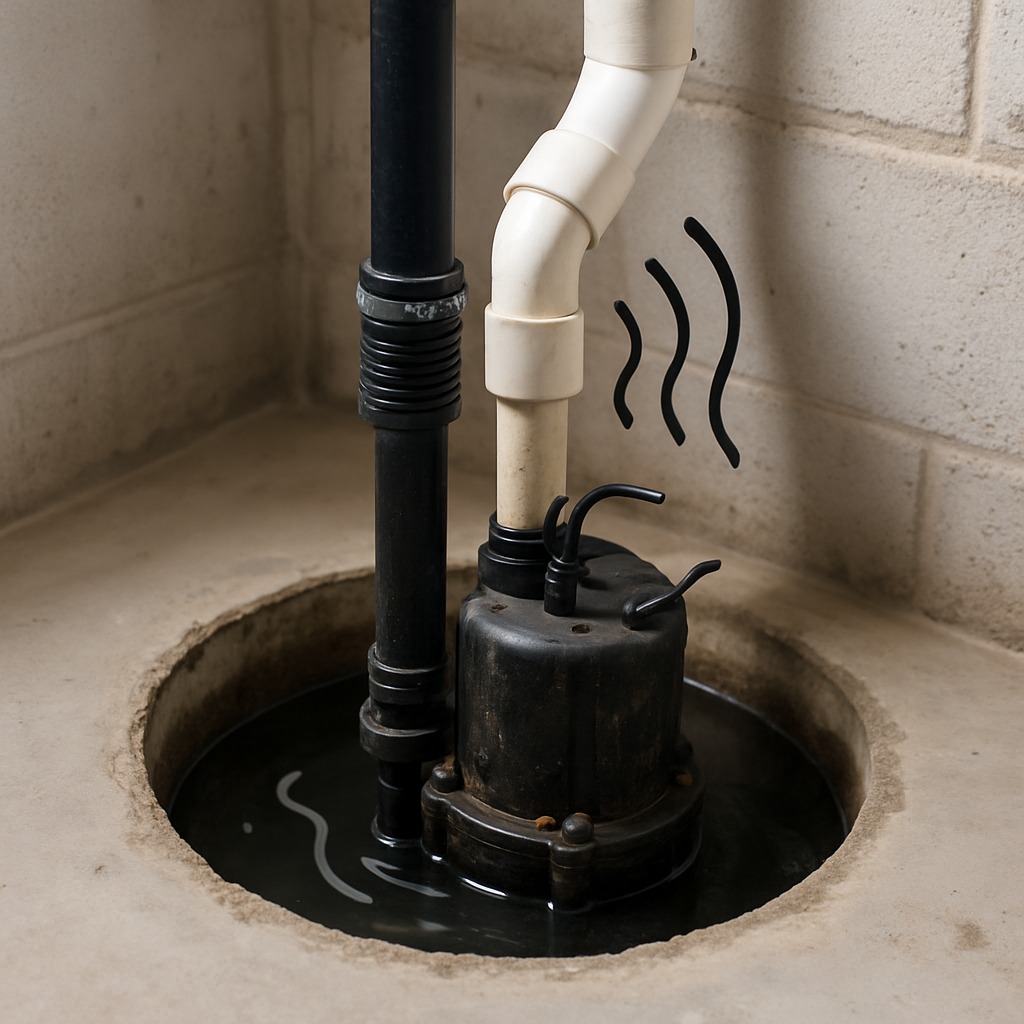
A noisy sump pump is one of those problems that starts as a minor annoyance and can quickly become a serious headache if ignored. Your sump pump sits in the lowest point of your basement or crawl space, quietly working to keep groundwater from flooding your home. When it starts making unusual sounds — grinding, rattling, humming, gurgling, or banging — it's telling you something is wrong. The question is how serious. Most homeowners first notice the noise during or after heavy rain, when the pump is working hardest. You might hear a high-pitched whine, a rhythmic clanking, or a loud sucking slurp as the pump cycles. Some noises are minor and fixable with basic maintenance. Others signal a pump that's about to fail entirely — and a failing sump pump during a rainstorm can mean thousands of dollars in water damage to your basement, foundation, and belongings. The most common culprits behind a noisy sump pump include a worn or damaged impeller (the spinning component that moves water), debris caught in the intake screen, a loose or vibrating discharge pipe, air bubbles trapped in the system, a dry or seized bearing, or a check valve that's rattling with each pump cycle. Age matters too — most sump pumps last 7 to 10 years, and an aging unit will often announce its decline loudly before it quits altogether. Pay close attention to when the noise occurs. Does it happen only when the pump runs? Does it start immediately or develop mid-cycle? Is water still being discharged properly? These clue patterns help narrow down the cause. Don't wait to investigate — a failed sump pump during wet season is one of the most preventable and costly home disasters homeowners face.
Working around a sump pump involves water and electricity in close proximity — one of the most dangerous combinations in any home repair scenario. Never reach into the sump pit, adjust the float switch, or handle the pump while it is plugged in. Always unplug the pump from the wall outlet before any hands-on inspection, and confirm power is off before anyone places a hand near the unit. If the outlet is hard to reach or the pump is hardwired, turn off the dedicated circuit breaker and use a non-contact voltage tester to confirm no power is present before proceeding. Be aware that sump pits can harbor bacteria, mold, and stagnant water — wear waterproof gloves if you must handle any components and wash hands thoroughly afterward. Never lean over an open pit with the pump running. If you smell burning plastic, rubber, or an electrical odor near the pump, do not attempt to investigate yourself — disconnect power from the breaker immediately and call a licensed plumber. During active flooding or heavy rain, be especially cautious about standing water on the basement floor and any electrical outlets or panels nearby. When in doubt, stay out of a flooded basement and call emergency services.
The most common cause of a noisy sump pump is a worn or damaged impeller — the spinning fan-like component inside the pump housing that draws water in and forces it up through the discharge pipe. When the impeller becomes cracked, clogged with debris, or worn from years of use, it creates a grinding or rattling sound during operation and loses efficiency at moving water. A close second is a failing motor bearing, which produces a high-pitched whine or squeal that gets worse over time. In both cases, the root issue is mechanical wear that accumulates over years of operation. Debris in the pit — gravel, dirt, sand, or small objects — can also be drawn into the impeller and cause sudden loud rattling or grinding that was not present before. A banging or thudding noise is most often traced to a faulty check valve on the discharge line that allows water to fall back into the pit between cycles, creating a water hammer effect.
Visible or audible problems with a sump pump rarely exist in isolation. A grinding impeller often means debris has been circulating through the system long enough to also score the pump housing interior. A failing motor bearing typically signals overall motor fatigue, meaning the entire unit is approaching end of life rather than needing a single component swap. A check valve that is loud and failing may be causing repeated pressure spikes that have stressed pipe fittings and joints along the discharge line — sections you cannot easily see inside the wall. This is why professional evaluation matters: what sounds like a simple rattle on the surface is often the visible tip of broader mechanical decline that warrants a full pump assessment and, in many cases, complete replacement rather than a patch repair.
Before calling a plumber, there are several safe visual and auditory observations you can make without touching the pump or using any tools. These checks help you describe the problem accurately and determine how urgently you need professional help.
While a full diagnosis and repair should be handled by a licensed plumber, there are several damage-control and preparation steps you can safely take to protect your home and give any professional a head start when they arrive.
Record a short video of your sump pump running right now and note exactly what type of noise you hear and when it occurs.
You should call a licensed plumber any time your sump pump is making an unfamiliar noise that persists across multiple cycles, especially if it is accompanied by reduced water output, visible water on the basement floor, or a burning or electrical smell. Grinding and screeching sounds almost always indicate internal mechanical failure — a worn impeller, damaged bearings, or a seized motor — that cannot be repaired by a homeowner and will lead to total pump failure if ignored. Similarly, persistent loud banging or water hammer in the discharge line should be evaluated by a professional who can properly install or replace a check valve. If your pump is short cycling (turning on and off rapidly), a plumber needs to assess the float switch, pit size, and pump capacity. Any pump over 10 years old that begins making noise should be professionally inspected and likely replaced before it fails at the worst possible moment.
There are situations where you should call a plumber urgently rather than waiting for a scheduled appointment. If your pump has stopped running entirely and water is rising in the pit, that is an emergency — call immediately, especially if rain is forecasted. A burning smell coming from the sump pit indicates a motor overheating or an electrical fault and requires immediate attention and pump disconnection. If you notice the pump running continuously without shutting off, it may be overwhelmed or the float switch has failed, both of which demand same-day professional evaluation. Water already visible on your basement floor means the pump has already failed to contain the situation, and every hour of delay increases structural damage risk.
You should call a licensed plumber any time your sump pump is making an unfamiliar noise that persists across multiple cycles, especially if it is accompanied by reduced water output, visible water on the basement floor, or a burning or electrical smell. Grinding and screeching sounds almost always indicate internal mechanical failure — a worn impeller, damaged bearings, or a seized motor — that cannot be repaired by a homeowner and will lead to total pump failure if ignored. Similarly, persistent loud banging or water hammer in the discharge line should be evaluated by a professional who can properly install or replace a check valve. If your pump is short cycling (turning on and off rapidly), a plumber needs to assess the float switch, pit size, and pump capacity. Any pump over 10 years old that begins making noise should be professionally inspected and likely replaced before it fails at the worst possible moment.
There are situations where you should call a plumber urgently rather than waiting for a scheduled appointment. If your pump has stopped running entirely and water is rising in the pit, that is an emergency — call immediately, especially if rain is forecasted. A burning smell coming from the sump pit indicates a motor overheating or an electrical fault and requires immediate attention and pump disconnection. If you notice the pump running continuously without shutting off, it may be overwhelmed or the float switch has failed, both of which demand same-day professional evaluation. Water already visible on your basement floor means the pump has already failed to contain the situation, and every hour of delay increases structural damage risk.
You should call a licensed plumber any time your sump pump is making an unfamiliar noise that persists across multiple cycles, especially if it is accompanied by reduced water output, visible water on the basement floor, or a burning or electrical smell. Grinding and screeching sounds almost always indicate internal mechanical failure — a worn impeller, damaged bearings, or a seized motor — that cannot be repaired by a homeowner and will lead to total pump failure if ignored. Similarly, persistent loud banging or water hammer in the discharge line should be evaluated by a professional who can properly install or replace a check valve. If your pump is short cycling (turning on and off rapidly), a plumber needs to assess the float switch, pit size, and pump capacity. Any pump over 10 years old that begins making noise should be professionally inspected and likely replaced before it fails at the worst possible moment.
There are situations where you should call a plumber urgently rather than waiting for a scheduled appointment. If your pump has stopped running entirely and water is rising in the pit, that is an emergency — call immediately, especially if rain is forecasted. A burning smell coming from the sump pit indicates a motor overheating or an electrical fault and requires immediate attention and pump disconnection. If you notice the pump running continuously without shutting off, it may be overwhelmed or the float switch has failed, both of which demand same-day professional evaluation. Water already visible on your basement floor means the pump has already failed to contain the situation, and every hour of delay increases structural damage risk.