
ISSUE GUIDE
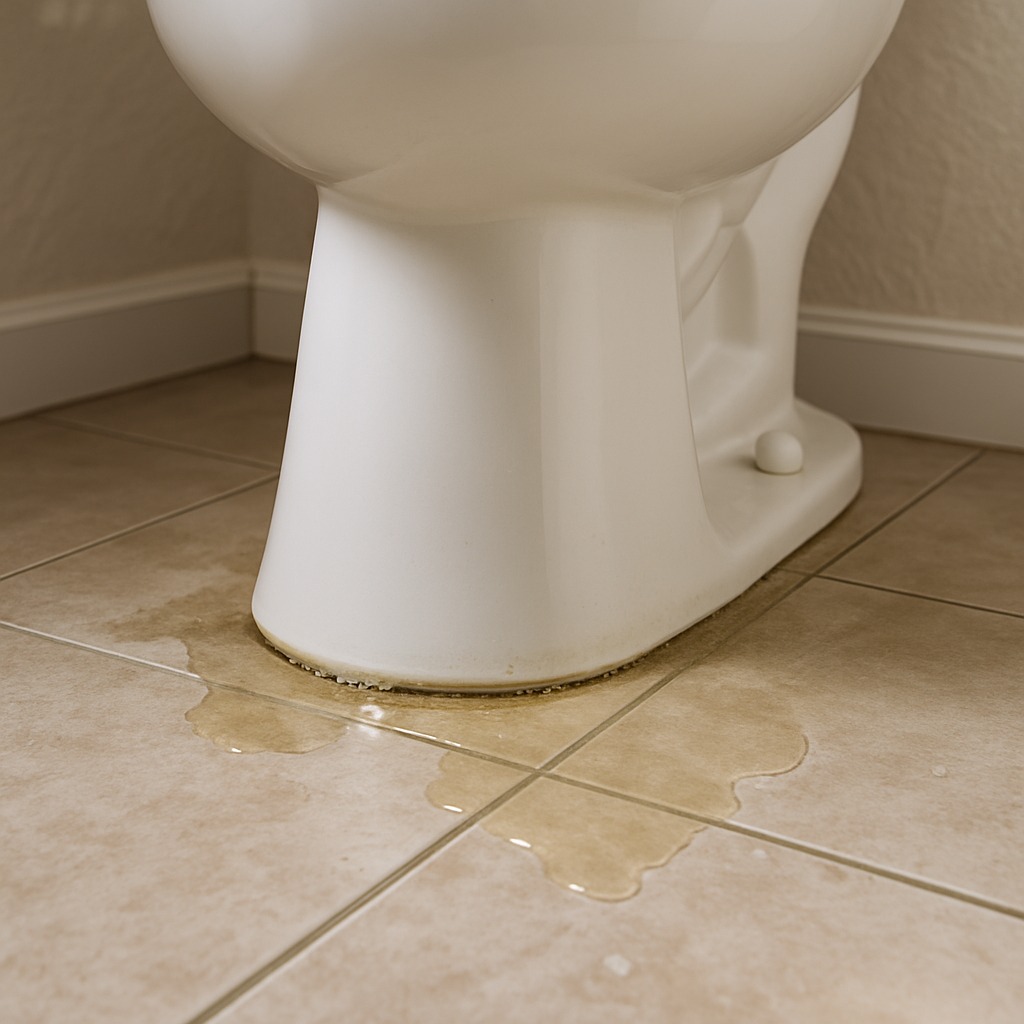
A toilet leaking at the base is one of those plumbing problems that sneaks up on homeowners. You might notice a damp ring of water around the bottom of the toilet after flushing, a soft or discolored floor around the fixture, or a faint sewage smell that doesn't go away no matter how much you clean. These are classic clues that something has failed at the point where your toilet meets the drain pipe below. In most cases, the culprit is a worn-out wax ring — a soft, donut-shaped seal that sits between the toilet base and the floor flange. Every time you flush, water and waste pass through this seal. Over time, the wax compresses, dries out, or shifts, especially if the toilet rocks or was never properly secured. When that seal fails, wastewater escapes at the base instead of flowing cleanly into the drain. Why does this matter beyond a wet floor? Because the water leaking out isn't clean. It contains sewage and bacteria. Left unaddressed, it soaks into subfloor materials — often plywood or oriented strand board — causing rot, structural weakening, and mold growth that spreads invisibly beneath your tile or vinyl flooring. What starts as a $150 wax ring replacement can quietly become a $1,500 subfloor repair if ignored for months. Homeowners often make the mistake of mopping up the puddle and assuming the problem resolved itself. It won't. The leak typically only appears during or just after flushing, which means the floor may look dry between uses. Don't let dry-looking floors fool you — damage is still accumulating underneath. If you've spotted water pooling around your toilet base, a spongy floor near the fixture, staining on a ceiling below a second-floor bathroom, or an unexplained sewage odor, take the signs seriously. Early action is always cheaper than delayed repair.
The water leaking from a toilet base is not clean water — it contains sewage, bacteria, and potential pathogens. Avoid direct contact with pooled water around the toilet base without wearing waterproof gloves. Do not allow children or pets to play near or on the affected floor area. If you need to clean up standing water, use disposable paper towels or old rags you can discard, and wash your hands thoroughly afterward with soap and water. If you detect a strong sulfur or rotten egg odor beyond a mild sewage smell, this could indicate a more serious drain venting issue — ventilate the bathroom and leave the door open rather than working in an enclosed space. Never attempt to remove or reset the toilet without first turning off the water supply and flushing to empty the tank and bowl as much as possible. The toilet itself is heavy — typically 60 to 120 pounds — and awkward to lift. Attempting to move it alone risks both injury and cracking the porcelain. If the subfloor beneath the toilet feels soft or unstable, avoid putting weight on that area until a professional has confirmed it is structurally sound. A compromised subfloor can fail unexpectedly under load.
In the vast majority of toilet base leak cases, the underlying cause is a failed wax ring. This thick, malleable ring creates a watertight seal between the bottom of the toilet and the floor flange — the pipe fitting embedded in your floor that connects to the drain system. Wax rings have a long service life, but they can fail prematurely if the toilet is installed on an uneven surface, if the toilet rocks due to loose closet bolts, or simply after many years of use and thermal cycling. When the seal breaks down, wastewater bypasses the drain opening and seeps outward along the path of least resistance, pooling at the toilet base during and after each flush. A secondary but less common cause is a cracked toilet base — a hairline fracture in the porcelain at the bottom of the fixture, which releases water when the bowl fills. This is less common but not rare, particularly in older toilets.
Before calling a plumber or attempting any repair, there are several safe visual observations you can make right now without touching any pipes or tools. These checks help you understand the severity of the problem and give a professional the information they need to diagnose quickly. Walk through each of these carefully and note what you find.
While a leaking toilet base ultimately requires a proper repair — typically replacing the wax ring and resetting the toilet — there are smart containment and preparation steps you can take right now to limit damage and get ready for professional service. Do not attempt to remove or reset the toilet yourself unless you have plumbing experience, as improper reinstallation can make the leak worse.
Turn off your toilet's water supply valve right now, then stop flushing until a licensed plumber has inspected the wax ring seal.
You should call a licensed plumber as soon as you confirm water is leaking from the base of your toilet. While replacing a wax ring is sometimes categorized as an intermediate DIY task, it requires removing the entire toilet, cleaning the old wax from the flange, inspecting the floor flange for damage or rust, and reinstalling the toilet with proper torque on the closet bolts — all without cracking the porcelain base or misaligning the drain. An improperly set wax ring will fail again quickly. If your floor already feels soft or spongy, a plumber may also need to coordinate with a contractor to assess subfloor damage before the toilet is reinstalled. Any signs of water staining on a ceiling below the bathroom indicate the leak has been ongoing long enough to warrant professional evaluation of both the plumbing and the structural materials affected.
Treat this as higher urgency if you notice the leak is worsening with each flush, if the sewage odor is strong or spreading to other rooms, or if the floor around the toilet feels noticeably unstable underfoot. A floor flange that has corroded, cracked, or dropped below the finished floor level requires more than a simple wax ring swap — it may need a flange repair kit, an extension, or in serious cases, access to the drain pipe below. Similarly, if the toilet has been leaking undetected for weeks or months, mold remediation may be necessary before repairs are complete. In that scenario, delaying even a few more days meaningfully increases your total repair cost.
You should call a licensed plumber as soon as you confirm water is leaking from the base of your toilet. While replacing a wax ring is sometimes categorized as an intermediate DIY task, it requires removing the entire toilet, cleaning the old wax from the flange, inspecting the floor flange for damage or rust, and reinstalling the toilet with proper torque on the closet bolts — all without cracking the porcelain base or misaligning the drain. An improperly set wax ring will fail again quickly. If your floor already feels soft or spongy, a plumber may also need to coordinate with a contractor to assess subfloor damage before the toilet is reinstalled. Any signs of water staining on a ceiling below the bathroom indicate the leak has been ongoing long enough to warrant professional evaluation of both the plumbing and the structural materials affected.
Treat this as higher urgency if you notice the leak is worsening with each flush, if the sewage odor is strong or spreading to other rooms, or if the floor around the toilet feels noticeably unstable underfoot. A floor flange that has corroded, cracked, or dropped below the finished floor level requires more than a simple wax ring swap — it may need a flange repair kit, an extension, or in serious cases, access to the drain pipe below. Similarly, if the toilet has been leaking undetected for weeks or months, mold remediation may be necessary before repairs are complete. In that scenario, delaying even a few more days meaningfully increases your total repair cost.
You should call a licensed plumber as soon as you confirm water is leaking from the base of your toilet. While replacing a wax ring is sometimes categorized as an intermediate DIY task, it requires removing the entire toilet, cleaning the old wax from the flange, inspecting the floor flange for damage or rust, and reinstalling the toilet with proper torque on the closet bolts — all without cracking the porcelain base or misaligning the drain. An improperly set wax ring will fail again quickly. If your floor already feels soft or spongy, a plumber may also need to coordinate with a contractor to assess subfloor damage before the toilet is reinstalled. Any signs of water staining on a ceiling below the bathroom indicate the leak has been ongoing long enough to warrant professional evaluation of both the plumbing and the structural materials affected.
Treat this as higher urgency if you notice the leak is worsening with each flush, if the sewage odor is strong or spreading to other rooms, or if the floor around the toilet feels noticeably unstable underfoot. A floor flange that has corroded, cracked, or dropped below the finished floor level requires more than a simple wax ring swap — it may need a flange repair kit, an extension, or in serious cases, access to the drain pipe below. Similarly, if the toilet has been leaking undetected for weeks or months, mold remediation may be necessary before repairs are complete. In that scenario, delaying even a few more days meaningfully increases your total repair cost.