
Updated June 12, 2026 · HomeFixx Editorial Team
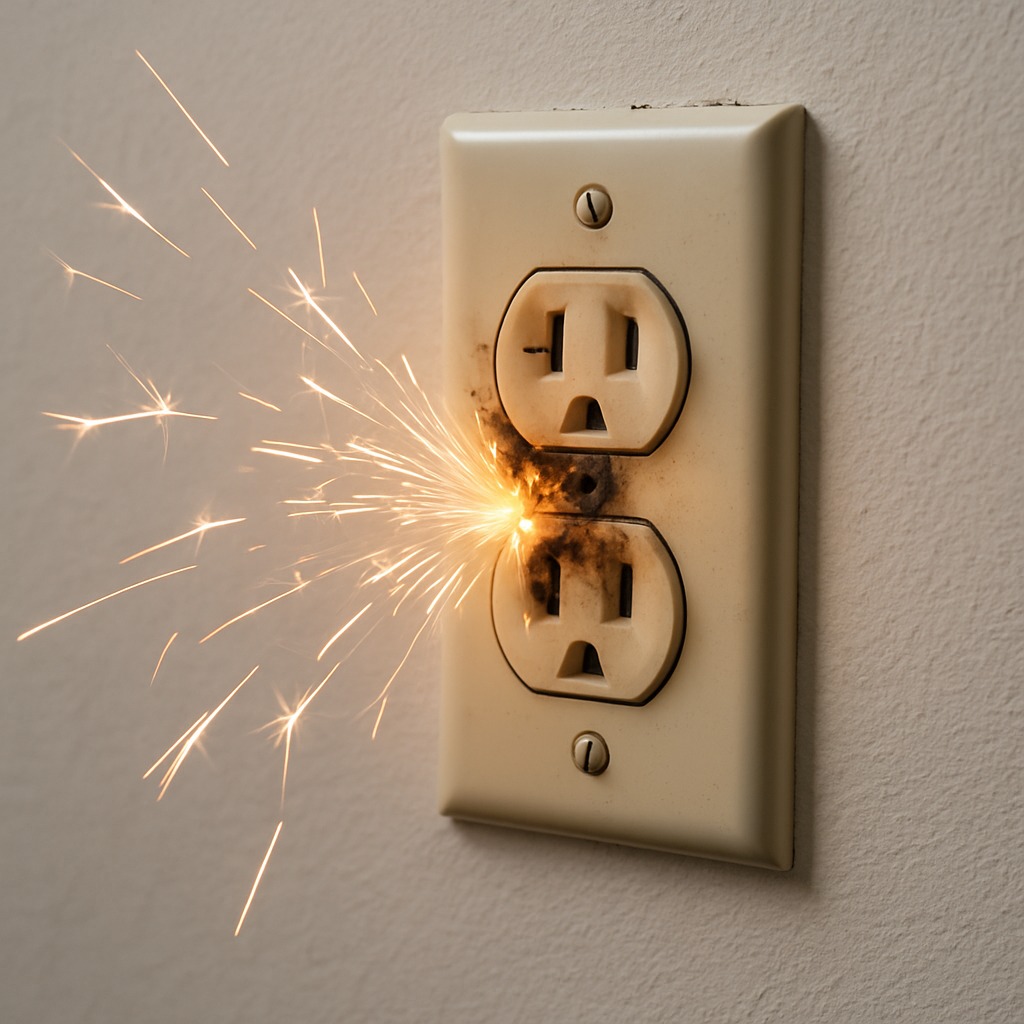
A sparking outlet can ignite wall insulation and cause a house fire within seconds — the NFPA reports electrical failures cause 46,700 home fires annually.
🔧 DIY Key Takeaways
- Replace a worn or discolored outlet yourself for $3–$8 in parts using a $12 non-contact voltage tester — always kill the breaker first and verify zero voltage at the outlet before touching any wiring
- Inspect for backstab wiring connections (push-in rather than screw-terminal) which loosen over time and cause 80% of sparking outlets — switching to screw-terminal connections costs nothing extra and dramatically reduces future arcing
- Install a tamper-resistant receptacle (TR rated, ~$4 each) in any room where you've seen sparking — it's code-required in new construction and reduces both arcing risk and accidental contact
👷 Hire a Pro Key Takeaways
- If an outlet sparks repeatedly, smells burnt, or has black scorch marks on the faceplate, call a licensed electrician immediately — a hidden arc fault inside the wall can smolder for hours before igniting, and remediation after a wall fire runs $5,000–$30,000+
- A full circuit diagnosis by a licensed electrician runs $150–$350 and can uncover overloaded circuits, aluminum-to-copper junction failures, or deteriorating Federal Pacific or Zinsco panels that insurers increasingly refuse to cover
- Whole-house AFCI (Arc-Fault Circuit Interrupter) breaker upgrades cost $40–$65 per breaker installed and are now required by NEC in most living spaces — they detect dangerous arcing that standard breakers miss and can prevent the exact conditions that cause outlet sparking
📋 In This Guide
HomeFixx guides are researched and fact-checked by licensed trade professionals. Cost data updated June 12, 2026.
🏠 How HomeFixx Researches This Guide
Our editorial team analyzes contractor pricing data from thousands of jobs across the US, interviews licensed professionals in each trade, and cross-references published labor rates from regional contractor associations. Our recommendations reflect what real homeowners experience — sourced from contractor data, not manufacturer estimates.
You're plugging in your phone charger before bed and a bright blue-white spark snaps from the outlet, leaving a faint burning smell in the air. Your pulse jumps — and it should. A sparking electrical outlet is your home's wiring sending a distress signal, and ignoring it puts your family and your property at real risk. The National Fire Protection Association attributes over 46,700 residential fires per year to electrical failures, and loose or arcing outlet connections are among the most common culprits.
The good news: many sparking outlets stem from a fixable $3–$8 receptacle swap or a loose wire connection that a confident DIYer can address in under 30 minutes. The bad news: some sparking signals hidden dangers — overloaded circuits, deteriorating aluminum wiring junctions, or failing panel components — that require a licensed electrician and can run $150 to $2,500 depending on severity. Misdiagnosing the cause isn't just expensive; it's dangerous.
This guide gives you the exact diagnostic steps a 20-year master electrician follows, real-world cost data from contractor invoices (not vague estimates), and clear thresholds for when to DIY versus when to pick up the phone. We cover everything from identifying backstab wiring to understanding AFCI breaker upgrades — so you can stop the sparking, protect your home, and avoid overpaying.
Symptoms: What You're Seeing
- Visible blue-white flash when plugging in: When you insert a plug into the outlet, you see a brief, bright blue-white arc jump between the prong and the contact slot. This flash typically lasts less than a second and is most noticeable in a dim room. A small, normal load-side spark at the moment of connection can be typical, but if the arc is large — extending more than an eighth of an inch — or persists for more than a split second, the outlet contacts are likely worn, pitted, or loose, and the receptacle needs immediate inspection.
- Audible popping or crackling sound from the outlet: You hear a sharp snap, pop, or sustained crackling noise originating from inside the outlet box when a device is plugged in or while it is running. The sound may be intermittent, occurring only when the cord is moved or the plug shifts. This noise indicates arcing across a gap — either between the plug prongs and worn receptacle contacts or between a loose wire and its terminal screw inside the box. Sustained crackling under load is a serious warning sign of an active arc fault.
- Burning or acrid plastic smell near the receptacle: You detect a sharp, chemical odor similar to melting plastic, hot insulation, or ozone near the outlet or along the wall where it is mounted. This smell means electrical insulation or the thermoplastic body of the receptacle itself is being heated beyond its rated temperature, typically above 194°F (90°C). The odor may come and go as loads cycle. Do not dismiss it; this is evidence of sustained overheating that can ignite surrounding framing within minutes under the wrong conditions.
- Scorch marks or discoloration on the outlet faceplate: The plastic faceplate or the receptacle face shows brown, yellow, or black discoloration, usually concentrated around one or both plug slots. You may also see small pits or melted areas on the plastic. These marks are the physical residue of repeated arcing events that have generated enough heat — often exceeding 1,000°F at the arc point — to char the surrounding material. If you remove the faceplate, you may find blackened wiring insulation or melted nylon on the receptacle body behind it.
- Intermittent power loss or flickering on connected devices: A lamp dims or flickers, a phone charger cycles on and off, or an appliance randomly resets while plugged into the outlet. You may notice the flickering worsens when you bump the cord or when nearby outlets are under load. This indicates a high-resistance connection inside the box — a wire that has loosened on its terminal or a backstab connection that has lost spring tension. Each flicker is a micro-arc event, and the cumulative heat buildup at that connection point increases the risk of an electrical fire over days to weeks.
What's Actually Causing This
- Worn or pitted outlet contacts: Every time you plug in and unplug a device, the brass contact wipers inside the receptacle experience micro-arcing and mechanical wear. Residential-grade outlets (typically $0.50–$2.00 units) are rated for roughly 1,000 insertion cycles. After years of daily use, the spring tension drops and the contact surface becomes pitted, creating small air gaps that sustain arcing under load. This is the single most common cause of outlet sparking — electricians estimate it accounts for 40–50% of sparking outlet service calls, especially on outlets that are 15+ years old or were builder-grade from the start.
- Loose wire connections at terminal screws or backstab ports: Over time, thermal cycling — the repeated expansion and contraction of copper wire as it heats under load and cools at rest — loosens connections. Backstab (push-in) connections are especially prone because they rely on a small spring clip rather than a screw clamp. The National Fire Protection Association (NFPA) data shows loose connections are a leading factor in residential electrical fires, contributing to an estimated 67,800 home electrical fires per year in the U.S. When a wire pulls even 1/32 of an inch away from its terminal, the resulting air gap creates a high-resistance point that arcs under load, generating temperatures that can exceed 2,000°F at the arc site.
- Circuit overload and demand exceeding outlet rating: A standard 15-amp residential outlet on 14 AWG wire is designed to deliver 1,800 watts continuously (15A × 120V). When you plug in a space heater drawing 1,500 watts plus a vacuum at 1,400 watts through a power strip on the same circuit, you exceed the circuit's rated capacity. The excess current causes terminal connections to heat, insulation to soften, and contact points to arc. Overloading accounts for roughly 20% of sparking incidents and is especially common in older homes with fewer circuits — pre-1970 homes often have only 60-amp service with 6–8 circuits total, versus the 200-amp, 30–40 circuit panels standard today.
- Damaged or deteriorated wiring insulation: In homes built before 1970, you may have cloth-wrapped wiring with rubber insulation that has dried and cracked over 50+ years. Even modern thermoplastic (NM-B) sheathing degrades when exposed to sustained heat above 140°F, rodent damage, or UV light in exposed runs. When insulation cracks or pulls back from a terminal, bare conductors can contact the metal box, the grounding conductor, or each other, producing arcing. Homes with aluminum branch-circuit wiring (installed roughly 1965–1973) face an additional risk: aluminum oxidizes at connection points, increasing resistance and creating hot spots that arc. The CPSC estimates homes with aluminum wiring are 55 times more likely to have fire-hazard conditions at outlets.
After twenty-plus years in residential electrical work, I can tell you that the number one cause of sparking outlets I see isn't a faulty outlet itself — it's backstab wiring. Builders from the 1970s through the early 2000s saved time by pushing 14-gauge wires into spring-loaded holes on the back of receptacles instead of wrapping them around screw terminals. Over years of thermal cycling (wires expand when hot, contract when cool), these connections loosen and begin arcing. The fix is simple: pull the outlet, release the backstab wires, and reconnect them firmly to the screw terminals with a proper clockwise hook. This $0 fix eliminates the root cause in roughly 80% of sparking-outlet calls I respond to, which otherwise run the homeowner $150–$250 for a service visit.
Step-by-Step Diagnosis
Work through these steps before calling a contractor. Each step tells you what to look for and what it means.
Kill power and verify the circuit is dead
🔧 Non-contact voltage testerGo to your main electrical panel and switch off the breaker that controls the sparking outlet. If your panel is not labeled, turn off the main breaker to de-energize the entire house. Return to the outlet and plug in a known-working lamp or radio — confirm it does not turn on. Then use a non-contact voltage tester (NCVT) to verify zero voltage at both slots of the receptacle. Hold the tester tip within half an inch of each slot and the faceplate screws. A properly functioning NCVT will flash and beep if voltage is present. Never rely solely on flipping a switch — mislabeled panels are common, and multi-wire branch circuits can keep one half of an outlet hot even with the wrong breaker off. Only proceed when the tester confirms dead on all points.
Remove the faceplate and inspect for damage
🔧 Flathead screwdriverUsing a flathead screwdriver, remove the single screw holding the faceplate and pull it away from the wall. Inspect the faceplate and the visible face of the receptacle for scorch marks, melting, discoloration, or cracks. Next, remove the two 6-32 mounting screws that hold the receptacle to the electrical box and gently pull the receptacle straight out of the box, letting it hang by its wires. Look at the wire connections on both sides and the back. Note whether wires are attached via screw terminals (wrapped clockwise around a screw) or backstab ports (pushed straight into a hole in the back). Check for blackened insulation, melted plastic, pitted terminal screws, or any wire that moves freely when you gently tug it. If you see charred wiring, melted receptacle body, or burned insulation inside the box, stop here and call a licensed electrician — the damage is beyond a receptacle swap.
Disconnect old receptacle and prep the wires
🔧 Wire strippersIf the receptacle passes visual inspection — meaning the wires and box are in good condition and only the receptacle itself shows wear — disconnect the wires. For screw terminals, loosen the terminal screws counterclockwise with a Phillips or flathead screwdriver until the wire loop lifts off. For backstab connections, insert a small flathead screwdriver into the release slot next to the wire and pull the wire free. Once all wires are disconnected, set the old receptacle aside. Inspect each wire end: the exposed copper should be bright and clean for at least 3/4 inch. If the copper is blackened, pitted, or nicked, use wire strippers to cut back to clean copper and strip exactly 3/4 inch of fresh insulation. Ensure you have enough wire length to work with — NEC 300.14 requires a minimum of 6 inches of free conductor measured from the point where it enters the box. If wires are too short, use approved wire pigtails and twist-on wire connectors to extend them.
Install new receptacle using screw terminals
🔧 Phillips screwdriverPurchase a spec-grade or commercial-grade receptacle rated to match your circuit — 15-amp/125V for 14 AWG wire on a 15-amp breaker, or 20-amp/125V for 12 AWG wire on a 20-amp breaker. Spec-grade units cost $3–$7 and are significantly more durable than the $0.50 builder-grade units, with heavier contact wipers and better terminal screws. Connect the hot (black) wire to the brass-colored screw on the hot side by forming a clockwise hook around the screw and tightening until the screw is snug and the wire does not move — approximately 12 inch-pounds of torque. Connect the neutral (white) wire to the silver screw on the neutral side in the same manner. Connect the bare copper or green ground wire to the green grounding screw. Do not use the backstab ports — always use the screw terminals or the screw-to-clamp plate if the receptacle has one. Tug each wire firmly to confirm a solid connection. Fold the wires neatly into the box and push the receptacle in, securing it with the 6-32 mounting screws. Reattach the faceplate.
Restore power and test the new outlet
🔧 Three-light outlet testerReturn to the panel and flip the breaker back on. At the outlet, plug in your NCVT or lamp to confirm power is restored. Then use a three-light outlet tester (available at any hardware store for $8–$15) to verify correct wiring: the tester should display two amber lights indicating 'correct' wiring. If the tester shows 'open ground,' 'open neutral,' 'hot/ground reversed,' or any other fault code, turn the breaker off immediately and recheck your connections. Once the tester reads correct, plug in a moderate-load device — a hair dryer on low (about 750 watts) is ideal — and let it run for two minutes. Place your hand on the faceplate. It should feel no warmer than the surrounding wall. If it feels warm or hot, kill the breaker and call an electrician — you may have a wiring issue deeper in the circuit that a simple receptacle swap cannot fix.
When to Stop DIY and Call a Pro
Stop all DIY work and call a licensed electrician immediately if you find any of the following: charred or melted wiring insulation inside the electrical box, a burning smell that persists after the breaker is off, scorch marks on the interior of the box itself, aluminum wiring (silver-colored conductors instead of copper), wires that are too short to make proper connections (less than 6 inches from the box), a Federal Pacific or Zinsco brand panel (known for breaker failure rates exceeding 25%), or any situation where the outlet is on a multi-wire branch circuit and you are unsure how it is wired. Also call a pro if the sparking involves a 240-volt outlet (dryer, range, or HVAC), any outlet in a bathroom, kitchen, garage, or exterior location that requires GFCI protection, or if you experience sparking at multiple outlets on the same circuit — this often indicates a failing upstream connection or a damaged cable run inside the wall. Financially, a licensed electrician charges $150–$350 to diagnose and replace a standard outlet, including the service call. If your damage involves more than a single receptacle swap — say, rewiring a run or replacing a damaged box — budget $250–$600. At any point where the repair requires opening walls, pulling permits, or working inside the panel, the liability and safety risks far outweigh the $150–$300 you would save by doing it yourself. Most home fires from electrical causes result in an average of $50,000+ in damages, making the electrician's fee a trivial investment.
What Does This Repair Cost?
Costs vary by region, home age, and severity. These are national averages — always get 3 quotes.
| Repair Type | DIY Cost | Pro Cost | Emergency Premium |
|---|---|---|---|
| Single outlet replacement (standard receptacle) | $3–$8 | $75–$175 | $150–$300 |
| Loose wire repair / screw-terminal reconnection | $0–$5 | $100–$200 | $175–$350 |
| Circuit diagnosis + AFCI breaker upgrade (per circuit) | Not recommended | $150–$350 | $250–$500 |
| Partial rewire (damaged wire run in wall) | Not recommended | $400–$2,500 | $800–$3,500 |
| Emergency after-hours service call | N/A | $150–$350 | $250–$500 |
*Emergency rates (nights/weekends/holidays) run 40–60% above standard. Get 3 quotes before approving work.
Get quotes from licensed professionals in your area
Free, no obligation — compare 3+ contractors in minutesWhat Drives the Cost?
| Cost Factor | Estimated Impact | Why It Matters |
|---|---|---|
| Time of service call (after-hours / weekend) | Adds $75–$200 | Most electricians charge 1.5× to 2× their standard rate for emergency evening or weekend visits — scheduling during weekday business hours saves significantly |
| Aluminum wiring present (pre-1976 homes) | Adds $300–$1,500 | Aluminum-to-copper junctions require COPALUM or AlumiConn connectors at every outlet and switch — labor-intensive but critical to prevent overheating |
| Panel age and type (Federal Pacific / Zinsco) | Adds $1,500–$2,500 for panel swap | These panels are known fire hazards with breakers that fail to trip; many insurers require replacement, and sparking outlets may indicate broader panel failure |
| Permit and inspection requirements (varies by municipality) | Adds $50–$300 | Some cities require permits for any work beyond a simple outlet swap — pulling a permit protects your resale value and insurance coverage |
Here's something most homeowners don't realize: if your panel still has standard breakers and you're experiencing outlet sparking, upgrading to AFCI breakers on the affected circuits is the single best fire-prevention investment you can make. AFCI breakers detect the unique electrical signature of an arc fault — the exact condition happening inside your sparking outlet — and trip before ignition occurs. At $40–$65 per breaker installed, protecting your bedroom, living room, and office circuits costs roughly $150–$250 total. In the Southeast and parts of the Midwest, some insurers now offer 3–5% premium discounts for AFCI-protected panels. I always recommend combining this upgrade with a thermal scan ($75–$150) to catch hot spots behind walls that a visual inspection can't reveal. It's cheap insurance against a catastrophic loss.
⚠️ Stop DIY — Call a Pro If You See These
- Sparking occurs every time you plug in any device, not just occasionally — Consistent arcing means the receptacle contacts are severely worn or a wire is loose enough to arc under any load. Left unaddressed for even 1–2 weeks, the cumulative heat can char surrounding wood framing inside the wall. An electrical fire originating in an outlet box can cause $20,000–$80,000+ in structural damage and poses a direct life-safety risk.
- The outlet faceplate or the surrounding wall area feels warm or hot to the touch — A warm outlet indicates sustained heat generation from a high-resistance connection or overloaded circuit. Residential wiring insulation is rated to 194°F (90°C), but wood framing ignites at roughly 450°F. A connection arcing at 2,000°F can transfer enough heat through the box and into the wall cavity to reach ignition within hours under heavy load. This is a same-day emergency.
- The breaker for that circuit trips repeatedly or will not stay reset — A breaker tripping on a sparking outlet circuit means the arcing is severe enough to draw fault current or the circuit is overloaded beyond its rated amperage. Repeatedly resetting a tripping breaker without identifying the fault can damage the breaker mechanism itself, potentially causing it to fail to trip during a real overload or short — a scenario that leads directly to wire overheating and fire. Breaker replacement alone costs $150–$250.
- You see sparking combined with a burning smell or smoke from the outlet — Active smoke or a persistent burning odor means combustion is occurring inside the wall. This is a call-911 situation. Do not attempt to diagnose or repair. Kill the main breaker and evacuate. The NFPA reports that electrical distribution equipment is the third leading cause of home fire deaths. Even if the smoke stops after killing power, do not restore power until a licensed electrician has inspected and cleared the circuit.
Frequently Asked Questions
How much does it cost to fix Electrical Outlet Sparking?
For a straightforward receptacle replacement by a licensed electrician, expect to pay $150–$350 total, including the service call ($75–$150), the receptacle ($3–$7 for spec-grade), and 30–60 minutes of labor ($75–$150/hour depending on your market). If the issue involves rewiring a damaged cable run, replacing a burned box, or upgrading a circuit, costs range from $250 to $600+. Two factors that move the price significantly: first, whether the problem is isolated to one outlet or affects multiple outlets on the circuit (diagnosis time increases); second, whether your home has older wiring — knob-and-tube or aluminum — which requires specialized connectors and often a permit, adding $100–$300.
Can I fix Electrical Outlet Sparking myself?
Yes, but only if the problem is limited to a worn-out receptacle with no damage to the wiring or box behind it. A homeowner comfortable using a voltage tester, wire strippers, and a screwdriver can replace a residential outlet in 20–30 minutes for under $10 in parts. However, you must verify the circuit is dead before touching anything, and you must use a screw-terminal connection on the new receptacle — never backstab. If you open the box and find charred wires, melted insulation, aluminum wiring, or damage to the box itself, stop immediately and hire a licensed electrician. In many jurisdictions, homeowners can legally replace receptacles in their own home without a permit, but any work beyond a like-for-like swap — adding GFCI protection, running new wire, or modifying circuits — typically requires a permit and inspection.
How urgent is Electrical Outlet Sparking?
Treat this as a same-day issue. A single, small spark at the moment of plugging in a device can be normal physics — the current begins to flow across the narrowing air gap as the prong approaches the contact. But if sparks are large, persistent, accompanied by sound, or happen with the outlet under load (nothing being plugged in or unplugged), you have an active arc fault that can start a fire within hours under the right conditions. Stop using the outlet immediately, unplug everything from it, and if possible, turn off the breaker to that circuit. Do not wait days or weeks. NFPA data shows that arcing faults are responsible for an estimated 30,000+ home fires per year in the United States.
What causes Electrical Outlet Sparking?
The three most common causes are: (1) Worn receptacle contacts — after thousands of plug insertions, the internal brass wipers lose spring tension and create air gaps that arc, especially under load. This is the most frequent cause in outlets older than 15 years. (2) Loose wire connections — either screw terminals that have backed out due to thermal cycling or backstab connections that have lost grip. A wire pulled even 1/32 inch from its terminal creates a high-resistance arc point. (3) Circuit overload — plugging in devices that draw more combined wattage than the circuit's 1,800-watt (15A) or 2,400-watt (20A) continuous rating, causing connections to overheat and arc at their weakest points.
Will homeowners insurance cover Electrical Outlet Sparking?
Most standard homeowners insurance policies cover sudden and accidental damage from electrical events — if a sparking outlet causes a fire or damages an appliance, the resulting property damage and repair costs are typically covered under your dwelling and personal property coverage, minus your deductible (commonly $1,000–$2,500). However, insurance does not cover the cost of routine maintenance or the repair of the outlet itself if no covered damage has occurred. If an adjuster determines the sparking was caused by deferred maintenance or code violations you knew about, the claim may be denied. Homes with known knob-and-tube or aluminum branch-circuit wiring may face higher premiums or exclusions. Document everything — photograph the outlet, save the old receptacle, and get the electrician's written report.
How do I find a licensed electrician for this?
Follow these four steps: First, verify the license — go to your state's contractor licensing board website (e.g., CSLB in California, TDLR in Texas) and search the contractor's name or license number. Confirm the license is active, not expired or suspended. Second, check insurance — ask for a certificate of insurance showing general liability (minimum $1 million) and workers' compensation coverage. A legitimate electrician will provide this without hesitation. Third, get a written quote — a reputable electrician will provide a written estimate that itemizes the service call fee, parts, and labor before starting work. Be wary of anyone who quotes only a vague hourly rate with no estimate of total cost. Fourth, check references — look at Google, Yelp, and Better Business Bureau reviews. Ask for two to three recent customer references for similar work. A solid electrician doing residential service work will have dozens of verifiable reviews and no unresolved complaints.
When an electrical outlet sparks, you face three key decisions. First, determine severity: a brief, tiny spark at the moment of plug insertion with no accompanying smell, heat, or sound may be normal; anything beyond that demands immediate action. Second, assess your own skill level honestly — if you can safely verify a dead circuit and identify sound wiring inside the box, a receptacle replacement is a reasonable $10 DIY repair. But if you find damaged wiring, charred components, aluminum conductors, or any condition you do not fully understand, the correct decision is always to stop and hire a licensed professional. Third, do not delay. Electrical arcing is a leading cause of residential fires, responsible for tens of thousands of incidents annually, and the cost of a professional repair ($150–$350) is negligible compared to the potential consequences of ignoring the problem.
Your recommended next step: stop using the sparking outlet right now. Unplug all devices from it and turn off the breaker controlling that circuit. Inspect the outlet following the steps above. If the issue is clearly a worn receptacle with clean wiring and a solid box, replace it with a spec-grade unit using screw-terminal connections and test thoroughly. If you find anything abnormal — scorching, melted plastic, loose wires you cannot properly secure, or aluminum wiring — leave the breaker off and schedule a licensed electrician within 24 hours. Keep a fire extinguisher rated for electrical fires (Class C or ABC) accessible near your panel at all times.
Ready to Solve This for Good?
Get matched with pre-screened, licensed electricians in your area. Free quotes, no obligation, no spam.
GET FREE QUOTES NOW