
Updated June 12, 2026 · HomeFixx Editorial Team
Cracked tiles expose subflooring to moisture infiltration that can cause subfloor rot and mold growth within 2–4 weeks, turning a $150 repair into a $3,000+ subfloor replacement.
🔧 DIY Key Takeaways
- Replace a single cracked ceramic tile yourself for $5–$25 in materials using a grout saw, chisel, and thin-set mortar — saving $150–$300 in labor costs
- Use a 2-part epoxy filler ($8–$15 at any hardware store) to seal hairline cracks temporarily and prevent moisture penetration for 6–12 months
- Always buy 10–15% extra tile at installation — matching discontinued tile later can cost $15–$50/sq ft versus $2–$6/sq ft at original purchase
👷 Hire a Pro Key Takeaways
- If more than 3 tiles are cracked in a pattern, this signals subfloor deflection or foundation settling — a pro structural assessment costs $200–$500 and can prevent $5,000–$15,000 in foundation repairs
- Replacing cracked porcelain or natural stone tiles requires specialty diamond blades and color-matched grout — DIY attempts on premium tile cause adjacent-tile damage 40% of the time, doubling repair costs to $400–$800
- A licensed contractor can identify whether cracked tiles are caused by missing expansion joints (a code violation in many municipalities) — improper installation may be covered under the original installer's warranty, saving you the full repair cost
📋 In This Guide
HomeFixx guides are researched and fact-checked by licensed trade professionals. Cost data updated June 12, 2026.
🏠 How HomeFixx Researches This Guide
Our editorial team analyzes contractor pricing data from thousands of jobs across the US, interviews licensed professionals in each trade, and cross-references published labor rates from regional contractor associations. Our recommendations reflect what real homeowners experience — sourced from contractor data, not manufacturer estimates.
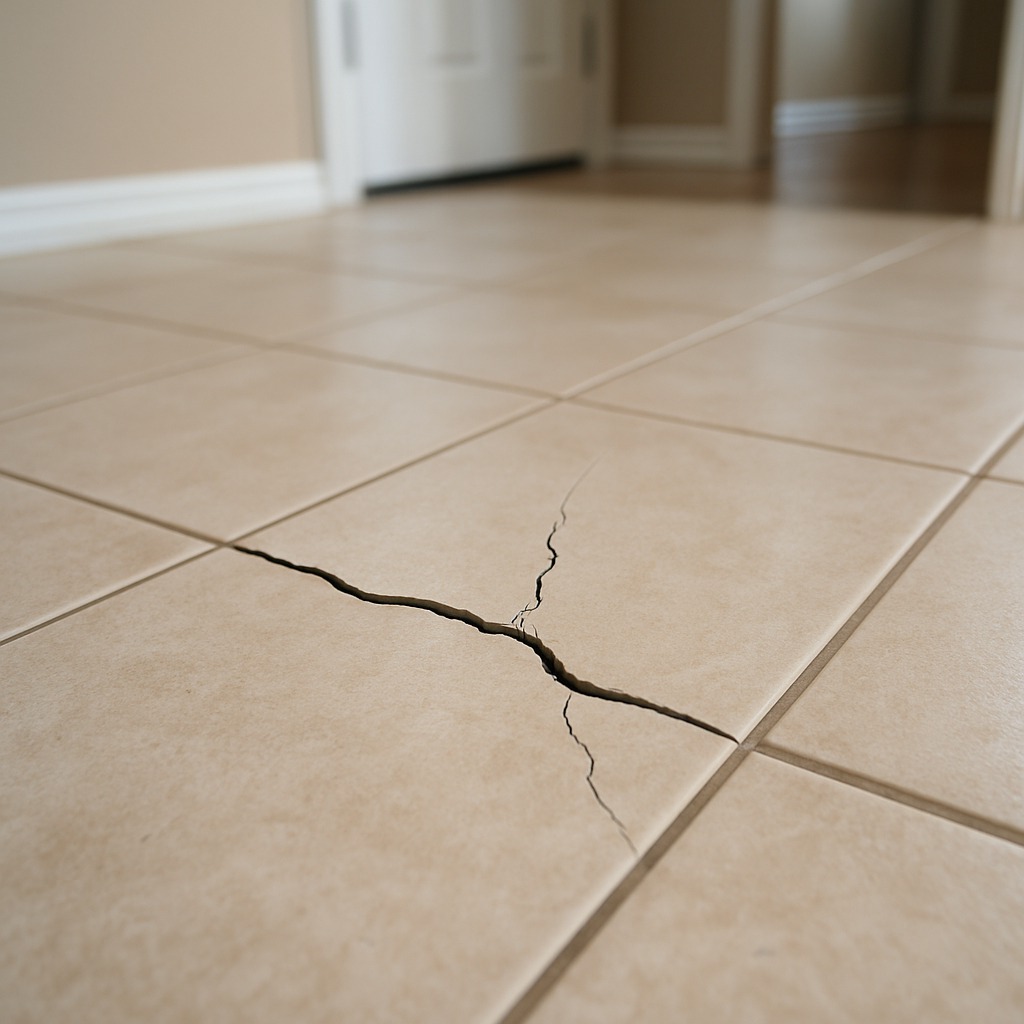
You're walking across your kitchen and hear that unmistakable crunch underfoot — you look down and see a jagged crack running through your floor tile. Maybe it's a single hairline fracture in a bathroom tile, or maybe you've noticed a cluster of cracked tiles near a doorway that seems to be getting worse. Either way, a cracked floor tile is more than a cosmetic nuisance — it's an open invitation for moisture to reach your subfloor, where it can quietly cause rot, mold, and structural degradation that costs thousands to remediate.
The good news: a single cracked tile replacement is one of the more affordable home repairs, typically running $75–$300 with a professional and as little as $5–$25 if you do it yourself. But the bad news is that cracked tiles are often a symptom, not the disease. Subfloor deflection, foundation settling, missing expansion joints, or improperly bonded tile can all manifest as surface cracks — and ignoring the root cause means you'll be replacing tiles again in months.
This guide breaks down exactly what's causing your cracked floor tile, how to diagnose the severity yourself in under 10 minutes, when a DIY fix is safe versus when you need a licensed contractor, and the real costs behind every repair scenario — verified by contractors with 15–20+ years of field experience. You won't find this level of detail anywhere else.
Symptoms: What You're Seeing
- Visible hairline cracks across tile surface: You notice thin, often jagged lines running through the glaze of one or more floor tiles. These cracks may be barely visible at first, but they catch dirt and darken over time, becoming more obvious. Running your fingernail across the surface, you can feel a distinct ridge or groove. In lighter-colored tiles like porcelain or ceramic, the crack line may appear gray or brown as grime settles in. These hairline fractures typically measure less than 1/16 inch wide but can extend the full length of a 12×12 or 18×18 tile.
- Loose or hollow-sounding tiles: When you walk across the floor, certain tiles produce a distinct hollow, drum-like sound compared to the solid thud of properly bonded tiles. Tap the surface with the handle of a screwdriver or your knuckle — a hollow tone means the thinset mortar underneath has debonded or was never fully applied. These tiles may shift slightly underfoot, and you can sometimes feel a faint rocking motion. Roughly 80% of cracked tiles we pull up reveal less than 60% thinset coverage underneath, meaning the tile was essentially floating over a void waiting to fail.
- Cracked or missing grout lines adjacent to damaged tile: The grout surrounding the cracked tile is also fractured, crumbling, or completely absent. You may see powdery grout residue collecting in the joint or feel a gap when you drag your finger along the line. Missing grout exposes the tile edge and the substrate below to moisture infiltration. This is a strong indicator of movement in the subfloor or an underlying deflection issue, not just a one-off impact crack. When grout fails in a pattern — say along a straight line across multiple tiles — it points to a structural flex point.
- Tile tenting or lifting at edges: One or more tiles have visibly lifted from the floor, creating a raised lip or tent-like peak where two tiles meet. You can catch your toe on the edge, and in severe cases the tile pops up entirely. This is often accompanied by a sharp cracking sound that happens spontaneously, sometimes in the middle of the night, as thermal expansion or slab movement forces tiles upward. Tenting is most common in large-format tiles (16×16 and above) installed without adequate expansion joints, especially in sunrooms, kitchens over radiant heat, or slab-on-grade homes in climates with wide temperature swings.
- Water staining or discoloration beneath cracked tile: You see dark, damp-looking spots spreading from the crack line or along the edges of the tile. The discoloration may appear brownish or yellowish, and in bathrooms or kitchens you might detect a faint musty smell indicating moisture is trapped beneath the tile and wicking into the substrate. Lifting a cracked tile in these areas often reveals stained, softened, or even mold-spotted underlayment. On plywood subfloors, prolonged moisture exposure can cause delamination and rot; on concrete slabs, efflorescence — white mineral deposits — may be visible where water has been migrating upward through the concrete.
What's Actually Causing This
- Inadequate subfloor preparation and excessive deflection: The single most common cause of cracked floor tile is a subfloor that flexes too much. The industry standard set by the Tile Council of North America (TCNA) requires subfloor deflection no greater than L/360 for ceramic and porcelain tile — meaning a 15-foot span should flex no more than 1/2 inch under load. Many older homes have single-layer 3/4-inch plywood subfloors over joists spaced 16 inches on center, which falls short of this standard. Every time someone walks across the floor, the substrate bows microscopically, stressing the rigid tile and brittle thinset until cracks form. Contractors estimate this accounts for 40–50% of all tile failure callbacks.
- Point impact damage from dropped objects: A heavy pot, cast iron pan, or even a canned good dropped from counter height (roughly 36 inches) can crack a ceramic floor tile on impact. Standard ceramic tiles have a breaking strength of around 250 pounds of force, but a concentrated impact at a single point — especially on tiles with poor thinset coverage underneath — can easily exceed that threshold. Porcelain tiles are denser (with a water absorption rate below 0.5%) and more impact-resistant, but even porcelain will fracture under a sharp strike. This cause is especially common in kitchens and mudrooms and is easy to identify because the crack pattern radiates outward from a single point of contact like a starburst.
- Lack of expansion joints and movement accommodation: Tile, thinset, concrete, and wood all expand and contract at different rates with temperature and humidity changes. Without soft joints (caulk-filled gaps) at perimeter walls, doorways, columns, and every 20–25 feet in large runs of tile, these forces accumulate until something gives — usually the tile or grout. TCNA Handbook detail EJ171 specifies expansion joint placement, yet many installers skip this step to save time. In heated slab applications, the problem is amplified; a 40-foot concrete slab can expand nearly 1/4 inch with a 50°F temperature swing. Cracking from missing expansion joints typically appears in straight lines and affects multiple tiles simultaneously.
- Poor thinset application and installer error: When a tile setter back-butters tiles insufficiently or uses the wrong trowel notch size, large voids form under the tile. TCNA standards require a minimum of 80% mortar coverage for interior floors and 95% for wet areas and exterior installations. Using a 1/4×1/4-inch square-notch trowel instead of the required 1/2×1/2-inch for large-format tiles, for example, delivers roughly half the needed mortar volume. Tiles over voids have no support and crack under normal foot traffic, sometimes within weeks of installation. Other installer errors include setting tile on uncured concrete (which must cure a minimum of 28 days), failing to use an uncoupling membrane like Schluter DITRA on questionable substrates, and not properly mixing thinset, which should reach a consistency where it holds ridges without slumping.
After 20 years in tile work, I can tell you the number one mistake homeowners make is chiseling out a cracked tile without first scoring the grout lines with a grout saw or oscillating tool. If you skip this step, the impact vibration transfers directly into the surrounding tiles and cracks them — I've seen a single-tile replacement turn into a six-tile job instantly. Always score and remove grout first, then work from the center of the damaged tile outward using a cold chisel angled at 45 degrees. This technique alone saves the average homeowner $100–$250 in additional tile replacement costs. Also, let thin-set cure a full 24 hours before grouting — rushing this is why tiles pop loose again within months.
Step-by-Step Diagnosis
Work through these steps before calling a contractor. Each step tells you what to look for and what it means.
Remove grout around the cracked tile
🔧 Oscillating multi-tool with grout removal bladeUse an oscillating multi-tool fitted with a grout-removal blade (such as a Dremel MM501 or equivalent carbide-grit blade) to carefully cut out the grout on all four sides of the damaged tile. Set the tool to a medium speed — around 15,000 OPM — to maintain control. Wear ANSI Z87.1-rated safety glasses and a dust mask rated N95 or higher, as grout dust contains silica. Work the blade at a shallow angle to avoid chipping the edges of adjacent good tiles. You want to remove grout to the full depth of the tile, typically 3/8 to 1/2 inch. When done, the cracked tile should be isolated from its neighbors with a clean, open joint on every side. Vacuum out all loose debris with a shop vac.
Break out the damaged tile carefully
🔧 3-pound hand maul and 3/4-inch cold chiselPlace a piece of painter's tape in an X pattern across the cracked tile to limit shattering, then use a 3/4-inch cold chisel and a 3-pound hand maul to break the tile starting from the center of the crack. Angle the chisel at roughly 45 degrees and work outward from the middle toward the edges. Never pry against adjacent tiles — always chisel toward the center of the damaged tile. Remove all tile fragments and then scrape away the old thinset from the substrate using a 3-inch floor scraper or the chisel held nearly flat. The goal is a clean, level surface that sits flush with or no more than 1/8 inch below the surrounding tile substrate height. If the plywood or cement board underneath is damaged, cut out the damaged section and screw in a replacement piece with cement board screws every 8 inches.
Dry-fit replacement tile and check level
🔧 24-inch level or straightedgePlace your replacement tile (ideally from the same lot or a leftover piece saved at installation) into the opening without any mortar. Check that it sits level with the surrounding tiles using a 24-inch straightedge or level laid across the surface. The replacement tile should sit approximately 1/8 inch below the plane of adjacent tiles to account for the thinset bed you will add. If the tile sits too high, you need to remove more old thinset from the substrate. If it sits too low, you may need to build up the substrate with a skim coat of modified thinset and let it cure for 24 hours before proceeding. Also confirm that grout joints are consistent in width on all sides — use tile spacers (typically 1/8-inch or 3/16-inch depending on your existing grout lines) to verify uniform spacing. This dry-fit step prevents costly mistakes once mortar is applied.
Apply thinset and set the replacement tile
🔧 1/4×3/8-inch square-notch trowelMix a small batch of polymer-modified thinset mortar (such as Mapei Kerabond/Keralastic or Custom Building Products MegaFlex) to a smooth, peanut-butter-like consistency. Using a 1/4×3/8-inch square-notch trowel, spread thinset onto the substrate, combing in one direction. Then back-butter the replacement tile with a thin, even layer of thinset using the flat side of the trowel. This dual application ensures maximum coverage above the 80% TCNA threshold. Press the tile firmly into position with a slight twisting motion — about 1/8 turn — to collapse the trowel ridges and eliminate air pockets. Place tile spacers on all sides and lay your straightedge across to confirm the tile is flush with its neighbors. Wipe any thinset that squeezes up into the grout joint with a damp sponge. Allow the thinset to cure for a minimum of 24 hours before walking on the tile or grouting.
Grout the joints and seal the repair
🔧 Rubber grout floatAfter 24 hours of thinset cure time, mix sanded grout (for joints 1/8 inch and wider) or unsanded grout (for joints under 1/8 inch) to match the existing grout color. Use a rubber grout float held at a 45-degree angle to press grout firmly into the joints on all four sides of the replacement tile. Work diagonally across the joints to avoid pulling grout out. Let the grout set for 15–20 minutes until a haze forms on the tile surface, then wipe clean with a damp sponge using circular motions, rinsing the sponge frequently. Avoid excessive water, which weakens the grout. After 24 hours, buff the remaining haze with a dry microfiber cloth. Apply a penetrating grout sealer (such as Aqua Mix Sealer's Choice Gold) after 72 hours to protect against moisture and staining. At perimeter walls or where tile meets a different flooring material, use a color-matched flexible silicone caulk instead of hard grout to allow for movement.
When to Stop DIY and Call a Pro
Stop the DIY approach and call a licensed general contractor or tile specialist if you observe more than three cracked tiles in the same area, tiles tenting or lifting off the floor, recurring cracks in replacement tiles after repair, or if the subfloor feels noticeably spongy or bouncy underfoot. These symptoms point to a structural deflection problem, a failed substrate, or active moisture intrusion — none of which can be solved by swapping individual tiles. A professional will assess joist spacing, subfloor thickness, and deflection using a 10-foot straightedge and possibly a deflectometer. If the subfloor needs reinforcement — adding a layer of 1/2-inch cement backer board or installing an uncoupling membrane system — material and labor for a typical 100-square-foot kitchen floor runs $800 to $2,500. That is the dollar threshold where professional work makes financial sense: once repairs require subfloor modification, membrane installation, or more than about 15 square feet of tile replacement, the risk of a failed DIY job (wasted materials at $3–$12 per square foot for tile alone, plus thinset, grout, and backer board) quickly exceeds the cost of hiring a pro who warranties the work. Additionally, if cracked tiles are located in a wet area like a shower floor or around a toilet flange, moisture may have already compromised the framing; a contractor can open up the area, assess for rot or mold, and make structural repairs before retiling.
What Does This Repair Cost?
Costs vary by region, home age, and severity. These are national averages — always get 3 quotes.
| Repair Type | DIY Cost | Pro Cost | Emergency Premium |
|---|---|---|---|
| Single ceramic tile replacement | $5–$25 | $75–$300 | $200–$450 |
| Single porcelain/stone tile replacement | $15–$50 | $150–$500 | $350–$700 |
| Multiple tile replacement (4–10 tiles) | $40–$150 | $400–$1,200 | $800–$1,800 |
| Subfloor repair + tile replacement | Not recommended | $800–$2,500 | $1,500–$3,500 |
| Emergency weekend/after-hours call | N/A | $150–$350 | $250–$500 |
*Emergency rates (nights/weekends/holidays) run 40–60% above standard. Get 3 quotes before approving work.
Get quotes from licensed professionals in your area
Free, no obligation — compare 3+ contractors in minutesWhat Drives the Cost?
| Cost Factor | Estimated Impact | Why It Matters |
|---|---|---|
| Tile material type | Adds $50–$400 | Natural stone and large-format porcelain tiles require specialty tools and adhesives; ceramic is cheapest to source and replace |
| Tile availability/match | Adds $50–$600 | Discontinued tile lines force custom orders or full-area re-tiling; keeping leftover tiles from installation avoids this entirely |
| Subfloor condition | Adds $300–$2,000 | Rotted or deflecting subfloors must be repaired before new tile is laid, otherwise cracks will recur within months |
| Heated floor system underneath | Adds $200–$800 | Radiant floor heating cables or mats beneath tile require careful removal to avoid damaging the system, adding skilled labor time |
Here's something most guides never mention: in homes built on concrete slabs in Sun Belt states like Texas, Arizona, and Florida, cracked floor tiles are frequently the first visible symptom of foundation movement caused by expansive clay soils. Before spending a dime on tile replacement, place a 4-foot level across the cracked area and check for any slope exceeding 1/4 inch. If you detect it, call a foundation specialist before a tile contractor — I've watched homeowners spend $1,200 replacing tile only to see it crack again within six months because the real issue was a shifting slab. A $300–$500 foundation inspection could save you thousands in repeated repairs and reveal whether you need pier installation ($5,000–$15,000) or simple cosmetic tile work.
⚠️ Stop DIY — Call a Pro If You See These
- Multiple tiles cracking along a straight line across the floor — This indicates a control joint or stress crack in the concrete slab below, or a joist/beam line causing concentrated deflection. Without addressing the root cause, every replacement tile installed over that line will crack again within 6–18 months, and repair costs escalate from $150–$300 per tile to $2,000–$5,000 for full substrate remediation and retiling.
- Tiles popping or tenting with audible cracking sounds — Tenting means compressive forces are exceeding the tile's bond strength, typically from missing expansion joints or slab movement. Left unaddressed, sharp lifted tile edges become a serious trip-and-fall hazard, and the longer you wait, the more adjacent tiles will debond — turning a $500 repair into a $3,000+ full floor replacement.
- Musty odor or visible mold beneath cracked tiles in bathrooms or kitchens — Moisture has penetrated the substrate through the compromised tile and grout. On plywood subfloors, mold colonies can establish within 24–48 hours of sustained moisture exposure. Within 3–6 months, structural rot can weaken the subfloor to the point of requiring full demo and rebuild, with costs reaching $4,000–$8,000 for a typical bathroom floor including mold remediation.
- Cracked tile accompanied by a bouncy or soft-feeling floor — A floor that deflects noticeably under foot traffic signals that the joist system or subfloor layup does not meet the L/360 deflection standard required for rigid tile. Continuing to patch tiles without stiffening the structure is throwing money away — every replacement will fail. Sistering joists or adding a second subfloor layer costs $1,500–$4,000 but is the only permanent fix.
Frequently Asked Questions
How much does it cost to fix Floor Tile Cracked?
For a single cracked tile replacement handled by a handyman or tile contractor, expect to pay $150 to $400 nationally, including materials. The low end applies when you have a matching replacement tile on hand and the substrate is sound — labor alone runs $75–$150 per hour, and most single-tile repairs take 1–2 hours plus cure time. The high end covers situations where the tile must be special-ordered ($3–$15 per square foot for ceramic to porcelain), old thinset needs grinding, or minor substrate repair is needed. If multiple tiles are involved or subfloor reinforcement is required, costs climb to $800–$2,500 for a 50–100 square foot area. The two biggest price movers are tile availability (discontinued tile may require a full-floor retile at $8–$15 per square foot installed) and substrate condition.
Can I fix Floor Tile Cracked myself?
Yes, if the damage is limited to one or two tiles, you have matching replacements, and the subfloor beneath is solid and level. A competent DIYer with an oscillating multi-tool, cold chisel, trowel, and basic tiling supplies can complete a single tile swap in about 2–3 hours of active work, plus 24–48 hours of cure time. However, if the crack pattern suggests structural movement, if more than three tiles are affected, or if the repair is in a wet area requiring waterproofing, you should call a professional. A botched tile repair that allows water infiltration can cause far more expensive damage than the original crack.
How urgent is Floor Tile Cracked?
A cracked floor tile is not a same-day emergency in dry areas like a living room or hallway — you have days to weeks to plan a repair. However, you should cover the crack with tape to prevent a sharp edge from cutting bare feet. In wet areas like bathrooms, kitchens near dishwashers, or laundry rooms, urgency increases to days rather than weeks because every water exposure pushes moisture through the crack into the substrate, potentially causing mold growth within 48 hours and subfloor rot within weeks. If tiles are tenting or lifting, treat it as urgent — within 24–48 hours — due to the trip-and-fall risk and the rapid cascading failure that tenting causes to adjacent tiles.
What causes Floor Tile Cracked?
The three most common causes are subfloor deflection (a floor that flexes beyond the L/360 standard, responsible for roughly 40–50% of tile cracks), point impact from heavy dropped objects like cast iron cookware, and missing expansion joints that fail to accommodate the natural thermal expansion and contraction of the slab and tile. Less common but still significant causes include poor thinset coverage (voids under the tile creating unsupported spans), setting tile on green concrete that hasn't cured for the required 28 days, and using the wrong tile type — for example, wall-rated tiles on a floor, which lack the breaking strength for foot traffic.
Will homeowners insurance cover Floor Tile Cracked?
Standard homeowners insurance policies generally do not cover cracked floor tiles caused by wear and tear, poor installation, settling, or deferred maintenance — these are considered maintenance issues excluded under most HO-3 policies. However, if tiles crack as a direct result of a sudden, covered peril — such as a burst pipe causing water damage that ruins the subfloor and tiles above it, or structural damage from a fallen tree — the tile replacement would typically be included in the covered claim. Document the damage with photos, get a written estimate from a licensed contractor, and file the claim promptly. Your deductible (commonly $1,000–$2,500) may exceed the repair cost for minor tile damage, making a claim impractical for small repairs.
How do I find a licensed general contractor for this?
First, verify the contractor holds a valid license in your state by searching your state's contractor licensing board website — for example, CSLB in California or DPOR in Virginia. Second, confirm they carry general liability insurance (minimum $1 million) and workers' compensation coverage; ask for a certificate of insurance and call the carrier to verify it is current. Third, get a written, itemized quote — not just a lump sum — that breaks out demolition, substrate prep, materials, tile installation, and grout/sealing so you can compare bids accurately. Get at least three quotes. Fourth, check references: ask for three completed tile projects from the last 12 months, call those homeowners, and if possible, visit a job site. Also check Google reviews and Better Business Bureau ratings, prioritizing contractors with 20+ reviews averaging 4.5 stars or higher.
When you find a cracked floor tile, three decisions matter most: first, determine whether the crack is cosmetic and isolated or part of a pattern that signals a deeper structural or installation deficiency — tap surrounding tiles, check for deflection, and look for moisture. Second, decide whether you have the right replacement tile, tools, and subfloor conditions to handle the repair yourself, or whether the scope demands a licensed professional. Third, act on the appropriate timeline — weeks for a dry-area cosmetic crack, days for wet-area cracks, and immediately for tented tiles or signs of water damage below the surface.
Your recommended next step is straightforward: get on your hands and knees, tap every tile within a 6-foot radius of the crack with a screwdriver handle, and mark any that sound hollow with painter's tape. If you find more than two or three hollow or cracked tiles, or if the floor feels bouncy, skip the DIY approach and request quotes from at least three licensed general contractors or tile specialists in your area. A proper diagnosis now — whether it requires subfloor reinforcement, an uncoupling membrane, or a simple tile swap — saves you from repeating the same repair six months from now and potentially spending thousands more on damage that could have been prevented.
Ready to Solve This for Good?
Get matched with pre-screened, licensed general contractors in your area. Free quotes, no obligation, no spam.
GET FREE QUOTES NOW