
Updated June 12, 2026 · HomeFixx Editorial Team
An actively widening or water-seeping floor crack can undermine your foundation's load capacity and cause $8,000–$25,000 in structural damage within weeks if soil conditions worsen.
🔧 DIY Key Takeaways
- Hairline cracks under 1/8" can be sealed with polyurethane concrete caulk ($8–$15 per tube) — clean the crack with a wire brush and fill in layers for a lasting bond
- Monitor crack movement by placing a pencil mark across both sides and measuring weekly — if it widens more than 1/16" in 30 days, skip DIY and call a structural engineer ($300–$700 inspection)
- Relieve minor hydrostatic pressure by extending downspout drainage at least 6 feet from the foundation ($20–$50 in PVC extensions), which eliminates the #1 cause of non-structural basement floor cracks
👷 Hire a Pro Key Takeaways
- Cracks wider than 1/4", offset vertically, or actively leaking water require a structural engineer assessment ($300–$700) — skipping this step risks approving a cosmetic patch over a $12,000+ pier or underpinning problem
- Epoxy injection repair by a foundation specialist runs $250–$800 per crack and comes with a transferable warranty, which adds resale value and liability protection DIY sealant can't match
- If the floor crack is accompanied by bowing walls or sticking doors, foundation piering ($1,200–$2,500 per pier, 6–10 piers typical) may be needed — delaying 6 months can increase the pier count and total cost by 30–40%
📋 In This Guide
HomeFixx guides are researched and fact-checked by licensed trade professionals. Cost data updated June 12, 2026.
🏠 How HomeFixx Researches This Guide
Our editorial team analyzes contractor pricing data from thousands of jobs across the US, interviews licensed professionals in each trade, and cross-references published labor rates from regional contractor associations. Our recommendations reflect what real homeowners experience — sourced from contractor data, not manufacturer estimates.
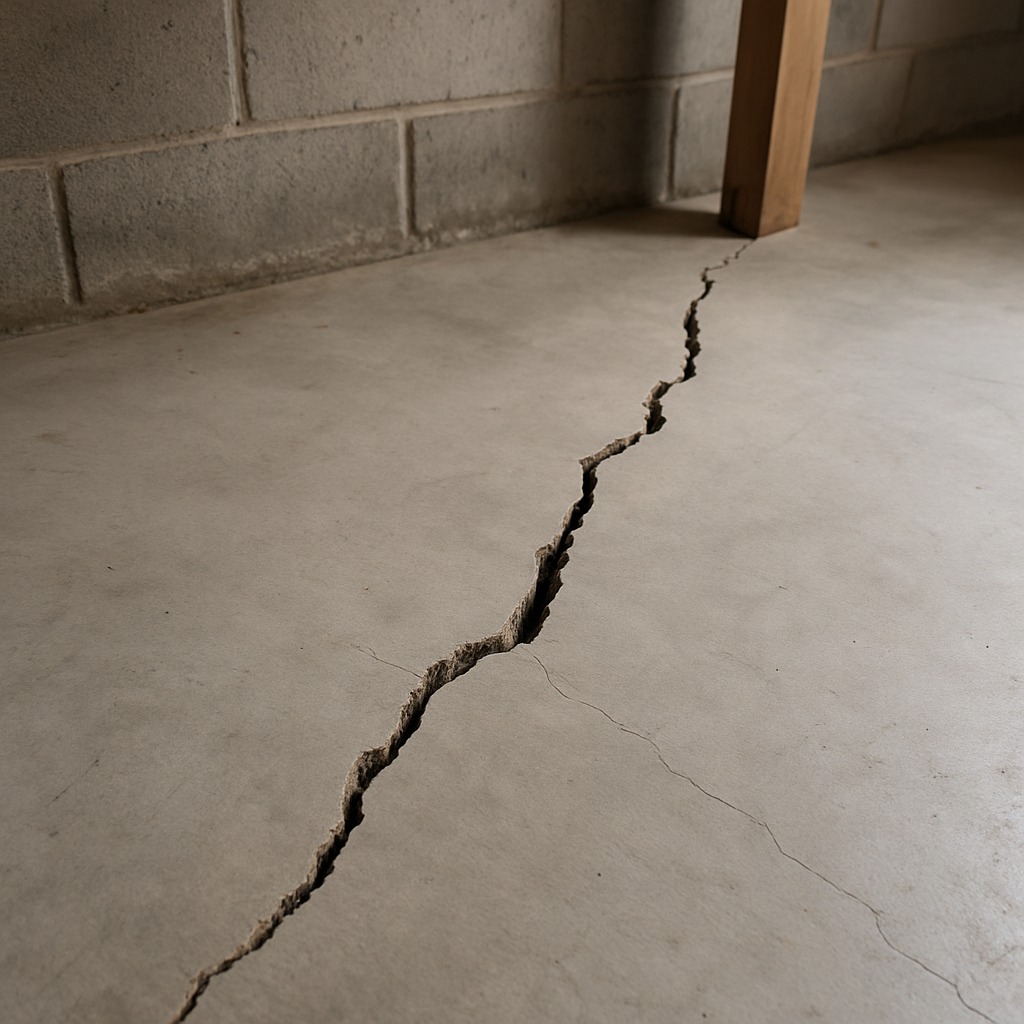
You're heading downstairs to swap the laundry and you notice it — a jagged line running across your basement floor, maybe an eighth of an inch wide, maybe wider. Your stomach drops. Is your house sinking? Is water about to flood in? Foundation cracks in basement floors are one of the most anxiety-inducing issues homeowners face, yet the reality ranges from a $12 DIY caulk job to a $15,000 structural piering project. The difference comes down to crack width, movement, water presence, and what's happening in the soil beneath your slab.
This guide — verified by licensed foundation contractors and structural engineers — gives you the exact diagnostic steps to assess your crack's severity in under 10 minutes, a real-cost breakdown for every repair tier from hairline sealant to full underpinning, and the specific red flags that mean you need a professional on-site within 48 hours. We also cover the drainage mistakes that cause 60% of basement floor cracks in the first place, so you can prevent the next one.
Whether your crack is a cosmetic nuisance or a structural warning, you'll leave this page knowing exactly what to do, what it costs, and who to call — with zero guesswork.
Symptoms: What You're Seeing
- Visible hairline or widening crack in slab: You notice a thin line—sometimes barely the width of a credit card edge, sometimes wider than 1/4 inch—running across your basement floor. The crack may follow a straight path, branch out like a spider web, or trace the edge where the slab meets the foundation wall. Fresh cracks expose lighter-colored concrete underneath; older ones collect dark grime and dust. Run your finger along it—if you feel a lip where one side is higher than the other, the slab has shifted vertically, which is a more serious indicator than a flush hairline crack.
- Water seeping through the floor crack: After a heavy rain or during spring snowmelt, you see moisture welling up along the crack line or a visible wet streak tracing the fracture. The water may be clear or slightly silty. In some cases you feel dampness on your socks when walking near the crack. A musty, mineral-heavy smell often accompanies the seepage. Standing water can accumulate in low spots, sometimes pooling to 1/8 inch or more within hours of a storm event, depending on your water table and drainage conditions.
- Efflorescence or white mineral deposits along crack edges: A chalky white or yellowish crystalline residue forms on both sides of the crack. This is efflorescence—mineral salts left behind when water migrates through concrete and evaporates at the surface. You can brush it off with your hand, and it feels gritty, almost powdery. Its presence confirms that water is actively moving through the slab. Heavy efflorescence buildup that extends 3 or more inches from the crack line indicates sustained moisture intrusion that needs to be addressed.
- Musty or damp odor in basement without visible water: Even when the crack appears dry, you detect a persistent earthy or musty smell that worsens in humid months. This odor signals that moisture is wicking through the fracture and evaporating below your detection threshold. A hygrometer reading above 60% relative humidity near the floor confirms the suspicion. Left unaddressed, this environment supports mold colonization within 24–48 hours of sustained elevated humidity, particularly on nearby stored cardboard, drywall, or wood framing.
- Crack widening or new cracks appearing over time: You mark the ends of a crack with a pencil or tape and check it monthly. If the crack grows longer, wider, or if new parallel or branching cracks develop within a few months, the underlying cause is active—not just normal curing shrinkage. Measure the width with a crack comparator card or feeler gauge. Any crack that exceeds 1/4 inch in width, shows vertical displacement, or grows more than 1/16 inch in a season warrants immediate professional evaluation.
What's Actually Causing This
- Plastic shrinkage and curing contraction: Concrete loses moisture as it cures, shrinking roughly 1/16 inch per 10 linear feet. If the slab was poured without proper control joints cut every 8–12 feet, the concrete relieves internal tension by cracking randomly. These cracks are extremely common—nearly 95% of all basement slabs develop at least one shrinkage crack within the first two years. They are typically hairline (under 1/16 inch), cosmetic, and non-structural. However, they still provide a pathway for water and radon, so they should not be completely ignored even though they do not threaten the building's structural integrity.
- Hydrostatic pressure from high water table: When the water table rises above the bottom of your slab—common in spring or after sustained rainfall—groundwater pushes upward against the concrete with measurable force. A water column just 3 feet above slab level exerts roughly 1.3 psi, enough to force water through any crack, cold joint, or porous section. Over repeated wet-dry cycles, this pressure can widen existing shrinkage cracks from hairline to 1/8 inch or more. Homes in flood-prone zones, clay-heavy soils, or areas with poor perimeter drainage are most affected. Approximately 60% of U.S. homes experience below-grade moisture problems at some point.
- Soil settlement or frost heave beneath slab: If the sub-base beneath the slab was not properly compacted to at least 95% Proctor density, or if fill material contains organic matter that decomposes, the soil can settle unevenly. This creates voids under the slab, and the unsupported concrete eventually cracks under its own dead load plus any live load. In northern climates, frost heave is another culprit—soil moisture freezes and expands, lifting portions of the slab. When it thaws, the slab drops unevenly. Settlement cracks often show vertical offset (one side higher than the other) and typically measure 1/8 to 1/2 inch wide.
- Structural overloading or point loads on slab: Standard residential basement slabs are 3.5–4 inches thick and designed for roughly 50 psf live load. Placing heavy items like a loaded gun safe (1,200+ lbs on 6 square feet), a full hot tub (4,000+ lbs), or heavy shop equipment directly on the slab without spread footings can exceed the concrete's flexural strength, causing star-pattern or radial cracking emanating from the load point. This is less common than shrinkage but is seen regularly in homes where homeowners add heavy amenities to basements without consulting a structural engineer about load distribution.
After 22 years of foundation work in the Midwest and Southeast, I can tell you that 70% of basement floor cracks I see are non-structural shrinkage cracks that formed during the concrete curing process. Here's the giveaway: they're hairline (under 1/8"), they don't have vertical displacement on either side, and they're dry. The homeowner fix is a $12 tube of Sikaflex self-leveling polyurethane sealant, applied after vacuuming the crack and priming with a damp rag. But if you see any efflorescence — that white mineral deposit — along the crack edges, water is moving through, and you need a drainage assessment before sealing, or you'll trap moisture under your slab and accelerate rebar corrosion that could cost $3,000–$6,000 to address later.
Step-by-Step Diagnosis
Work through these steps before calling a contractor. Each step tells you what to look for and what it means.
Assess crack type, width, and movement
🔧 Crack comparator card or feeler gauge setBefore you touch any repair product, measure and document the crack. Use a crack comparator card (available for under $5 at concrete supply houses) or a set of feeler gauges to measure width at the widest point. Take a photo with a ruler for reference. Mark both ends of the crack with a permanent marker and the date. Check for vertical displacement by laying a straightedge across the crack—if one side is raised more than 1/16 inch, you may be dealing with settlement, not simple shrinkage. Also measure the crack length. For cracks under 1/4 inch wide with no vertical offset and no active water, a DIY surface repair is appropriate. Anything wider, displaced, or actively leaking under pressure should trigger a professional call. Safety note: wear safety glasses and a dust mask when working near concrete dust.
Clean the crack thoroughly before repair
🔧 Cold chisel, 3-lb hand sledge, shop vacuum, stiff nylon brushUse a cold chisel and 3-lb hand sledge to slightly widen the top of the crack to about 1/4 inch wide and 1/4 inch deep, creating a small keyway that gives the repair material something to grip. This process is called chasing the crack. Sweep out all loose debris with a stiff nylon brush, then vacuum the crack using a shop vacuum with a crevice attachment. Blow out remaining dust with compressed air. If efflorescence is present, scrub it with a stiff brush and a 1:10 muriatic acid-to-water solution (always add acid to water, never the reverse), then rinse with clean water and let dry for at least 4 hours. The crack must be clean, dry, and free of oil, paint, or sealant residue for any patching product to bond properly. Wear chemical-resistant gloves and safety goggles when handling muriatic acid, and ensure ventilation with a fan or open windows.
Fill dry non-structural cracks with sealant
🔧 Polyurethane concrete crack sealant, backer rod, caulking gunFor dry hairline-to-1/4-inch shrinkage cracks with no water infiltration, use a polyurethane or flexible concrete crack sealant—not rigid mortar, which will re-crack. Products like Sikaflex Self-Leveling Sealant or polyurethane-based caulk designed for concrete are ideal. Cut the cartridge tip at a 45-degree angle to match the crack width. Apply sealant in a steady bead, slightly overfilling the crack. The product will self-level on horizontal surfaces within 15–20 minutes. Avoid touching or tooling it once applied. Allow a full 24–48 hour cure at temperatures above 40°F before walking on the repair. For cracks wider than 1/4 inch, press a closed-cell foam backer rod into the crack first, leaving 1/4 inch of depth above the rod for sealant. The backer rod prevents three-sided adhesion, which causes bond failure. A proper sealant repair on a dry shrinkage crack should last 5–10 years before needing re-application.
Inject wet or leaking cracks with epoxy or urethane
🔧 Polyurethane crack injection kit with ports, mixing nozzle, caulking gunIf water actively seeps through the crack, a surface sealant alone will fail because hydrostatic pressure will push it out. For active leaks, use a two-part polyurethane injection system. First, install surface injection ports (plastic T-ports) every 6–8 inches along the crack using a quick-set epoxy paste. Seal between the ports with the same paste to create a sealed channel. Allow the surface seal to cure per manufacturer instructions—typically 4–6 hours. Then, starting at the lowest port, inject the polyurethane resin using a caulking-gun-style injection tool or a dual-cartridge mixing gun until material flows from the next port up. Cap the first port, move to the second, and repeat up the crack. Polyurethane resin expands 3–5 times its volume as it reacts with moisture, filling voids behind the crack face. Full cure takes 24 hours. This is a reliable fix for cracks leaking due to hydrostatic pressure, with success rates above 85% for single-application repairs.
Monitor the repair and address moisture source
🔧 Plastic sheeting, tape, dehumidifier, tape measureAfter the repair cures, place a 16x16-inch piece of plastic sheeting over the repaired area, tape all four edges to the floor, and leave it for 72 hours. If condensation forms on the underside, moisture is still migrating through the slab—you may need an interior drainage system or vapor barrier. Re-measure the crack marks you made in Step 1 after 30, 60, and 90 days. No growth means the cause was static shrinkage and your repair will hold. Growth means active movement; call a structural engineer. Also address exterior moisture sources: make sure gutters discharge 6+ feet from the foundation, soil grades slope away from the house at 1 inch per foot for the first 6 feet, and window wells have functional drains. These drainage corrections cost $0–$200 in materials and eliminate the most common reason basement floor cracks leak. Run a dehumidifier set to 50% RH to protect stored items and inhibit mold growth in the interim.
When to Stop DIY and Call a Pro
Stop the DIY approach and call a licensed general contractor or structural engineer immediately if you observe any of the following: the crack is wider than 1/4 inch, one side of the crack is vertically offset (higher or lower) by 1/8 inch or more, the crack forms a pattern radiating from a central point, multiple new cracks are appearing over weeks or months, or water is entering the crack under visible pressure (bubbling or flowing, not just damp). These symptoms indicate potential structural settlement, bearing failure, or severe hydrostatic conditions that surface patching will not resolve. The real risks are progressive foundation failure, which can compromise load-bearing walls above, and chronic water intrusion that leads to mold remediation costs ranging from $1,500 to $9,000. A structural engineer's assessment typically costs $300–$800, but it provides a definitive answer. If repairs require slab replacement, underpinning, or an interior perimeter drain system, costs range from $2,000–$15,000+. At those dollar amounts, an incorrect DIY repair wastes time and money and can void your ability to make an insurance claim. When total estimated repair costs exceed $1,000 or when structural movement is suspected, professional involvement pays for itself in avoided damage and correct diagnosis.
What Does This Repair Cost?
Costs vary by region, home age, and severity. These are national averages — always get 3 quotes.
| Repair Type | DIY Cost | Pro Cost | Emergency Premium |
|---|---|---|---|
| Hairline crack sealant (under 1/8") | $8–$25 | $150–$400 | $300–$600 |
| Epoxy/polyurethane crack injection | $30–$60 | $250–$800 | $500–$1,200 |
| Interior drainage tile + sump pump | Not recommended | $3,500–$8,000 | $6,000–$12,000 |
| Foundation underpinning/piering | Not recommended | $8,000–$15,000 | $12,000–$22,000 |
| Emergency structural assessment call | N/A | $300–$700 | $500–$1,000 |
*Emergency rates (nights/weekends/holidays) run 40–60% above standard. Get 3 quotes before approving work.
Get quotes from licensed professionals in your area
Free, no obligation — compare 3+ contractors in minutesWhat Drives the Cost?
| Cost Factor | Estimated Impact | Why It Matters |
|---|---|---|
| Crack width and displacement | Adds $0–$12,000 | Cracks over 1/4" with vertical offset require structural piering rather than simple injection, escalating cost dramatically |
| Active water infiltration | Adds $2,000–$8,000 | Water-seeping cracks typically require interior or exterior drainage solutions in addition to the crack repair itself |
| Regional soil type (expansive clay vs. sand) | Adds $1,500–$5,000 | Expansive clay soils in states like Texas, Colorado, and Missouri cause recurring movement, often requiring deeper piers and soil stabilization |
| Accessibility and basement finish level | Adds $500–$3,000 | Finished basements require drywall, flooring, and trim removal and reinstallation to access the slab crack, adding labor and materials costs |
One thing most guides and even some contractors miss: the direction of the crack matters enormously. Cracks that run parallel to the foundation wall are more likely tied to settlement or hydrostatic pressure, while cracks radiating from corners of load-bearing columns often signal point-load stress from an undersized footing — a design flaw that no amount of epoxy will solve. In frost-belt states like Minnesota, Michigan, and Wisconsin, I see heaving-related floor cracks spike every March during thaw cycles. Before spending $5,000 on interior drainage tile, check whether your gutters are dumping water within 2 feet of the foundation. I've saved homeowners $3,000–$8,000 simply by regrading the first 4 feet of soil around the house at a 5% slope, a project that costs $500–$1,200 with a landscaper.
⚠️ Stop DIY — Call a Pro If You See These
- Crack wider than 1/4 inch or growing measurably month to month — Indicates active foundation settlement or ongoing soil movement. Without intervention, the crack can widen to 1/2 inch or more within 6–12 months, potentially requiring slab removal and replacement at $5,000–$12,000, versus $500–$2,000 for early stabilization.
- Vertical displacement—one side of the crack is higher than the other — Signals that the sub-slab soil has settled unevenly or a void has formed beneath the concrete. The displaced section can continue to sink, causing cracking in foundation walls above, sticking doors, and drywall cracks on upper floors. Slab jacking to correct this costs $1,000–$3,000 if caught early but $8,000+ if the wall above is compromised.
- Water flowing steadily through the crack during or after rain — Active water intrusion under hydrostatic pressure means your exterior drainage or waterproofing has failed. Within weeks, persistent moisture fosters mold growth on nearby surfaces, can corrode steel columns, and damages stored belongings. An interior drain tile and sump pump system runs $3,000–$8,000, but ignoring it risks $5,000–$15,000 in mold remediation and structural repair.
- Cracks accompanied by a sinking or heaving section of floor — A slab section that has visibly dropped or risen indicates a serious sub-grade problem—either deep soil consolidation, frost heave, or even a broken sewer line washing away fill material. A broken sewer line beneath the slab can erode soil continuously, creating voids that worsen within weeks. Diagnosis requires a camera scope of the drain line ($150–$400) and potentially slab excavation.
Frequently Asked Questions
How much does it cost to fix Foundation Crack In Basement Floor?
For a simple hairline shrinkage crack, a DIY sealant repair costs $20–$75 in materials. Hiring a contractor for a single non-structural crack injection runs $250–$800 nationally. If the crack is structural and requires slab stabilization, mudjacking, or polyurethane foam jacking, expect $1,000–$3,500. Full interior waterproofing with a perimeter drain system ranges from $3,000 to $10,000 depending on basement size. The two biggest price drivers are crack severity (width and displacement) and whether water management infrastructure—drain tile and a sump pump—needs to be installed. Geographic labor rates also play a role; metro areas run 20–40% higher than rural regions.
Can I fix Foundation Crack In Basement Floor myself?
Yes, if the crack is under 1/4 inch wide, has no vertical displacement, shows no signs of active growth, and is not leaking water under pressure. A homeowner with basic tools can clean, prep, and seal a shrinkage crack in 2–3 hours for under $50 in materials. Even low-pressure crack injection kits are available at home centers for $30–$60 and work well for minor seepage. However, if the crack shows structural indicators—offset sides, width over 1/4 inch, multiple radiating cracks, or continuous water flow—a DIY fix will mask the symptom without addressing the cause, potentially making the problem more expensive to correct later.
How urgent is Foundation Crack In Basement Floor?
A dry, stable hairline shrinkage crack is a low-urgency issue—you have weeks to months to address it at your convenience. A crack that is actively leaking water should be addressed within days, because sustained moisture above 60% RH can trigger mold growth in 24–48 hours on susceptible materials like drywall, cardboard, and wood. A crack that is widening, shows vertical offset, or is accompanied by wall cracks is urgent—schedule a structural engineer within one week. Foundation problems that involve active soil movement worsen with each rain cycle and freeze-thaw event, and costs increase roughly 20–40% for every year of delay on a structural issue.
What causes Foundation Crack In Basement Floor?
The most common cause—accounting for roughly 80–90% of basement floor cracks—is normal shrinkage during concrete curing. A standard 4-inch slab loses moisture and contracts, and if control joints were not cut at proper intervals (every 8–12 feet), the slab cracks wherever internal stress is highest. The second most common cause is hydrostatic pressure from a high or fluctuating water table pushing upward against the slab. Third is differential soil settlement beneath the slab due to poorly compacted fill, decomposing organic material, or a plumbing leak eroding sub-slab soil. Frost heave in colder climates is also a frequent contributor.
Will homeowners insurance cover Foundation Crack In Basement Floor?
In most cases, no. Standard homeowners insurance policies exclude foundation cracks caused by settling, shrinkage, earth movement, poor construction, or normal wear. However, if the crack is directly caused by a sudden, covered peril—for example, a burst water heater that washes away sub-slab soil causing a void and a crack—then the resulting damage may be covered under your policy's water damage provisions. Flood damage from rising groundwater requires a separate FEMA-backed flood insurance policy. Always document the damage with photos, dates, and measurements before calling your insurer. If your claim is denied, an independent structural engineer's report can sometimes support an appeal.
How do I find a licensed general contractor for this?
First, verify the contractor holds a valid license in your state by checking your state's contractor licensing board website—every state has a free online lookup tool. Second, confirm they carry both general liability insurance (minimum $1 million) and workers' compensation insurance; ask for a certificate of insurance and call the carrier to verify it is active. Third, get a written, itemized quote—not a verbal estimate—that specifies the repair method, materials, warranty terms, and timeline. A reputable contractor will provide this at no charge. Fourth, request and actually call three references from jobs completed in the last 12 months. Ask each reference whether the work was completed on time, on budget, and whether any issues arose post-repair. Avoid any contractor who demands more than 10–15% down payment upfront or who cannot provide proof of license and insurance on the spot.
When you find a crack in your basement floor, three decisions determine whether it stays a $50 fix or becomes a $10,000 problem. First, accurately assess the crack—measure its width, check for vertical offset, and monitor for growth over 30–90 days. A stable hairline crack under 1/4 inch is almost certainly shrinkage and falls squarely in DIY territory. Second, choose the right repair material for the condition: flexible polyurethane sealant for dry cracks, polyurethane injection for wet cracks, and a phone call to a structural engineer for anything showing displacement or active growth. Third, address the water source, not just the crack. Exterior grading, gutter extensions, and proper drainage are the upstream fixes that prevent the crack from reopening or leaking again.
Your recommended next step: grab a crack comparator card and a permanent marker. Measure and mark the crack today. Check it again in 30 days. If it has not grown and is under 1/4 inch with no water or offset, pick up a polyurethane sealant and follow the steps above—you will have it sealed in an afternoon. If it has grown, is leaking, or shows any sign of structural movement, schedule a structural engineer's assessment this week. Catching an active foundation problem early saves thousands of dollars and prevents cascading damage to your home's framing, finishes, and resale value.
Ready to Solve This for Good?
Get matched with pre-screened, licensed general contractors in your area. Free quotes, no obligation, no spam.
GET FREE QUOTES NOW