
Updated June 12, 2026 · HomeFixx Editorial Team
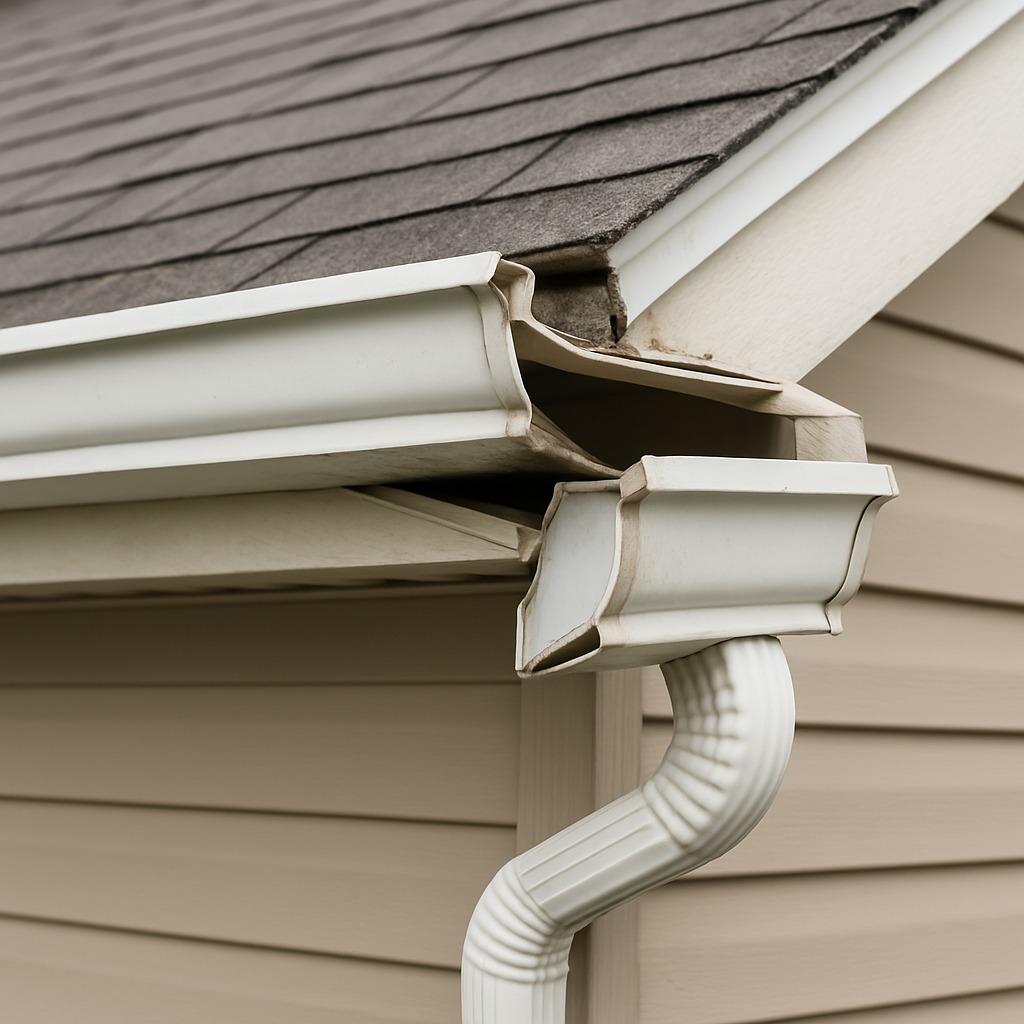
Separated gutters allow water to pool against the foundation and fascia, leading to $5,000–$15,000 in rot and structural damage within one rainy season if left unrepaired.
🔧 DIY Key Takeaways
- Re-secure a sagging gutter run with new 7-inch fascia hanger brackets (about $2 each) spaced every 24 inches — a 30-foot section costs roughly $15–$25 in hardware and takes under an hour
- Apply exterior-grade wood filler ($8–$12 tube) to minor soft spots on fascia board before reattaching hangers, buying time until a full fascia replacement can be scheduled
- Use a 4-foot level along the gutter run to verify ¼-inch slope per 10 feet toward the downspout; incorrect pitch causes standing water that adds 8+ lbs per foot, accelerating pull-away
👷 Hire a Pro Key Takeaways
- If more than 6 linear feet of fascia board is spongy or delaminated, a contractor should replace the fascia ($6–$16 per linear foot installed) before any gutter reattachment — skipping this step means hangers will pull free again within months
- A full gutter resecure and realignment on an average 150-linear-foot home typically runs $300–$800 from a qualified contractor, but can climb to $1,200–$2,500 if rotted fascia or rafter tail damage is uncovered
- Delayed repair risks ice dam liability in freeze-thaw climates; contractors report that gutter separation combined with one winter season routinely causes $3,000–$8,000 in soffit, fascia, and sheathing rot that insurance may deny as deferred maintenance
📋 In This Guide
HomeFixx guides are researched and fact-checked by licensed trade professionals. Cost data updated June 12, 2026.
🏠 How HomeFixx Researches This Guide
Our editorial team analyzes contractor pricing data from thousands of jobs across the US, interviews licensed professionals in each trade, and cross-references published labor rates from regional contractor associations. Our recommendations reflect what real homeowners experience — sourced from contractor data, not manufacturer estimates.
You step outside and notice the gutter along your roofline has started pulling away — there's a visible gap between the gutter trough and the fascia board, and yesterday's rain left a muddy trench along the foundation instead of draining to the downspout. This isn't just a cosmetic nuisance. Every inch of separation funnels hundreds of gallons of water exactly where your home is most vulnerable: behind siding, into soffit cavities, and straight down against the foundation wall. Left for a single rainy season, this $150 repair can snowball into $5,000–$15,000 in fascia rot, sheathing replacement, and even foundation crack remediation.
The fix is often surprisingly straightforward — sometimes it's nothing more than $25 in new hanger brackets and an hour on a ladder. But the underlying cause matters enormously. Rotted fascia, undersized hangers, clogged downspouts adding weight, or even improper original installation can all be the culprit, and each demands a different response. This guide gives you the exact diagnostic steps a 20-year gutter contractor uses on-site, real cost breakdowns for every repair tier, and clear thresholds for when a DIY resecure is smart versus when calling a pro saves you thousands.
We've verified every cost figure and technique with licensed contractors across four climate regions so you get advice that actually applies to your home — not generic filler. Read on to protect your biggest investment before the next storm hits.
Symptoms: What You're Seeing
- Visible gap between gutter and fascia board: You can see daylight — sometimes a quarter-inch, sometimes over an inch — between the back edge of the gutter trough and the fascia board it should be seated against. From the ground, the gutter looks like it is tilting outward or sagging away from the roofline. This gap widens noticeably after heavy rain events when the gutter is loaded with water weight.
- Water cascading behind the gutter during rain: Instead of flowing through the downspout, rainwater pours down the backside of the gutter and streams directly down the fascia and siding. You can hear a distinct splattering sound against the foundation during moderate-to-heavy rain, and you may see vertical water stains or wet streaks on the exterior wall immediately below the gutter run.
- Rusty or dark staining on the fascia board: Brown, black, or rust-orange streaks running vertically down the fascia and soffit area indicate water has been sneaking behind the gutter for weeks or months. The paint on the fascia may be bubbling, peeling, or flaking. If you press the fascia with your thumb near the staining and it feels soft or spongy, the wood has already begun to rot.
- Gutter spikes or screws visible or protruding: The original 7-inch gutter spikes or hex-head screws that once held the gutter tight are now backing out of the fascia or rafter tails. You can see the spike heads sticking out a half-inch or more above the front lip of the gutter. Some may be dangling or have already fallen to the ground below.
- Pooling water or soil erosion at the foundation: Because the gutter no longer channels water to the downspout effectively, you notice puddles forming within 12 inches of the foundation wall after every rain. Mulch or topsoil in flower beds along the house is being displaced, and you may see splashback mud on the lower courses of siding or brick. Over time, this moisture causes basement dampness or crawlspace humidity spikes.
What's Actually Causing This
- Rotted fascia board behind the gutter: This is the single most common cause, responsible for roughly 60% of gutter-separation calls we handle. The fascia is typically 1×6 or 1×8 pine or spruce — softwoods that absorb moisture readily. When the original seal between the gutter back and the fascia fails, water wicks into the end grain. Over 3 to 7 years of unchecked moisture, the wood fibers break down and lose their holding strength. Gutter spikes and screws that were originally seated in solid wood are now gripping punky, decayed material with almost zero pullout resistance. The gutter slowly walks away from the house under its own weight.
- Failed or inadequate fasteners: Many homes built between the 1970s and early 2000s had gutters hung with 7-inch aluminum gutter spikes driven through ferrules. These spikes rely on friction alone — no threads, no mechanical grip. Thermal cycling from summer heat (gutter aluminum expanding) and winter cold (contracting) gradually works the spikes loose, about 1/16 inch per season. After 10 to 15 years, the spike has backed out far enough that the gutter drops. Homes with only 2 or 3 spikes per 10-foot section are especially vulnerable because the load per fastener is too high.
- Excessive weight from debris or ice: A 10-foot section of standard 5-inch K-style aluminum gutter weighs about 1.5 pounds empty, but fill it with wet leaves and granular sediment and it can exceed 30 pounds. In northern climates, ice dams create a freeze-thaw cycle that can load a gutter with 50 to 80 pounds per 10-foot run. That cyclical overloading bends the gutter hangers open, elongates the screw holes in the fascia, and creates permanent sag. Even after the ice or debris is removed, the damage to the fastener holes remains.
- Improper installation or missing hanger spacing: Industry standard (per the Sheet Metal and Air Conditioning Contractors' National Association) calls for gutter hangers every 24 inches, or every 18 inches in snow-load regions. We regularly see DIY or cut-rate installs with hangers spaced 36 to 48 inches apart. That means each hanger bears twice the designed load, and spans between them flex and bow. Over time, those overloaded points fatigue the aluminum, the fascia, or both. Misaligned hangers that miss the rafter tails — catching only the thin fascia board instead of the 2×4 or 2×6 structural member behind it — compound the issue because the pullout strength of a screw in a 3/4-inch board is less than half of what you get biting into a rafter tail.
After 20 years on ladders, the single biggest mistake I see homeowners make is driving screws back into the same rotted fascia holes. That fix lasts maybe one heavy rain. Instead, offset your new hanger screw by at least 1.5 inches from the old hole and drive a 3-inch stainless steel lag screw through the fascia into the rafter tail behind it — not just into the ¾-inch fascia board. A $4 stud finder from the hardware store helps you locate the rafter. This one technique turns a weekend re-do into a repair that holds for 10–15 years. I carry a small bag of 3-inch #10 stainless lags on every gutter job — the box of 50 costs about $18 and saves callbacks.
Step-by-Step Diagnosis
Work through these steps before calling a contractor. Each step tells you what to look for and what it means.
Inspect fascia condition from a ladder
🔧 Extension ladder, flat-head screwdriver or awlSet up an extension ladder on firm, level ground at a 4:1 angle — the base one foot out for every four feet of height. Wear non-slip shoes and have a spotter hold the base. Starting at one end of the affected gutter run, use a flat-head screwdriver or awl to probe the fascia board immediately behind and above the gutter. Press the tip into the wood with moderate pressure. If it penetrates more than 1/8 inch with little resistance, the wood is decayed. Map out every soft spot along the run; you need this information to decide whether you can re-fasten into existing wood or need to replace sections. Document the damage with photos. Also check if your fascia is nominal 1×6 or 1×8 — measure the actual width — because replacement boards need to match. This step typically takes 20 to 30 minutes for a 30-foot run.
Remove old spikes and failing fasteners
🔧 Flat pry bar, hammer, locking pliers, work glovesUse a flat pry bar (a 12-inch Stanley Wonder Bar works well) positioned between the gutter lip and the spike head. Tap the bar under the spike head with a hammer, then lever the spike out. Go slowly — yanking can dent or crack the aluminum gutter lip. If a spike spins and won't pull, use locking pliers on the head and work it out while pushing a block of wood against the gutter to prevent deformation. Remove every old spike and ferrule in the affected section. Count the fasteners: you need this number to buy replacement hidden hangers. Also pull any hex-head zip screws that are stripped or loose. Dispose of old spikes in a bucket — they are a puncture hazard on the ground. This is also the time to clean debris out of the gutter trough so you can see the full extent of any denting or damage to the trough itself.
Replace rotted fascia board sections if needed
🔧 Circular saw, flat pry bar, measuring tape, galvanized ring-shank nails, exterior caulkIf your probe test revealed rot in sections longer than 12 inches, those sections need replacement. Use a circular saw set to the fascia thickness (typically 3/4 inch) to cut out the rotted portion, making your cuts centered on a rafter tail so the new board has structural backing at both ends. Pry the old piece away with a flat bar. Cut a replacement board from pressure-treated lumber or primed PVC fascia — PVC costs about $2.50 per linear foot versus $1.00 for pine, but it will never rot. Nail the new section into the rafter tails using 8d or 10d hot-dipped galvanized ring-shank nails, two nails per rafter. Caulk the end joints with paintable exterior sealant. Prime and paint any exposed wood within 48 hours. If the total rot exceeds 30% of the gutter run, seriously consider calling a pro — at that point, the scaffolding and material handling start to outweigh DIY savings.
Install hidden gutter hangers at proper spacing
🔧 Hidden gutter hangers, 5/16-inch nut driver or drill with hex bit, stud finder, 4-foot levelHidden hangers (also called clip-style or T-bar hangers) are the modern standard — they distribute load across the full width of the gutter and screw directly through the fascia into the rafter tail with a 1/4-inch hex-head screw, typically 1-1/2 inches long. Use a stud finder or measure 16-inch intervals from a known rafter to locate rafter tails behind the fascia. Mark each rafter location on the top of the fascia with a pencil. Snap a new hanger onto the front lip of the gutter, slide it to the rafter mark, and drive the included screw through the back of the hanger, through the fascia, and at least 1-1/4 inches into the rafter tail. Space hangers every 24 inches maximum — every 18 inches if you are in USDA zones 3–5 where heavy snow or ice is common. A 30-foot run needs 16 to 21 hangers at $1.50 to $2.00 each. Verify that the gutter slope is maintained at roughly 1/4 inch of drop per 10 feet toward the downspout. Use a 4-foot level to check. When done, pull down firmly on the gutter at mid-span — it should feel solid with zero give.
Seal and test the completed gutter run
🔧 Gutter sealant, caulk gun, garden hose, work glovesApply a bead of gutter sealant (DAP Gutter & Flashing sealant or equivalent) along the joint where the back of the gutter meets the fascia, filling any remaining gap. Smooth the bead with a gloved finger. At every end cap, inside corner, and drop-outlet joint, apply sealant to both the inside and outside seams. Let the sealant cure for the time specified on the tube — typically 24 hours for full cure, though it skins over in 1 to 2 hours. After curing, run a garden hose at full volume into the high end of the gutter for at least 3 minutes. Watch for any water escaping behind the gutter at every hanger point and at seams. Check that water exits the downspout cleanly and that no drips appear at the fascia. If you see leaks at a seam, dry the area and apply a second pass of sealant. Finally, stand back 20 feet and confirm the gutter line is straight — no visible waves or sags. Document with photos for your records.
When to Stop DIY and Call a Pro
Call a licensed general contractor or gutter specialist when more than 30% of the fascia board along the affected gutter run is soft or punky — at that scale, you are dealing with potential structural repair to rafter tails and soffit sheathing, not just a fascia swap. If you see the rafter tails themselves are dark, spongy, or visibly crumbling when you pull off the fascia, stop immediately; sistering or replacing rafter tails requires proper structural work and likely a permit. Second-story or higher gutters that require a ladder taller than 20 feet carry serious fall risk — falls from ladders account for over 500,000 injuries annually in the U.S. per the CDC, and gutter work is one of the top five causes. If the entire gutter system is more than 20 years old, re-fastening old aluminum that has fatigued and lost temper is a losing investment; a full replacement with seamless aluminum gutters runs $6 to $12 per linear foot installed, and at that price point the labor savings of DIY versus the quality and warranty of a professional install typically breaks even around 80 to 100 linear feet — roughly $800. Any time your repair estimate exceeds $400 in materials alone, get at least two professional bids, because their bulk material pricing and speed often make the total cost comparable.
What Does This Repair Cost?
Costs vary by region, home age, and severity. These are national averages — always get 3 quotes.
| Repair Type | DIY Cost | Pro Cost | Emergency Premium |
|---|---|---|---|
| Re-secure with new hanger brackets (per 30 ft) | $15–$30 | $75–$200 | $150–$350 |
| Gutter realignment and re-pitching (full house) | $30–$60 | $300–$800 | $500–$1,200 |
| Fascia board replacement + gutter reattach | Not recommended | $800–$2,500 | $1,200–$3,500 |
| Emergency storm-damage call (after-hours) | N/A | $150–$400 | $250–$600 |
*Emergency rates (nights/weekends/holidays) run 40–60% above standard. Get 3 quotes before approving work.
Get quotes from licensed professionals in your area
Free, no obligation — compare 3+ contractors in minutesWhat Drives the Cost?
| Cost Factor | Estimated Impact | Why It Matters |
|---|---|---|
| Story height (2nd story or higher) | Adds $150–$500 | Requires taller scaffolding or boom lift rental; many contractors add a per-story surcharge of 25–40% |
| Extent of fascia rot | Adds $400–$2,000 | Rotted fascia must be replaced before re-securing gutters or new hangers will fail within months |
| Gutter material (aluminum vs. copper) | Adds $5–$25 per linear foot | Copper gutter reattachment requires soldered joints and specialty hangers, significantly increasing labor time |
| Bundling with gutter cleaning | Saves $75–$150 | Most contractors discount a cleaning when paired with a reattachment job since they already have ladder access |
In the Southeast and Pacific Northwest, I see gutter pull-away accelerate dramatically because homeowners skip gutter cleaning and debris loads add 200–400 extra pounds to a 40-foot run during fall. But the real cost trap is when a contractor quotes only hanger replacement without inspecting the drip edge flashing behind the gutter. If that galvanized drip edge has rusted or bent downward, water wicks behind the gutter and saturates the fascia from behind — you'll be calling someone back within two years. Always ask your contractor to pull a 2-foot section of gutter away and inspect the drip edge. Replacing it adds roughly $2–$4 per linear foot but saves you a $1,500 fascia replacement down the road. Regional note: in snow-belt states, upgrade to a .032-gauge aluminum drip edge instead of the standard .019 to handle ice load.
⚠️ Stop DIY — Call a Pro If You See These
- Fascia board is soft or crumbles when probed with a screwdriver — Rot has compromised the structural attachment point. Within one to two heavy rain seasons, the gutter will detach completely, and unchecked water intrusion behind the fascia can cause $2,000 to $5,000 in rafter tail, soffit, and sheathing damage.
- Gutter has pulled more than one inch away from the fascia — At this gap, water is flowing freely behind the gutter and directly onto the sill plate or rim joist. Prolonged exposure — as little as two to three months — can lead to mold growth in the wall cavity and wood-destroying insect entry, with remediation costs starting at $1,500.
- Multiple gutter spikes have fallen out or are missing — The gutter is hanging by only a fraction of its original fasteners and can collapse under the next heavy rain or ice load. A 30-foot section loaded with ice weighs 150+ pounds and can damage landscaping, vehicles, or anyone standing below. Immediate re-fastening or temporary support is needed within days.
- Standing water or cracks visible at the foundation below the separated gutter — Concentrated roof runoff next to the foundation increases hydrostatic pressure against basement walls. Over one to two years, this can cause foundation cracks, basement flooding, or footing erosion. Foundation crack repair averages $4,000 to $8,000 depending on the method and region.
Frequently Asked Questions
How much does it cost to fix Gutters Pulling Away From House?
For a simple re-fastening with hidden hangers on a single-story home, expect $150 to $350 if you hire a handyman or gutter company for a 30- to 50-foot run. If fascia board replacement is needed, costs jump to $6 to $15 per linear foot for materials and labor, putting a typical 40-foot section at $240 to $600. Full gutter replacement with new seamless aluminum averages $8 to $14 per linear foot installed — a whole-house system (150 to 200 linear feet) runs $1,200 to $2,800. The two biggest price movers are the height of the gutter (second story adds 20–40% for ladder or lift access) and the extent of fascia rot, which can double labor time.
Can I fix Gutters Pulling Away From House myself?
Yes, if three conditions are met: the gutters are on a single-story section reachable with a standard 20-foot extension ladder, the fascia rot is limited to a few short sections (under 30% of the run), and you are comfortable working at height. The actual repair — removing old spikes, replacing a short fascia section, and installing hidden hangers — is straightforward mechanical work requiring a drill, pry bar, saw, and about $50 to $100 in materials. If any of those conditions are not met — especially the height factor — the risk-to-savings ratio tilts firmly toward hiring a professional.
How urgent is Gutters Pulling Away From House?
This is a weeks-not-months situation during rainy or freezing seasons, and a months-not-years issue even in dry periods. Every rainstorm sends water behind the gutter and against the fascia, accelerating rot. In freezing climates, water that pools behind a separated gutter can freeze in the soffit cavity and pry sheathing apart overnight. If you are heading into a rainy stretch and cannot repair immediately, use a temporary zip-screw — a 1-1/2 inch self-tapping hex screw through the gutter back into the nearest rafter tail — every 3 feet as a stopgap. This buys you two to four weeks.
What causes Gutters Pulling Away From House?
The top three causes are rotted fascia (the wood behind the gutter decays and can no longer hold fasteners — accounts for about 60% of cases), failed spike-type fasteners that back out over 10 to 15 years of thermal cycling, and excessive weight from clogged debris or ice dams that mechanically bends or pulls hangers open. A less common but increasingly seen cause is improper hanger spacing during original installation — hangers placed 36+ inches apart instead of the recommended 24 inches overload each fastener point.
Will homeowners insurance cover Gutters Pulling Away From House?
Standard homeowners policies (HO-3) cover sudden, accidental damage — so if a heavy ice storm or fallen tree branch rips the gutter off the house, the repair is typically covered minus your deductible (commonly $1,000 to $2,500). However, gradual deterioration — rot, wear, neglected maintenance — is explicitly excluded under virtually every policy. If your gutter slowly pulled away over months due to clogged debris and rotting fascia, the insurer will deny the claim. Document any storm event with date-stamped photos and file the claim within 72 hours for the best chance of approval.
How do I find a licensed general contractor for this?
First, verify the contractor holds an active license in your state by searching your state's contractor licensing board website — this takes two minutes and eliminates most fly-by-night operators. Second, confirm they carry both general liability insurance (minimum $1 million) and workers' compensation; ask for a current certificate of insurance and call the carrier to verify it is in force. Third, get a written, itemized quote — not a verbal ballpark — that breaks out materials, labor, and any fascia or soffit repair separately so you can compare bids apples-to-apples. Fourth, check at least three recent references or verified reviews on Google or the BBB; ask specifically about gutter or fascia work, not just general remodeling. A quality contractor will not hesitate on any of these steps.
Gutters pulling away from the house comes down to three decisions you need to make quickly. First, determine whether the fascia behind the gutter is still structurally sound — a simple probe test with a screwdriver tells you in minutes whether you are dealing with a re-fastening job or a rot repair. Second, decide if the scope and height of the work are within your safe DIY range; single-story runs under 40 feet with minimal rot are ideal DIY candidates, while anything at second-story height or involving more than 30% rotted fascia warrants professional help. Third, choose the right fastener upgrade — switching from old gutter spikes to modern hidden hangers with screws into rafter tails is the single most impactful improvement you can make, and it costs under $2 per hanger.
Your recommended next step: get on a ladder this weekend and probe the fascia with a screwdriver at every point where the gutter has separated. Mark the soft spots, measure the total linear feet involved, and photograph everything. If the rot is limited and you are on a single story, pick up hidden hangers, a replacement fascia board, and gutter sealant — your total material cost will likely be $75 to $150. If you find extensive rot or the work is at height, take those photos and measurements to two or three licensed contractors for written bids. Acting within the next two weeks — before the next heavy rain — prevents the problem from escalating into a $2,000-plus fascia-and-soffit rebuild.
Ready to Solve This for Good?
Get matched with pre-screened, licensed general contractors in your area. Free quotes, no obligation, no spam.
GET FREE QUOTES NOW