
Updated June 12, 2026 · HomeFixx Editorial Team
A failed IGU seal allows moisture infiltration that degrades framing, sill, and wall sheathing—left 6+ months, mold remediation and framing repairs can exceed $4,000 per window opening.
🔧 DIY Key Takeaways
- A $12 handheld moisture meter pressed against the sash and sill reveals whether condensation has already wicked into surrounding wood—readings above 19% mean rot is starting
- Drill-and-vent defogging kits ($20–$45) can temporarily clear moisture from a dual-pane IGU, but the argon or krypton gas fill is permanently lost, cutting insulating value by roughly 20%
- Applying a $9 tube of silicone sealant around the exterior glazing stop can slow further moisture intrusion into the IGU cavity and buy 6–12 months before full replacement is needed
👷 Hire a Pro Key Takeaways
- Insulated glass unit (IGU) replacement by a glazier runs $150–$400 per window and preserves the existing frame—full window replacement at $600–$1,800 per unit is only necessary when the frame itself shows rot or warping
- If more than 30% of your home's windows show inter-pane condensation, bundled IGU replacement drops per-unit cost by 15–25%—request batch pricing from at least three glaziers before committing
- Failing to address broken seals on Low-E coated units eliminates the $150–$300 per year in energy savings those coatings provide, effectively raising your HVAC costs every month the seal stays broken
📋 In This Guide
HomeFixx guides are researched and fact-checked by licensed trade professionals. Cost data updated June 12, 2026.
🏠 How HomeFixx Researches This Guide
Our editorial team analyzes contractor pricing data from thousands of jobs across the US, interviews licensed professionals in each trade, and cross-references published labor rates from regional contractor associations. Our recommendations reflect what real homeowners experience — sourced from contractor data, not manufacturer estimates.
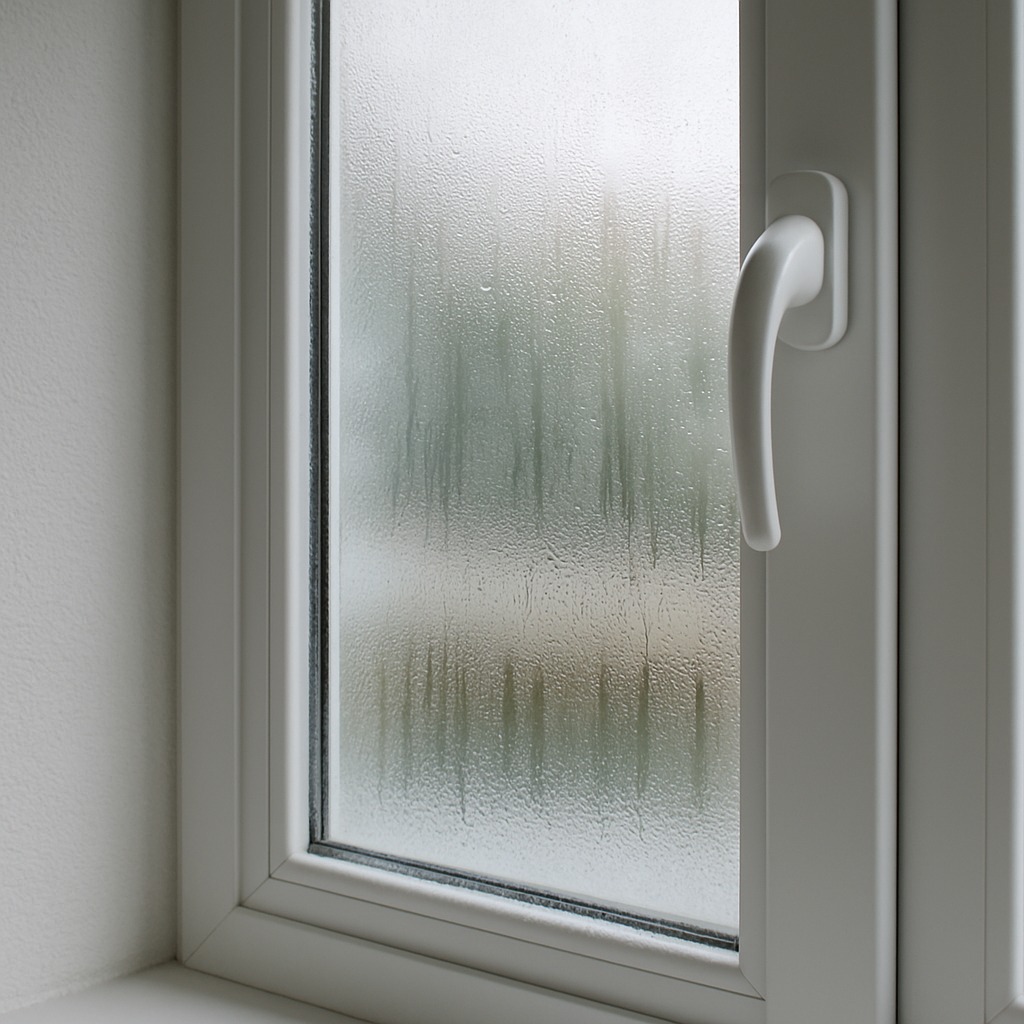
You notice it on a cool morning: a cloudy, milky haze trapped between your double-pane window glass that no amount of Windex can touch. You wipe the inside, you wipe the outside, and the fog stays put. That haze means the hermetic seal on your insulated glass unit (IGU) has failed, and outside moisture is now sitting in a space designed to hold insulating gas. It's one of the most common window complaints in homes built after 1980, and it gets worse—never better—on its own.
The real cost isn't just aesthetic. A broken IGU seal eliminates the insulating gas layer (argon or krypton) that accounts for up to 40% of the window's thermal resistance. Over a full heating season, a single failed unit can add $30–$50 to your energy bill, and a house with six or more compromised windows could leak $180–$300 in extra HVAC costs annually. Worse, persistent moisture against the sash and sill can trigger wood rot and mold growth that pushes total remediation costs past $4,000 per opening.
This guide covers exactly how to diagnose the severity of your seal failure, which DIY steps actually work (and which waste money), the real cost difference between glass-only replacement and full window swaps, and the warranty loopholes that could make your repair free. Every cost figure is contractor-verified for 2024 pricing across U.S. markets.
Symptoms: What You're Seeing
- Foggy or hazy glass between panes: You look at your window and notice a milky, cloudy film trapped between the two layers of glass that you cannot wipe away from either the interior or exterior surface. The haze may appear uniform across the entire pane or concentrate in one corner, often worse in early morning when outdoor temperatures drop below 45°F. The fog can be faint at first, making you think the glass is just dirty, but standard glass cleaner has zero effect because the moisture is sealed inside the insulated glass unit (IGU).
- Visible water droplets or streaks inside the glass: You can see actual beads of water or thin rivulets running down the inside surface of the sealed unit, trapped between the two panes. These droplets shift position throughout the day as the sun heats and cools the glass, sometimes pooling along the bottom edge of the spacer bar. This is a clear sign the desiccant inside the spacer has fully saturated and can no longer absorb incoming moisture.
- White mineral deposits or staining on inner glass surfaces: Over weeks or months of repeated condensation cycles, dissolved minerals in the moisture leave behind a chalky, white residue etched onto the interior glass face. This staining often appears as rings, streaks, or a permanent cloudy film that persists even on warm dry days when the liquid moisture temporarily evaporates. Once mineral etching occurs, the glass surface is permanently damaged and cannot be restored by defogging alone.
- Distorted or wavy view through the window: As moisture repeatedly forms and evaporates between the panes, the water deposits and micro-etching on the glass surfaces create a subtle distortion in your view. Objects outside appear slightly bent or shimmering, similar to looking through old, imperfect glass. You may only notice this when looking at straight lines like fence posts or siding, and it worsens as the seal failure progresses over several months.
- Temperature difference felt near the window: Place your hand within two inches of the affected window on a cold day and you will feel noticeably more radiant cold compared to a properly sealed double-pane unit nearby. The failed seal means the argon or krypton gas fill has escaped and been replaced by regular air, reducing the window's R-value from approximately R-3.1 down to roughly R-1.8. Your heating bill near that window zone climbs measurably, sometimes 10-15% higher for rooms with multiple failed units.
What's Actually Causing This
- Seal failure from thermal cycling and UV degradation: Every insulated glass unit has a perimeter seal—typically a dual-seal system with polyisobutylene (PIB) as the primary moisture barrier and a structural sealant like silicone or polysulfide as the secondary seal. Over 10 to 20 years of daily thermal cycling—glass expanding and contracting 1/16 inch or more per day—this seal fatigues and cracks. Ultraviolet radiation accelerates the breakdown, especially on south- and west-facing windows that receive 6+ hours of direct sun daily. Industry data shows roughly 1% of IGUs fail per year after the first 10 years, making this the single most common cause of between-pane condensation. Once breached, humid outdoor air infiltrates and overwhelms the desiccant in the spacer bar within weeks.
- Saturated desiccant in the spacer bar: Inside the aluminum or stainless-steel spacer bar that separates the two panes sits a molecular sieve desiccant, typically 3-angstrom zeolite beads. This desiccant absorbs any residual moisture trapped during manufacturing and small amounts that permeate slowly through the seal over the unit's lifetime. A standard IGU spacer holds roughly 5 to 8 grams of desiccant per linear foot. When the seal develops even a micro-breach, outside humidity at 60% or higher can overwhelm this desiccant capacity within 2 to 6 months. Once the desiccant is saturated, every temperature swing that crosses the dew point produces visible condensation between the panes. At that stage, the unit cannot self-correct.
- Manufacturing defects in the insulated glass unit: Approximately 2-3% of IGUs ship from the factory with compromised seals due to contaminated bonding surfaces, improper sealant application, or inadequate press times during assembly. These defective units often fail within the first 3 to 5 years rather than the expected 15-25 year lifespan. Quality manufacturers test units with dew point testing per ASTM E2190, but budget-grade windows sometimes skip rigorous QA. If your windows are less than five years old and showing condensation between panes, a manufacturing defect is the most likely culprit and may be covered under the IGU warranty, which typically runs 10 to 20 years from the leading manufacturers.
- Improper installation causing frame stress on the glass unit: When a window is installed out of plumb or shimmed unevenly, the frame places asymmetric mechanical stress on the IGU perimeter seal. Over time, this stress concentrates at corners and can crack the sealant bond. Windows installed without proper 1/4-inch edge clearance between the glass and frame, or without adequate setting blocks at the sill, are especially vulnerable. Contractors see this frequently in renovation projects where old rough openings are slightly out of square. The stressed seal may take 3-7 years to fail, but when it does, it often fails at one corner first, and the fog appears in that quadrant before spreading across the full unit.
Twenty-year glazing contractors will tell you: before you spend $350 on an IGU swap, check whether your window is still under the manufacturer's seal warranty. Most major brands—Andersen, Pella, Marvin—carry 20-year glass seal warranties, and even budget lines like JELD-WEN offer 10 years. The claim process typically costs you nothing beyond a phone call and a photo of the fogged unit with the serial number visible. We've seen homeowners save $2,400 on a whole-house re-glaze simply by verifying warranty coverage first. Pull the sticker from the spacer bar between the panes or check the original purchase paperwork before calling any contractor.
Step-by-Step Diagnosis
Work through these steps before calling a contractor. Each step tells you what to look for and what it means.
Confirm the condensation is between panes
🔧 Hair dryerBefore you spend any money, verify the moisture is actually trapped between the glass layers and not on the interior or exterior surface. Run your finger across both the inside and outside surfaces of the glass. If the surface feels dry on both sides while the fog remains visible, the seal has failed and moisture is trapped inside the IGU. Next, try a hair dryer on the interior surface for 30 seconds—if the fog does not clear or shift, it is between the panes. Also check multiple windows; if only one unit is affected, it confirms a localized seal failure rather than a whole-house humidity issue. Document which windows are affected, their orientation (north, south, east, west), and approximate size in inches for quoting purposes later. Take a clear photo with a ruler held against the glass so you can communicate the problem accurately to any vendor.
Assess whether defogging is a viable option
🔧 FlashlightDefogging—also called IGU restoration—involves drilling a small 3/16-inch hole through the outer pane, injecting a cleaning solution, flushing the cavity, then installing a one-way vent plug. This works best on windows that have had fog for less than 12 months and show no mineral etching or permanent staining. Hold a flashlight at an angle against the glass at night; if you see white haze or rings that persist even when no moisture is visible, the glass is etched and defogging will not restore clarity. Defogging kits run $25-$60 per window for DIY versions. Professional defogging services charge $75-$150 per window. Know that defogging does NOT restore the insulating gas fill—your window will still perform at reduced R-value. Defogging is a cosmetic fix with a 3-5 year expected life, not a permanent repair. If the window has mineral staining, skip defogging entirely and proceed to IGU replacement.
Remove the interior glazing stops carefully
🔧 1.5-inch stiff putty knife, flat pry bar, safety glassesIf you decide on full IGU replacement, start by removing the interior glazing stops—the thin vinyl, wood, or aluminum strips that hold the glass unit into the sash frame. For vinyl stops, insert a stiff 1.5-inch putty knife between the stop and the sash at the midpoint of the longest stop, then gently pry outward. Work from the center toward the corners to avoid cracking the stop. Number each stop with a pencil on the hidden face (1 through 4) so you reinstall them in the same positions. For wood stops, use the putty knife plus a flat pry bar and go slowly—replacement wood stops cost $3-$8 per linear foot if you break one. Wear safety glasses throughout; old glazing stops can snap unexpectedly and send splinters toward your face. Set stops aside in order on a clean surface. Once stops are removed, the IGU should be free to tilt inward for removal.
Measure and order the replacement IGU
🔧 Tape measure, notepadWith the old unit removed, measure the width, height, and thickness of the glass unit itself—not the sash opening. Measure in three places for both width and height, and use the smallest dimension. Standard residential IGUs are either 3/4-inch or 7/8-inch overall thickness (two panes of 3mm glass with a 1/2-inch or 5/8-inch airspace). Write down the exact spacer bar width and note whether the old unit had a warm-edge spacer (black or gray, slightly flexible) or a traditional aluminum spacer (shiny silver). Order the replacement IGU from a local glass shop—not a big-box store—for better quality control. Expect to pay $65-$180 per unit depending on size and whether you opt for argon fill and Low-E coating. Specify Low-E and argon fill; the upcharge is typically only $15-$30 per unit and restores full thermal performance. Lead time is usually 5-10 business days for custom sizes.
Install the new IGU and reset stops
🔧 Rubber setting blocks, clear silicone sealant, caulk gunPlace two rubber setting blocks (available from any glass supplier, about $0.50 each) at the quarter-points along the sill of the sash frame—roughly 25% in from each corner. These blocks support the weight of the glass and prevent it from sitting directly on the frame, which would stress the seal. Tilt the new IGU into the opening, resting it on the setting blocks, and center it so there is approximately 1/8- to 1/4-inch clearance on all sides. If the frame has a glazing channel with a rubber gasket, press the glass firmly into the gasket. Apply a thin bead of clear silicone sealant (GE Silicone II or equivalent) along the edge where the glass meets the frame if no gasket is present. Reinstall the glazing stops in reverse order—start with the shortest stop, then work to the longest. Press each stop firmly until it snaps or seats into its original position. Wipe away any excess silicone with a damp cloth immediately. Allow 24 hours of cure time before operating the window.
When to Stop DIY and Call a Pro
Call a licensed general contractor or a specialty glass contractor when you see any of the following: mineral etching or permanent white staining on the inner glass surfaces, condensation in more than three windows simultaneously, any sign of water damage on the sill, jamb, or surrounding wall framing—such as soft drywall, peeling paint, or a musty smell suggesting mold behind the casing. Also call a professional if your windows are casement, awning, or any style where the IGU is factory-bonded into the sash rather than held by removable stops, because these require sash removal and shop work. If the window frame itself is rotted, warped, or the vinyl has become brittle and cracked, an IGU swap will not solve the problem and full window replacement at $300-$900 per unit installed is the right move. From a pure cost standpoint, if you have five or more failed IGUs, a contractor can batch-order units at wholesale pricing 20-30% below retail, and the labor efficiency on multiple units typically brings per-window cost to $150-$275 installed versus $200-$350 doing them one at a time. Any time the failed window is on the second story or above, the fall risk from working on a ladder with a 30-pound glass unit makes professional installation the smart financial and safety decision.
What Does This Repair Cost?
Costs vary by region, home age, and severity. These are national averages — always get 3 quotes.
| Repair Type | DIY Cost | Pro Cost | Emergency Premium |
|---|---|---|---|
| DIY defogging drill-and-vent kit | $20–$45 | N/A | N/A |
| IGU (glass unit only) replacement | $75–$150 (materials) | $150–$400 | $250–$550 |
| Full window replacement (single unit) | Not recommended | $600–$1,800 | $900–$2,200 |
| Emergency water/mold damage from prolonged seal failure | N/A | $1,200–$4,500 | $2,000–$6,000 |
*Emergency rates (nights/weekends/holidays) run 40–60% above standard. Get 3 quotes before approving work.
Get quotes from licensed professionals in your area
Free, no obligation — compare 3+ contractors in minutesWhat Drives the Cost?
| Cost Factor | Estimated Impact | Why It Matters |
|---|---|---|
| Window size and style (casement vs. double-hung vs. picture) | Adds $50–$400 | Casement and picture windows require custom-cut IGUs; standard double-hung sizes are stocked and cheaper |
| Gas fill type (argon vs. krypton vs. air) | Adds $30–$120 per unit | Krypton gas refill costs 3–4× more than argon but provides better insulation in thinner units |
| Low-E coating specification | Adds $40–$150 per unit | Matching the original Low-E coating type (Low-E 272 vs. 366) preserves energy performance and warranty validity |
| Number of windows replaced at once | Saves $50–$175 per unit | Batch ordering reduces per-unit glass fabrication cost and consolidates labor into a single site visit |
Here's a red flag most homeowners miss: if inter-pane condensation appears only on south- or west-facing windows, the root cause is often excessive solar heat cycling that pumps and relaxes the seal hundreds of times per season. Contractors in Sun Belt states like Arizona and Texas see seal failure rates 30–40% higher on sun-exposed elevations. A $175–$350 exterior solar window film applied before replacing the IGU can extend the new seal's life by 5–8 years. Without it, you may be paying for the same glass unit swap again in under a decade. Always ask your glazier whether film or exterior shading should accompany the replacement—good ones factor this into the quote automatically.
⚠️ Stop DIY — Call a Pro If You See These
- Condensation that has been present for more than 6 months with visible white mineral deposits — The glass surfaces are permanently etched and cannot be restored by defogging. The longer you wait, the worse the etching becomes. At this point, only full IGU replacement ($65-$180 per unit plus labor) will restore clarity. Waiting another 6 months risks frame moisture damage adding $200-$500 in wood repair.
- Soft, spongy, or discolored wood on the window sill or jamb near the failed unit — Moisture migrating past the failed seal is saturating the wood frame, creating conditions for rot and mold growth. Within 12-18 months of visible wood softening, structural framing behind the casing can be affected, escalating a $200 IGU replacement into a $1,500-$3,000 frame and wall repair.
- Multiple windows failing in the same year within the same house — Batch failure indicates all windows were manufactured around the same time and are reaching end-of-seal life simultaneously. Expect remaining windows to follow within 1-3 years. Proactive whole-house IGU replacement or full window replacement now saves 15-25% versus addressing each failure individually over time.
- Visible gap or separation between the spacer bar and the glass edge — This means the structural secondary seal has completely failed, not just the primary moisture seal. The IGU is no longer mechanically stable and can shift within the frame, creating a safety risk especially in high-wind zones. The unit could crack or fall from the sash. Replace immediately—do not wait for a quote on defogging, as defogging cannot address structural seal loss.
Frequently Asked Questions
How much does it cost to fix Window Condensation Between Panes?
The national average for IGU (insulated glass unit) replacement runs $150-$350 per window installed, with $65-$180 of that being the glass unit itself and $75-$150 being labor. Defogging as a cosmetic-only fix costs $75-$150 per window professionally or $25-$60 DIY. The two biggest factors that move the price are window size—a standard 30x48-inch unit costs roughly 40% less than a 48x72-inch unit—and glass specification, since adding Low-E coating and argon gas fill adds $15-$30 per unit but restores full energy performance. Full window replacement, when needed, runs $300-$900 per window installed depending on material and brand.
Can I fix Window Condensation Between Panes myself?
Yes, if you have basic hand-tool skills and the window uses removable glazing stops—which covers roughly 70% of residential double-hung and slider windows. The process involves removing the stops, pulling the old IGU, and installing a custom-ordered replacement. You need a putty knife, tape measure, caulk gun, and safety glasses. The work takes 30-60 minutes per window once you have the replacement unit in hand. However, if your windows are casement or awning style with factory-bonded glass, second-story or higher, or if the wood frame shows any rot, hire a professional. Botching the install can crack the new $180 glass unit and void the manufacturer warranty.
How urgent is Window Condensation Between Panes?
This is not an emergency—you have weeks to months, not hours. A failed IGU seal does not cause water intrusion into your wall cavity in the way a roof leak does. However, the longer you wait, the worse the outcome. Within 3-6 months of first fog, mineral etching can permanently damage the glass, eliminating defogging as a cheaper option. Within 12-18 months, moisture migration can begin softening wood frames and sills, potentially leading to mold and rot. Your energy bills also climb roughly 10-15% for affected rooms due to lost insulating gas. Aim to address the problem within 60 days of first noticing fog.
What causes Window Condensation Between Panes?
The most common cause—accounting for roughly 75% of cases—is age-related seal failure from years of thermal expansion and contraction combined with UV degradation. The dual-seal system around the IGU perimeter fatigues and cracks, allowing humid air to enter and overwhelm the desiccant in the spacer bar. The second most common cause is manufacturing defects, responsible for about 15% of cases, where improper sealant application or contaminated bonding surfaces lead to premature failure within the first 3-5 years. The third cause is installation-induced stress, where an out-of-square frame or missing setting blocks place uneven mechanical load on the seal, cracking it over time.
Will homeowners insurance cover Window Condensation Between Panes?
In almost all cases, no. Standard homeowners insurance policies cover sudden and accidental damage—a tree limb breaking through a window, hail impact, or vandalism. Seal failure between panes is classified as wear and tear, gradual deterioration, or a maintenance issue, all of which are explicitly excluded from standard HO-3 policies. The one exception: if a covered peril (like a severe storm creating unusual pressure differential) caused the seal to fail suddenly, you could file a claim, but you would need to document the event and prove causation. Your better coverage avenue is the IGU manufacturer warranty—most major brands (Andersen, Pella, Marvin, Milgard) offer 10-20 year glass-seal warranties that cover replacement of the sealed unit at no cost for parts.
How do I find a licensed general contractor for this?
First, verify the contractor holds an active license in your state by checking your state's contractor licensing board website—every state except a handful requires general contractor licensing. Second, confirm they carry both general liability insurance (minimum $1 million) and workers' compensation coverage, and ask for a current certificate of insurance. Third, get a written quote that itemizes the IGU cost, labor, and any frame repair separately; a reputable contractor will not bundle everything into one opaque line item. Fourth, ask for three references from similar window work completed in the past 12 months and actually call them. For this specific job, a glazing specialist or window-replacement contractor may offer better pricing than a general contractor since IGU replacement is their core business.
When you see fog between your window panes, you face three key decisions. First, determine whether the glass has mineral etching—if it does, skip defogging and go straight to IGU replacement, which costs $150-$350 installed per window versus $75-$150 for a defogging service that will not fix etched glass. Second, decide whether this is a single-unit failure or the beginning of batch failure across your home; if three or more windows show fog within the same year, plan and budget for whole-house IGU replacement to save 15-25% through bulk ordering and labor efficiency. Third, assess the condition of your window frames—any soft wood, peeling paint, or musty smell near the sill means moisture damage has progressed beyond the glass, and full window replacement at $300-$900 per unit is the smarter long-term investment than swapping glass into a deteriorating frame.
Your recommended next step: today, walk every window in your home with a flashlight held at an angle against the glass. Document which units show fog, which show mineral deposits, and note any frame damage. Take photos with measurements. Then call a local glass shop or window contractor for a free assessment and written quote on IGU replacement for the affected units. Acting within 60 days of first fog saves you from permanent glass damage, rising energy costs, and the compounding expense of frame rot that turns a $200 fix into a $2,000 problem.
Ready to Solve This for Good?
Get matched with pre-screened, licensed general contractors in your area. Free quotes, no obligation, no spam.
GET FREE QUOTES NOW