
Updated June 12, 2026 · HomeFixx Editorial Team
Standing water can compromise foundation integrity and trigger toxic mold colonization within 24–48 hours, turning a $500 fix into a $15,000+ remediation project.
🔧 DIY Key Takeaways
- A $35 submersible utility pump from any big-box store can remove 1,800+ gallons per hour — deploy it within the first 2 hours to prevent water from wicking into drywall above the sill plate
- Clear all gutter downspout extensions so they discharge at least 6 feet from the foundation — a $12 splash block or $25 corrugated downspout extension eliminates the #1 cause of post-rain basement water
- Apply hydraulic cement ($8–$15 per 10-lb tub) to actively leaking wall cracks as a same-day stopgap — it sets in 3–5 minutes even underwater and buys you weeks before a pro can install a permanent repair
👷 Hire a Pro Key Takeaways
- Interior French drain and sump pump installation ($3,500–$8,000) is the gold-standard permanent fix — skipping it after repeated flooding risks $10,000–$25,000 in foundation wall bowing and mold abatement costs
- If water enters through multiple wall cracks simultaneously, a structural engineer evaluation ($300–$500) is critical — this pattern often signals hydrostatic pressure that requires exterior waterproofing at $8,000–$15,000
- Emergency water extraction services run $1,000–$3,000 for an average basement but are typically covered under homeowners insurance if you document the damage with photos and call within 24 hours of the event
📋 In This Guide
HomeFixx guides are researched and fact-checked by licensed trade professionals. Cost data updated June 12, 2026.
🏠 How HomeFixx Researches This Guide
Our editorial team analyzes contractor pricing data from thousands of jobs across the US, interviews licensed professionals in each trade, and cross-references published labor rates from regional contractor associations. Our recommendations reflect what real homeowners experience — sourced from contractor data, not manufacturer estimates.
It's 2 a.m., rain is hammering the roof, and you step onto the basement stairs to find three inches of murky water covering the floor. Your storage boxes are soaked, drywall is wicking moisture upward, and a faint musty smell is already setting in. This isn't just an inconvenience — it's a race against the clock. Within 24 hours, mold spores begin colonizing wet surfaces. Within 72 hours, structural lumber starts to swell and weaken. The average homeowner who ignores repeated basement flooding spends $11,500 on combined mold remediation and foundation repair, according to contractor cost data from 2023.
This guide is built differently than what you'll find elsewhere. We break down exactly what's happening beneath and around your foundation, which fixes you can handle yourself for under $50, and where the real money goes when you hire a waterproofing professional. You'll get contractor-verified cost tables, a step-by-step diagnostic walkthrough, and the specific warning signs that separate a $200 grading fix from a $12,000 exterior waterproofing job.
Whether you're ankle-deep in water right now or trying to prevent the next storm from flooding your basement again, start here. We'll help you stop the water, protect your home's value, and avoid overpaying for repairs you may not even need.
Symptoms: What You're Seeing
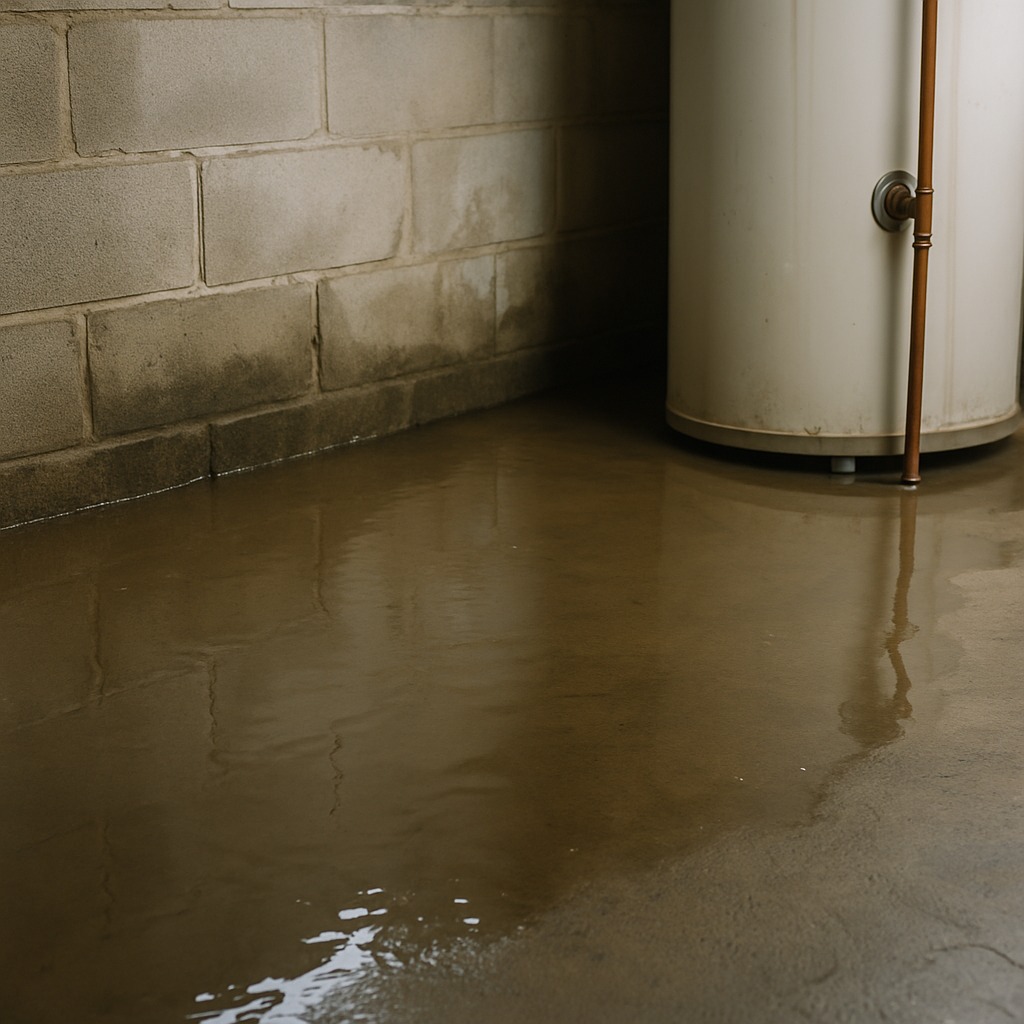
- Standing water on basement floor: After moderate to heavy rain, you walk downstairs and find anywhere from a thin film to several inches of standing water pooled across the concrete slab. The water often collects first in the lowest corner or near the floor drain. You may hear a faint trickling sound coming from behind the walls or near the foundation footer. The water smells earthy and mineral-heavy, not like sewage — that distinction matters for diagnosis.
- Damp or wet foundation walls with visible seepage: You run your hand along the poured-concrete or block foundation wall and feel a cold, slick moisture layer. In cinder-block walls, you may see water weeping through mortar joints or efflorescence — a white, chalky mineral deposit left behind as water evaporates. The moisture can extend 12 to 36 inches up from the floor-wall joint. The smell is distinctly musty, and you might notice condensation collecting on nearby pipes or ductwork.
- Water stains and tide marks on walls or floor: Even after the basement dries out, you see dark horizontal lines or brownish discoloration along the lower portion of drywall, paneling, or bare concrete. These tide marks tell you exactly how high the water reached. Over time, paint may bubble, peel, or flake in these zones. Stored cardboard boxes near walls show warping, soft spots, or mold growth at the waterline. These stains grow higher with each successive rain event if the problem worsens.
- Sump pump running continuously or not running at all: During or after rain, listen at the sump pit. A pump cycling every 30 to 90 seconds signals an overwhelmed system — the pit is refilling faster than the pump can discharge. Alternatively, complete silence during heavy rain when the pit is full means the pump has failed, tripped its breaker, or lost its float switch. You may smell a hot-motor odor from an overworked pump or hear a buzzing hum from a seized impeller.
- Musty odor and visible mold in basement: Within 24 to 48 hours of repeated flooding events, a persistent musty, damp smell develops that no amount of ventilation clears. You may spot dark green, black, or gray mold colonies on drywall, wood framing, carpet backing, or stored belongings. Mold can begin growing on organic materials at sustained relative humidity above 60 percent. Occupants sometimes report increased allergy symptoms, sneezing, or respiratory irritation when spending time in the basement.
What's Actually Causing This
- Failed or absent sump pump system: The sump pump is your basement's last line of defense against groundwater. Pumps have an average service life of 7 to 10 years, and most homeowners never test theirs until it fails. Common failure modes include a stuck float switch, burned-out motor, clogged intake screen, or a check valve that lets discharged water fall back into the pit. In homes without any sump system — common in pre-1980 construction — hydrostatic pressure from a rising water table pushes water directly through the floor-wall joint or up through cracks in the slab. About 60 percent of American homes experience some form of below-grade moisture, and a missing or dead sump pump accounts for a huge share of actual flooding events.
- Clogged or collapsed footing drains (French drains): Most homes built after the 1950s have a perimeter drain system — a run of 4-inch perforated pipe set in gravel alongside the foundation footing. Over decades, these pipes fill with silt, iron-ochre bacteria, or root intrusion and lose flow capacity. Clay-tile drains in older homes crack and collapse entirely. When the footing drain fails, groundwater has no path to the sump pit, so pressure builds against the foundation wall and floor slab. Diagnosing this requires a plumber to run a sewer camera through the drain cleanout, if one exists. Replacing collapsed footing drains is one of the most expensive basement-water repairs, often requiring interior or exterior excavation.
- Poor surface grading and downspout discharge too close to foundation: This is the single most common contributor to basement water after rain, and also the cheapest to fix. The ground around a foundation should slope away at a minimum of 6 inches of fall over the first 10 feet — per IRC code. Over time, soil settles, mulch beds build up, and the grade flattens or even reverses, funneling rainwater toward the foundation. Downspouts that dump water right at the foundation wall make it worse: a 1,000-square-foot roof section produces roughly 600 gallons of runoff per inch of rainfall. All of that water saturating the backfill soil next to your footer is the number-one driver of hydrostatic pressure.
- Foundation cracks under hydrostatic pressure: Poured-concrete foundations develop shrinkage cracks as the concrete cures; these hairline cracks are normal and usually cosmetic. But when hydrostatic pressure from saturated soil builds — sometimes exceeding 500 pounds per square foot at 8 feet of depth — water is forced through any crack wider than about 0.02 inches. Horizontal cracks in block walls indicate lateral soil pressure and potential structural movement. Non-structural vertical cracks can be injected with polyurethane or epoxy for $300 to $600 per crack, but structural cracks require engineering assessment. Freeze-thaw cycling in northern climates widens cracks roughly 10 to 15 percent per season if left unaddressed.
After 22 years of waterproofing basements in the Midwest, the single biggest money-saver I tell homeowners is to check the grading around their foundation before spending a dime on interior systems. In roughly 40% of the flooding calls I respond to, the soil has settled and now slopes toward the house instead of away from it. Regrading with clean fill dirt — about $15–$25 per cubic yard — to create a 1-inch-per-foot slope for the first 6 feet away from the foundation can stop water intrusion entirely. That's a $200–$600 fix that eliminates the need for a $5,000+ interior drain system. Always address exterior water management first; it's the cheapest and most effective intervention available.
Step-by-Step Diagnosis
Work through these steps before calling a contractor. Each step tells you what to look for and what it means.
Inspect and regrade soil around foundation
🔧 4-foot level, tape measure, hand tamperWalk the entire perimeter of your home with a 4-foot level and a tape measure. Set the level against the soil starting at the foundation wall and measure the slope over 10 feet. You need a minimum of 6 inches of fall in that distance. If the grade is flat or slopes toward the house, bring in clean fill dirt — not topsoil, which is too porous. Tamp the fill in 2-inch lifts using a hand tamper, building a wedge shape that directs water away from the wall. Cover with a thin layer of topsoil and seed or sod. Avoid piling soil above the sill plate or any siding. This single step resolves roughly 40 to 50 percent of basement water complaints, according to waterproofing industry data. Success looks like visible positive slope on all four sides with no low spots or depressions within 4 feet of the foundation.
Extend downspouts at least six feet out
🔧 Hacksaw or PVC cutter, hose clamps, tape measureCheck every downspout around your home. If any terminate less than 6 feet from the foundation — and most do from the factory — add rigid or flexible downspout extensions to carry water further away. Rigid corrugated extensions work well and cost $5 to $12 each. For a more permanent solution, run 4-inch solid PVC or SDR-35 pipe underground to a pop-up emitter or daylight outlet at least 10 feet from the house, sloping the pipe at a minimum of 1/8 inch per foot. Secure connections with stainless-steel hose clamps or PVC cement as appropriate. After installing, run a garden hose into each gutter for 5 minutes and confirm water discharges at the outlet without pooling back toward the foundation. This prevents hundreds of gallons per storm from saturating your footer backfill.
Test and maintain your sump pump system
🔧 5-gallon bucket, flashlight, garden hoseRemove the sump pit lid and pour 5 gallons of water into the pit using a bucket. Watch the float switch rise and confirm the pump kicks on. The pump should evacuate the pit in under 15 seconds for a standard 1/3 HP unit. Listen for grinding, rattling, or excessive vibration — these indicate a failing impeller or bearing. Check the discharge pipe outside: water should flow freely, not dribble. Inspect the check valve on the discharge line — if it is missing or stuck open, water falls back into the pit after each cycle, causing the pump to short-cycle and burn out prematurely. Replace the check valve if it does not hold. Clean the intake screen at the base of the pump by pulling the unit out and rinsing debris with a garden hose. If your pump is over 7 years old, budget $150 to $400 for a replacement unit. Consider adding a battery backup pump ($200 to $400) that activates during power outages — the exact moment you need it most.
Seal visible foundation cracks from inside
🔧 Polyurethane crack-injection kit, wire brush, caulk gunExamine the interior foundation walls and floor-wall joint with a bright flashlight. Mark every crack you find using a lumber crayon. For non-structural vertical or diagonal cracks up to 1/4 inch wide that are actively seeping, use a polyurethane crack-injection kit (around $30 to $60 per crack). Clean the crack with a wire brush, install the surface ports per kit instructions spaced every 8 to 12 inches, apply the surface seal paste between ports, and inject the flexible polyurethane resin starting at the lowest port until it flows from the next one up. Polyurethane stays flexible and accommodates minor foundation movement, unlike rigid epoxy which can re-crack. Do not inject horizontal cracks in block walls or any crack that is widening — these may be structural and require professional evaluation. Successful injection means no water seeping through the crack during the next rain event.
Clean gutters and verify proper drainage flow
🔧 Extension ladder with stabilizer, work gloves, garden hoseClogged gutters are an overlooked root cause of basement flooding. Climb a ladder safely — use a stabilizer bar on extension ladders and maintain three points of contact. Wear gloves and scoop out all debris, then flush each gutter run with a garden hose starting at the far end from the downspout. Watch for standing water in the gutter, which indicates sagging — hangers may need re-securing every 24 inches. At the downspout, confirm water flows freely without backing up. If it backs up, disconnect the downspout elbow and snake the downspout with a plumber's hand auger or flush from the top with a pressure nozzle. A single 30-foot gutter run clogged during a 1-inch-per-hour rainfall can dump over 180 gallons directly against the foundation in one hour. Clean gutters twice a year minimum — spring and late fall — and consider leaf guards if you have heavy tree cover.
When to Stop DIY and Call a Pro
Call a licensed plumber or waterproofing contractor immediately if you find more than 2 inches of standing water that does not recede within a few hours, if water is entering through multiple wall cracks simultaneously, if you detect a sewage smell indicating a sewer backflow issue, or if your sump pump has completely failed during active flooding. Horizontal cracks in foundation block walls, bowing walls, or cracks wider than 1/4 inch require a structural engineer before any plumbing work begins — these can signal foundation failure that worsens with every freeze-thaw cycle. If water is backing up through a basement floor drain, the problem may be a municipal combined sewer surcharge, and you may need a backwater valve installed ($1,000 to $2,500 professionally). From a financial standpoint, any DIY attempt on interior drain tile (French drain) systems is inadvisable — the concrete cutting, gravel work, pipe installation, and sump integration require specialized equipment and typically cost $3,000 to $8,000 for a professional install. Doing it wrong means tearing it out and starting over. If cumulative damage from repeated flooding approaches $5,000 in drywall, flooring, and mold remediation, investing $4,000 to $10,000 in a professional waterproofing system usually pays for itself in one to two events. A professional can also camera-inspect your footing drains to determine whether they are salvageable or need full replacement.
What Does This Repair Cost?
Costs vary by region, home age, and severity. These are national averages — always get 3 quotes.
| Repair Type | DIY Cost | Pro Cost | Emergency Premium |
|---|---|---|---|
| Gutter/downspout correction & regrading | $25–$150 | $200–$800 | $400–$1,200 |
| Wall crack injection (epoxy or polyurethane) | $30–$60 per crack | $350–$700 per crack | $500–$1,000 per crack |
| Interior French drain + sump pump system | Not recommended | $3,500–$8,000 | $5,000–$12,000 |
| Emergency water extraction & pump-out | N/A | $500–$1,500 | $1,000–$3,000 |
*Emergency rates (nights/weekends/holidays) run 40–60% above standard. Get 3 quotes before approving work.
Get quotes from licensed professionals in your area
Free, no obligation — compare 3+ contractors in minutesWhat Drives the Cost?
| Cost Factor | Estimated Impact | Why It Matters |
|---|---|---|
| Basement square footage | Adds $15–$45 per linear foot | Interior drain systems are priced per linear foot of perimeter — a 1,200 sq ft basement has roughly 140 linear feet vs. 90 for a 700 sq ft space |
| Depth to footer / slab thickness | Adds $500–$2,000 | Thicker slabs or deeper footers require more concrete cutting and labor hours, significantly increasing drain installation costs |
| Existing sump pump condition | Saves $500–$1,200 | If your current sump pit and discharge line are functional, a contractor can tie a new drain system into the existing setup instead of installing from scratch |
| Exterior excavation access | Adds $2,000–$6,000 | Porches, driveways, or landscaping that block access to the foundation wall force hand-digging or require removal and replacement of hardscaping |
One red flag most homeowners miss: if your sump pump runs continuously during moderate rain but your neighbors' basements stay dry, your footing drains are almost certainly collapsed or clogged with iron ochre — a rust-colored bacterial sludge common in areas with high iron content in groundwater. Jetting and cleaning existing footing drains costs $1,500–$3,000, versus $6,000–$10,000 to install a brand-new interior perimeter system. Ask your contractor to run a camera scope of the existing drain tile before agreeing to a full tear-out. In the Northeast and Great Lakes regions, I see iron ochre in about 30% of older homes, and it's almost never diagnosed by general contractors who don't specialize in waterproofing. Getting the right diagnosis upfront can save you thousands.
⚠️ Stop DIY — Call a Pro If You See These
- Horizontal crack across block foundation wall with inward bowing — This indicates lateral soil and hydrostatic pressure exceeding the wall's structural capacity. Left unaddressed for one to two more seasons, the wall can fail catastrophically, leading to $15,000 to $40,000 in structural repair and potential collapse risk.
- Sewage odor coming from basement floor drain during rain — A sewage smell during storms signals sewer backflow from an overwhelmed combined sewer system or a failed backwater valve. Raw sewage in your basement is a biohazard requiring professional cleanup ($2,000 to $7,000) and can cause illness within hours of exposure.
- Visible black mold growth covering more than 10 square feet — Once mold colonizes more than 10 square feet, the EPA recommends professional remediation. Mold spreads exponentially in damp conditions and can compromise structural wood framing within a single season. Professional remediation typically costs $1,500 to $6,000 depending on extent, and delaying increases scope and cost by roughly 20 to 30 percent per month of growth.
- Sump pump cycling every 30 seconds or less nonstop — Rapid short-cycling means the check valve has failed or the pump cannot keep up with inflow volume. The motor will burn out within hours to days of continuous short-cycling, leaving you completely unprotected. Pump replacement runs $300 to $800 installed, but flood damage from the failure can easily exceed $10,000.
Frequently Asked Questions
How much does it cost to fix Basement Flooding After Rain?
Costs range widely based on the root cause. Simple grading and downspout corrections run $200 to $600 if you do the labor yourself, or $500 to $1,500 hired out. Sump pump replacement averages $500 to $1,200 installed. Interior French drain systems with a new sump pump typically cost $3,000 to $8,000 for a full perimeter in an average 1,000-square-foot basement. Exterior foundation waterproofing with excavation can reach $8,000 to $15,000 or more. The two biggest factors that move the price are the source of the water — surface runoff versus groundwater — and whether excavation is required.
Can I fix Basement Flooding After Rain myself?
Yes, for surface-water causes. Regrading soil, extending downspouts, cleaning gutters, and maintaining a sump pump are all solid DIY projects that resolve the problem in roughly half of cases. You can also inject non-structural foundation cracks yourself with a polyurethane kit for under $60 per crack. However, interior drain tile installation, backwater valve installation on sewer lines, and any structural crack repair should be left to licensed professionals. If water is entering through multiple points or involves sewage, do not attempt DIY — the health and structural risks outweigh any savings.
How urgent is Basement Flooding After Rain?
Active flooding is a same-day emergency. Standing water causes damage to drywall, flooring, and stored belongings within hours. Mold can begin colonizing damp materials within 24 to 48 hours. If water is actively entering and your sump pump is not functioning, you need to act immediately — rent a utility pump or call an emergency plumber. If the flooding has stopped and the basement has dried, you have a window of days to weeks before the next rain event to implement permanent fixes. Delaying through multiple rain events compounds damage: waterlogged drywall and carpet usually cannot be salvaged after 48 to 72 hours of saturation.
What causes Basement Flooding After Rain?
The three most common causes are poor surface drainage sending rainwater toward the foundation, a failed or absent sump pump system, and clogged footing drains that can no longer route subsurface water to the sump pit. Poor grading and short downspouts account for roughly 40 to 50 percent of all basement water complaints and are the easiest to correct. Sump pump failures — especially during power outages — account for another 25 to 30 percent. Foundation cracks under hydrostatic pressure and sewer backflow make up the remainder. In many homes, multiple causes overlap.
Will homeowners insurance cover Basement Flooding After Rain?
Standard homeowners insurance policies typically do not cover groundwater seepage, surface water flooding, or sewer backup unless you have purchased specific endorsements. Sewer and drain backup coverage is an add-on rider that costs $40 to $100 per year and typically covers $5,000 to $25,000 in damage. Flood insurance through FEMA's NFIP is a separate policy entirely and does cover certain below-grade flooding but excludes finished basement contents in most cases. If flooding results from a sudden, accidental plumbing failure — like a burst pipe — your standard policy likely covers it. Always document damage with photos and contact your insurer within 24 hours.
How do I find a licensed plumber for this?
First, verify the plumber holds an active license in your state or municipality — you can check this through your state's contractor licensing board website. Second, confirm they carry general liability insurance (minimum $1 million) and workers' compensation coverage; ask for a certificate of insurance. Third, get a written, itemized quote — not a verbal estimate — that specifies the scope of work, materials, warranty terms, and timeline. Be wary of any contractor who quotes without inspecting the basement in person. Fourth, check references and online reviews, focusing on reviews that specifically mention basement water or sump pump work. Get at least two to three quotes for any job over $1,000.
Basement flooding after rain comes down to three critical decisions: identify whether you are dealing with surface water or groundwater, determine whether your sump pump system is functional and properly sized, and assess whether foundation cracks or failed footing drains are allowing water intrusion under pressure. Surface-water problems — bad grading, short downspouts, clogged gutters — are the most common cause and the most affordable to fix, often for a few hundred dollars in materials and a weekend of labor. Groundwater problems involving failed drain tile or structural foundation issues require professional diagnosis and repair, and costs escalate quickly into the thousands.
Your recommended next step is straightforward: the next time it rains, go outside during the storm and watch where water flows around your foundation. Check every downspout, look for pooling within 4 feet of the walls, and test your sump pump with a 5-gallon bucket. If those three checks reveal obvious deficiencies, fix them before the next rain. If the problem persists after correcting surface drainage, call a licensed plumber to camera-inspect your footing drains and evaluate your sump system. Acting before the next heavy rain — not after — is what separates a $200 fix from a $10,000 cleanup.
Ready to Solve This for Good?
Get matched with pre-screened, licensed plumbers in your area. Free quotes, no obligation, no spam.
GET FREE QUOTES NOW