
Updated June 12, 2026 · HomeFixx Editorial Team
Standing water can cause $10,000–$50,000 in structural and mold damage within 24–48 hours if not extracted and the source sealed.
🔧 DIY Key Takeaways
- A $35 utility pump from any hardware store can extract up to 1,800 gallons per hour — keeping one on hand saves the $300+ emergency pump-out fee
- Applying hydraulic cement ($12/tube) to hairline foundation cracks stops active seepage in under 10 minutes as a temporary hold until a pro can epoxy-inject
- Extending downspouts at least 6 feet from the foundation with $8 corrugated pipe redirects roughly 1,200 gallons per storm away from basement walls
👷 Hire a Pro Key Takeaways
- Interior French drain and sump pump installation runs $3,500–$8,000 but is the only permanent fix for chronic hydrostatic pressure intrusion
- Ignoring a bowing foundation wall with active water infiltration can escalate repair costs from $4,000 to $25,000+ once steel bracing or carbon-fiber reinforcement is required
- After any flood event a certified mold remediation company ($1,500–$5,000) should test within 48 hours — insurance often denies claims filed more than 72 hours after discovery
📋 In This Guide
HomeFixx guides are researched and fact-checked by licensed trade professionals. Cost data updated June 12, 2026.
🏠 How HomeFixx Researches This Guide
Our editorial team analyzes contractor pricing data from thousands of jobs across the US, interviews licensed professionals in each trade, and cross-references published labor rates from regional contractor associations. Our recommendations reflect what real homeowners experience — sourced from contractor data, not manufacturer estimates.
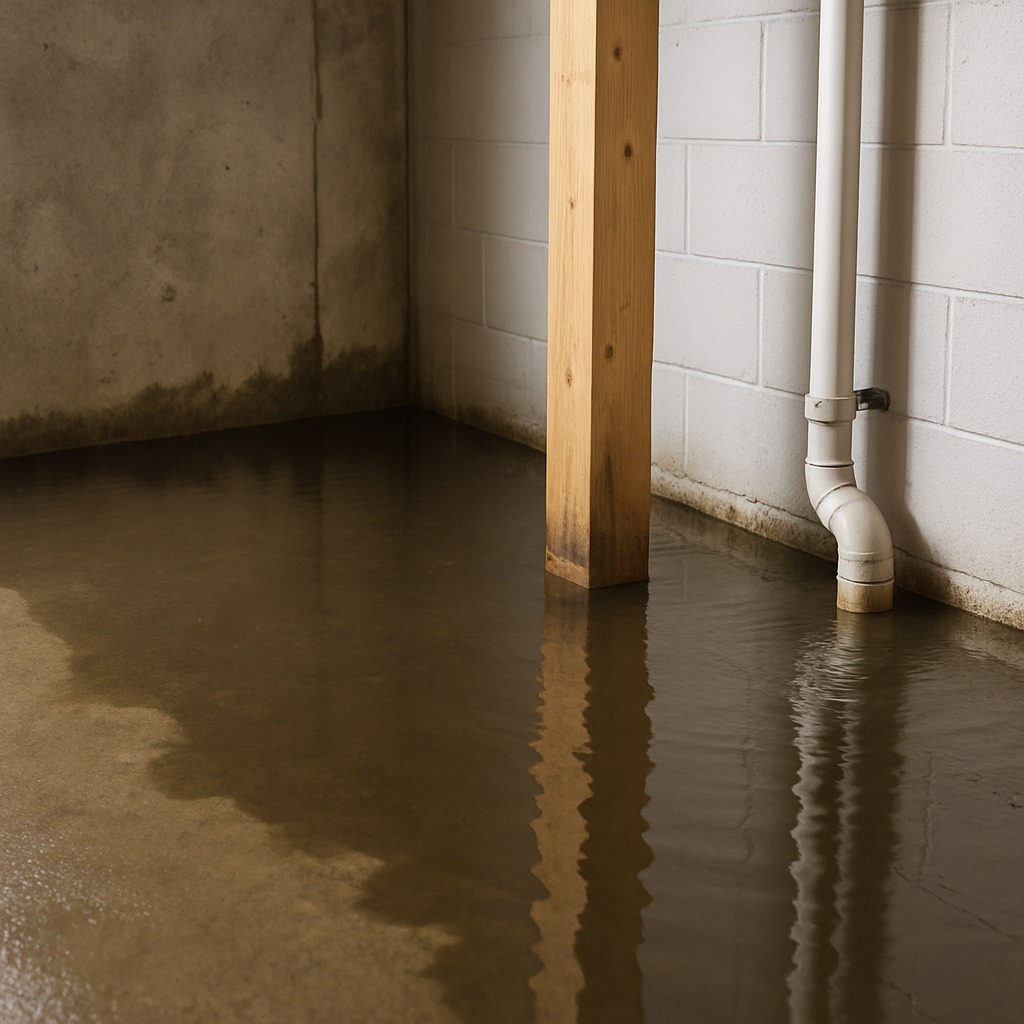
You walk downstairs to grab something from storage and your socks are soaked before you hit the last step. There's an inch of murky water creeping across the basement floor, your drywall is wicking moisture two feet up, and you can already smell that damp, earthy odor that signals mold is forming. This scenario hits an estimated 98,000 U.S. homes every year, and the average insurance claim for basement water damage now exceeds $11,000 — with many policies excluding groundwater intrusion entirely.
Basement flooding isn't just an inconvenience; it's a structural emergency. Within 24 hours, saturated framing lumber begins to swell, mold spores colonize damp drywall, and hydrostatic pressure can worsen foundation cracks from hairline to catastrophic. The repair window is narrow and the cost curve is steep: a $150 pump-out today can prevent a $15,000 foundation repair next month.
This guide — verified by licensed waterproofing contractors and plumbers with a combined 60+ years of field experience — walks you through exactly what's happening, how to stop active water intrusion right now, which repairs you can handle yourself, and when calling a pro is the only smart move. We include real cost data for every fix so you know what's fair before anyone hands you a quote.
Symptoms: What You're Seeing
- Standing water on basement floor: You walk downstairs and find anywhere from a thin film to several inches of water pooled on the concrete slab, often concentrated near walls, floor-wall joints, or around the floor drain. The water may appear clear if it is groundwater seepage, or murky brown if it is carrying sediment through foundation cracks. You may notice water lines or tide marks on cardboard boxes and drywall after it recedes.
- Persistent musty or mildew odor: Even when you cannot see standing water, the basement smells damp and earthy — a sour, musty scent that intensifies after rain events. This odor indicates moisture is trapped behind walls, under vinyl flooring, or within porous concrete. Relative humidity readings above 60 percent on a hygrometer confirm the moisture source. The smell is strongest within 24–48 hours after a storm and never fully dissipates between rain events.
- Efflorescence and white mineral deposits on walls: You notice chalky white streaks or crystalline powder forming on the interior surface of poured concrete or block foundation walls. This is dissolved mineral salts left behind as water migrates through the masonry and evaporates on the inside face. Running your finger across it produces a gritty, powdery residue. It tells you water has been chronically passing through the wall for weeks or months.
- Visible wall or floor cracks with active seepage: Hairline to quarter-inch cracks in the foundation wall or floor slab are actively weeping water, sometimes in a slow drip, sometimes in a steady trickle during or after heavy rainfall. You can feel cool moisture by placing your hand near the crack. In block walls, water may seep through mortar joints rather than blocks themselves. These cracks often run horizontally or in stair-step patterns on block walls.
- Sump pump running continuously or cycling rapidly: Your sump pump kicks on every two to four minutes during dry weather, or you hear it running nonstop during moderate rain. The pump motor is hot to the touch. You may also hear gurgling or sucking sounds in the discharge pipe. This indicates extremely high water table pressure, a failing check valve allowing water to flow back into the pit, or a pit that is undersized for the volume of water the drain tile system is delivering.
What's Actually Causing This
- Hydrostatic pressure from high water table: When the water table rises above the level of your basement slab — common in clay-heavy soils with poor drainage — groundwater exerts upward pressure of roughly 62.4 pounds per cubic foot against the underside of the concrete. This force pushes water through any crack, cold joint, or porous spot in the slab and walls. It is the single most common cause of chronic basement flooding, accounting for an estimated 40–50 percent of water intrusion cases plumbers see. Homes built before the 1980s without underslab drainage or a properly installed vapor barrier are especially vulnerable. Even a well-sealed foundation can fail under sustained hydrostatic pressure exceeding 500 pounds per square foot.
- Failed or absent interior drain tile and sump system: Many homes built before 1970 either have no perimeter drain tile system or have the original clay or concrete tile that has collapsed, silted up, or separated at joints over decades. Without a functional drain tile channeling subsurface water to a sump pit and pump, there is no relief valve for hydrostatic pressure. Plumbers estimate that roughly 35 percent of basement flooding calls trace back to drain tile failure. Replacing a failed system typically means trenching around the interior perimeter, installing 4-inch perforated PVC pipe bedded in washed gravel, and connecting it to a properly sized sump basin.
- Poor exterior grading and downspout discharge: When the soil grade around the foundation slopes toward the house instead of away, surface rainwater flows directly against the foundation wall. Combined with downspouts that discharge at the base of the foundation or are disconnected, this concentrates hundreds of gallons of water per storm event within inches of the basement wall. The International Residential Code calls for a minimum 6-inch drop in grade over the first 10 feet from the foundation. Plumbers and waterproofers report that correcting grading and extending downspouts solves or significantly reduces flooding in about 25 percent of cases without any interior work.
- Sewer backup through floor drain or plumbing fixtures: During heavy rainfall, combined storm and sanitary sewer systems can become overwhelmed, sending sewage back up through the lowest drain in the house — typically the basement floor drain, laundry sink, or toilet. This introduces contaminated water containing pathogens, and it is distinguishable by a strong sewage odor and dark, discolored water. Homes without a backwater valve on the main sewer line are fully exposed. Municipal data from cities like Chicago and Detroit show thousands of sewer backup claims per major storm. A properly installed backwater valve with a cleanout costs between $1,200 and $3,000 and is required by code in many jurisdictions for new construction.
A 20-year waterproofing contractor will tell you the number-one misdiagnosis homeowners make is blaming the foundation when the real culprit is grading. If the soil within 4 feet of your foundation doesn't slope away at roughly 1 inch per foot, rainwater pools against the wall and finds every micro-crack. Regrading that zone with compacted clay fill costs just $500–$1,200 — compared to $6,000+ for an interior drain tile system you may not even need. Before you sign any waterproofing contract, pour a bucket of water against the exterior wall and watch where it flows. If it flows toward the house, fix the grade first and re-evaluate after two heavy rains.
Step-by-Step Diagnosis
Work through these steps before calling a contractor. Each step tells you what to look for and what it means.
Identify the water source and entry point
🔧 Flashlight, rubber boots, nitrile gloves, painter's tapeBefore touching anything, determine whether the water is clean groundwater, surface rainwater, or sewage. If the water smells of sewage or has solids floating in it, do not enter — call a plumber immediately because of bacterial and pathogen exposure risk. For clean water, put on rubber boots and nitrile gloves, then trace the water back to its origin. Check the floor-wall joint first — 90 percent of seepage enters there. Use a flashlight and run your hand along the wall to find wet spots. Check every crack in the slab and walls. Mark active seepage points with painter's tape or chalk so you can reference them when the water recedes. Also check the sump pit: is the pump running? Is the float switch stuck? Document everything with time-stamped photos for insurance purposes.
Remove standing water safely and quickly
🔧 Wet-dry shop vacuum or 1/4-HP submersible utility pump, garden hoseFor water less than one inch deep, a wet-dry shop vacuum rated for at least 10 gallons will handle removal in a small basement. For deeper flooding, rent or purchase a utility pump — a 1/4-HP submersible utility pump moves about 1,800 gallons per hour through a standard garden hose. Place the pump at the lowest point of the slab. Run the discharge hose outside, at least 10 feet from the foundation, pointed downhill away from the house. Plug the pump into a GFCI-protected outlet only — if no GFCI is available, do not proceed until an electrician installs one. Never stand in water while handling electrical connections. Remove water in stages if flooding is above 2 feet to avoid unbalanced pressure on foundation walls, draining roughly 1 foot per day.
Correct exterior grading and downspout extensions
🔧 4-foot level, tape measure, shovel, hand tamper, downspout extensionsOnce the basement is dry, go outside and examine the grade around the foundation. Using a 4-foot level and tape measure, check for the code-required 6-inch slope over 10 feet away from the house. If the grade is flat or slopes inward, bring in clean fill dirt — not topsoil, which holds water — and re-grade by adding soil against the foundation and tamping it firmly with a hand tamper. Build up at least 6 inches directly at the wall, tapering out. Next, check all downspouts: add rigid or flexible downspout extensions so that roof water discharges at least 6 feet from the foundation, ideally onto a splash block or into a pop-up emitter buried in a trench. This single step eliminates the problem in roughly one out of four homes with basement water intrusion.
Seal visible cracks in walls and floor
🔧 Hydraulic cement, margin trowel, or polyurethane crack injection kitFor non-structural hairline cracks up to 1/8 inch wide in poured concrete walls, use hydraulic cement or polyurethane crack injection. Hydraulic cement is mixed to a putty consistency and pressed into the dampened crack with a margin trowel — it sets in 3 to 5 minutes and expands slightly to create a watertight bond. For cracks wider than 1/8 inch or actively weeping, a polyurethane injection kit uses ports epoxied every 8 to 12 inches along the crack, then injectable resin is pumped in with a caulk gun to fill the full depth of the wall. Do not attempt to seal horizontal cracks in block walls that are bowing inward more than 1/4 inch — this indicates structural failure and requires a structural engineer. Crack sealing is a temporary measure if hydrostatic pressure is the root cause; the water will find another path.
Test and maintain your sump pump system
🔧 5-gallon bucket, hacksaw, pipe clamps, replacement check valvePour 5 gallons of water slowly into the sump pit and watch the float switch activate the pump. The pump should kick on, discharge the water, and shut off within 15 to 20 seconds. If it does not start, check the GFCI outlet for a tripped breaker and test-reset it. If the pump runs but water returns to the pit immediately, the check valve on the discharge line has failed — replacement check valves cost $15 to $40 and require two pipe clamps and a hacksaw to swap. Inspect the discharge line outside to ensure it is not frozen, clogged, or disconnected. For reliability, install a battery backup sump pump system — a quality unit like a Wayne WSS30VN or Zoeller Aquanot runs $250 to $500 and provides 8 to 12 hours of pumping during a power outage, which is when most catastrophic flooding occurs. Test your sump pump every 3 months.
When to Stop DIY and Call a Pro
Call a licensed plumber immediately if water entering your basement smells like sewage or contains waste solids — this is a sewer backup with serious health risks including E. coli and hepatitis A exposure, and it requires professional remediation and backwater valve installation. Stop DIY if you find horizontal or stair-step cracks in block foundation walls that are bowing inward, as this is structural and could lead to wall collapse — you need a structural engineer before a plumber. If your sump pump cannot keep up with inflow and runs continuously, the drain tile system has likely failed and needs professional excavation and replacement. Interior drain tile replacement runs $3,000 to $8,000 for an average basement, while exterior waterproofing with membrane and drain tile can reach $8,000 to $15,000. At these price points, professional installation comes with warranties — typically 10 years to lifetime transferable — that make the investment defensible. If water damage has already affected finished walls, flooring, or HVAC equipment exceeding $2,000 in loss, professional water mitigation and proper repair will likely save you money versus repeated DIY patching. Any time you are unsure whether standing water is in contact with electrical wiring, panels, or outlets, do not enter — call your utility company to cut power first, then call a plumber.
What Does This Repair Cost?
Costs vary by region, home age, and severity. These are national averages — always get 3 quotes.
| Repair Type | DIY Cost | Pro Cost | Emergency Premium |
|---|---|---|---|
| Water extraction & pump-out | $35–$80 | $150–$500 | $400–$900 |
| Foundation crack injection (epoxy/polyurethane) | $20–$50 | $350–$800 per crack | $600–$1,200 per crack |
| Interior French drain + sump pump install | Not recommended | $3,500–$8,000 | $6,000–$12,000 |
| Exterior foundation waterproofing (excavation) | Not recommended | $5,000–$15,000 | $8,000–$20,000 |
| Emergency after-hours service call | N/A | $200–$450 | $450–$850 |
*Emergency rates (nights/weekends/holidays) run 40–60% above standard. Get 3 quotes before approving work.
Get quotes from licensed professionals in your area
Free, no obligation — compare 3+ contractors in minutesWhat Drives the Cost?
| Cost Factor | Estimated Impact | Why It Matters |
|---|---|---|
| Depth of standing water | Adds $100–$2,000 | Every additional inch requires longer extraction time and more powerful equipment; above 6 inches often triggers hazardous-material protocols |
| Foundation crack severity | Adds $500–$5,000 | Hairline cracks take a single epoxy injection; structural cracks wider than ¼ inch require steel plates or carbon-fiber straps plus engineering review |
| Mold presence after 48 hours | Adds $1,500–$5,000 | Certified mold remediation is required before any rebuild work; delaying testing can void insurance coverage and create health hazards |
| Permits and engineering reports | Adds $200–$1,500 | Many municipalities require a structural engineer sign-off for foundation repairs — skipping this step can derail a future home sale inspection |
In regions with high water tables — think coastal Mid-Atlantic, parts of the Midwest, and the Gulf states — a single sump pump is a single point of failure. Experienced contractors install a battery-backup or water-powered secondary pump ($350–$800 installed) that kicks on when the primary fails during a power outage, which is exactly when you need it most. They also set the float switch 2 inches lower than factory default to cycle the pump more frequently and prevent the pit from overwhelming. Ask any contractor whether they include a check valve and alarm float in their quote; if they don't mention these, that's a red flag they're cutting corners. This $50 check valve prevents backflow that can burn out a pump motor in one season.
⚠️ Stop DIY — Call a Pro If You See These
- Bowing or leaning foundation walls with horizontal cracks — This indicates lateral soil and hydrostatic pressure exceeding wall capacity. Within 1 to 3 years, the wall can shift enough to require $10,000–$30,000 in structural stabilization with carbon fiber straps or steel I-beams. Ignoring it risks partial wall collapse.
- Mold growth on walls, joists, or stored items — Visible mold colonies appear within 24 to 48 hours of sustained moisture. Left unchecked for weeks, mold spreads to framing and drywall and can require professional remediation costing $1,500 to $6,000. Prolonged mold exposure causes respiratory illness, especially in children and immunocompromised individuals.
- Sump pump running but water level in pit not dropping — The pump impeller is likely damaged, the intake screen is clogged, or the discharge line is obstructed. If the pump burns out during a storm, the entire basement can flood within 2 to 4 hours. Pump replacement costs $300–$800 installed — far less than the $10,000–$25,000 average water damage restoration claim.
- Sewage odor or dark water backing up through floor drain — This is a combined sewer backup carrying raw sewage into your living space. Without a backwater valve, every major rain event repeats the flooding. Contaminated materials must be removed and the space sanitized professionally. Delaying backwater valve installation (about $1,500–$3,000) exposes you to repeated claims that insurers may deny after the first occurrence.
Frequently Asked Questions
How much does it cost to fix Basement Flooding Water Intrusion?
Costs vary widely depending on the root cause. Regrading and extending downspouts is the cheapest fix at $500–$1,500. A sump pump replacement runs $500–$1,200 installed. Interior drain tile with a new sump system costs $3,000–$8,000 for an average 1,000-square-foot basement. Full exterior waterproofing with excavation, membrane, and drain tile ranges from $8,000 to $15,000 or more. The two biggest price drivers are the linear footage of foundation wall requiring treatment and whether the system is interior or exterior. The national average homeowner spends roughly $4,500–$6,500 on a comprehensive interior waterproofing solution.
Can I fix Basement Flooding Water Intrusion myself?
Yes, for surface-level causes — you can regrade soil, extend downspouts, seal minor cracks, and replace a sump pump yourself with basic tools and save $1,000–$3,000 in labor. However, installing a full interior drain tile system requires jackhammering the slab, proper pipe bedding, gravel, and pit installation — this is heavy, technical work most homeowners should not attempt. Any sewer-related backup requires a licensed plumber for code-compliant backwater valve installation. If the problem is structural, only a licensed professional should proceed.
How urgent is Basement Flooding Water Intrusion?
Active flooding is a same-day emergency. Standing water damages drywall, flooring, and personal property within hours. Mold colonization begins within 24–48 hours on organic materials. If water contacts electrical panels or outlets, there is immediate electrocution risk. Sewage backups require same-day professional response due to pathogen exposure. Even slow seepage that you can manage with towels should be addressed within one to two weeks — each rain cycle worsens crack propagation and can erode soil under footings, compounding future repair costs.
What causes Basement Flooding Water Intrusion?
The three most common causes are: hydrostatic pressure from a high water table pushing groundwater through foundation cracks and the floor-wall cold joint, which accounts for roughly 40–50 percent of cases; poor exterior grading and improperly discharged downspouts concentrating surface water against the foundation, responsible for about 25 percent of cases; and sewer backup through the floor drain during heavy storms when municipal combined sewer systems are overwhelmed. Less common but serious causes include failed drain tile systems and foundation wall cracks from settling or lateral soil pressure.
Will homeowners insurance cover Basement Flooding Water Intrusion?
Standard homeowners insurance does not cover groundwater seepage, rising water tables, or sewer backups unless you have purchased a specific sewer backup and water backup endorsement, which typically costs $40–$100 per year and covers $5,000–$25,000 in damage. Flood insurance through NFIP covers rising water from natural flooding but has a 30-day waiting period and does not cover sewer backup. If a pipe bursts inside your home causing sudden flooding, that is generally covered under your standard policy as a sudden and accidental event. Always document damage with photos and file claims within 48 hours.
How do I find a licensed plumber for this?
First, verify the plumber holds a valid state or municipal plumbing license — check your state's contractor licensing board website. Second, confirm they carry general liability insurance of at least $1 million and workers' compensation coverage, and ask for a certificate of insurance. Third, get a detailed written estimate — not a verbal quote — that specifies scope of work, materials, timeline, and warranty terms. Fourth, check at least three recent references specifically for waterproofing or drainage work, and look for consistent reviews on Google and the BBB. Avoid any contractor who demands full payment upfront; standard terms are 10–30 percent deposit with balance due on completion.
Basement flooding comes down to three critical decisions: identifying whether you are dealing with groundwater, surface water, or sewage backup, because each demands a different fix; determining whether the cause is something you can correct yourself — like grading or a sump pump swap — or whether it requires professional drain tile installation or a backwater valve; and acting fast enough to prevent secondary damage from mold, structural deterioration, and repeated property loss that will cost far more than the original repair.
Your recommended next step is straightforward: the next time it rains, go into your basement with a flashlight and inspect every wall, crack, and the sump pit. Document what you find. If you see clear seepage at the floor-wall joint or minor cracks, start with the exterior grading and downspout corrections outlined above — these are free to low-cost and solve the problem entirely in roughly 25 percent of homes. If water is entering despite good grading, or if your sump pump cannot keep pace, get three written estimates from licensed plumbers who specialize in basement waterproofing. Compare scope, materials, and warranty length, not just price. Solving this problem correctly one time is always cheaper than patching it repeatedly.
Ready to Solve This for Good?
Get matched with pre-screened, licensed plumbers in your area. Free quotes, no obligation, no spam.
GET FREE QUOTES NOW