
Updated June 12, 2026 · HomeFixx Editorial Team
A slow or fully clogged bathroom sink can cause P-trap seal failure and sewage gas infiltration within 48–72 hours, and standing water risks cabinet and subfloor rot costing $1,500–$8,000 to remediate.
🔧 DIY Key Takeaways
- Remove and clean the pop-up stopper assembly — hair and soap scum wrapped around the pivot rod cause 70% of bathroom sink clogs and cost $0 to clear with needle-nose pliers
- Use a $7 plastic drain snake (like a Zip-It tool) before reaching for chemical drain cleaners, which can corrode brass and PVC fittings and lead to $150–$300 in pipe replacement
- Flush the cleared drain with a mixture of ½ cup baking soda followed by ½ cup white vinegar, then boiling water — this $1 preventive routine monthly reduces recurrence by roughly 60% according to plumber field reports
👷 Hire a Pro Key Takeaways
- If the sink backs up again within two weeks of a DIY clearing, the clog is likely deeper in the branch line or vent stack — professional drain camera inspection runs $125–$275 and pinpoints the exact blockage location
- A plumber's motorized drain auger clears mineral-scaled or grease-hardened blockages in 1.25″ to 1.5″ bathroom drain lines that hand snakes cannot reach, typically costing $175–$350 for a service call
- Recurring slow drains in multiple bathroom fixtures simultaneously signal a main vent stack obstruction or partial sewer line collapse — ignoring this can escalate to a $3,000–$8,000 sewer repair versus a $200–$400 vent clearing done now
📋 In This Guide
HomeFixx guides are researched and fact-checked by licensed trade professionals. Cost data updated June 12, 2026.
🏠 How HomeFixx Researches This Guide
Our editorial team analyzes contractor pricing data from thousands of jobs across the US, interviews licensed professionals in each trade, and cross-references published labor rates from regional contractor associations. Our recommendations reflect what real homeowners experience — sourced from contractor data, not manufacturer estimates.
You turn on the faucet to brush your teeth and the water just sits there, slowly creeping up toward the rim. A bathroom sink that won't drain is one of the most common — and most underestimated — plumbing problems in any home. Left alone for even a few days, standing water deteriorates caulk seals, warps particleboard vanity cabinets, and allows sewer gas to seep past a dried-out P-trap. What starts as a minor annoyance can quietly escalate into $1,500–$8,000 in water-damage repairs to subfloors and drywall.
The good news: roughly 80% of bathroom sink clogs can be resolved in under 30 minutes with tools you already own or can buy for less than $15. The bad news: the other 20% involve deeper obstructions — mineral scale in branch lines, collapsed vent stacks, or root intrusion in older cast-iron drains — that require professional equipment and can cost $175–$550 if you wait, or double that on an emergency weekend call.
This guide is contractor-verified and packed with real cost data so you can diagnose exactly what is wrong, decide confidently whether to fix it yourself or call a licensed plumber, and avoid overpaying no matter which route you choose. We break down every symptom, every cause, and every dollar so the fix is fast, informed, and permanent.
Symptoms: What You're Seeing
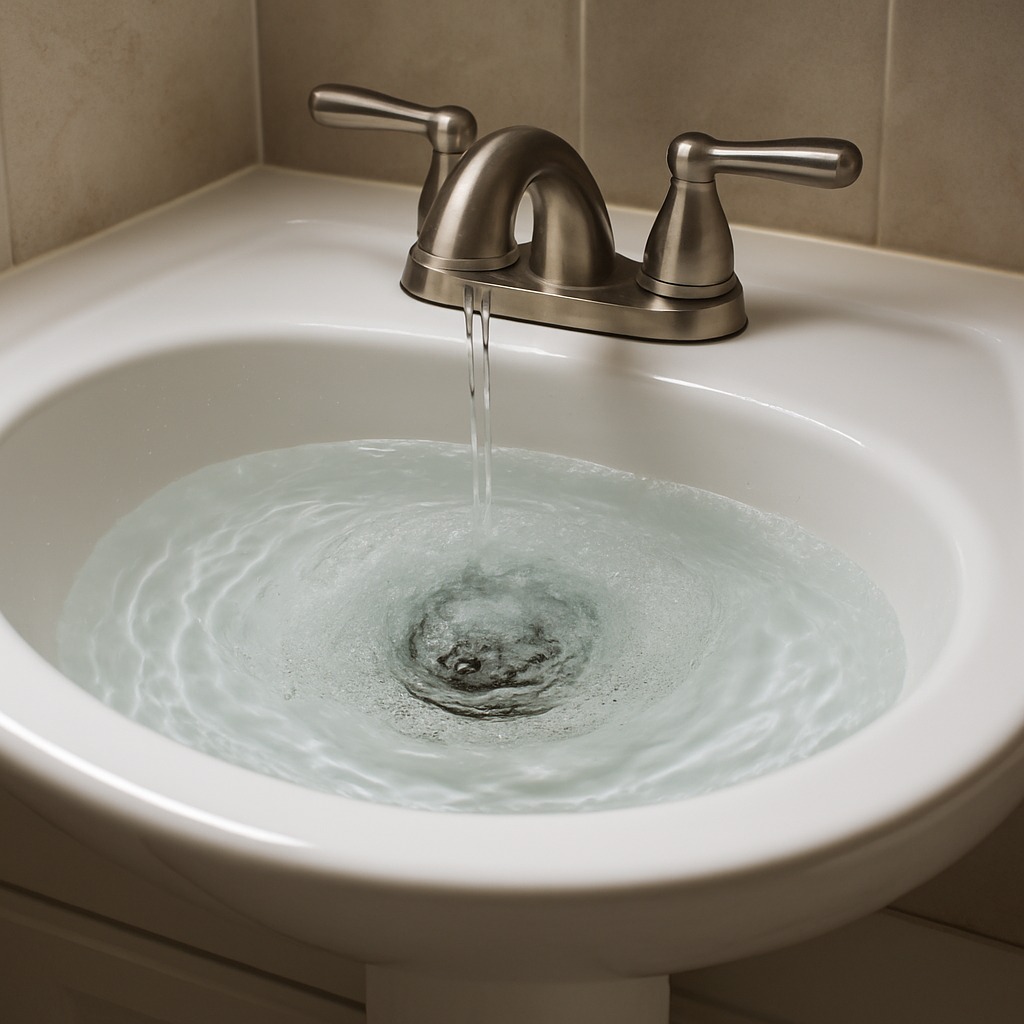
- Slow-draining water pooling in the basin: You turn on the faucet and water rises steadily, taking 30 seconds to several minutes to fully drain when it should empty in 5–8 seconds. You can see a visible water line forming around the bowl, and the drain emits a faint gurgling or sucking noise as it struggles to pull water through a partial blockage. The longer it sits, the more soap scum residue it leaves behind on the porcelain.
- Foul sewer or rotten-egg odor rising from the drain: You lean over the sink and catch a sulfuric, rotten-egg smell or a stale, musty odor, especially first thing in the morning or after the sink has sat unused for a day or two. This smell is biofilm — decomposing hair, skin cells, soap, and toothpaste trapped in the P-trap or tailpiece. The odor intensifies in warm, humid bathrooms and can permeate towels stored nearby.
- Standing water that will not drain at all: The basin fills and the water simply sits with zero movement. You may notice a slight film of soap or toothpaste scum floating on the surface. Tapping on the drain stopper or toggling the pop-up lever produces no change. This indicates a complete blockage somewhere between the pop-up assembly and the branch drain line, and water has no path forward.
- Gurgling or bubbling sounds from overflow hole or adjacent fixtures: When you run the faucet, you hear air bubbles percolating up through the overflow opening on the front of the sink or through a nearby bathtub or toilet. This audible symptom indicates a venting issue or a downstream blockage that is forcing air backward through the drain system, disrupting the pressure balance the plumbing needs to drain properly.
- Pop-up stopper stuck or not seating properly: The lift rod behind the faucet feels loose, does not raise the stopper fully, or the stopper sits crooked in the drain opening. You can visually see the stopper not clearing the drain flange, partially blocking water flow. Hair and debris tangled around the pivot rod underneath the sink are usually visible when you look under the vanity with a flashlight.
What's Actually Causing This
- Hair and soap-scum accumulation in the pop-up assembly: This is the number-one cause plumbers encounter, responsible for roughly 60–70 percent of bathroom-sink clogs. Hair wraps around the pivot rod and pop-up stopper ball, forming a net that catches soap, toothpaste, and skin cells. Over 6–18 months this mass hardens into a dense plug that narrows or fully blocks the 1.25-inch tailpiece. Homes with multiple long-haired occupants see this problem accelerate significantly, sometimes clogging in as little as 3 months without a drain screen.
- Biofilm and mineral buildup inside the P-trap: The P-trap holds 2–4 ounces of standing water as a sewer-gas seal. Over time, calcium and magnesium deposits from hard water (above 120 ppm) coat the interior walls of the trap, reducing the effective inside diameter from 1.25 inches down to as little as 0.5 inches. Biofilm — a slimy bacterial colony feeding on organic material — layers on top of the mineral scale, compounding the restriction. This cause is especially common in homes with well water or municipal water exceeding 10 grains per gallon hardness.
- Obstruction in the branch drain or wall piping: Objects like dental-floss bundles, small caps from toiletry products, cotton swabs, or children's small toys can lodge in the horizontal branch drain behind the wall. Because the branch line is typically 1.5-inch PVC or older 1.25-inch galvanized steel, even a small object creates a significant restriction. Galvanized pipes in homes built before 1970 also develop interior corrosion and rust scale that can reduce flow by 50 percent or more over decades, creating chronic slow drains that no amount of snaking fully resolves.
- Blocked or improperly installed vent pipe: Every drain requires a vent — usually a 1.5-inch pipe that ties into the main vent stack and exits through the roof. If this vent is blocked by bird nests, leaves, ice dams, or was never installed correctly during a remodel, the drain loses its air supply. Without venting, negative pressure develops in the drain line, creating a siphon effect that slows drainage to a crawl and causes the gurgling sounds described above. Plumbers estimate that roughly 10–15 percent of chronic slow-drain calls trace back to vent issues rather than actual clogs.
A 22-year master plumber we consulted says the number-one misdiagnosis homeowners make is assuming the clog is in the P-trap when it is actually in the wall-side horizontal branch line. Before you disassemble the trap, try this: fill the basin with about 3 inches of warm water, press a wet rag tightly over the overflow hole at the top of the bowl, then plunge vigorously with a flat-bottom cup plunger for 15–20 strokes. This creates real hydraulic pressure in the drain line rather than letting air escape through the overflow. If the water still does not budge, then remove the P-trap with a bucket underneath — the clog is likely 2–5 feet beyond the trap arm. At that point, a $12 hand-crank drum auger from any hardware store can save you a $175+ service call. Always hand-tighten PVC slip nuts back on; over-torquing with pliers cracks the ferrule and causes slow leaks inside the cabinet that go unnoticed for months.
Step-by-Step Diagnosis
Work through these steps before calling a contractor. Each step tells you what to look for and what it means.
Remove and clean the pop-up stopper assembly
🔧 Channel-lock pliers, flashlight, old toothbrushStart by pulling the pop-up stopper straight up out of the drain. Some stoppers lift out freely; others require a quarter-turn counterclockwise first. If it will not budge, go under the sink with a flashlight and locate the horizontal pivot rod entering the back of the tailpiece. Unscrew the retaining nut by hand or with channel-lock pliers — it is a plastic or chrome slip nut, typically 5/8 inch. Slide the pivot rod out, which releases the stopper from above. Pull the stopper free and peel off the tangled hair and debris by hand. Use an old toothbrush to scrub soap residue from the stopper and the inside of the drain flange. Reassembly is the reverse — insert the stopper, slide the pivot rod back through the ball, and hand-tighten the retaining nut. Test by running water for 15 seconds; it should drain in under 5 seconds. This single step resolves roughly 50 percent of bathroom-sink clogs.
Clear the drain with a zip-strip tool
🔧 Zip-It or barbed drain strip, rubber glovesPurchase a plastic barbed drain-cleaning strip — commonly sold as Zip-It or FlexiSnake — for about $3–5 at any hardware store. With the stopper removed, feed the 18–24-inch strip slowly down the drain opening until you feel resistance. Push gently past the resistance, then pull straight up in one smooth motion. The barbs will grab hair clumps and gunk lodged in the tailpiece and upper P-trap. Repeat three to four times until the strip comes out relatively clean. Run hot water for 30 seconds to flush loosened debris. Wear rubber gloves — the material that comes out is odorous and bacteria-laden. Dispose of the strip and debris in the trash, never the toilet. This tool works on clogs within the first 24 inches of the drain and is the most cost-effective DIY fix available.
Flush the drain with hot water and dish soap
🔧 Kettle or pot, liquid dish soapAfter physically removing debris with the strip, boil a full kettle or pot of water — roughly 1 to 1.5 quarts. Squirt two tablespoons of liquid dish soap (Dawn or similar grease-cutting formula) directly into the drain opening. Slowly pour the hot water into the drain in a steady stream, allowing the heat and surfactant to dissolve remaining soap scum and grease adhered to the pipe walls. Wait five minutes, then flush with cold tap water for 30 seconds. Caution: if your drain connections are PVC with glued joints, water above 140°F is safe, but do not use boiling water repeatedly on old, brittle PVC as thermal shock can soften cemented joints. For ABS or metal pipes, boiling water is fine. This flush loosens soft buildup the mechanical strip could not reach and helps verify the clog is fully cleared. Water should now swirl and drain within 3–4 seconds.
Remove, disassemble, and clean the P-trap
🔧 Channel-lock pliers or pipe wrench, bucket, bottle brush, flashlightPlace a bucket or large bowl directly under the P-trap — the curved pipe section beneath the sink. Using channel-lock pliers or a pipe wrench, loosen the two slip nuts on either end of the trap; they turn counterclockwise. PVC traps typically hand-loosen. Carefully lower the trap and dump its contents into the bucket. Expect 2–4 ounces of foul-smelling black water and possibly a solid clog of hair and mineral paste. Use a bottle brush or stiff wire to scrub the interior of the trap and the straight tailpiece above it. Inspect the trap arm — the horizontal pipe running into the wall — by shining a flashlight into the opening. If it is clear, reassemble the trap, making sure the washers seat flat, and hand-tighten plus a quarter-turn with pliers. Over-tightening cracks PVC nuts. Run water to check for leaks at both connections and verify drainage speed. Total time: 15–20 minutes.
Use a hand drain snake for deeper clogs
🔧 Hand-crank drum auger (1/4-inch, 25-foot), rags, bucketIf clearing the stopper, strip, and P-trap did not restore flow, the blockage is likely in the branch drain inside the wall. Purchase or rent a 15–25-foot hand-crank drain snake (also called a drum auger) with a 1/4-inch cable — available at hardware stores for $20–35. Remove the P-trap again and insert the snake cable directly into the wall drain opening. Feed the cable while cranking the handle clockwise. When you feel resistance, keep steady pressure and continue cranking — the auger head will either break through the clog or grab it so you can pull it out. Retrieve the cable slowly, wiping it with a rag as it comes out to keep the mess contained. Reassemble the P-trap and run water for one full minute to flush debris downstream. If the snake hits a hard stop or the drain still does not clear, the obstruction may be a collapsed pipe or root intrusion, and you need a professional with a camera.
When to Stop DIY and Call a Pro
Stop DIY and call a licensed plumber if you experience any of the following: the clog returns within two weeks of clearing, which usually signals a problem deeper in the branch or main line; water backs up into other fixtures such as the bathtub or toilet when you run the bathroom sink, indicating a shared drain or main-line blockage; you detect persistent sewer odor even after cleaning the trap, pointing to a broken vent or cracked drain pipe; the drain pipes under the sink are corroded galvanized steel that crumbles when you try to loosen fittings; or you see water stains, soft drywall, or mold on the wall behind the vanity or on the ceiling below, which suggests a concealed leak from a compromised fitting. Financially, if you have already spent $30–50 on DIY tools and the problem persists, a professional drain cleaning runs $150–$300 on average and includes a camera inspection in many markets. Delaying at that point risks water damage repairs that can easily run $800–$2,500 for drywall, subfloor, and mold remediation — far exceeding the cost of a service call.
What Does This Repair Cost?
Costs vary by region, home age, and severity. These are national averages — always get 3 quotes.
| Repair Type | DIY Cost | Pro Cost | Emergency Premium |
|---|---|---|---|
| Pop-up stopper / hair clog removal | $0–$7 | $100–$175 | $175–$300 |
| P-trap disassembly & cleaning | $0–$12 | $125–$225 | $200–$350 |
| Branch line snaking (motorized auger) | Not recommended | $175–$350 | $300–$550 |
| Emergency after-hours service call | N/A | $200–$400 | $350–$600 |
*Emergency rates (nights/weekends/holidays) run 40–60% above standard. Get 3 quotes before approving work.
Get quotes from licensed professionals in your area
Free, no obligation — compare 3+ contractors in minutesWhat Drives the Cost?
| Cost Factor | Estimated Impact | Why It Matters |
|---|---|---|
| Time of service (evenings, weekends, holidays) | Adds $75–$200 | After-hours and weekend rates carry a 50–100% surcharge at most plumbing companies |
| Accessibility of pipes (wall-mounted vs. pedestal vs. vanity) | Adds $50–$150 | Pedestal and wall-hung sinks require more disassembly labor to access the trap and branch line |
| Pipe material (PVC vs. cast iron vs. galvanized) | Adds $100–$300 | Older galvanized or cast-iron drains may need section replacement if corroded, significantly raising parts and labor |
| Geographic water hardness | Adds $50–$175 | Hard-water regions require descaling equipment and longer auger time, increasing the service duration and cost |
Regional water hardness dramatically changes what is clogging your bathroom sink. In hard-water areas — Phoenix, San Antonio, most of Florida, the upper Midwest — calcium and magnesium deposits calcify inside 1.25-inch lavatory drain lines and reduce effective diameter by up to 40% within 5–7 years. Chemical drain openers do almost nothing against mineral scale. A plumber with a small-diameter descaling head on a motorized auger can restore full flow for $200–$325, while a full drain-line replacement runs $350–$550 in parts and labor. If you live in a hard-water zone, installing a $30 mesh drain catch and running a citric-acid flush (two tablespoons dissolved in a quart of hot water) every 60 days keeps scale in check. This one habit alone can extend the service life of your drain piping by a decade and save $400+ in avoided plumber visits over five years.
⚠️ Stop DIY — Call a Pro If You See These
- Water backing up into the bathtub or toilet when the sink runs — Indicates a shared main-line blockage that can escalate to a full sewage backup within days, with cleanup costs ranging from $2,000 to $10,000 depending on contamination level.
- Persistent sewer-gas smell even after cleaning the P-trap — May indicate a cracked drain pipe or failed vent allowing sewer gases (including methane and hydrogen sulfide) into living space, posing health risks and code violations that worsen until repaired — typical vent repair runs $200–$600.
- Visible mold or water staining on the wall behind the vanity or ceiling below — Signals an active leak from a corroded fitting or cracked pipe. Within 48–72 hours, mold colonies establish on damp drywall. Mold remediation averages $1,500–$3,500 for a small bathroom; the longer you wait, the more material must be removed.
- Drain clog returns within one to two weeks after clearing — Recurring clogs typically indicate interior pipe corrosion, partial pipe collapse, or root intrusion in the branch line. Without a camera inspection ($100–$250) and professional repair, the pipe will eventually fail completely, requiring emergency service at premium rates.
Frequently Asked Questions
How much does it cost to fix Bathroom Sink Not Draining?
For a straightforward clog, professional drain cleaning costs $150–$300 nationally, with the low end around $100 for a simple snake-and-clear in accessible piping and the high end reaching $500 or more when the plumber needs to pull the sink, camera-inspect the line, or access an in-wall clog. Two factors that move the price most are location of the blockage (under-sink versus in-wall or main line) and pipe material — corroded galvanized steel is harder to work on and often requires section replacement at $300–$600 additional. Service-call or trip fees of $50–$100 are common on top of the repair price.
Can I fix Bathroom Sink Not Draining myself?
Yes, in most cases. Approximately 70–80 percent of bathroom-sink clogs are in the pop-up assembly or P-trap — areas a homeowner can access with basic tools like channel-lock pliers, a bucket, and a $4 drain strip. The job takes 15–30 minutes. However, if the blockage is past the wall or involves corroded galvanized piping, a hand snake may not reach it or the fittings may break when disturbed. If you are not comfortable working under the sink or if the pipes look heavily corroded, skip straight to a professional to avoid turning a $200 fix into a $600 pipe-repair job.
How urgent is Bathroom Sink Not Draining?
A slow drain is a days-level urgency — you have time to attempt DIY over a weekend. A completely stopped drain with standing water should be addressed within 24–48 hours because stagnant water breeds bacteria, biofilm grows rapidly in warm bathrooms, and the standing water can overflow if someone accidentally turns on the faucet. If the stoppage is causing backup into other fixtures, treat it as same-day urgent: a shared-line blockage can escalate to sewage backup in hours under heavy household water use. Every day you wait with a partial clog, mineral and biofilm deposits continue to harden, making the eventual fix more difficult and expensive.
What causes Bathroom Sink Not Draining?
The top cause is hair and soap-scum buildup wrapped around the pop-up stopper and pivot rod — this accounts for about 60–70 percent of calls. The second most common cause is mineral scale and biofilm narrowing the P-trap, especially in areas with hard water above 10 grains per gallon. A less common but significant third cause is a blocked plumbing vent, which starves the drain of air and creates negative pressure that slows water flow. Each cause has a different fix location, which is why systematic diagnosis starting at the stopper and working downstream saves time and money.
Will homeowners insurance cover Bathroom Sink Not Draining?
Standard homeowners insurance does not cover drain cleaning, routine maintenance, or clogs caused by normal use — these are considered homeowner maintenance responsibilities. However, if a clogged drain causes a sudden and accidental discharge of water that damages floors, walls, or ceilings, the resulting water damage is typically covered under your dwelling and personal-property coverage, subject to your deductible (commonly $1,000–$2,500). Gradual leaks or long-term seepage are generally excluded. If you discover mold from a slow leak, most standard policies exclude mold unless you carry a specific mold endorsement. Document everything with photos and file the claim within 24–48 hours of discovery for best results.
How do I find a licensed plumber for this?
First, verify the plumber holds a valid state or local plumbing license — you can check your state's contractor licensing board website by entering their license number. Second, confirm they carry general liability insurance (minimum $500,000) and workers' compensation coverage; ask for a certificate of insurance. Third, request a written quote that itemizes the service-call fee, hourly labor rate, and any camera-inspection charges before work begins — reputable plumbers will provide this without pushback. Fourth, check references or online reviews on at least two platforms (Google, Better Business Bureau, or Nextdoor). Avoid any plumber who demands full payment upfront, refuses to provide a license number, or quotes over the phone without seeing the job.
A bathroom sink that won't drain comes down to three decisions: first, determine whether the blockage is at the pop-up stopper, in the P-trap, or deeper in the branch line — each location dictates a different approach and tool. Second, decide whether the pipe material and your comfort level support a DIY fix or require a professional, especially with corroded galvanized steel or in-wall obstructions. Third, assess the urgency — a slow drain gives you a weekend to troubleshoot, but backups into other fixtures or visible water damage demand a same-day call to a licensed plumber.
Your recommended next step: remove the pop-up stopper right now, clean it, and run a barbed drain strip down the opening. This five-minute test clears the majority of bathroom-sink clogs at zero or near-zero cost. If the water still drains slowly after clearing the stopper and the P-trap, call a licensed plumber for a drain-cleaning and camera inspection — expect to spend $150–$300, which is a fraction of the water-damage repair bill you will face if you let the problem worsen. Act on it today; clogs do not fix themselves and they never get cheaper to resolve.
Ready to Solve This for Good?
Get matched with pre-screened, licensed plumbers in your area. Free quotes, no obligation, no spam.
GET FREE QUOTES NOW