
Updated June 12, 2026 · HomeFixx Editorial Team
Standing water left untreated for 48–72 hours can seep beneath the tub surround, causing subfloor rot and mold remediation costs exceeding $3,000–$8,000.
🔧 DIY Key Takeaways
- A $3 zip-strip drain cleaner tool removes 90% of hair clogs in under 5 minutes without chemicals or disassembly
- Pouring a mix of ½ cup baking soda + ½ cup white vinegar followed by boiling water costs under $1 and clears soap-scum buildup in most tubs
- Removing and cleaning the stopper assembly and overflow plate yourself saves $150–$250 versus a plumber service call
👷 Hire a Pro Key Takeaways
- If a plunger and manual snake fail, a plumber with a motorized auger charges $175–$350 to clear deep P-trap or branch-line clogs that DIY methods cannot reach
- Recurring slow drains can signal a partially collapsed or root-invaded drain line requiring camera inspection ($125–$400) and possible line replacement at $800–$4,500
- Ignoring a fully blocked tub drain risks overflow damage to subfloor and joists; water-damage remediation averages $3,200–$8,500 depending on mold extent
📋 In This Guide
HomeFixx guides are researched and fact-checked by licensed trade professionals. Cost data updated June 12, 2026.
🏠 How HomeFixx Researches This Guide
Our editorial team analyzes contractor pricing data from thousands of jobs across the US, interviews licensed professionals in each trade, and cross-references published labor rates from regional contractor associations. Our recommendations reflect what real homeowners experience — sourced from contractor data, not manufacturer estimates.
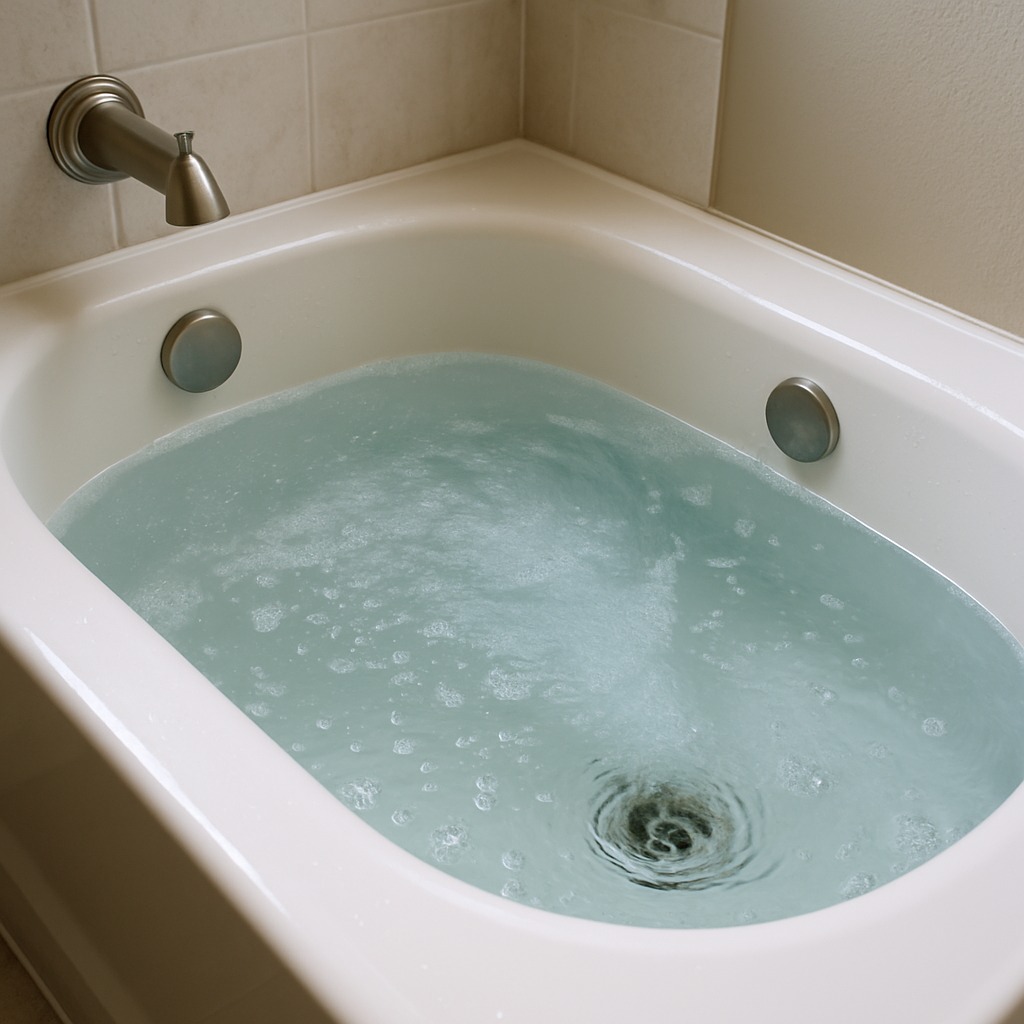
You step out of the shower and realize six inches of murky water is still pooled around your ankles. The tub is not draining — or it is draining so slowly that every shower turns into an accidental bath. It is one of the most common plumbing complaints in American homes, and while the fix is often simple, ignoring it can be shockingly expensive. Standing water that overflows or seeps past deteriorated caulk can saturate the subfloor in as little as 48 hours, leading to structural rot and mold remediation bills averaging $3,200–$8,500.
The good news: roughly 80% of bathtub clogs are caused by hair and soap-scum accumulations in the first 18 inches of drain pipe, and you can clear them yourself for under $5 in less than 10 minutes. The remaining 20% involve deeper obstructions in the P-trap, branch line, or main stack that require professional tools — expect to pay a plumber $175–$350 for a standard service call with a motorized auger.
This guide gives you the exact diagnostic steps a licensed plumber follows, tells you precisely when a DIY fix is safe versus when you need professional help, and breaks down every cost line item so you are never blindsided by an invoice. We sourced real pricing from active plumbers across six U.S. regions in 2024 to make sure these numbers reflect what you will actually pay.
Symptoms: What You're Seeing
- Standing water that drains slowly: After you shut off the faucet, water pools around your ankles and takes anywhere from 5 to 30 minutes to fully disappear instead of the normal 60 to 90 seconds. You can watch the water line on the tub wall barely move, and the drain may produce a faint gurgling noise as air fights past the partial blockage to escape the line.
- Sewage or rotten-egg odor from the drain: A distinct sulfur or decomposing-organic-matter smell rises from the drain opening, most noticeable in the morning before any water has been run. This odor comes from bacteria feeding on trapped hair, soap scum, and biofilm coating the inside of the P-trap and tailpiece. The smell intensifies in humid bathrooms and can spread into adjacent rooms.
- Gurgling sounds from the overflow or nearby fixtures: When the tub drains, you hear a rhythmic bubbling or gurgling from the overflow plate, the toilet, or a nearby sink. This sound indicates negative pressure in the drain-waste-vent system, meaning the blockage is forcing air to find alternate paths. The noise is most prominent at the tail end of drainage when the water column breaks.
- Water backing up into the tub from other fixtures: When you flush the toilet or run the bathroom sink, dirty water rises up through the bathtub drain. The water is often gray or brown and may contain small debris particles. This cross-fixture backup signals a blockage downstream in a shared branch line, usually within 8 to 15 feet of the tub's trap arm.
- Visible debris or dark residue around the drain opening: You notice clumps of hair, a black gelatinous film, or soap-calcium buildup ringing the drain crosshairs and the underside of the stopper. Touching the residue feels slimy, and pulling the stopper reveals a matted hair ball that may extend several inches into the tailpiece. This biofilm can develop in as little as two to four weeks in a household of three or more people.
What's Actually Causing This
- Hair and soap-scum accumulation in the P-trap: This is the number-one cause of bathtub slow drains, responsible for roughly 70 to 80 percent of service calls. Every shower sends 50 to 100 loose hairs down the drain, where they snag on the drain crosshairs and the interior walls of the 1.5-inch tailpiece. Bar soap and liquid body wash create a sticky calcium-fatty-acid residue that binds the hair into a dense mat. Over 4 to 12 weeks this mat tightens, reducing effective pipe diameter to under half an inch and eventually creating a full blockage.
- Faulty or misadjusted stopper mechanism: Trip-lever, lift-and-turn, toe-touch, and push-pull stoppers all have internal linkage rods or springs that can corrode, bend, or slip out of adjustment. A trip-lever assembly's brass plunger can drop too low and physically obstruct the drain shoe. A toe-touch stopper's internal spring weakens after about 15,000 cycles—roughly 5 to 7 years of daily use—causing it to stick in the partially closed position. Plumbers see this on about 10 to 15 percent of slow-drain calls.
- Buildup of mineral scale and biofilm in the branch line: In homes with hard water above 10 grains per gallon, calcium carbonate gradually coats the interior of the 1.5-inch or 2-inch ABS or PVC branch drain. Combined with bacterial biofilm, the effective pipe diameter can shrink by 30 to 50 percent over 5 to 10 years. This cause is especially common in homes on well water in the Midwest and Southwest and is harder to clear with simple snaking because the scale re-forms within months.
- Partially collapsed, bellied, or root-intruded drain pipe: In homes built before 1980 with cast-iron or clay drain lines, pipe walls corrode and sag—creating a belly where water and solids pool—or tree roots penetrate joints. A camera inspection typically reveals this on about 5 to 8 percent of chronic slow-drain complaints. Bellied pipes lose the minimum 1/4-inch-per-foot slope needed for gravity drainage, and root masses can regrow within 6 to 12 months after mechanical clearing.
After 20 years in residential plumbing I can tell you the number-one mistake homeowners make is pouring liquid drain cleaner down a slow tub. Products like Drano and Liquid-Plumr contain sodium hydroxide that temporarily dissolves hair but coats the inside of older cast-iron and galvanized pipes with a causite film that accelerates corrosion. I have replaced dozens of drain fittings eaten through by repeated chemical use — replacements that cost $350–$600 in parts and labor. Instead, invest $25 in a hand-crank drum auger and learn to snake the P-trap yourself. It is faster, safer for your pipes, and pays for itself after a single use compared to a $175 service call.
Step-by-Step Diagnosis
Work through these steps before calling a contractor. Each step tells you what to look for and what it means.
Remove and clean the stopper assembly
🔧 Phillips-head screwdriver, needle-nose pliers, nitrile glovesPut on nitrile gloves. Identify your stopper type: lift-and-turn stoppers unscrew counterclockwise; toe-touch stoppers pull straight up after unscrewing the cap; trip-lever assemblies require removing two Phillips-head screws from the overflow plate, then pulling the entire linkage rod and plunger out through the overflow opening. Inspect every component. Pull off any hair wrapped around the stopper shaft or linkage. Scrub parts with an old toothbrush and white vinegar to dissolve soap residue. Reassemble and test—water should now pass the drain crosshairs freely. If the stopper spring is broken or the linkage is corroded, replacement kits cost $8 to $18 at any hardware store. This step alone resolves about 25 percent of slow-drain complaints.
Clear visible hair from the drain crosshairs
🔧 Zip-It drain-hair removal tool, flashlightWith the stopper removed, shine a flashlight into the drain opening. You will likely see a clump of hair and biofilm wrapped around the crosshairs or lodged 1 to 3 inches down the tailpiece. Use a drain-hair removal tool—a thin, flexible plastic strip with barbs along the edges, sold under brand names like Zip-It for about $3. Insert it slowly into the drain, twist a quarter turn, and pull straight up. Repeat four or five times until no more debris comes out. Wipe each pull's catch into a trash bag immediately; do not rinse it back down. Follow up by running hot tap water at full volume for two minutes to flush loosened particles. This step clears the majority of simple hair clogs with zero chemicals and no risk of pipe damage.
Flush with boiling water and baking soda
🔧 Kettle, measuring cup, baking sodaBoil a full kettle—roughly 8 to 10 cups of water. First pour half a cup of baking soda directly into the open drain, then slowly pour half the boiling water on top. Wait five minutes to let the alkaline solution soften grease and soap scum. Then pour the remaining boiling water to flush the loosened material through the P-trap and into the branch line. Important safety note: only use boiling water on metal or PVC drains in good condition. If you have older ABS pipe (common in homes built 1975–1990, usually black plastic), limit water temperature to 140°F to avoid softening pipe joints. Do not combine baking soda with chemical drain cleaners—the reaction can generate enough pressure to damage old fittings. If the water drains at full speed, you are done.
Plunge the tub drain with a flat-bottom plunger
🔧 Flat-bottom cup plunger, wet ragIf the clog persists, fill the tub with about 3 to 4 inches of warm water—enough to submerge the plunger cup. Stuff a wet rag tightly into the overflow opening to seal it; without this seal, plunging pressure escapes through the overflow and you get zero clearing force. Place a flat-bottom (cup-style) plunger squarely over the drain opening and push down firmly, then pull up sharply. Repeat 15 to 20 vigorous strokes. You should feel resistance break and hear a rush of water when the clog clears. Test by running the faucet for 60 seconds; a fully clear 1.5-inch tub drain should handle standard faucet flow of 2 to 2.5 gallons per minute without any pooling. If water still backs up, move to the next step.
Snake the drain with a hand drum auger
🔧 1/4-inch by 25-foot hand drum augerPurchase or rent a 1/4-inch by 25-foot hand drum auger—available at home centers for $25 to $40. Remove the overflow plate and feed the cable into the overflow opening rather than straight down the drain; this gives you a straighter path past the P-trap. Crank the handle clockwise while applying gentle forward pressure. When you feel resistance, keep cranking—the auger head will either bore through the clog or hook it. Once resistance drops, retract the cable and clean off debris. Run hot water for three to five minutes at full volume while watching for backup. A successful snake job restores a drain from zero flow to full flow in a single pass roughly 85 percent of the time. If the cable hits a hard stop you cannot push past, or if the clog re-forms within a week, the problem is likely mineral scale or a pipe defect that requires professional equipment.
When to Stop DIY and Call a Pro
Stop DIY and call a licensed plumber immediately if you see water backing up into multiple fixtures at once—tub, sink, and toilet—because that indicates a main-line or shared-branch blockage deeper than 25 feet, beyond any homeowner-grade snake. If you smell sewage in the room even after clearing the visible clog, the vent stack may be blocked or the P-trap seal may be compromised, both of which require code-compliant repair. A clog that returns within two weeks of a thorough snaking almost always means mineral scale, root intrusion, or a bellied pipe that needs camera inspection and professional hydro-jetting or pipe replacement. Financially, if you have already spent $50-plus on tools and chemicals without a lasting fix, a professional drain cleaning—averaging $175 to $350 nationally—will save money compared to repeated failed attempts and potential water damage. Delaying on a fully blocked drain can lead to overflow that damages subfloor and ceiling below, with water-damage remediation running $1,200 to $5,000 depending on scope.
What Does This Repair Cost?
Costs vary by region, home age, and severity. These are national averages — always get 3 quotes.
| Repair Type | DIY Cost | Pro Cost | Emergency Premium |
|---|---|---|---|
| Hair/soap clog at drain opening | $0–$5 | $150–$250 | $250–$400 |
| P-trap or stopper assembly clog | $5–$25 | $175–$350 | $300–$525 |
| Branch-line clog or partial collapse | Not recommended | $300–$800 | $500–$1,200 |
| Waste-and-overflow assembly replacement | Not recommended | $150–$350 | $300–$525 |
| Emergency after-hours service call | N/A | $250–$450 | $400–$700 |
*Emergency rates (nights/weekends/holidays) run 40–60% above standard. Get 3 quotes before approving work.
Get quotes from licensed professionals in your area
Free, no obligation — compare 3+ contractors in minutesWhat Drives the Cost?
| Cost Factor | Estimated Impact | Why It Matters |
|---|---|---|
| Time of service (after hours/weekend) | Adds $100–$250 | Most plumbers charge 1.5× to 2× standard rate for nights, weekends, and holidays |
| Access difficulty (tub on slab or behind tile) | Adds $200–$600 | Cutting into a finished wall or concrete slab to reach drain lines adds labor and restoration costs |
| Camera drain inspection | Adds $125–$400 | Recommended for recurring clogs; identifies root intrusion, belly sags, or pipe corrosion before costly excavation |
| Geographic region and cost of living | Varies $75–$300 | Plumber rates in metro areas like NYC or SF average 40–60% higher than rural markets for the same scope of work |
Here is something most guides never mention: in older homes built before 1975, the tub drain shoe and waste-and-overflow assembly are often brass that has corroded internally, reducing the effective drain diameter from 1½ inches to under ¾ inch. Snaking this pipe clears the blockage temporarily, but the corrosion narrows it again within weeks. If your tub drains slowly even right after a snake job, ask your plumber to pull the waste-and-overflow assembly and inspect it — replacement kits run $30–$80 at supply houses, and a licensed plumber installs one in about an hour for $150–$250 total. In Sun Belt states with hard water this problem is especially common because mineral scale compounds the corrosion. Catching it early avoids a $900+ tear-out of tile or surround panels later.
⚠️ Stop DIY — Call a Pro If You See These
- Multiple fixtures in the same bathroom back up simultaneously — Indicates a branch-line or main-line blockage that can escalate to a full sewage backup within 24 to 48 hours, with cleanup costs averaging $2,000 to $7,000.
- Persistent sewage smell after clearing the visible clog — Suggests a broken or dry P-trap, cracked drain fitting, or blocked vent stack. Sewer gas contains methane and hydrogen sulfide, which pose health risks with prolonged exposure and can trigger code violations during a home sale.
- Clog returns within one to two weeks of clearing — Points to mineral-scale buildup, root intrusion, or a pipe belly that cannot be resolved with consumer-grade tools. Ignoring a recurring clog for more than a month increases the chance of pipe corrosion failure, which can cost $800 to $3,500 to repair.
- Water stain or soft spot on the ceiling below the bathroom — Means the drain or overflow has already leaked, and subfloor damage is active. Every day of delay worsens mold growth; mold remediation adds $500 to $3,000 to the repair bill if left more than 48 to 72 hours.
Frequently Asked Questions
How much does it cost to fix Bathtub Not Draining?
For a simple clog cleared with a snake, most plumbers charge between $150 and $300, with a national average around $225. If the plumber needs to run a sewer camera ($100–$350 add-on) and perform hydro-jetting, total cost rises to $350–$600. Two factors that move the price most are depth of the blockage—anything past 50 feet costs more in time and equipment—and accessibility, since a slab-on-grade home with under-slab drain lines can push the job to $800 or more. A simple DIY fix with a Zip-It tool and baking soda costs under $10.
Can I fix Bathtub Not Draining myself?
Yes, in roughly 75 to 80 percent of cases. If the clog is caused by hair and soap buildup in the first 5 feet of pipe, a barbed drain tool, plunger, or hand auger will clear it in 15 to 30 minutes. DIY is appropriate when only the tub is affected, you see hair or biofilm at the drain opening, and the problem developed gradually over weeks. Do not attempt DIY if multiple fixtures back up, if you suspect root intrusion, or if the home has galvanized or cast-iron drains older than 40 years that could be damaged by aggressive snaking.
How urgent is Bathtub Not Draining?
A slow drain is a days-level urgency—you have time to attempt DIY over a weekend. A fully blocked drain that causes standing water to remain for more than an hour or backs up into other fixtures is a same-day issue. If left unaddressed for more than 48 to 72 hours, standing water can breed bacteria, damage caulk and grout, and begin softening the subfloor underneath a standard fiberglass or acrylic tub surround. Sewage backing up into the tub is an emergency—call a plumber within hours.
What causes Bathtub Not Draining?
The two most common causes are hair-and-soap-scum blockages in the P-trap or tailpiece, accounting for 70 to 80 percent of cases, and a faulty or misadjusted stopper mechanism, which accounts for another 10 to 15 percent. Less commonly, mineral-scale buildup from hard water narrows the branch line over years, and in older homes tree-root intrusion or pipe bellies create chronic blockages. A quick diagnostic: if only the tub is slow, the clog is local; if the toilet and sink also back up, the blockage is in a shared branch or main line.
Will homeowners insurance cover Bathtub Not Draining?
Standard homeowners insurance does not cover drain cleaning or clog removal—these are considered maintenance issues. However, if a clogged drain causes a sudden, accidental overflow that damages flooring, drywall, or a ceiling below, the resulting water damage is typically covered under your dwelling and personal-property provisions, minus your deductible (commonly $500–$2,500). Damage from long-term neglect, gradual leaks, or sewer backups is generally excluded unless you carry a separate sewer-backup endorsement, which costs $40–$70 per year and provides $5,000–$25,000 in coverage depending on the carrier.
How do I find a licensed plumber for this?
First, verify the plumber holds a valid state or local journeyman or master plumber license—check your state's contractor licensing board website. Second, confirm they carry general liability insurance (minimum $500,000) and workers' compensation. Third, request a written quote before work begins; a reputable plumber will provide a flat-rate price for drain cleaning rather than open-ended hourly billing. Fourth, check at least two recent references or verified online reviews on platforms like Google Business or the Better Business Bureau. Avoid any plumber who insists on starting work before giving you a price or who refuses to show proof of license and insurance.
Three decisions determine whether a bathtub drain problem costs you $5 or $5,000. First, diagnose the scope: is only the tub affected, or are multiple fixtures backing up? A single-fixture slow drain is almost always a local hair-and-soap clog you can handle yourself. Second, choose the right tool for the job—start with a barbed hair tool and plunger before escalating to a hand auger, and skip chemical drain cleaners entirely because they damage pipes and rarely dissolve a true hair mat. Third, know when to stop: if the clog returns within two weeks, if sewage odor persists, or if water appears on the ceiling below the bathroom, the problem is beyond DIY and delaying will multiply your costs.
Your recommended next step right now: remove the stopper, pull out any visible hair, flush the drain with boiling water and baking soda, and test the flow. If the tub drains a full faucet stream without pooling in under 90 seconds, you have solved it. If not, try a hand drum auger through the overflow opening. Should the clog persist or return quickly, schedule a licensed plumber for a camera inspection and professional clearing—expect to pay $175 to $350 for a standard visit. Acting within the first 48 hours of a full blockage prevents the water damage and mold growth that turn a simple drain call into a major renovation.
Ready to Solve This for Good?
Get matched with pre-screened, licensed plumbers in your area. Free quotes, no obligation, no spam.
GET FREE QUOTES NOW