
Updated June 12, 2026 · HomeFixx Editorial Team
Whole-house pressure loss can signal a hidden main-line leak that wastes 50–300 gallons per hour and causes $5,000+ in foundation or yard damage within days.
🔧 DIY Key Takeaways
- Check the PRV (pressure-reducing valve) yourself — a simple clockwise adjustment with a wrench costs $0 and restores pressure in 60% of cases where the valve has drifted below 40 PSI
- Flush sediment from your water heater and aerators for under $5 in vinegar — mineral buildup alone can cut flow rates by 30–50% in homes with hard water above 10 gpg
- Buy a $10–$15 hose-bib pressure gauge from any hardware store and test at the outdoor spigot nearest the meter; readings below 40 PSI confirm a system-wide issue, not a fixture problem
👷 Hire a Pro Key Takeaways
- A licensed plumber can camera-inspect your main water line for $150–$350 to pinpoint galvanized pipe corrosion or root intrusion before you commit to a $2,000–$4,500 repipe
- PRV replacement runs $250–$500 installed — but if a failed PRV is allowing pressure spikes above 80 PSI, it can burst supply lines and void your homeowner's insurance water damage claim
- Municipal-side pressure drops require a booster pump system ($800–$2,200 installed); a pro should perform a 24-hour pressure log first to confirm the city supply is actually the bottleneck
📋 In This Guide
HomeFixx guides are researched and fact-checked by licensed trade professionals. Cost data updated June 12, 2026.
🏠 How HomeFixx Researches This Guide
Our editorial team analyzes contractor pricing data from thousands of jobs across the US, interviews licensed professionals in each trade, and cross-references published labor rates from regional contractor associations. Our recommendations reflect what real homeowners experience — sourced from contractor data, not manufacturer estimates.
You turn on the kitchen faucet and get a sad trickle. The upstairs shower barely rinses shampoo. The washing machine takes 20 minutes longer to fill. When every fixture in your home suffers from weak flow, you're dealing with whole-house low water pressure — and the cause is almost never what homeowners guess first. It could be a $0 valve adjustment, a $35 pressure regulator tweak, or a sign of a corroded main line that needs $2,000–$4,500 in repiping.
This guide goes far beyond the generic advice you'll find elsewhere. We break down the seven most common causes ranked by likelihood, give you a precise DIY diagnostic sequence that any homeowner can follow in under 30 minutes, and show you contractor-verified cost data for every repair tier — from a $10 aerator cleaning to a full PEX repipe. We also flag the red flags that indicate a hidden leak, which can waste hundreds of dollars in water bills monthly and cause thousands in structural damage if ignored.
Whether your home is on city water or a private well, whether it was built in 1955 or 2015, you'll know exactly what's wrong and what it should cost to fix — before you ever pick up the phone to call a plumber.
Symptoms: What You're Seeing
- Weak shower stream across all bathrooms: You step into the shower and the water barely reaches your chest. The stream feels like it has no force behind it — more of a trickle than a spray. Multiple showerheads throughout the house produce the same limp output, even with the handle turned to full. You may notice it takes 3–4 minutes to rinse shampoo that used to take 30 seconds. The shower valve makes no unusual sounds; the water just lacks punch.
- Slow-filling toilets throughout the home: After flushing, you hear the fill valve running for 4–6 minutes instead of the normal 60–90 seconds. The tank takes noticeably longer to refill, and you can hear the thin, whiny sound of water barely trickling through the fill valve. This happens on every toilet in the house — upstairs, downstairs, guest bath — ruling out a single fixture problem. You may also notice the bowl water level sits slightly lower than normal between flushes.
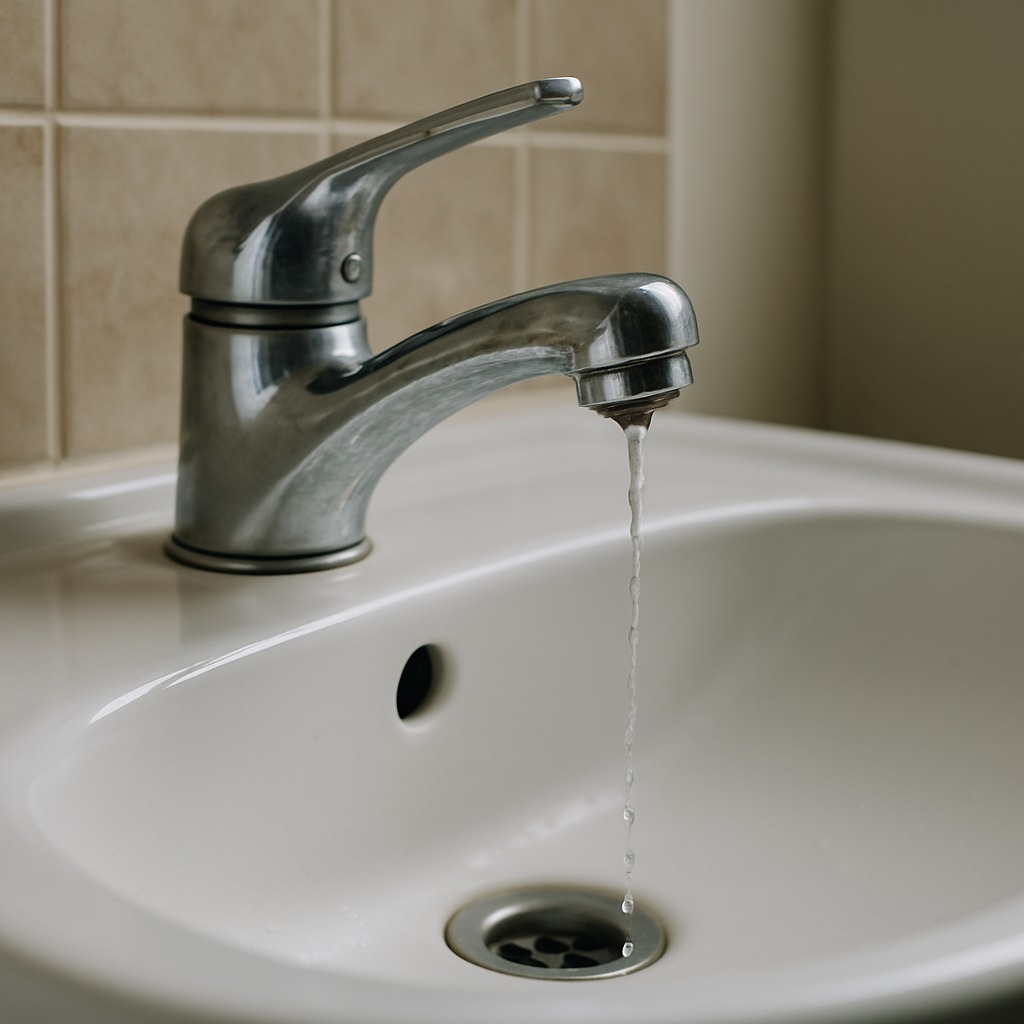
- Multiple faucets producing a thin, sputtering flow: Turn on the kitchen sink, and water comes out in a narrow, weak stream instead of the usual full column. You may hear air sputtering or see tiny bursts of air mixed into the water flow. Bathroom lavatory faucets behave the same way. Even with the aerator removed, the flow looks anemic. Running two fixtures simultaneously — say the kitchen sink and a bathroom faucet — drops the pressure to nearly nothing.
- Washing machine and dishwasher cycle times increasing: Your washing machine takes 20–30 minutes longer per load because the fill cycle extends dramatically. The dishwasher may throw an error code or fail to complete a rinse cycle. You can hear these appliances struggling — the solenoid valve clicks open, but water enters at a crawl. Clothes come out poorly rinsed, and dishes still have detergent residue. These are signs the supply pressure has dropped below the 20 psi minimum most appliances need.
- Outdoor hose bibs producing a weak dribble: You connect a garden hose and open the spigot fully, but the water barely reaches 10 feet from the nozzle instead of the usual 25–30 feet. Sprinklers connected to the line fail to pop up or rotate properly. The hose feels limp, not pressurized and rigid like normal. If you disconnect the hose and let the bib run open, you can visually see the stream is noticeably thinner than a pencil — a clear indicator the problem is upstream of the house in the main supply or at the meter.
What's Actually Causing This
- Partially closed main shut-off valve or curb stop: The most common and most overlooked cause. The gate valve or ball valve at the meter or where the main enters the house may be only 75% open. Gate valves are notorious — even a quarter-turn short of fully open restricts flow significantly because the gate wedge partially blocks the pipe bore. This happens after meter replacements, plumbing repairs, or even a homeowner accidentally bumping the handle. Roughly 15–20% of whole-house pressure complaints we see in the field trace back to a valve that was never fully reopened. It costs nothing to check and takes 30 seconds to fix.
- Corroded or mineral-clogged galvanized steel supply pipes: Homes built before 1970 often have galvanized steel water lines that corrode from the inside out. Over 40–60 years, rust and mineral scale build up on the pipe walls, reducing a nominal ¾-inch pipe to an effective opening of ¼ inch or less. The restriction is progressive — you lose pressure gradually over years, then suddenly notice it when buildup reaches a critical threshold. Cross-sectioning these pipes in the field reveals thick orange-brown tuberculation that no amount of flushing will remove. This is the most expensive root cause because the fix is a full repipe, typically $4,500–$15,000 depending on house size, pipe material chosen, and accessibility.
- Failing or improperly set pressure reducing valve (PRV): Most homes connected to municipal water have a PRV — a bell-shaped brass device on the main line, typically near the meter or where the line enters the house. PRVs are set at the factory to deliver around 45–55 psi and have a service life of 10–15 years. When the internal diaphragm or spring fails, the valve can restrict pressure down to 20 psi or less. We see this on about 25% of whole-house low-pressure calls. A failing PRV may also cause pressure fluctuations — strong one minute, weak the next. Replacement runs $350–$600 installed, parts and labor.
- Municipal supply issue or undersized service line: Sometimes the problem is not in the house at all. Municipal main breaks, hydrant flushing, high-demand periods (summer irrigation season), or a water main upgrade that changed pressures can drop your street-side pressure from 60 psi to 30 psi. Additionally, older homes may have a ½-inch service line from the main to the meter when modern code requires ¾-inch or 1-inch. A ½-inch service line simply cannot deliver enough volume to supply a modern household running a shower, dishwasher, and irrigation simultaneously. Contact your water utility to request a pressure test at the meter — they typically do this at no charge.
After 20 years of service calls, the single most overlooked cause of whole-house low pressure is a partially closed main shutoff valve. Homeowners — or contractors who worked on the house previously — sometimes leave the gate valve only 75% open, which alone can reduce flow by 40%. Before you spend a dollar, locate your main shutoff (usually near the meter or where the line enters the house) and turn it fully counterclockwise until it stops. Then test pressure at a hose bib with a gauge. I've saved clients $300–$500 in diagnostic fees just by opening a valve all the way. If you have an older gate valve that's corroded, upgrade to a quarter-turn ball valve for about $150–$250 installed — it's less prone to partial closure and lasts decades longer.
Step-by-Step Diagnosis
Work through these steps before calling a contractor. Each step tells you what to look for and what it means.
Test static pressure at an outdoor hose bib
🔧 Hose-thread water pressure test gaugeBuy or borrow a water pressure test gauge with a hose-thread fitting — they cost $10–$15 at any hardware store. Shut off every water-using fixture and appliance in the house, including ice makers, irrigation timers, and water softeners. Thread the gauge onto an outdoor hose bib closest to the water meter. Open the bib fully and let the gauge needle stabilize for 15 seconds. Read the number. Normal residential pressure is 40–80 psi. Below 40 psi confirms a problem. Above 80 psi with low flow at fixtures suggests restriction inside the house. Write down the number — you will need it for every subsequent step. If the gauge reads below 20 psi, skip directly to calling your water utility because the issue is likely on their side.
Verify all supply valves are fully open
🔧 Meter key (curb stop wrench)Locate your main shut-off valve where the water line enters the house — typically in the basement, crawl space, or utility closet. If it is a gate valve (round wheel handle), turn it counterclockwise until it stops completely. Do not force it; old gate valves can break. If it is a ball valve (lever handle), the handle must be perfectly parallel to the pipe. Even 10 degrees off-parallel on a ball valve reduces flow by up to 30%. Next, locate the curb stop valve at the meter box near the street. You may need a meter key (available for $12 at hardware stores) to open the box. The curb stop should also be fully open — parallel for a quarter-turn style, or fully counterclockwise for a round-handle type. After opening all valves, re-test pressure at the hose bib. An increase of 10 psi or more means you found the problem.
Inspect and adjust the pressure reducing valve
🔧 Adjustable wrench or 7/16-inch wrenchFind your PRV — it is a bell- or cone-shaped brass fitting on the main line, usually within 5 feet of where the line enters the house. Look for signs of failure: green corrosion, water weeping from the body, or mineral crust on the adjustment bolt. Using a 3/8-inch or 7/16-inch wrench (varies by manufacturer — Watts and Zurn are the most common brands), turn the adjustment bolt clockwise in quarter-turn increments. Each quarter-turn raises output pressure roughly 5 psi. Have someone watch the pressure gauge at the hose bib while you adjust. Stop when you reach 55–60 psi — never exceed 80 psi, as that can damage appliance solenoids and toilet fill valves. If the valve does not respond to adjustment, or if it is visibly corroded or leaking, it needs replacement. Budget $35–$80 for the part; professional installation adds $250–$450.
Clean or replace clogged faucet aerators and showerheads
🔧 Slip-joint pliers, white vinegar, adjustable wrenchUnscrew the aerator from each faucet by hand or with slip-joint pliers wrapped in a cloth to avoid scratching the finish. Drop the aerator screens and flow restrictor discs into a bowl of white vinegar and let them soak for 2–4 hours. Mineral deposits — especially calcium carbonate common in hard-water areas above 120 ppm — will dissolve and free the mesh. Rinse thoroughly and reassemble. For showerheads, unscrew the head from the arm using an adjustable wrench with a rag over the fitting. Soak the entire head overnight in vinegar. If the screen is torn or the housing is cracked, replace it — a quality showerhead costs $20–$50. After reinstalling, run each fixture and compare flow. If cleaning aerators restores pressure at individual fixtures but your hose-bib gauge still reads below 40 psi, the problem is in the supply piping, not the fixtures.
Check for hidden leaks wasting supply pressure
🔧 Pen and paper (to record meter readings)A slab leak or underground service-line leak can silently bleed off pressure. To test: shut off every fixture and appliance in the house. Go to your water meter and record the reading, including the low-flow indicator — a small triangle or dial on the meter face. Wait exactly 30 minutes without using any water. Re-read the meter. If the low-flow indicator has moved or the reading has changed, you have a leak somewhere between the meter and your fixtures. Even a pinhole leak in a copper line can waste 5–10 gallons per hour and reduce system pressure by 10–15 psi. At this point, call a licensed plumber equipped with electronic leak detection equipment — do not attempt to excavate or access slab piping yourself. Slab leak repairs typically run $800–$3,000 depending on location and method (spot repair vs. reroute).
When to Stop DIY and Call a Pro
Stop DIY and call a licensed plumber if your pressure gauge reads below 20 psi after verifying all valves are open — that level of restriction typically indicates a failed PRV, a collapsed service line, or severe internal pipe corrosion that requires professional diagnosis. Call immediately if you detect meter movement with all fixtures off, because an active leak under a slab or underground can cause structural damage to your foundation within weeks and rack up water bills exceeding $200–$500 per month. If your home has galvanized steel piping and you are seeing rust-colored water alongside the low pressure, the pipes need professional evaluation for a full or partial repipe — a job that requires permits, inspection, and typically runs $4,500–$15,000. Any time the repair involves the meter, the curb stop, or piping between the street and the meter, you must call your water utility or a licensed plumber because work in the right-of-way may require a permit and is often regulated by local code. As a dollar-threshold rule of thumb: if you have spent more than $150 on parts and troubleshooting supplies without improvement, a professional diagnosis — typically $75–$200 for a service call — will save you money by pinpointing the actual cause on the first visit.
What Does This Repair Cost?
Costs vary by region, home age, and severity. These are national averages — always get 3 quotes.
| Repair Type | DIY Cost | Pro Cost | Emergency Premium |
|---|---|---|---|
| Aerator/showerhead cleaning or replacement | $0–$15 | $75–$150 | $150–$250 |
| PRV adjustment or replacement | $0–$50 | $250–$500 | $400–$700 |
| Booster pump installation | Not recommended | $800–$2,200 | $1,500–$3,000 |
| Whole-house repipe (galvanized to PEX/copper) | Not recommended | $2,500–$4,500 | $4,000–$6,500 |
| Main water line repair or replacement | Not recommended | $1,200–$3,500 | $2,500–$5,000 |
| Emergency leak diagnosis call | N/A | $150–$350 | $250–$500 |
*Emergency rates (nights/weekends/holidays) run 40–60% above standard. Get 3 quotes before approving work.
Get quotes from licensed professionals in your area
Free, no obligation — compare 3+ contractors in minutesWhat Drives the Cost?
| Cost Factor | Estimated Impact | Why It Matters |
|---|---|---|
| Pipe material (galvanized vs. PEX vs. copper) | Adds $500–$2,000 | Copper costs 2–3× more than PEX in materials; galvanized removal adds labor hours due to corrosion and threaded fittings |
| Home size and number of bathrooms | Adds $300–$1,500 | Each additional bathroom adds 20–40 feet of pipe runs and 2–4 hours of labor during a repipe |
| Slab foundation vs. crawlspace/basement | Adds $1,000–$3,000 | Under-slab pipes require tunneling or rerouting through attic/walls, dramatically increasing labor and restoration costs |
| Permit and inspection requirements | Adds $75–$350 | Many municipalities require permits for repipes and main line work; skipping them can void insurance and complicate resale |
In homes built between 1940 and 1975 with original galvanized steel pipes, interior corrosion is almost guaranteed to be your pressure killer. The pipes look fine on the outside but are narrowed to the diameter of a pencil inside. I tell homeowners: if you've already replaced two or three sections and pressure keeps dropping, a whole-house repipe in PEX or copper is the only real fix — typically $2,500–$4,500 for a standard three-bath home. Here's the money-saving angle: bundle the repipe with another open-wall project like a bathroom remodel, and you can save $800–$1,500 in labor because the walls are already open. Also, in areas with aggressive water (pH below 6.5), adding a $300–$600 acid neutralizer at the point of entry extends copper pipe life by 15–20 years.
⚠️ Stop DIY — Call a Pro If You See These
- Rusty, brown, or orange-tinted water at multiple fixtures — Indicates advanced internal corrosion of galvanized pipes. Within 6–18 months, pipe walls can corrode through completely, causing a burst line that can release 5–8 gallons per minute inside a wall, leading to $5,000–$25,000 in water damage and mold remediation.
- Water meter spinning or ticking with all fixtures shut off — Confirms an active leak in the supply system. A hidden slab or underground leak left unaddressed for 30 days can waste 7,000–15,000 gallons, add $50–$150 to your water bill, and undermine foundation soil — potentially causing settlement cracks that cost $8,000–$15,000 to repair.
- Sudden pressure drop from normal to near-zero overnight — Suggests a catastrophic failure — a burst service line, a fully failed PRV, or a municipal main break. If the utility confirms service is normal on their side, you likely have a ruptured pipe. Every hour of delay risks flooding and structural damage. Call a plumber within 2 hours.
- Pressure fluctuates wildly — strong one minute, weak the next — Classic symptom of a failing PRV diaphragm or a waterlogged well pressure tank (for well systems). A failing PRV can allow pressure spikes above 100 psi that damage water heater T&P valves, dishwasher solenoids, and toilet fill valves. Replacement costs $350–$600 now versus $1,200+ in cascading appliance repairs later.
Frequently Asked Questions
How much does it cost to fix Low Water Pressure Whole House?
The national average cost ranges from $150 to $600 for straightforward fixes like PRV replacement or valve adjustment. On the low end, if the problem is a partially closed valve, you pay nothing — just turn the handle. Mid-range repairs like PRV replacement run $350–$600 installed. On the high end, a full repipe of a 1,500-square-foot home with copper costs $8,000–$15,000, while PEX repipes run $4,500–$9,000. The two biggest cost drivers are pipe material (copper vs. PEX) and accessibility — homes on slabs cost 20–40% more to repipe than homes with basements or crawl spaces.
Can I fix Low Water Pressure Whole House myself?
Yes, in about 30–40% of cases. You can test pressure with a $12 gauge, open partially closed valves, clean aerators, adjust a PRV, and check for leaks at the meter — all without a plumber. However, if the cause is corroded galvanized piping, a failed PRV that needs replacement, a slab leak, or a municipal supply problem, you need a licensed professional. Any work involving soldering, pipe replacement, or PRV installation requires a plumbing permit in most jurisdictions. If your diagnosis takes more than 2 hours without identifying the cause, stop and call a pro.
How urgent is Low Water Pressure Whole House?
It depends on the cause. A partially closed valve or dirty aerators are zero-urgency annoyances — fix them this weekend. A failing PRV should be addressed within 1–2 weeks because pressure fluctuations can damage appliances. A suspected leak (meter moving with everything off) is a same-day emergency — every hour costs water and risks structural damage. Corroded galvanized pipes are a weeks-to-months timeline, but do not ignore them because a corroded pipe can burst without warning. As a general rule, if pressure is below 20 psi, treat it as urgent because your water heater, dishwasher, and washing machine may not function safely.
What causes Low Water Pressure Whole House?
The three most common causes, accounting for roughly 70% of service calls, are: (1) a partially closed main shut-off or curb stop valve — often left half-closed after a prior repair; (2) a failed or misadjusted pressure reducing valve (PRV) — the internal diaphragm degrades after 10–15 years and restricts flow; and (3) corroded galvanized steel supply pipes — homes built before 1970 are especially vulnerable, as internal rust buildup can reduce a ¾-inch pipe to a ¼-inch effective opening. Less common causes include undersized service lines, municipal supply issues, and hidden leaks.
Will homeowners insurance cover Low Water Pressure Whole House?
In most cases, no. Standard homeowners policies do not cover maintenance issues like pipe corrosion, worn-out PRVs, or mineral buildup — these are considered wear and tear. However, if a pipe bursts suddenly and causes water damage to your home, insurance typically covers the resulting damage (drywall, flooring, personal property) but not the pipe repair itself. Some policies exclude slab leaks entirely; others cover the damage but not the detection or access costs. Review your policy for 'service line coverage' endorsements — they typically cost $3–$5 per month and can cover repair of the water line from the street to your house, which is often the homeowner's responsibility.
How do I find a licensed plumber for this?
Follow these four steps: (1) Verify the license — go to your state's contractor licensing board website and search by name or license number. Every state except a handful requires plumber licensing. (2) Confirm insurance — ask for a certificate of general liability insurance ($500,000 minimum) and workers' compensation coverage. If an uninsured plumber is injured in your home, you may be liable. (3) Get a written quote — a reputable plumber will diagnose the problem for $75–$200 and provide an itemized written estimate before any work begins. Walk away from anyone who demands payment before diagnosis. (4) Check references and reviews — ask for 3 recent customer references for similar work, and cross-check with Google Reviews, the BBB, and your local municipality's complaint records.
Low water pressure throughout your entire house comes down to three decisions: First, determine whether the problem is on your side of the meter or the utility's side — a $12 pressure gauge and a quick call to your water company answer that question in 15 minutes. Second, check the simplest causes first — a partially closed valve, a clogged aerator, or a misadjusted PRV account for nearly half of all whole-house pressure complaints and cost little to nothing to fix. Third, know when the problem exceeds DIY scope — corroded galvanized pipes, slab leaks, and failed PRVs requiring replacement are licensed-plumber territory where permits and professional equipment make the difference between a lasting fix and a costly mistake.
Your recommended next step: go buy a hose-thread pressure gauge today, test your static pressure at the hose bib closest to the meter, and write down the number. If it reads 40 psi or above, the restriction is inside your house — clean your aerators, check your PRV, and verify all valves are fully open. If it reads below 40 psi, call your water utility to confirm street-side pressure, then call a licensed plumber for a professional diagnosis. Most plumbers charge $75–$200 for a diagnostic visit, and that investment will save you from guessing your way into an expensive wrong repair. Do not live with low pressure — it stresses appliances, extends cycle times, and often signals a worsening problem that only gets more expensive to fix with time.
Ready to Solve This for Good?
Get matched with pre-screened, licensed plumbers in your area. Free quotes, no obligation, no spam.
GET FREE QUOTES NOW