
Updated June 13, 2026 · HomeFixx Editorial Team
Low shower pressure rarely signals an emergency, but if ignored for weeks it can mask a hidden pipe leak or valve failure that escalates into $2,000+ plumbing damage.
🔧 DIY Key Takeaways
- Soak the shower head overnight in white vinegar ($3) to dissolve mineral buildup — restores full pressure in 70% of cases without any tools
- Remove the shower head's flow restrictor disc (a small rubber or plastic washer behind the screen) to boost flow by 30–40% at zero cost
- Test pressure at the nearest hose bib with a $10 gauge from any hardware store — readings below 40 PSI confirm a whole-house issue, not just the shower
👷 Hire a Pro Key Takeaways
- If pressure is low at every fixture, a plumber should inspect for corroded galvanized supply lines — full repipe in copper or PEX runs $2,500–$8,000 but prevents eventual pipe failure
- A faulty pressure-reducing valve (PRV) at the main line costs $150–$400 for a pro to replace and is the most commonly missed cause of house-wide low pressure
- Shower mixing valves with worn cartridges restrict flow silently — a licensed plumber can swap the cartridge for $125–$275 and restore factory pressure in under an hour
📋 In This Guide
HomeFixx guides are researched and fact-checked by licensed trade professionals. Cost data updated June 13, 2026.
🏠 How HomeFixx Researches This Guide
Our editorial team analyzes contractor pricing data from thousands of jobs across the US, interviews licensed professionals in each trade, and cross-references published labor rates from regional contractor associations. Our recommendations reflect what real homeowners experience — sourced from contractor data, not manufacturer estimates.
You step into the shower expecting a solid stream of hot water, and instead you get a weak trickle that barely rinses the shampoo out of your hair. Low shower head water pressure is one of the most common — and most misdiagnosed — plumbing complaints in American homes. Homeowners waste an average of $150–$300 replacing perfectly good shower heads before discovering the real issue is a $12 valve cartridge, a clogged aerator, or corroded supply pipes hiding behind the wall.
This guide breaks down every cause of low shower pressure, from a simple mineral-clogged head you can fix in 15 minutes for free, to a failing pressure-reducing valve that costs $150–$400 to replace, all the way to deteriorated galvanized pipes requiring a $2,500–$8,000 repipe. We include contractor-verified cost data, step-by-step DIY diagnostics, and the exact red flags that mean it's time to call a licensed plumber — before a hidden leak turns a minor annoyance into major water damage.
Whether you rent or own, live in a 1960s ranch or a 2020 new build, this is the most detailed pressure-troubleshooting resource available online. Read it before you spend a dollar.
Symptoms: What You're Seeing
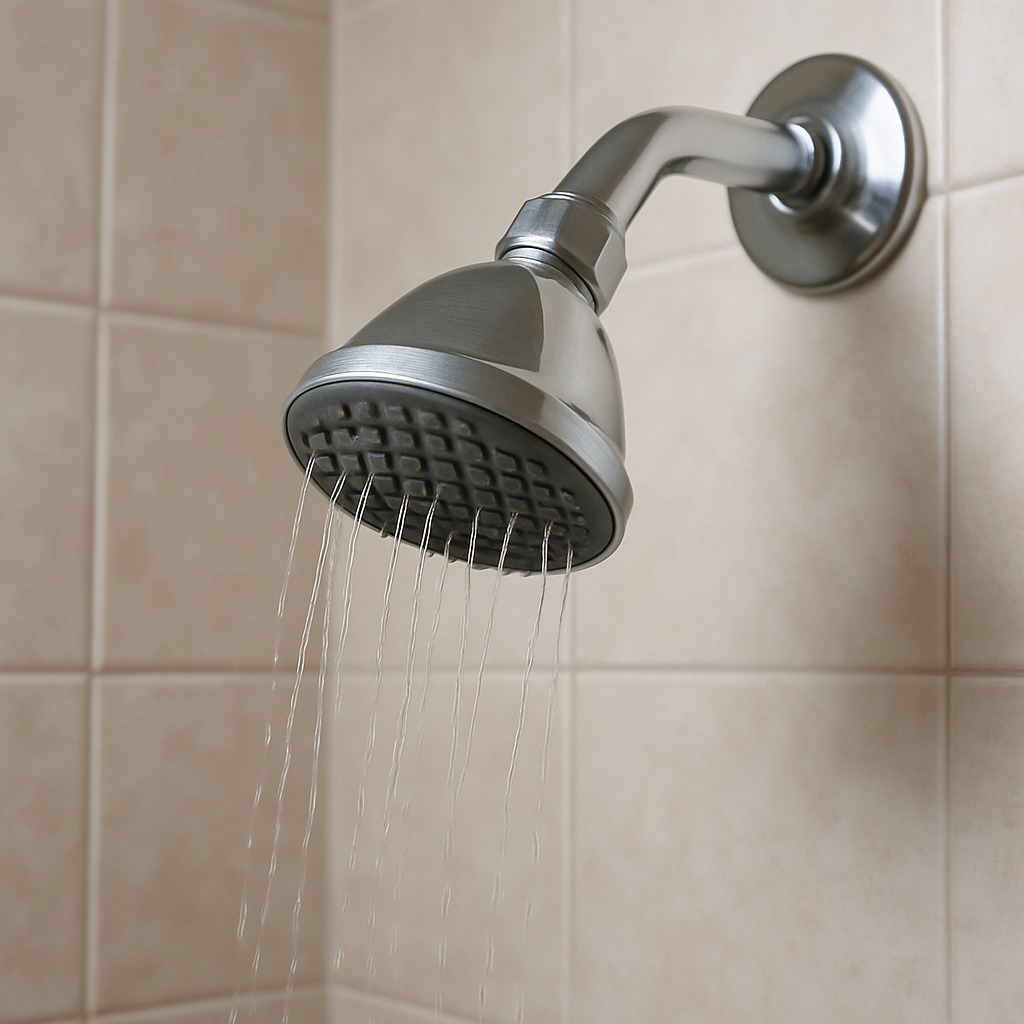
- Weak, dribbling stream from the shower head: Instead of a strong, full-fan spray pattern, water exits the nozzles in thin, uneven trickles that barely reach your chest when standing at normal distance. You can literally count individual streams coming out of the face plate. Rinsing shampoo takes two to three times longer than it should, and the shower feels more like standing under a slow garden hose than a proper fixture. The sound changes from a healthy, steady hiss to a quiet, sputtering patter against the tub floor.
- Uneven or partial spray pattern: Some nozzles on the shower head fire water at full force while others are completely blocked or dribble weakly. You can visibly see white or green mineral crust plugging individual rubber nozzles. The spray shoots off at odd angles rather than in a uniform cone pattern, hitting the wall or curtain instead of your body. Running your finger across the face plate, you feel gritty, calcium-like buildup that flakes off under your nail.
- Pressure drops when other fixtures run simultaneously: You step into the shower at decent pressure, but the moment someone flushes a toilet, runs the kitchen faucet, or starts the dishwasher, your flow drops noticeably — sometimes by 30 to 50 percent. You hear a brief surge sound in the wall piping right before the drop. The pressure may recover partially but rarely returns to the original level until the competing fixture shuts off completely.
- Hot water pressure lower than cold water pressure: When you turn the handle to full cold, the stream is reasonably strong, but rotating toward hot causes a noticeable decline in flow. This difference indicates a restriction somewhere in the hot-water supply line or at the water heater itself. You may also notice the hot water takes longer than usual to arrive, and the stream temperature fluctuates because the reduced flow cannot maintain a consistent mix at the valve cartridge.
- Gradual decline in pressure over weeks or months: The shower felt fine six months ago, but over time the pressure has slowly weakened to the point where it is now clearly inadequate. There was no single event — no plumbing work, no water main break — just a steady erosion of performance. This creeping decline often goes unnoticed until a visitor comments on the weak shower, and it typically signals progressive mineral scale accumulation inside pipes, valves, or the shower head itself.
What's Actually Causing This
- Mineral scale and sediment buildup inside the shower head: Municipal water with hardness above 7 grains per gallon (roughly 120 ppm) deposits calcium carbonate and magnesium inside the shower head's internal channels and nozzle openings over time. In areas with very hard water — parts of Texas, Arizona, Florida, and the Midwest — a shower head can lose 50 percent of its flow within 12 to 18 months. The scale narrows the internal waterway diameter from a typical 1/2 inch down to as little as 3/16 inch, choking flow. This is the single most common cause plumbers see, accounting for roughly 40 percent of low-pressure shower calls.
- Partially closed or failing shut-off valve: The shower supply valves — either the main house shut-off, the bathroom branch valve, or the integral stops behind the escutcheon plate — may not be fully open. A gate valve turned just one full turn from fully open can reduce flow by 25 to 40 percent. Gate valves also fail internally; the brass gate wedge corrodes, breaks, and lodges sideways in the valve body, creating a permanent partial obstruction. This is especially common in homes older than 25 years with original brass gate valves that have never been exercised.
- Corroded or restricted galvanized steel supply piping: Homes built before 1960 often have galvanized steel water lines that corrode from the inside out. Iron oxide tubercles grow inward, reducing a 3/4-inch pipe to an effective diameter of 1/4 inch or less over 40 to 60 years. The restriction is worst at elbows, tees, and threaded fittings where turbulence accelerates corrosion. A plumber can confirm this by measuring static pressure at the shower arm — if the house pressure reads 55 psi at the hose bib but only 20 psi at the shower arm, the piping between is the bottleneck. Galvanized pipe issues account for roughly 20 percent of whole-house low-pressure complaints.
- Faulty or clogged shower mixing valve cartridge: The pressure-balancing or thermostatic cartridge inside the shower valve body contains small internal ports and a rubber spool or piston that regulates flow. Over time, rubber seals swell, debris collects on the inlet screens, and the balancing spool sticks in a partially closed position. Moen 1222 and Delta RP19804 cartridges are common culprits, typically needing replacement every 8 to 15 years depending on water quality. A clogged cartridge screen alone can reduce flow by 60 percent. Plumbers report this as the most under-diagnosed cause because homeowners assume the issue is the shower head when the real restriction is behind the wall.
After 20 years of service calls, the number-one fix I see homeowners miss is the mixing valve cartridge. When you turn the handle and the pressure feels fine for two seconds then drops, that's a worn cartridge seal collapsing under flow. It's not the shower head. Don't waste money replacing a $30 head when the $12 Moen 1222 or Delta RP19804 cartridge is the real culprit. I keep both on my truck because they account for roughly 40% of all low-pressure shower calls. Parts cost $12–$25; I charge $125–$175 labor. Versus a $350 diagnostic wild goose chase, that's a bargain every time.
Step-by-Step Diagnosis
Work through these steps before calling a contractor. Each step tells you what to look for and what it means.
Remove and inspect the shower head
🔧 Adjustable wrench or 12-inch slip-joint pliersWrap a rag or painter's tape around the shower arm nut to protect the chrome finish. Using an adjustable wrench or 12-inch slip-joint pliers, grip the shower head swivel nut — not the arm — and turn counterclockwise. Most shower heads use a standard 1/2-inch NPT connection and come off with moderate force. Once removed, look inside the inlet for a small rubber flow restrictor washer (a disc with a hole, typically green or white, about 3/8-inch outer diameter). Also check for a mesh inlet screen — a small plastic or stainless disc filter. Hold both up to the light. If the screen is more than 30 percent blocked with sediment or the restrictor hole is crusted with white scale, you have found at least part of your problem. Set parts aside on a towel so nothing goes down the drain.
Soak the shower head in vinegar
🔧 White distilled vinegar, bucket or zip-lock bag, toothbrushFill a bucket or gallon-size zip-lock bag with undiluted white distilled vinegar (5 percent acetic acid concentration, standard grocery store variety). Submerge the entire shower head and let it soak for a minimum of 4 hours; overnight — 8 to 12 hours — works better for heavy buildup. The acetic acid dissolves calcium carbonate scale without damaging chrome, brushed nickel, or stainless finishes. After soaking, use a toothbrush or nylon bristle brush to scrub each nozzle opening. For silicone-tipped nozzles, flex each tip with your finger to break loose remaining deposits. Rinse under the kitchen faucet at full pressure. You should see clear, unobstructed flow through every nozzle. If more than 20 percent of nozzles remain blocked after this process, the head is likely too scaled internally and should be replaced — quality replacement heads run $25 to $80.
Check and fully open shut-off valves
🔧 No special tool required; flashlight for access panel inspectionLocate all valves between the water meter and the shower. Start at the main shut-off (typically near the meter or where the service line enters the house), then check any branch valves in the basement, crawlspace, or behind an access panel on the other side of the shower wall. Gate valves should be turned fully counterclockwise until they stop — do not force past the stop. Ball valves (with a lever handle) should have the handle perfectly parallel with the pipe; even 10 degrees off-axis reduces flow. After confirming all valves are fully open, go back to the shower and test. If pressure improves, a partially closed valve was your culprit. If a gate valve feels frozen or the handle spins without resistance, the internal gate is likely broken and the valve needs professional replacement. Never force a seized gate valve — the bonnet seal can fail and cause a flood.
Clean the shower valve cartridge screen
🔧 Allen key set, Phillips screwdriver, needle-nose pliers, cartridge puller (brand-specific)Turn off the water supply to the shower at the nearest shut-off valve or the main. Open the shower handle to relieve residual pressure. Remove the handle — most use a Phillips screw under a decorative cap or a hex set screw (typically 1/8-inch or 7/64-inch Allen key). Pull off the escutcheon trim plate. Depending on the valve brand, you will see a retaining clip (Moen) or bonnet nut (Delta, Kohler). For a Moen 1222 or 1225, pull the cartridge retaining clip with needle-nose pliers, then use a Moen cartridge puller tool (about $12) to extract the cartridge. Inspect the inlet ports inside the valve body — use a flashlight. Remove any debris or scale with a small flathead screwdriver and flush by briefly cracking the shut-off valve with a bucket ready. If the cartridge rubber is swollen, cracked, or grooved, replace it. Reinstall in reverse order, turn on the water slowly, and test. Successful cleaning typically restores 2 to 4 gallons per minute of lost flow.
Test static water pressure at the fixture
🔧 Water pressure test gauge with hose-thread fitting, 1/2-inch to 3/4-inch adapter bushingPurchase or borrow a water pressure test gauge with a 3/4-inch hose-thread fitting (available at any hardware store for $10 to $15). Thread the gauge onto the nearest hose bib or laundry faucet and record the static pressure with no fixtures running — normal residential pressure should read between 40 and 80 psi. Now remove the shower head and thread the gauge onto the shower arm using a 1/2-inch-to-3/4-inch adapter bushing. Record the pressure. If the shower arm reads within 5 psi of the hose bib, your piping is clear and the restriction is in the shower head or valve cartridge. If the shower arm reads 15 psi or more below the hose bib, you have a pipe restriction between those two points — corroded galvanized pipe, a kinked flex line, or a failing valve. This differential diagnosis tells a plumber exactly where to focus, saving you diagnostic labor charges of $75 to $150 per hour.
When to Stop DIY and Call a Pro
Stop DIY and call a licensed plumber if you measure static pressure below 40 psi at the main hose bib — this indicates a municipal supply issue or a failing pressure-reducing valve (PRV), which requires a licensed repair (PRV replacement runs $350 to $600 installed). Call a pro immediately if you see brown or rusty water when the shower first turns on, because this signals corroded galvanized piping that will only worsen and may eventually develop pinhole leaks causing hidden water damage costing $2,000 to $10,000 or more in mold remediation and drywall repair. If you pull the shower valve cartridge and find the brass valve body itself is pitted, scored, or corroded, the entire valve body may need replacement — a job that requires opening the wall, sweating copper fittings, and ensuring code-compliant installation, which should never be attempted without plumbing experience. Any time you cannot locate or successfully operate a shut-off valve to isolate the shower, do not proceed — a broken valve under pressure can release 8 to 12 gallons per minute and flood your home in minutes. As a general dollar threshold, once you estimate your repair cost exceeding $200 in parts and tool purchases, the economics favor hiring a plumber at $150 to $300 for a typical shower pressure diagnosis and repair visit, because the professional will warranty the work and carry liability insurance.
What Does This Repair Cost?
Costs vary by region, home age, and severity. These are national averages — always get 3 quotes.
| Repair Type | DIY Cost | Pro Cost | Emergency Premium |
|---|---|---|---|
| Shower head cleaning / descaling | $0–$5 | $75–$150 | $150–$250 |
| Flow restrictor removal or shower head replacement | $0–$45 | $100–$200 | $200–$325 |
| Mixing valve cartridge replacement | $12–$35 | $125–$275 | $250–$450 |
| Pressure-reducing valve (PRV) replacement | Not recommended | $150–$400 | $350–$650 |
| Partial or full supply line repipe | Not recommended | $800–$8,000 | $1,500–$10,000 |
| Emergency diagnostic call (after-hours) | N/A | $150–$300 | $250–$450 |
*Emergency rates (nights/weekends/holidays) run 40–60% above standard. Get 3 quotes before approving work.
Get quotes from licensed professionals in your area
Free, no obligation — compare 3+ contractors in minutesWhat Drives the Cost?
| Cost Factor | Estimated Impact | Why It Matters |
|---|---|---|
| Pipe material (galvanized vs. copper vs. PEX) | Adds $1,000–$4,000 if repipe needed | Galvanized pipes corrode internally and usually require full replacement, whereas copper or PEX issues are often localized and cheaper to fix |
| Number of affected fixtures | Adds $100–$500 in diagnostic labor | Whole-house low pressure requires the plumber to test the main line, PRV, and meter — more labor than a single-fixture fix |
| Water hardness (regional) | Adds $200–$800 for water softener install | Hard-water areas cause recurring mineral buildup; a softener ($400–$800 installed) prevents repeat service calls averaging $150 each |
| Access difficulty (wall-opening required) | Adds $150–$600 in drywall repair | If the mixing valve or supply pipe sits behind a tiled wall with no access panel, the plumber must cut drywall and a finisher must patch it afterward |
In homes built before 1985 with galvanized steel pipes, low shower pressure is almost always stage-one pipe failure. Mineral scale builds inside galvanized lines and narrows the interior diameter to the size of a pencil. I've cut open pipes that were 80% blocked. If you're in a pre-1985 home and only one bathroom has weak pressure, ask the plumber to inspect the branch line with a borescope before committing to a full repipe. Targeted replacement of just the affected 15–20 feet of pipe typically costs $400–$800 compared to $4,000+ for a whole-house repipe. Regional note: hard-water areas like Phoenix, San Antonio, and parts of Florida see this issue 3× more often.
⚠️ Stop DIY — Call a Pro If You See These
- Brown, orange, or rust-colored water when the shower first turns on — Indicates advanced internal corrosion in galvanized steel supply pipes. Within 6 to 24 months, corroded sections can develop pinhole leaks inside walls, leading to hidden water damage, mold growth, and remediation costs of $3,000 to $12,000. Pipe replacement (repipe) costs $4,000 to $8,000 for a typical single-family home but prevents catastrophic failure.
- Banging or hammering noise when the shower valve is turned on or off — Water hammer caused by loose or unsecured pipes, a failed water hammer arrestor, or sudden pressure surges from a malfunctioning PRV. Repeated hammer events stress solder joints and push-fit connections, increasing the risk of a burst joint within months. Repairing a burst joint behind a finished wall typically costs $500 to $1,500 including drywall and paint restoration.
- Visible dripping or water stains on the ceiling below the bathroom — A supply line, valve body, or shower arm connection is actively leaking inside the wall cavity. Even a slow drip of one drop per second wastes over 3,000 gallons per year and can cause structural wood rot within 60 to 90 days. Ignoring this can escalate a $200 valve repair into a $5,000-plus structural and mold remediation project.
- Pressure loss throughout the entire house, not just the shower — Whole-house low pressure points to a failing pressure-reducing valve, a partially closed main shut-off, or a municipal supply problem. A failed PRV can allow pressure spikes above 80 psi that damage appliance solenoid valves, toilet fill valves, and water heater T&P relief valves. Replacing a PRV costs $350 to $600; replacing a water heater ruined by over-pressure costs $1,200 to $3,000.
Frequently Asked Questions
How much does it cost to fix Shower Head Low Water Pressure?
The national average cost ranges from $75 to $350 for most shower-pressure fixes. On the low end, a simple shower head replacement or cleaning runs $75 to $125 including a service call. A cartridge replacement with labor typically falls between $150 and $300. On the high end, if corroded galvanized pipes require replacement on a single bathroom branch, expect $800 to $2,500 depending on pipe length and wall access. The two biggest factors that move the price are the root cause (shower head clog versus hidden pipe corrosion) and regional labor rates — plumbers in major metro areas charge $125 to $200 per hour versus $75 to $120 in smaller markets.
Can I fix Shower Head Low Water Pressure myself?
Yes, in most cases you can handle the first-tier diagnosis and repair yourself with basic tools and about 30 to 60 minutes of work. Removing, soaking, and cleaning a mineral-clogged shower head requires only pliers and vinegar. Checking and opening partially closed valves requires no tools at all. Replacing a shower valve cartridge is moderately advanced but well within reach if you can shut off water and follow manufacturer instructions. However, if the problem involves corroded supply piping, a failed pressure-reducing valve, or a valve body that needs replacement behind finished walls, you should hand the job to a licensed plumber to avoid code violations and potential water damage.
How urgent is Shower Head Low Water Pressure?
Low shower pressure alone is an inconvenience, not an emergency — you have days to weeks to address it without risk of damage. However, urgency escalates if the low pressure is accompanied by discolored water, visible leaks, or whole-house pressure loss. Brown water plus low pressure suggests active pipe corrosion that can lead to pinhole leaks within weeks to months. A sudden, dramatic pressure drop (50 percent or more overnight) may indicate a burst pipe, a failed PRV, or a municipal main break — investigate same day. If pressure has been declining gradually over months, you can plan a weekend repair, but don't wait beyond a few weeks because mineral scale hardens over time and becomes much more difficult to remove.
What causes Shower Head Low Water Pressure?
The three most common causes are mineral scale buildup inside the shower head or its inlet screen (responsible for roughly 40 percent of cases), a clogged or failing shower valve cartridge with debris-blocked inlet ports (about 25 percent of cases), and corroded or restricted galvanized steel supply piping in homes built before 1960 (about 20 percent of cases). Less common causes include a partially closed shut-off valve, a faulty pressure-reducing valve at the main line, or a flow restrictor washer installed in the shower head to meet the federal 2.5 GPM maximum flow standard. Identifying which cause applies to your situation requires testing pressure at multiple points, which you can do with a $10 gauge.
Will homeowners insurance cover Shower Head Low Water Pressure?
Standard homeowners insurance does not cover the repair of low water pressure because it is classified as a maintenance issue and normal wear-and-tear, both of which are excluded under virtually every HO-3 policy. However, if low pressure is caused by a sudden pipe failure — say a corroded galvanized pipe finally bursts — insurance typically covers the resulting water damage to your home's structure, drywall, flooring, and personal property, minus your deductible (commonly $1,000 to $2,500). The pipe repair itself is usually not covered, only the consequential damage. A home warranty plan (not the same as homeowners insurance) may cover plumbing repairs including valve and cartridge replacements, typically with a $75 to $125 service call fee. Check your specific policy language before assuming coverage.
How do I find a licensed plumber for this?
Follow a four-step process. First, verify the plumber's license through your state or county licensing board website — in most states you can search by name or license number and confirm the license is active and in good standing. Second, confirm they carry general liability insurance (minimum $500,000) and workers' compensation insurance; ask for a certificate of insurance and call the insurer to verify it is current. Third, get a written quote that itemizes diagnostic fee, parts, labor rate, and any trip charges — reputable plumbers provide this before starting work. Fourth, check references: look for at least a 4.0-star average across 20 or more reviews on Google or a verified platform, and ask for two to three recent customer references you can call directly. Avoid any plumber who diagnoses over the phone without seeing your system or demands full payment upfront.
Fixing low shower water pressure comes down to three decisions: first, determine whether the restriction is at the shower head, inside the valve cartridge, or deeper in your supply piping — the vinegar soak and pressure gauge test described above will answer this in under an hour. Second, decide whether the repair is within your skill level; cleaning a shower head and checking valves is beginner-level work, cartridge replacement is intermediate, and anything involving pipe replacement or opening walls belongs to a licensed plumber. Third, act on timing — gradual mineral buildup is forgiving and gives you days to weeks, but discolored water, sudden pressure drops, or visible leaks require same-day professional attention to prevent costly water damage.
Your recommended next step is to start at the shower head: remove it, inspect it, and soak it in vinegar overnight. This single action resolves roughly 40 percent of low-pressure complaints at zero cost. If the problem persists, move to the valve cartridge and shut-off valve checks. If pressure remains low after both steps, measure static pressure with a gauge to confirm a pipe-level restriction, then call a licensed plumber for diagnosis. Bring your pressure readings to the appointment — it saves diagnostic time and gives you confidence that you are paying for targeted repair, not exploratory labor.
Ready to Solve This for Good?
Get matched with pre-screened, licensed plumbers in your area. Free quotes, no obligation, no spam.
GET FREE QUOTES NOW