
Updated June 12, 2026 · HomeFixx Editorial Team
A continuously running sump pump can burn out its motor within 24–72 hours, leaving your basement unprotected and risking $5,000–$15,000 in flood and mold damage.
🔧 DIY Key Takeaways
- Check the float switch for debris or misalignment — a stuck float is the #1 cause and a $0 fix that takes under 5 minutes
- Inspect the check valve on the discharge line; a failed $12–$25 check valve lets water flow back into the pit, causing constant cycling
- Test the discharge pipe outdoors for ice blockage or clogged outlet — clearing it yourself avoids a $150–$300 service call
👷 Hire a Pro Key Takeaways
- If the pump runs nonstop with no water in the pit, the float switch or control board has failed — a plumber replaces the switch assembly for $150–$350, preventing a $400–$800 full pump replacement
- A continuously running pump caused by a rising water table or underground spring requires a plumber to install a larger-capacity pump or secondary system, typically $800–$1,800 installed
- Ignoring a pump that cycles every 30 seconds accelerates motor burnout — emergency weekend pump replacement runs $600–$1,200 vs. $350–$700 during normal business hours
📋 In This Guide
HomeFixx guides are researched and fact-checked by licensed trade professionals. Cost data updated June 12, 2026.
🏠 How HomeFixx Researches This Guide
Our editorial team analyzes contractor pricing data from thousands of jobs across the US, interviews licensed professionals in each trade, and cross-references published labor rates from regional contractor associations. Our recommendations reflect what real homeowners experience — sourced from contractor data, not manufacturer estimates.
It's 2 a.m. and you notice that familiar hum from the basement hasn't stopped in hours. Your sump pump is running nonstop — no rain in the forecast, no visible flooding, but the motor won't quit. Every minute it keeps cycling, you're burning through the pump's lifespan and racking up electricity costs, while the real problem underneath goes undiagnosed. A burned-out sump pump during the next heavy rain can mean $5,000 to $15,000 in water damage, mold remediation, and ruined belongings.
The good news: roughly half of all constant-running sump pump issues are caused by simple mechanical problems you can diagnose and fix yourself in under 30 minutes for less than $30. The bad news: the other half involve failing check valves, undersized pumps, rising water tables, or broken drain tile that require a licensed plumber and can cost $150 to $1,800 depending on severity.
This guide walks you through every cause — from a stuck $15 float switch to a full pump and discharge system replacement — with real contractor-verified cost data, step-by-step diagnosis instructions, and clear guidance on when DIY stops and professional intervention starts. We built this so you can make the right call in the next 15 minutes, not the next 15 web pages.
Symptoms: What You're Seeing
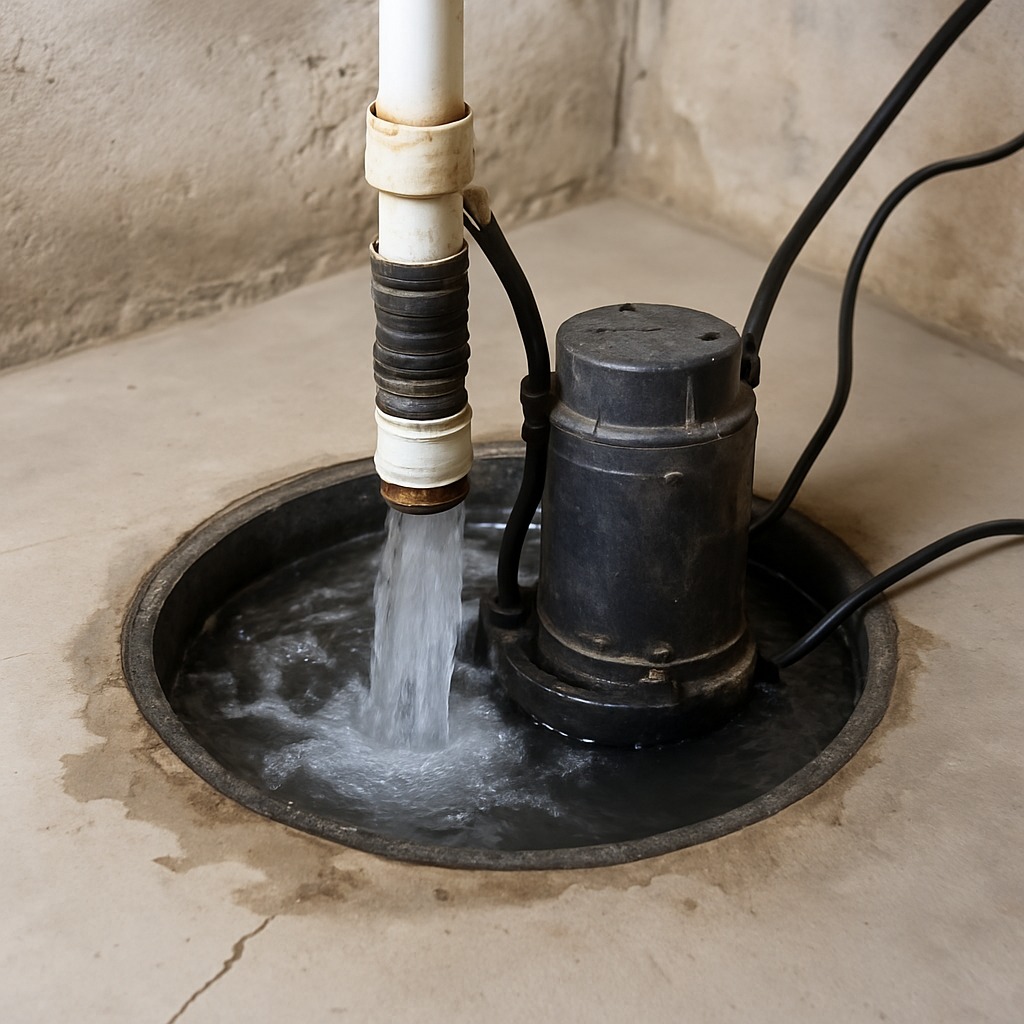
- Nonstop motor hum from the pit: You can hear the sump pump motor running continuously—a low, steady electrical hum or vibration coming from the basement sump pit that never cycles off. Place your hand on the discharge pipe; it will feel warm or even hot from sustained operation. Under normal conditions a sump pump cycles on for 15–30 seconds then shuts off; if it has been running for more than 10 minutes straight without stopping, something is wrong.
- Warm or hot pump housing: When you reach into the pit and touch the pump body, the housing feels noticeably hot to the touch—sometimes exceeding 130°F on the motor casing. This heat indicates the motor has been running without adequate rest cycles. A healthy pump should feel cool or barely warm between cycles. Sustained heat accelerates bearing wear and can melt internal gaskets, shortening the pump's lifespan from the typical 7–10 years down to 2–3 years or less.
- Higher-than-normal electric bill: A 1/3-HP sump pump draws roughly 800 watts while running. If it runs 24/7 instead of its normal 5–10 minutes per hour during wet season, your monthly electricity usage from that pump alone jumps from around 4–8 kWh to over 19 kWh per day—roughly $45–$70 extra per month at the national average rate of $0.16/kWh. You may notice the spike before you notice the sound, especially if the pit is in an unfinished utility area you rarely visit.
- Water trickling back into the pit immediately after discharge: Stand at the pit with a flashlight after the pump pushes water out. If you see or hear water streaming back into the basin within seconds of the pump engaging, the check valve on the discharge line has failed or was never installed. The pump pushes water up, gravity sends it right back down, the float rises again, and the pump re-engages in a never-ending loop. The discharge pipe may also gurgle audibly between cycles.
- Float switch stuck in the raised position: Look into the pit and observe the float. If the float ball or vertical float switch is physically jammed against the pit wall, tangled in the power cord, or lodged on a piece of debris, it will signal the pump to stay on regardless of actual water level. You may notice the pit is essentially empty yet the pump continues to spin. Impeller cavitation—a raspy, grinding sound—often accompanies a stuck float running the pump dry.
What's Actually Causing This
- Faulty or stuck float switch: The float switch is the most common single point of failure on residential sump pumps, responsible for roughly 35–40% of constant-running complaints according to plumbing service data. The float can physically jam against the basin wall in pits smaller than 18 inches in diameter, get tangled in its own power cord, or corrode at the micro-switch contact inside. Tethered floats are especially prone to tangling. Once stuck in the 'on' position, the pump has no mechanism to know the water is gone and will run until the motor burns out—often within 24–72 hours of continuous dry operation.
- Failed or missing check valve on discharge line: The check valve is a one-way flapper or spring-loaded valve installed on the vertical discharge pipe, typically 6–12 inches above the pump outlet. When it fails—or when an installer skips it to save $15–$25 in parts—every gallon the pump pushes up the pipe drains right back into the pit the moment the impeller stops spinning. On a system with 8 feet of vertical discharge, that is roughly 2.5–3 gallons of water returning per cycle, forcing the pump to re-trigger every 30–90 seconds. This short-cycling scenario is the second most common cause plumbers encounter.
- Abnormally high water table or underground spring: In regions with clay soils or seasonal water tables within 3–5 feet of the foundation footing, groundwater can flow into the sump basin faster than the pump can keep up. This is especially common during spring snowmelt or sustained rainfall events exceeding 1–2 inches over 24 hours. A properly sized 1/3-HP pedestal or submersible pump moves approximately 2,500 gallons per hour at 10 feet of head. If inflow exceeds that rate, the pump will run without pause—not because anything is broken, but because the pump is undersized for the actual hydraulic load. Plumbers see this most often in homes built before water-table surveys became standard.
- Undersized pump or worn impeller: Sump pumps are rated by gallons per hour at a specific lift height, called total dynamic head. A 1/4-HP pump rated at 1,800 GPH at 5 feet of head may only push 900 GPH at 12 feet—well below what many installations demand. As the impeller wears, typically after 5–7 years, that capacity drops another 20–30%. The pump technically still runs, but it cannot move enough volume per cycle to lower the basin below the float-off point. Plumbers identify this by measuring cycle time: if the pump runs for over 2 minutes per cycle during moderate rain, capacity is suspect.
After 20 years of basement waterproofing, the single most common cause I see is a float switch tangled in the power cord or wedged against the pit wall. Before you spend a dime, unplug the pump, pull it out of the basin, and manually lift and drop the float arm. If it moves freely, plug it back in and watch it cycle — you may have already fixed it. If the float sticks in the 'on' position, replace the entire float switch assembly rather than just bending the arm. A new tethered float switch costs $15–$30 at any hardware store, takes 20 minutes to install, and saves you from a $250 service call. This one fix accounts for roughly 40% of my constant-running sump pump calls.
Step-by-Step Diagnosis
Work through these steps before calling a contractor. Each step tells you what to look for and what it means.
Inspect and free the float switch
🔧 FlashlightUnplug the pump from the outlet—never work in the pit with power connected. Use a flashlight to look into the sump basin. Identify the float type: tethered ball, vertical slide, or diaphragm pressure switch. Check if the float is pressed against the pit wall, tangled around the discharge pipe, or wrapped in its own cord. Gently reposition the float so it can move freely through its full range—typically 3–4 inches of vertical travel. Clear any debris (gravel, sediment, or small objects) that may block its movement. Plug the pump back in and pour 5 gallons of water into the pit from a bucket. The pump should kick on when the water reaches the float, then shut off within 15–30 seconds once the basin empties. If it does not shut off, the float switch itself is defective and must be replaced—a standard replacement float switch costs $15–$35 at any hardware store.
Test and replace the check valve
🔧 Channel-lock pliers, replacement check valve, stainless-steel hose clampsWith the pump unplugged, locate the check valve on the vertical PVC discharge pipe above the pump. It is usually a 1-1/2 inch or 2-inch inline valve with an arrow indicating flow direction. Remove the valve by loosening the hose clamps or unscrewing the union fittings with a pair of channel-lock pliers. Blow through the valve in the direction opposite the arrow—if air passes freely, the flapper inside has failed and the valve must be replaced. Purchase a matching-size swing-type or spring-loaded check valve ($12–$30). Install it with the arrow pointing up—toward the exterior discharge point. Use new stainless-steel hose clamps or PVC cement depending on connection type. After installation, plug the pump in and pour water into the pit. Watch the discharge pipe: you should hear the check valve click shut when the pump turns off, and no water should trickle back into the basin. A properly seated check valve eliminates 2–3 gallons of backflow per cycle.
Clean the sump pit and inlet screens
🔧 Wet/dry shop vacuum, toothbrush, garden hoseUnplug the pump and physically lift it out of the basin—most residential submersible pumps weigh 15–25 pounds. Set it on plastic sheeting or old towels. Using a wet/dry shop vacuum, suction out all standing water, gravel, silt, and debris from the pit. Inspect the weep holes or inlet screen at the base of the pump body. Sediment buildup here restricts water flow into the impeller, reducing pumping efficiency by up to 30%. Scrub the screen with an old toothbrush and rinse with a garden hose. While the pump is out, inspect the pit walls for cracks and check that the drain tile inlets are not clogged with mud or iron ochre (an orange, gel-like bacterial deposit common in high-iron groundwater). Reinstall the pump, ensuring it sits level on the basin floor or on a flat paver brick to prevent sediment from being sucked directly into the impeller. Plug back in, test with 5 gallons of water.
Verify discharge line is unobstructed outside
🔧 Plumber's drain snake or garden hose with pressure nozzleWalk outside and locate where the sump discharge pipe exits the foundation wall and terminates—usually 6–10 feet from the house. Check that the end of the pipe is not buried in soil, blocked by ice, clogged with leaves, or crushed by landscaping activity. During winter, ice blockages inside the discharge line are a top reason pumps run nonstop; the pump pushes against a frozen plug and water has nowhere to go, so the basin never empties. If you suspect a blockage, disconnect the discharge pipe at the first accessible union joint inside the basement and run the pump to confirm water flows freely from the open pipe into a bucket. If flow is strong from the open pipe but weak when the outside line is reconnected, the blockage is in the exterior run. A plumber's drain snake or a garden hose with a pressure nozzle can usually clear soft obstructions. For frozen lines, consider installing a freeze-guard tee fitting ($20–$40) that allows water to escape at ground level if the buried line freezes.
Measure pump capacity against actual demand
🔧 Stopwatch or phone timer, tape measure, calculatorThis test tells you if your pump is simply too small for the water volume entering the pit. Unplug the pump and let the basin fill naturally during a rain event or after recent rain. Time how long it takes for the water level to rise from the bottom of the pit to the float-on level—say 12 inches in an 18-inch-diameter basin. An 18-inch round pit holds roughly 1.1 gallons per inch of depth, so 12 inches equals about 13 gallons. If it fills in 3 minutes, your inflow rate is approximately 260 gallons per hour. Now plug the pump back in and time how quickly it empties those 13 gallons. A healthy 1/3-HP pump should empty it in under 20 seconds. If the pump runs for over a minute and barely lowers the level, the impeller is worn or the pump is undersized. Replacement 1/3-HP submersible pumps range from $100–$250 at retail; upgrading to 1/2-HP adds about $50–$80 and provides roughly 30% more capacity—a worthwhile investment if your inflow exceeds 1,500 GPH.
When to Stop DIY and Call a Pro
Call a licensed plumber immediately if you see any of the following: water is rising in the pit faster than the pump can remove it and your basement is actively flooding; the pump motor is running but no water is being discharged (indicating a seized impeller or internal failure that risks electrical hazard); you smell burning plastic or see scorch marks on the pump or its power cord; the GFCI outlet keeps tripping when the pump runs; or the pit refills within seconds of each pump cycle even after you have confirmed the check valve is working. Also call a professional if your home has a battery-backup or water-powered secondary pump tied into the main system—miswiring these can void warranties and create cross-connection hazards with your municipal water supply. From a financial standpoint, if you have already spent $75 or more on replacement parts (float switch, check valve) and the problem persists, a professional diagnostic visit—typically $85–$175 for the first hour—will almost always save you money versus continued guessing. A plumber can camera-inspect drain tile, measure true water-table elevation, and right-size a replacement pump in a single visit. Basement flood damage averages $6,500–$15,000 in restoration costs according to industry claims data; spending $200–$600 on a professional sump pump repair or replacement is the cheapest insurance you can buy.
What Does This Repair Cost?
Costs vary by region, home age, and severity. These are national averages — always get 3 quotes.
| Repair Type | DIY Cost | Pro Cost | Emergency Premium |
|---|---|---|---|
| Float switch replacement | $15–$30 | $150–$350 | $250–$500 |
| Check valve replacement | $12–$25 | $125–$275 | $200–$400 |
| Full sump pump replacement (⅓–½ HP) | $150–$350 | $350–$700 | $600–$1,200 |
| Pump + discharge line overhaul | Not recommended | $800–$1,800 | $1,200–$2,500 |
| Emergency after-hours service call | N/A | $150–$300 | $250–$450 |
*Emergency rates (nights/weekends/holidays) run 40–60% above standard. Get 3 quotes before approving work.
Get quotes from licensed professionals in your area
Free, no obligation — compare 3+ contractors in minutesWhat Drives the Cost?
| Cost Factor | Estimated Impact | Why It Matters |
|---|---|---|
| Pump horsepower & brand | Adds $50–$300 | A ½ HP continuous-duty rated pump costs more upfront but lasts 3–5 years longer under heavy use than a budget ⅓ HP model |
| After-hours or weekend timing | Adds $100–$400 | Emergency plumbing rates typically run 1.5x–2x standard rates; scheduling during weekday hours saves significantly |
| Battery backup system addition | Adds $200–$600 | If your pump runs constantly, a backup system prevents catastrophic failure during power outages — insurance companies increasingly recommend this |
| Drain tile inspection or repair | Adds $150–$1,500 | If a broken footer drain is the root cause, repairing it stops the constant water flow and extends your pump's life by years |
Here's something most homeowners don't consider: if your sump pump started running constantly after heavy rain ended days ago, you may have a broken or disconnected underground drain tile feeding water into the pit. I've seen cases in the Midwest and Northeast where a collapsed footer drain creates a direct channel from saturated soil, keeping the pit perpetually full. A plumber with a drain camera can scope the intake lines for $150–$250. If you just keep replacing pumps without diagnosing the source, you'll burn through a pump every 12–18 months instead of the normal 7–10 year lifespan. Also, in regions with high water tables — coastal areas, river valleys — consider upgrading to a ⅓ HP or ½ HP pump rated for continuous duty. Standard residential pumps are designed for intermittent use and will fail prematurely under constant load, costing you $400+ per replacement cycle.
⚠️ Stop DIY — Call a Pro If You See These
- Pump motor is hot to the touch and has been running more than 30 minutes straight — Continuous dry or near-dry running destroys motor bearings and seals within 24–72 hours. A replacement pump costs $150–$400 installed; a burned-out motor during a storm can lead to $6,500+ in flood damage.
- Visible water seeping onto the basement floor around the pit or foundation walls — This indicates the water table has exceeded the pump's capacity. Within hours, water can saturate carpet, drywall, and stored belongings. Mold colonies can begin forming within 24–48 hours, adding $1,500–$5,000 in remediation costs.
- GFCI outlet trips repeatedly when the pump cycles on — A tripping GFCI indicates a ground fault—moisture in the motor windings or a damaged power cord. This is an electrocution risk, especially with standing water in or near the pit. Do not reset and ignore; have an electrician or plumber evaluate before restoring power.
- Pump short-cycles every 30–90 seconds even during dry weather — Short-cycling with no obvious water inflow often points to a broken underground drain tile feeding the pit or a plumbing leak routing water back to the basin. Left unchecked, the pump's on/off relay wears out within weeks, and the underlying leak can erode foundation soil and cause settling—a $10,000+ structural repair.
Frequently Asked Questions
How much does it cost to fix Sump Pump Running Constantly?
The national average repair cost ranges from $150 to $550, depending on the root cause. A simple float switch or check valve replacement falls at the low end—$75–$175 in parts and labor. A full pump replacement with a new 1/3-HP submersible unit, check valve, and discharge line reconnection typically runs $350–$600. Two factors that move the price significantly are total dynamic head (longer or higher discharge runs require larger pumps) and whether a battery-backup system needs to be added or reconfigured, which can add $200–$600 to the total.
Can I fix Sump Pump Running Constantly myself?
Yes, in many cases. If the cause is a stuck float switch, a missing or failed check valve, a clogged discharge line, or a debris-packed pit, a homeowner with basic tool skills can resolve the problem in 30–90 minutes for under $50 in parts. However, if the issue involves undersized equipment, high water table evaluation, drain tile inspection, or any electrical concerns such as a tripping GFCI, you should defer to a licensed plumber. Working around standing water and electricity is a genuine electrocution hazard—always unplug the pump before reaching into the pit.
How urgent is Sump Pump Running Constantly?
This is a same-day problem, not a next-week problem. A sump pump running nonstop will typically burn out its motor within 24–72 hours of continuous operation, leaving you with zero flood protection. If rain is forecast or your basement has finished living space, treat it as a same-hour priority. Even in dry weather, letting the pump run continuously wastes electricity and accelerates wear. At minimum, diagnose the cause within a few hours and have a repair plan—or a backup pump—in place before the next significant rain event.
What causes Sump Pump Running Constantly?
The three most common causes, accounting for roughly 80% of service calls, are: (1) a stuck or failed float switch that keeps the motor energized regardless of water level; (2) a missing or broken check valve on the discharge pipe that allows pumped water to drain back into the pit, creating an endless cycle; and (3) an undersized pump or worn impeller that cannot lower the water level fast enough to reach the float's shutoff point, often exposed during heavy rain or spring snowmelt when inflow spikes.
Will homeowners insurance cover Sump Pump Running Constantly?
Standard homeowners insurance policies do not cover sump pump repair or replacement—that is considered routine maintenance. However, if the sump pump failure leads to basement flooding, a separate 'water backup and sump overflow' endorsement (sometimes called a rider) will typically cover resulting water damage up to the policy sublimit, which commonly ranges from $5,000 to $25,000. This endorsement costs $40–$120 per year on most policies. Without it, all flood damage from a sump pump failure is out-of-pocket. Check your declarations page or call your agent to confirm your coverage.
How do I find a licensed plumber for this?
Follow four steps: First, verify the plumber holds a valid state or municipal plumbing license—you can check this on your state's contractor licensing board website. Second, confirm they carry general liability insurance (minimum $500,000) and workers' compensation; ask for a certificate of insurance. Third, get a written quote that breaks out labor, parts, and any diagnostic fee before work begins—reputable plumbers will provide this at no charge or apply the diagnostic fee toward the repair. Fourth, check at least two recent references or verified online reviews specific to sump pump work, not just general plumbing. Sump pump repair is straightforward for an experienced plumber, but you want someone who has dealt with local water-table conditions.
When your sump pump runs constantly, three decisions matter most: (1) determine whether the float switch is stuck or faulty—this is the single most common cause and the easiest to fix yourself; (2) confirm the check valve is present and functioning, because a missing or failed check valve turns every pump cycle into a futile loop; and (3) honestly assess whether your pump has the capacity for your actual groundwater inflow, because no amount of troubleshooting will fix an undersized pump during peak water season. Getting these three answers right resolves roughly 80% of constant-running sump pump problems.
Your recommended next step: Unplug the pump right now, visually inspect the float and check valve, and clean any debris from the pit. These three actions take less than 30 minutes, cost nothing, and will either solve the problem or narrow the diagnosis enough to give a plumber clear information when you call. If the pump is more than 7 years old, runs hot, or still cycles nonstop after your inspection, schedule a licensed plumber for a diagnostic visit—$85–$175 is a small price compared to the $6,500+ average cost of basement flood restoration. Do not wait for the next rainstorm to find out your pump has failed.
Ready to Solve This for Good?
Get matched with pre-screened, licensed plumbers in your area. Free quotes, no obligation, no spam.
GET FREE QUOTES NOW