
Updated June 12, 2026 · HomeFixx Editorial Team
A weak or incomplete flush can escalate to a full sewage backup within 48–72 hours, risking $3,000–$8,000 in water damage and biohazard remediation.
🔧 DIY Key Takeaways
- A $4 flapper valve replacement from any hardware store fixes roughly 30% of weak-flush problems — remove the old flapper, match the size, and snap the new one onto the overflow tube in under 10 minutes
- Pour one gallon of hot (not boiling) water directly into the bowl from waist height to break a soft clog for free — this creates enough pressure to clear most toilet-paper blockages without a plunger
- Clean clogged rim jets under the toilet bowl lip using a $2 piece of wire and white vinegar soak overnight — mineral deposits in these jets are the #1 overlooked cause of lazy swirl flushes
👷 Hire a Pro Key Takeaways
- If a plunger and auger both fail, the clog is likely past the toilet's trap in the main drain line — a plumber with a motorized snake charges $150–$350 versus the $1,500+ you'll spend on sewage cleanup if you wait
- A toilet that rocks on the floor often has a broken wax ring seal underneath, which costs a pro $150–$250 to replace but can leak sewage into subfloor joists causing $3,000–$7,000 in structural rot if ignored
- Recurring weak flushes in homes built before 1994 often mean a 3.5-GPF or 5-GPF toilet that needs full replacement — a plumber installs a modern 1.28-GPF high-efficiency toilet for $250–$550 including parts, saving you 40%+ on water bills
📋 In This Guide
HomeFixx guides are researched and fact-checked by licensed trade professionals. Cost data updated June 12, 2026.
🏠 How HomeFixx Researches This Guide
Our editorial team analyzes contractor pricing data from thousands of jobs across the US, interviews licensed professionals in each trade, and cross-references published labor rates from regional contractor associations. Our recommendations reflect what real homeowners experience — sourced from contractor data, not manufacturer estimates.
You push the handle down and the water barely swirls — or worse, it rises toward the rim and your heart rate spikes. A toilet that won't flush properly is more than an inconvenience; it's a ticking clock. What starts as a sluggish flush today can become raw sewage backing up into your bathroom, laundry room, or basement within 48 to 72 hours if the underlying cause is a worsening drain blockage or failing sewer line.
The good news: roughly half of all flush problems can be solved by a homeowner in under 20 minutes for less than $15 in parts. The bad news: the other half involve issues hidden behind porcelain or buried underground, where delays turn a $200 plumber visit into a $3,000–$8,000 damage remediation nightmare. This guide will help you tell the difference immediately.
Below, you'll get a contractor-verified diagnostic flowchart, exact cost breakdowns for every repair tier from a $4 flapper swap to a $1,200 main-line clearing, and the specific red flags that mean you should stop Googling and start dialing a licensed plumber right now. We consulted plumbers with 15–25 years of field experience to bring you advice that goes far beyond the generic tips you'll find elsewhere.
Symptoms: What You're Seeing
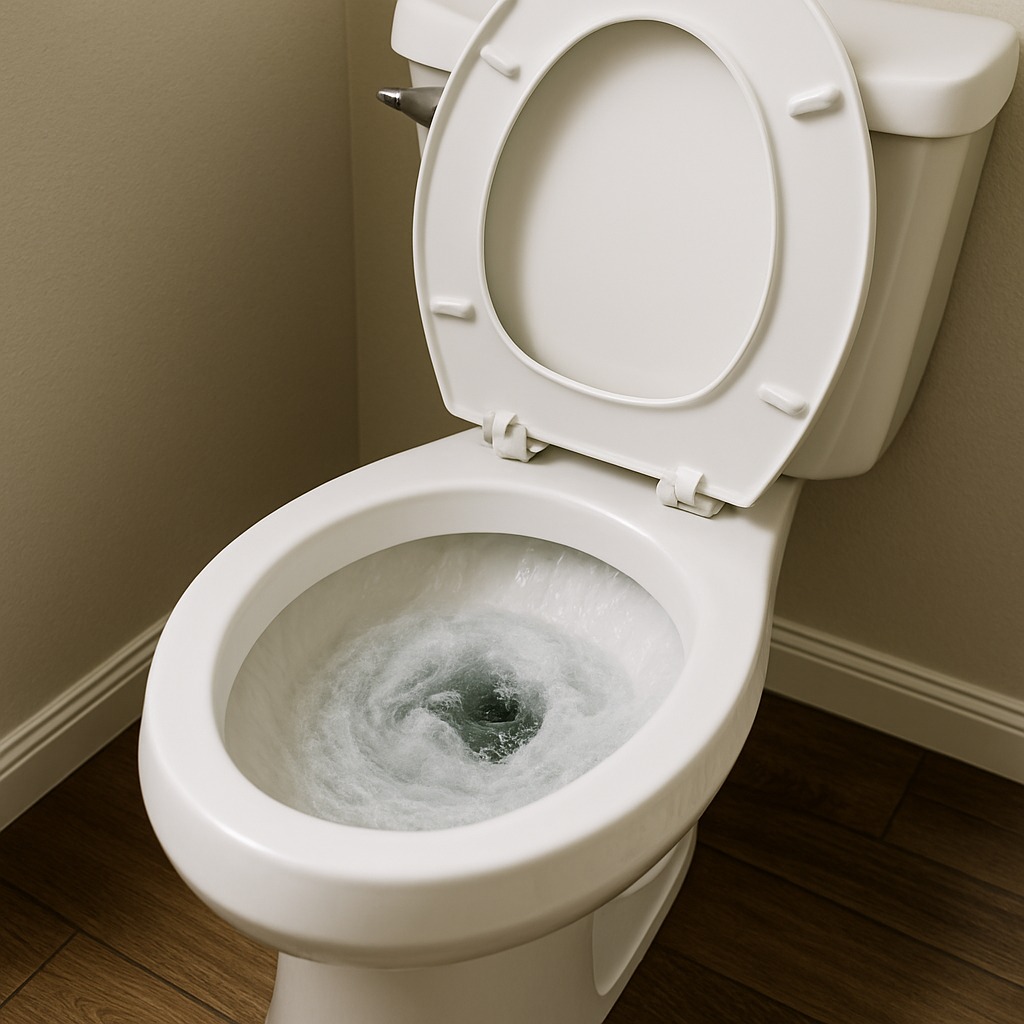
- Weak or incomplete flush: When you press the handle, the water swirls slowly and lazily in the bowl instead of producing a strong, rapid vortex. Waste and paper remain after the cycle completes. You may hear a brief, anemic gurgle rather than the full rush of water. The tank seems to refill normally, but the next flush produces the same disappointing result. This indicates insufficient water volume or velocity entering the bowl through the rim jets and siphon jet.
- Toilet handle feels loose or disconnected: When you push or pull the flush lever, it moves freely with no resistance whatsoever — almost like it is not connected to anything inside the tank. There is no click, no tension, and no sound of a flapper lifting. Sometimes the handle flops back without returning to its original position, and you have to jiggle it repeatedly before any flushing action occurs. This typically signals a broken lift chain, a disconnected lift wire, or a corroded handle assembly.
- Water rises dangerously high before slowly draining: After flushing, the water level in the bowl climbs to within an inch or two of the rim, and you can feel the panic set in. It hovers there for 15 to 45 seconds, then drains at a glacial pace, sometimes accompanied by a deep, bubbling gurgle from somewhere in the drain line. You may detect a faint sewer gas smell. This points to a partial clog in the trapway, the branch drain, or possibly the main sewer line downstream.
- Phantom running between flushes: You hear the tank refill valve kick on for 5 to 15 seconds at random intervals, even though nobody touched the handle. The sound is a brief hiss followed by running water, then silence. Over a 24-hour period, this can waste 200 or more gallons. The flapper is leaking water from the tank into the bowl at a rate fast enough to trigger the fill valve, and you might notice the bowl water subtly rippling if you watch closely.
- Double flush needed to clear the bowl: You flush once and the water moves, the siphon starts, but the bowl does not fully evacuate — waste and tissue linger. You have to wait 60 to 90 seconds for the tank to refill and then flush a second time to get a clean bowl. This wastes 1.6 to 3.5 gallons per extra flush and is typically caused by a low tank water level, a waterlogged flapper that drops too quickly, or mineral-clogged rim jets that reduce the flush's siphon energy.
What's Actually Causing This
- Partial clog in the trapway or branch drain: This is the number-one cause plumbers encounter — roughly 60 percent of weak-flush service calls trace back to an obstruction. The built-in S-shaped trapway in the toilet's porcelain body is only about 2 inches in diameter on most residential models. Accumulated toilet paper, so-called 'flushable' wipes (which do not disintegrate like paper), feminine hygiene products, children's toys, or even excess hard-water mineral scale can narrow this passage. A partial clog allows some water through but kills the siphon action needed for a full flush. Over days, the restriction gets worse as more debris catches on the blockage.
- Low tank water level: The tank on a standard gravity-flush toilet needs to hold the full designed volume — 1.6 gallons on post-1994 models, 3.5 gallons on older units — for the flush to generate adequate siphon force. If the fill valve is misadjusted or failing, the water line sits an inch or more below the marked fill line (typically ½ inch below the overflow tube top). A float set too low, a slowly failing fill valve diaphragm, or a partially closed supply stop valve under the tank can all cause this. It affects about 20 percent of weak-flush complaints and is one of the easiest problems to correct.
- Worn or warped flapper valve: The rubber flapper sits on the flush valve seat at the bottom of the tank and lifts when you push the handle. After 3 to 7 years — less in homes with chlorinated municipal water or drop-in tank cleaning tablets — the rubber deteriorates, hardens, warps, or develops mineral buildup on its sealing surface. A degraded flapper does two things: it leaks water continuously from the tank into the bowl between flushes, keeping the tank below full volume, and it can close too quickly during a flush, cutting the water delivery short. Replacing the flapper is a $4 to $10 fix and takes under five minutes.
- Clogged rim jets and siphon jet: Underneath the bowl rim are a series of small angled ports (rim jets, typically 3/8 inch openings) and one larger siphon jet in the front bottom of the bowl (about ¾ inch). In areas with hard water — anything above 7 grains per gallon — calcium and mineral deposits slowly encrust these openings. When rim jets are 50 percent blocked, flush water enters the bowl in a weak dribble instead of a powerful angled stream, and the swirling action necessary to start the siphon is compromised. This cause accounts for a significant share of slow-flush problems in hard-water regions across the Sun Belt and Midwest.
After 20 years of service calls, I can tell you that 40% of 'broken toilet' calls turn out to be a water level issue inside the tank. Open the lid and check: the water should sit exactly half an inch below the top of the overflow tube. If it's lower, the fill valve isn't refilling the tank properly, which starves your flush of the pressure it needs. Adjusting the float — either bending a brass rod or turning the adjustment screw on a plastic fill valve — costs nothing and takes 30 seconds. A replacement fill valve is $8–$12 at any big-box store and installs in 15 minutes. Before you spend $250 on a plumber, always check that water line first.
Step-by-Step Diagnosis
Work through these steps before calling a contractor. Each step tells you what to look for and what it means.
Check and adjust the tank water level
🔧 Flathead screwdriverRemove the tank lid and set it on a towel on the floor — porcelain lids crack easily and replacements cost $30 to $80. Look inside: there should be a molded fill-line mark on the inside wall of the tank or on the overflow tube, typically ½ inch below the top of the overflow pipe. If the water sits below this mark, your flush is starting with an insufficient charge. For a ball-float fill valve, turn the adjustment screw on top of the arm clockwise one full turn at a time, flushing between adjustments. For a modern cup-float valve (Fluidmaster 400A-style), squeeze the spring clip on the float adjustment rod and slide the float up ½ inch. Flush and check. The water should stop right at the fill line. If the valve will not shut off or keeps running past the line, the diaphragm inside is shot and you need a new fill valve.
Inspect and replace the flapper valve
🔧 Replacement flapper ($4–$10)With the tank lid off, shut the water supply stop valve under the tank by turning it clockwise until snug. Flush to drain the tank. Reach in and unhook the old flapper from the ears on the overflow tube — most just slip on and off. Inspect the rubber: if it is discolored, stiff, feels gritty with mineral scale, or you can see warping, replace it. Take the old flapper to the hardware store to match the size; most residential toilets use a 2-inch flapper, but 3-inch models (common on Kohler and American Standard since around 2005) are also widespread. Hook the new flapper onto the overflow ears and reconnect the chain to the flush lever arm with about ½ inch of slack — just enough that the chain is not taut when the flapper is closed. Turn the water back on, let the tank fill, and flush. The flapper should lift fully, stay open for 3 to 4 seconds, then close cleanly with no wobble.
Plunge or auger to clear a clog
🔧 Flange plunger and closet auger ($12–$35)Use a flange plunger — the kind with the extra rubber collar that folds out, not a flat cup plunger — to get a true seal in the bowl's throat. Insert the plunger at an angle to let air escape, then seat it firmly over the drain opening. Give 15 to 20 forceful push-pull strokes, keeping the seal intact. The goal is hydrostatic pressure, not splashing. If a plunger does not clear it after three rounds, step up to a closet auger (also called a toilet auger). Feed the flexible cable into the trapway until you hit resistance, typically 6 to 18 inches in. Crank the handle clockwise to bore through or hook the obstruction, then slowly retract. Flush with the auger removed. Water should drain quickly with a strong vortex. Do not use a regular drain snake — its bare metal cable will scratch the porcelain glaze inside the trapway, creating rough spots that catch debris and invite future clogs.
Clean clogged rim jets and siphon jet
🔧 White vinegar, duct tape, small Allen wrench or pickUse a small handheld mirror to look up under the toilet bowl rim. You will see a row of small ports; in hard-water homes they are often partially or fully sealed with white, green, or rust-colored mineral buildup. First, tape over the siphon jet hole at the front bottom of the bowl with duct tape. Then pour 1 to 2 cups of plain white distilled vinegar into the overflow tube inside the tank so it flows down into the rim channel. Let it sit for at least 2 hours — overnight is better. Remove the duct tape, then use a piece of stiff wire, an Allen wrench, or a small pick to gently poke out the softened deposits from each rim hole. Flush several times. You should see distinct, angled water streams from each jet rather than a weak dribble. In severe cases, repeat the vinegar treatment or use a commercial calcium-lime-rust remover rated safe for porcelain.
Verify the flush handle and lift chain
🔧 Adjustable wrenchPush the flush handle. It should meet firm resistance as it lifts the flapper via the chain. If the handle is loose, the mounting nut inside the tank may need tightening — note that toilet handle mounting nuts have reverse threads (lefty-tighty). Use an adjustable wrench and turn clockwise to loosen, counterclockwise to tighten. If the chain is disconnected or has too much slack (more than 1 inch), reattach it to the lever arm using a closer hole so there is only about ½ inch of play. Excess chain length should be trimmed or clipped up to prevent it from getting caught under the flapper, which causes running and incomplete seals. If the metal handle shaft is corroded and binds when you push it, replace the entire handle assembly — universal kits cost $8 to $15 and install in under 10 minutes with just an adjustable wrench. Test by flushing several times and confirming the flapper lifts fully and drops cleanly.
When to Stop DIY and Call a Pro
Call a licensed plumber if any of the following apply: the toilet backs up into the bathtub, shower, or other fixtures, which signals a main sewer line blockage that can escalate to a sewage backup within hours; the bowl overflows onto the floor despite plunging, because contaminated water on bathroom flooring creates a health hazard and can damage subfloor, tile adhesive, and the ceiling below within 24 hours; you have plunged and augered with no improvement, meaning the clog is past the toilet's internal trapway and deep in the branch or main drain; or you notice the floor around the toilet base is soft, spongy, or water-stained, indicating a failed wax ring that may have been leaking for weeks and rotting the subfloor. For material cost alone, a new wax ring is $5, but improper installation can crack the toilet flange or the porcelain — a mistake that turns a $175 service call into an $800 toilet replacement. As a financial rule, if you have spent more than an hour troubleshooting without resolution, a plumber's diagnostic visit (typically $75 to $150) will save you money compared to trial-and-error part purchases and potential water damage repairs that can reach $2,000 to $5,000 if a sewage backup or hidden leak goes unaddressed.
What Does This Repair Cost?
Costs vary by region, home age, and severity. These are national averages — always get 3 quotes.
| Repair Type | DIY Cost | Pro Cost | Emergency Premium |
|---|---|---|---|
| Flapper or fill valve replacement | $4–$15 | $75–$150 | $150–$275 |
| Toilet auger / plunger unclog | $10–$30 | $100–$250 | $200–$400 |
| Wax ring and reset toilet | $10–$25 | $150–$250 | $250–$400 |
| Main drain line snaking | Not recommended | $150–$350 | $300–$600 |
| Full toilet replacement (unit + labor) | Not recommended | $250–$550 | $450–$800 |
| Emergency after-hours call | N/A | $200–$450 | $350–$700 |
*Emergency rates (nights/weekends/holidays) run 40–60% above standard. Get 3 quotes before approving work.
Get quotes from licensed professionals in your area
Free, no obligation — compare 3+ contractors in minutesWhat Drives the Cost?
| Cost Factor | Estimated Impact | Why It Matters |
|---|---|---|
| Time of service call | Adds $100–$250 | After-hours, weekend, and holiday calls carry a premium surcharge from most plumbing companies — scheduling during weekday business hours saves significantly |
| Toilet age and type | Adds $0–$300 | Older toilets with discontinued parts may require a full replacement instead of a simple repair, doubling the total project cost |
| Main line vs. fixture clog | Adds $100–$500 | A clog isolated to the toilet is a quick fix, but a main sewer line blockage requires specialized equipment and often a camera inspection fee |
| Geographic region and permits | Adds/saves $50–$400 | Plumbing labor rates vary 30–60% between rural and major metro areas; some municipalities require permits for toilet replacements adding $50–$150 in fees |
Here's a red flag most homeowners miss: if multiple fixtures in your home are draining slowly at the same time your toilet struggles to flush, the problem isn't the toilet — it's your main sewer line. Tree root intrusion is the most common cause in homes with clay pipes built before 1980, especially in the Midwest and Southeast. A camera inspection runs $100–$300 and can save you from a catastrophic backup. If roots are confirmed, hydro-jetting costs $350–$600 versus the $5,000–$15,000 you'd pay for a full sewer line excavation and replacement if the pipe collapses. In freezing climates, get this inspection done before winter when the ground hardens and excavation costs jump 30–50%.
⚠️ Stop DIY — Call a Pro If You See These
- Sewage odor near the toilet base or in adjacent rooms — Indicates a cracked wax ring seal, a cracked toilet flange, or a dry trap in a nearby fixture. Within 2 to 4 weeks of ignoring this, moisture can rot the plywood subfloor, leading to $500 to $1,500 in floor repair plus the risk of mold colonization that triggers a $3,000+ remediation.
- Multiple fixtures draining slowly or gurgling simultaneously — This is a hallmark of a main sewer line obstruction — tree root intrusion, a collapsed clay pipe section, or a heavy grease buildup. If not cleared within 48 to 72 hours, raw sewage can back up through the lowest fixture in the house. Main line camera inspection and hydro-jetting typically runs $350 to $600; ignoring it until a full backup occurs can result in $5,000 to $15,000 in cleanup and restoration.
- Water pooling or discoloration at the toilet base after each flush — The wax ring or toilet-to-flange gasket is compromised. Every flush sends a small amount of waste water under the toilet and into the subfloor structure. Left unchecked for 30 to 60 days, the subfloor plywood delaminates and the toilet becomes unstable. Repair costs jump from a $175 wax-ring replacement to $800 to $2,000 when subfloor and flange replacement become necessary.
- Cracks visible in the tank or bowl porcelain — Even a hairline crack in a toilet bowl or tank will worsen over time due to thermal expansion and hydraulic pressure. A tank crack can release 2 to 4 gallons of water onto the floor in seconds. A bowl crack at or below the waterline continuously leaks contaminated water. The toilet cannot be reliably repaired and must be replaced. Average replacement with installation: $250 to $600.
Frequently Asked Questions
How much does it cost to fix Toilet Not Flushing Properly?
The national average cost for a professional toilet repair runs $150 to $350, depending on the issue. A simple clog cleared with an auger typically falls in the $100 to $175 range. Replacing internal tank components — fill valve, flapper, flush valve — costs $150 to $250 including parts and labor. If the toilet itself needs replacement, expect $250 to $600 for a standard model with installation. The two biggest price movers are geographic labor rates (plumbers in major metros charge $95 to $175 per hour versus $65 to $100 in rural areas) and whether the problem is isolated to the toilet or involves the drain line downstream.
Can I fix Toilet Not Flushing Properly myself?
Yes, in most cases. About 75 percent of weak-flush problems are resolved with one of four DIY fixes: adjusting the tank water level, replacing the flapper, plunging or augering a clog, or cleaning mineral deposits from the rim jets. These require no special plumbing knowledge and under $35 in tools and parts. Where DIY should stop: if you suspect the issue is in the drain line beyond the toilet, if you see floor damage near the base, or if multiple fixtures are affected. These scenarios can involve sewage exposure, structural damage, or code-related drain work that requires a licensed plumber.
How urgent is Toilet Not Flushing Properly?
It depends on the specific symptom. A weak flush with no overflow or backup is a days-to-weeks issue — annoying but not an emergency. A toilet that overflows or backs up warrants same-day attention because waste water on finished flooring begins causing damage within hours and creates a health hazard. If multiple drains in the house are slow simultaneously, treat it as a same-day emergency — this often indicates a main sewer blockage that can escalate to a full sewage backup within 24 to 72 hours. A phantom-running toilet is not urgent structurally but can waste 200+ gallons per day, adding $30 to $60 to your monthly water bill.
What causes Toilet Not Flushing Properly?
The three most common causes are partial clogs in the trapway or drain line, low tank water level, and a deteriorated flapper valve. Partial clogs account for about 60 percent of service calls and are often caused by accumulated 'flushable' wipes or excess toilet paper. A low water level — caused by a misadjusted or failing fill valve — starves the flush of the 1.6 gallons it needs for proper siphon action. A worn flapper (typical lifespan 3 to 7 years) either leaks water between flushes or closes too fast, cutting the flush short. In hard-water areas, mineral deposits clogging the rim jets are also a frequent culprit.
Will homeowners insurance cover Toilet Not Flushing Properly?
Standard homeowners insurance does not cover the repair or replacement of the toilet itself — that falls under normal home maintenance. However, if a toilet malfunction causes sudden, accidental water damage (for example, an overflow that floods the bathroom and damages the ceiling below), most HO-3 policies cover the resulting water damage restoration, minus your deductible. What is not covered: gradual leaks, neglected maintenance, and sewer line backups unless you carry a separate sewer backup endorsement, which typically costs $40 to $70 per year and provides $5,000 to $25,000 in coverage. Always document damage with photos and call your insurer within 24 hours.
How do I find a licensed plumber for this?
Follow a four-step process. First, verify the plumber holds an active license in your state or municipality — most states have an online license lookup tool through the contractor licensing board. Second, confirm they carry general liability insurance (minimum $500,000) and workers' compensation; ask for a certificate of insurance. Third, get a written quote before work begins that breaks out labor, parts, and any diagnostic fee — reputable plumbers will waive the diagnostic fee if you hire them for the repair. Fourth, check references or online reviews on at least two platforms; look for consistent feedback about showing up on time, explaining the work, and standing behind it. A plumber who resists any of these steps is a red flag.
A toilet that won't flush properly almost always comes down to three decisions: Is the tank delivering its full water charge? Is the flapper sealing and timing correctly? And is the path from bowl to drain clear? Address those three checkpoints in order — adjust the water level, inspect the flapper, then plunge or auger — and you will resolve roughly 75 percent of weak-flush problems yourself for under $35 in parts. Cleaning mineral-clogged rim jets and verifying the handle and chain mechanism covers most of the remaining cases.
Your recommended next step: lift the tank lid right now and check the water level against the fill line. If it is low, adjust it. If it is correct, inspect the flapper for wear. If both check out, plunge or auger the bowl. Work through these steps methodically before spending money on a service call. But if you see water at the toilet base, smell sewer gas, or notice multiple slow drains in the house, skip DIY entirely and call a licensed plumber today — those symptoms point to problems that get dramatically more expensive every day you wait.
Ready to Solve This for Good?
Get matched with pre-screened, licensed plumbers in your area. Free quotes, no obligation, no spam.
GET FREE QUOTES NOW