
Updated June 12, 2026 · HomeFixx Editorial Team
An unaddressed under-sink leak can warp cabinetry, spawn toxic mold, and cause $5,000–$12,000 in water and structural damage within 48–72 hours.
🔧 DIY Key Takeaways
- A $4 slip-joint washer replacement fixes 60% of under-sink drain leaks — hand-tighten only, as overtightening cracks PVC nuts
- Apply plumber's putty ($3–$5 tube) around the basket strainer flange to stop slow seepage at the sink drain opening before it rots the subfloor
- Use a dry paper towel trace test: press towels along each joint and fitting to pinpoint exactly which connection is leaking before buying any parts
👷 Hire a Pro Key Takeaways
- If the leak originates from a corroded supply valve or the pipe inside the wall, a licensed plumber ($175–$450 typical) prevents code violations and ensures proper shut-off replacement
- Garbage disposal leaks at the dishwasher inlet or mounting ring often require simultaneous disposal reinstallation — a misaligned unit can crack the flange and cost $250–$600 to repair
- Chronic P-trap leaks in older homes may indicate a venting issue causing negative pressure siphoning; a plumber's smoke test ($150–$300) identifies hidden vent blockages that DIYers cannot reach
📋 In This Guide
HomeFixx guides are researched and fact-checked by licensed trade professionals. Cost data updated June 12, 2026.
🏠 How HomeFixx Researches This Guide
Our editorial team analyzes contractor pricing data from thousands of jobs across the US, interviews licensed professionals in each trade, and cross-references published labor rates from regional contractor associations. Our recommendations reflect what real homeowners experience — sourced from contractor data, not manufacturer estimates.
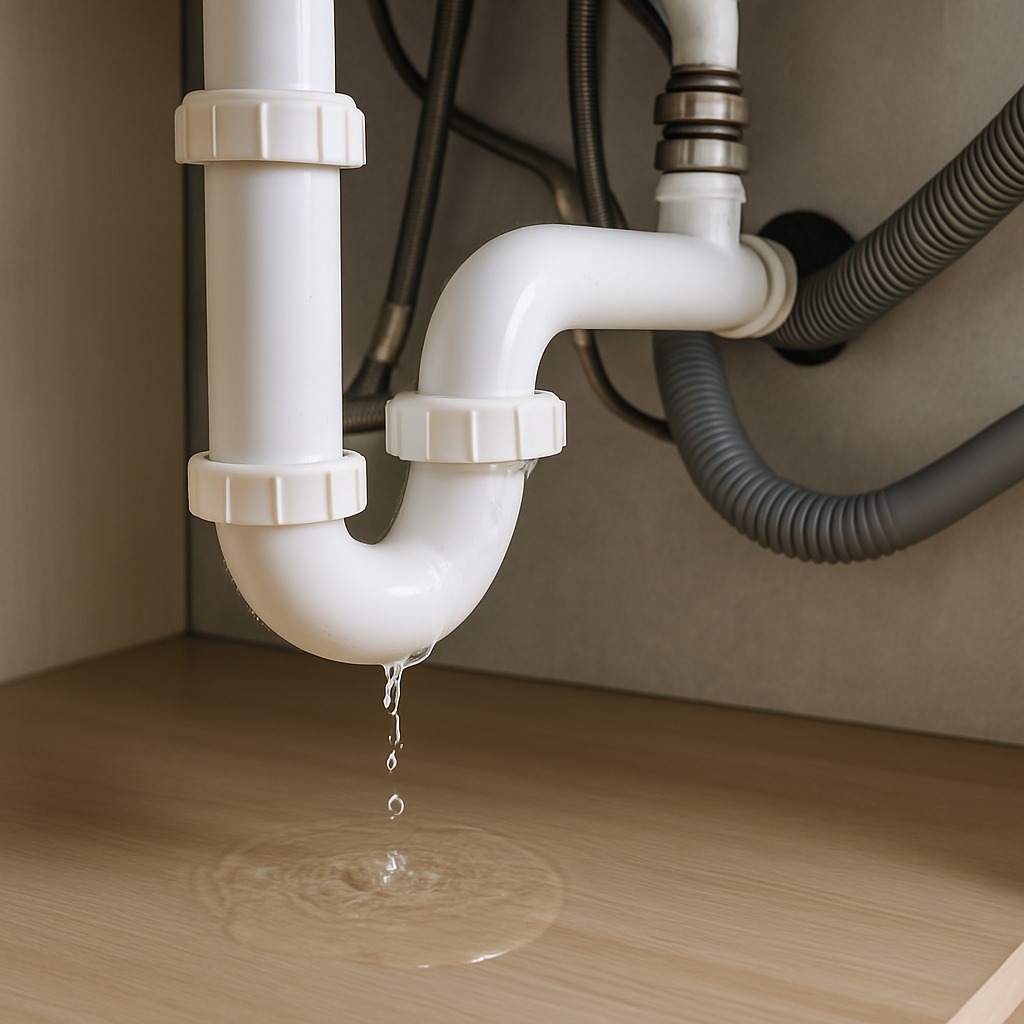
You open the cabinet under your kitchen sink to grab a sponge and your hand lands in a puddle. The bottom of the cabinet is warped, there's a musty smell, and you can see water beading along a pipe joint. This is one of the most common — and most underestimated — plumbing problems in American homes. Left alone for even two to three days, that small drip can swell into saturated subfloors, mold colonies behind the drywall, and cabinet damage that costs $2,000–$8,000 to remediate.
The good news: roughly 70% of under-sink leaks originate at accessible connections you can see and often fix yourself for under $15 in parts. The bad news: the other 30% involve supply-line failures, corroded valves, or hidden venting issues that require a licensed plumber and can run $175–$1,200 depending on severity and your market.
This guide gives you the exact diagnostic sequence professional plumbers use, real cost breakdowns verified by contractors in multiple U.S. regions, and clear thresholds for when a DIY fix is smart versus when calling a pro saves you thousands. No fluff — just the information you need to stop the leak and protect your home today.
Symptoms: What You're Seeing
- Pooling water inside the cabinet: You open the cabinet doors beneath your sink and find standing water on the base panel, sometimes only a thin film, other times a quarter-inch deep puddle. The particleboard or plywood shelf may feel spongy, swollen, or discolored with a dark waterline stain. You might notice cleaning supplies or stored items are damp on the bottom even though nothing has been spilled.
- Musty or mildew odor near the sink area: A persistent damp, earthy smell rises every time you open the under-sink cabinet, even after you wipe surfaces down. This odor indicates trapped moisture has been present long enough — typically 24 to 48 hours — for mold or mildew colonies to begin forming on wood, drywall, or caulk surfaces behind the pipes.
- Visible dripping from pipe joints or connections: You can see individual water droplets forming at a slip-joint nut, the P-trap connection, or the tailpiece where the drain meets the sink basket strainer. The drip may be slow — one drop every few seconds — or a steady trickle that follows the curve of the pipe downward and pools at the lowest point of the cabinet floor.
- Staining or mineral deposits on pipe surfaces: White, green, or rust-colored crusty buildup appears on threaded brass fittings, chrome slip nuts, or copper supply lines. These mineral rings mark where water has been slowly seeping and evaporating repeatedly over weeks or months. Running your finger over the deposits produces a gritty, chalite residue that flakes off easily.
- Warped or deteriorating cabinet floor: The bottom panel of the sink cabinet bows downward, delaminates, or shows dark discoloration spreading outward from the pipe area. Pressing the panel with your hand reveals soft spots where the material has lost structural integrity. In severe cases, the floor may sag enough to drop items stored underneath into the space below.
What's Actually Causing This
- Worn or compressed slip-joint washers: The nylon or rubber compression washers inside slip-joint nuts on drain lines degrade over time due to constant exposure to hot water, grease, and chemical drain cleaners. A typical slip-joint washer has a lifespan of 5 to 10 years before it hardens, cracks, or compresses beyond its sealing capacity. This is the single most common cause of under-sink drain leaks, accounting for roughly 40 to 50 percent of service calls for this issue. Once the washer can no longer form a watertight seal, water seeps out every time the drain is used.
- Loose or cross-threaded connections: Slip nuts, supply line compression fittings, and tailpiece connections can loosen over time from vibration — especially if a garbage disposal is installed — or from items being shoved against pipes when loading the cabinet. Cross-threading occurs during installation or DIY repairs when a plastic or brass nut is started at an angle, stripping the threads and preventing a full seal. A connection that is even a quarter-turn short of snug can produce a slow, intermittent leak that only appears under full water flow.
- Corroded or cracked pipes and fittings: Metal drain pipes, particularly chrome-plated brass common in homes built before 1990, develop pinhole corrosion from the inside out. Acidic water with a pH below 6.5 accelerates this process. PVC pipes are corrosion-resistant but can crack from impact, over-tightening, or prolonged exposure to boiling water exceeding 140°F. A corroded tailpiece or P-trap may look intact externally while harboring hairline fractures along the seam that only weep under pressure.
- Failed plumber's putty or gasket at the strainer: The basket strainer where the drain meets the sink bowl is sealed with plumber's putty or a rubber gasket. Over years of thermal cycling — hot dishwater followed by cold rinses — putty dries out and shrinks, breaking the seal between the strainer flange and the sink surface. Water then migrates down the outside of the tailpiece rather than through the drain. This leak is deceptive because the drip originates above the connection points, making it look like the pipes themselves have failed.
A 20-year master plumber we consulted says the single most overlooked leak source is the tailpiece connection directly below the drain basket — not the P-trap most homeowners suspect first. The nylon compression washer at that joint hardens after 5–8 years and loses its seal. Replacement washers cost $1.50–$4 at any hardware store, but here's the trick: when reinstalling, wet the washer with dish soap before sliding it on. This lets it seat 30% more evenly and prevents the micro-gaps that cause slow drips. If you overtighten the slip nut to compensate for a bad washer, you'll crack the PVC — turning a $4 fix into a $35–$80 tailpiece replacement. Always hand-tighten first, then add only a quarter-turn with channel locks.
Step-by-Step Diagnosis
Work through these steps before calling a contractor. Each step tells you what to look for and what it means.
Identify the exact leak source location
🔧 Flashlight, dry paper towels, painter's tapeClear everything out of the cabinet and lay dry paper towels flat across the entire cabinet floor and around each pipe joint. Turn on the faucet to full flow and run water for 60 seconds. Then stop the water and inspect each paper towel section — the first towel to show wetness is closest to the leak. Next, dry all pipes with a rag and run water again while using a flashlight to watch each connection point individually: the basket strainer, the tailpiece nut, each slip-joint nut on the P-trap, and the wall or floor connection. Mark the leaking joint with a piece of painter's tape. If you have supply line leaks (pressurized side), the drip will be constant even without running the faucet — check the hot and cold shut-off valves and the flexible supply connectors separately.
Tighten slip-joint nuts on drain assembly
🔧 10-inch channel-lock pliersUsing channel-lock pliers (also called tongue-and-groove pliers, 10-inch size is ideal), grip the slip nut firmly and tighten it clockwise approximately one-quarter turn past hand-tight. Do not over-tighten — plastic PVC slip nuts crack under excessive force, and brass nuts can strip. Hold the pipe steady with your other hand or a second pair of pliers to prevent the entire assembly from twisting and breaking the wall connection. After tightening, run water for 30 seconds and watch the joint with your flashlight. If the leak stops, dry the area and check again in 24 hours. If it continues dripping, the internal washer is likely failed and the joint must be disassembled. On supply side compression fittings at shut-off valves, tighten only one-eighth turn at a time — these fittings seal with a brass ferrule that can deform permanently if overtightened.
Replace worn washers and reassemble P-trap
🔧 Channel-lock pliers, bucket, replacement slip-joint washersPlace a bucket beneath the P-trap to catch residual water. Unscrew each slip nut by hand or with channel-lock pliers turning counter-clockwise. The P-trap will release 1 to 2 cups of water — expect a sewer gas smell, which is normal. Remove the old nylon or rubber slip-joint washers from inside each nut; they are beveled, approximately 1-1/4 inch or 1-1/2 inch diameter depending on your drain size. Take one to the hardware store to match the exact size. Standard replacement washer packs cost $2 to $5. When reinstalling, seat the new washer beveled-side facing into the joint (toward the pipe, not toward you), then hand-tighten each slip nut before giving it a final quarter-turn with pliers. Reassemble from the wall connection upward to the tailpiece. Run water for two full minutes and verify every joint is dry.
Reseal the sink basket strainer properly
🔧 Basket strainer wrench, plumber's putty, plastic putty knifeIf water is seeping around the strainer body from above, the putty or gasket has failed. From underneath, unscrew the large locknut holding the strainer to the sink — this may require a basket strainer wrench or a large pair of channel-locks. Remove the strainer from above, and scrape off all old, dried putty from the sink surface and the strainer flange using a plastic putty knife to avoid scratching stainless steel or porcelain. Roll a fresh rope of plumber's putty about 3/8-inch thick and press it around the underside of the strainer flange in a continuous ring. Press the strainer into the drain hole from above, then reinstall the rubber gasket, cardboard friction ring, and locknut from below. Tighten until putty squeezes out evenly around the flange — excess putty is normal, wipe it away. Wait 30 minutes before running water to let the putty settle.
Replace corroded or cracked pipe sections
🔧 Hacksaw, 120-grit sandpaper, channel-lock pliers, PVC P-trap kitIf the pipe itself is cracked, corroded, or has pinhole leaks, repair tape and epoxy are temporary at best — replacement is the correct fix. Measure the outer diameter of your existing pipe (most residential kitchen and bathroom sinks use 1-1/4 inch or 1-1/2 inch). Purchase a PVC P-trap kit for $5 to $12 at any hardware store; these kits include the J-bend, trap arm, slip nuts, and washers. Remove the old assembly by loosening all slip nuts and pulling the sections apart. Dry-fit the new PVC pieces first — the trap arm must slope downward toward the wall at roughly 1/4 inch per foot for proper drainage. If the trap arm is too long, cut it to length with a hacksaw and deburr the cut end with sandpaper. Hand-tighten all connections, then add a quarter-turn with pliers. PVC does not require pipe dope or Teflon tape on slip-joint connections. Run water for a full two minutes and inspect every joint for drips.
When to Stop DIY and Call a Pro
Stop DIY and call a licensed plumber if you find any of the following: the leak originates from a pressurized supply line and tightening the compression fitting does not stop it — a failed supply line can release 2 to 4 gallons per minute and cause thousands of dollars in water damage within an hour. Call a professional if you see active mold growth (black, green, or white fuzzy patches) on the cabinet interior, subfloor, or drywall behind the pipes — mold remediation combined with plumbing repair is not a DIY job and may require a licensed mold assessor depending on your state. If the pipes connect to a garbage disposal and the leak is coming from the disposal body itself (cracked housing or failed internal seal), replacement requires working with hardwired or plug-in electrical connections alongside plumbing, which raises the risk level. Any leak involving copper or galvanized supply pipes inside the wall, corroded shut-off valves that will not turn without risking breakage, or a drain pipe that enters the wall and connects to the main waste line should be left to a professional. Financially, if your total parts estimate exceeds $75 or the project requires cutting into the wall or floor, a plumber's service call of $150 to $350 is almost always the smarter investment compared to the cost of repairing water-damaged cabinetry ($500 to $2,000) or subfloor replacement ($1,000 to $3,000) from a botched or delayed repair.
What Does This Repair Cost?
Costs vary by region, home age, and severity. These are national averages — always get 3 quotes.
| Repair Type | DIY Cost | Pro Cost | Emergency Premium |
|---|---|---|---|
| Slip-joint washer or compression nut replacement | $2–$8 | $125–$200 | $200–$350 |
| P-trap replacement (PVC or ABS) | $8–$20 | $150–$275 | $250–$425 |
| Supply line valve + braided line replacement | Not recommended | $175–$450 | $350–$700 |
| Subfloor/cabinet water damage repair | Not recommended | $400–$1,200 | $800–$2,000 |
| Emergency after-hours service call | N/A | $150–$350 | $275–$500 |
*Emergency rates (nights/weekends/holidays) run 40–60% above standard. Get 3 quotes before approving work.
Get quotes from licensed professionals in your area
Free, no obligation — compare 3+ contractors in minutesWhat Drives the Cost?
| Cost Factor | Estimated Impact | Why It Matters |
|---|---|---|
| Leak location (drain side vs. supply side) | Adds $50–$300 | Supply-side leaks involve pressurized water and shut-off valve work, which requires more labor and higher-grade parts than gravity drain repairs |
| Pipe material (PVC vs. brass vs. galvanized) | Adds $30–$250 | Galvanized steel pipes in pre-1980 homes often require transition fittings or partial re-piping, significantly increasing labor time |
| Presence of garbage disposal | Adds $75–$200 | Disposals must be disconnected and sometimes remounted to access the leak, adding 30–60 minutes of billable labor |
| Water damage already present | Adds $400–$8,000 | Swollen particleboard cabinets, mold behind walls, and warped subfloor require separate remediation contractors beyond the plumbing repair itself |
Regional water hardness dramatically affects how fast under-sink fittings fail. In hard-water areas like Phoenix, Las Vegas, and much of Texas, mineral buildup corrodes brass ferrules on supply line connections 40% faster than national averages. Plumbers in these markets recommend replacing braided stainless-steel supply lines proactively every 8–10 years ($8–$14 per line DIY, $120–$200 for a pro to swap both hot and cold). Another red flag contractors see weekly: homeowners stacking cleaning products against PVC drain pipes under the sink. Chemical containers with rough edges abrade thin PVC walls over months, creating pinhole leaks that look mysterious. Simply reorganizing your under-sink storage to keep products 2 inches from all pipes can prevent hundreds of dollars in future damage.
⚠️ Stop DIY — Call a Pro If You See These
- Soft or spongy cabinet floor that flexes under light pressure — Indicates prolonged water saturation of particleboard or plywood — within 2 to 4 weeks of continuous exposure, the subfloor beneath can begin rotting, leading to $800 to $2,500 in subfloor and cabinet replacement costs.
- Visible black mold spots on cabinet walls or pipes — Active mold growth becomes a health hazard within 48 to 72 hours of moisture exposure. Remediation by a licensed professional typically runs $500 to $3,000 depending on the extent of colonization and whether drywall removal is necessary.
- Water stains or bubbling paint on the wall behind the sink — Suggests the leak has migrated into the wall cavity, potentially saturating drywall and insulation. Within 1 to 2 weeks, this can cause structural wood framing to swell and create conditions for hidden mold behind the wall — repair costs escalate to $1,500 to $4,000.
- Sudden spike in monthly water bill without increased usage — A pressurized supply line leak as small as 1 drip per second wastes approximately 5 gallons per day — 150 gallons per month. A faster leak, such as a cracked supply hose, can waste hundreds of gallons daily, adding $50 to $200 to a single month's water bill and signaling a problem that will only escalate.
Frequently Asked Questions
How much does it cost to fix Under Sink Pipe Leaking?
The national average for a plumber to fix a leaking under-sink drain pipe runs $175 to $350 for a straightforward slip-joint washer replacement or P-trap swap. A simple service call with a washer replacement may be as low as $125 in rural markets, while a complex repair involving supply line replacement, shut-off valve upgrade, and corroded fittings in a major metro area can reach $500 to $700. The two biggest price factors are whether the leak is on the drain side (gravity, lower pressure, cheaper parts) versus the supply side (pressurized, more labor-intensive), and whether additional damage like rotted cabinetry or subfloor requires simultaneous repair.
Can I fix Under Sink Pipe Leaking myself?
Yes, in most cases involving the drain side. About 70 percent of under-sink drain leaks are caused by loose slip nuts or worn washers — both are repairs that require only channel-lock pliers, a $3 to $5 washer pack, and 20 to 45 minutes of work. If you can identify the leak source and the fix involves tightening connections or swapping a PVC P-trap kit, this is a beginner-level DIY task. However, if the leak is on a pressurized supply line, involves corroded shut-off valves, or requires cutting into the wall, hire a licensed plumber to avoid water damage or cross-contamination risks.
How urgent is Under Sink Pipe Leaking?
Drain-side leaks that only drip while you are running the faucet give you a window of a few days to complete the repair — place a bucket or container to catch drips in the interim. However, do not wait more than 48 to 72 hours, because standing moisture inside a closed cabinet accelerates mold growth and wood deterioration rapidly. Supply-side leaks are more urgent because they drip or flow continuously under line pressure (40 to 80 psi in most homes) — shut off the hot and cold valves beneath the sink immediately and address the repair the same day. If you cannot stop the leak by closing the valves, shut off your home's main water supply and call a plumber for same-day service.
What causes Under Sink Pipe Leaking?
The two most common causes are failed slip-joint washers and loose connections, which together account for roughly 60 to 70 percent of under-sink leaks. Slip-joint washers are small rubber or nylon rings inside the threaded nuts on drain pipes; they harden, crack, and lose their seal after 5 to 10 years of use. The third most common cause is a failed plumber's putty seal at the basket strainer — the putty dries out and shrinks over time, allowing water to seep around the drain flange and travel down the outside of the tailpiece. Corroded metal pipes in older homes are less common but typically require full section replacement rather than a simple tightening.
Will homeowners insurance cover Under Sink Pipe Leaking?
Standard homeowners insurance typically covers sudden and accidental water damage — for example, a supply hose that bursts without warning and floods the cabinet and kitchen floor. In that scenario, the resulting water damage to flooring, drywall, and cabinetry is generally covered, but the cost to repair or replace the pipe itself is usually excluded. Slow leaks that develop over weeks or months are classified as maintenance failures and are almost universally denied. If you discover damage, document it with photos immediately and file the claim within 24 to 48 hours. Deductibles of $500 to $1,000 apply, so minor repairs rarely justify a claim. Review your specific policy language for water damage exclusions or endorsements.
How do I find a licensed plumber for this?
First, verify the plumber holds a valid license in your state or municipality — you can typically check this through your state contractor licensing board's online database. Second, confirm they carry general liability insurance (minimum $500,000) and workers' compensation coverage; ask for a certificate of insurance before work begins. Third, get a written quote that itemizes labor, parts, and any trip charge — reputable plumbers will quote a flat rate for common repairs like P-trap replacement. Fourth, check references or online reviews from at least three verified customers, focusing on reviews that mention similar under-sink repairs. Avoid plumbers who diagnose over the phone without seeing the issue or who demand full payment before starting work.
An under-sink pipe leak comes down to three decisions: identifying whether the leak is on the drain side or the supply side, determining if the fix requires a simple washer replacement or a full pipe section swap, and knowing when the scope of damage means you need a licensed plumber instead of a DIY approach. Drain-side leaks caused by worn washers or loose slip nuts are the most common scenario and cost under $10 in parts. Supply-side leaks, corroded pipes, and any situation involving mold or structural damage to the cabinet or subfloor shift the calculus firmly toward professional repair.
Your recommended next step: open the cabinet, clear it out, and run the faucet while you inspect every connection with a flashlight and dry paper towels. If you can identify a single dripping slip-joint nut, tighten it a quarter-turn and monitor for 24 hours. If the leak persists, pick up a washer pack and P-trap kit from the hardware store — total cost under $15 — and follow the disassembly and replacement steps outlined above. If you see mold, feel soft subflooring, or the leak is on a pressurized supply line you cannot stop with the shut-off valve, skip the DIY route entirely and schedule a licensed plumber. Acting within 48 hours of discovery is the single best way to keep this a $150 repair instead of a $2,000 restoration project.
Ready to Solve This for Good?
Get matched with pre-screened, licensed plumbers in your area. Free quotes, no obligation, no spam.
GET FREE QUOTES NOW