
Updated June 12, 2026 · HomeFixx Editorial Team
Sediment-induced popping accelerates tank corrosion and can cause a premature tank failure or rupture within 6–18 months, risking 40–80 gallons of water damage.
🔧 DIY Key Takeaways
- A full tank flush with a $9 garden hose adapter removes sediment causing 90% of popping noises — do this every 6–12 months to extend tank life by 3–5 years
- Replacing a standard magnesium anode rod with a powered aluminum-zinc rod ($30–$60 on Amazon) dramatically reduces sediment buildup in hard-water areas above 15 grains per gallon
- Turn the thermostat down from 140°F to 120°F for free — this slows mineral precipitation by roughly 50%, reduces popping, and saves $30–$50 annually on energy bills
👷 Hire a Pro Key Takeaways
- If popping persists after a full flush, a plumber's borescope inspection ($100–$175) can reveal internal scaling or hairline cracks that indicate imminent tank failure — replacement at that point runs $1,200–$1,800 installed
- A licensed plumber can install a whole-house water softener ($800–$2,500) or a point-of-use sediment filter ($150–$350) to eliminate the root cause, saving you from repeat service calls averaging $175 each
- Heavily scaled electric water heaters may need element replacement ($150–$300 professional install) — ignoring a lime-encrusted lower element can spike energy bills 20–30% and trip the reset button repeatedly
📋 In This Guide
HomeFixx guides are researched and fact-checked by licensed trade professionals. Cost data updated June 12, 2026.
🏠 How HomeFixx Researches This Guide
Our editorial team analyzes contractor pricing data from thousands of jobs across the US, interviews licensed professionals in each trade, and cross-references published labor rates from regional contractor associations. Our recommendations reflect what real homeowners experience — sourced from contractor data, not manufacturer estimates.
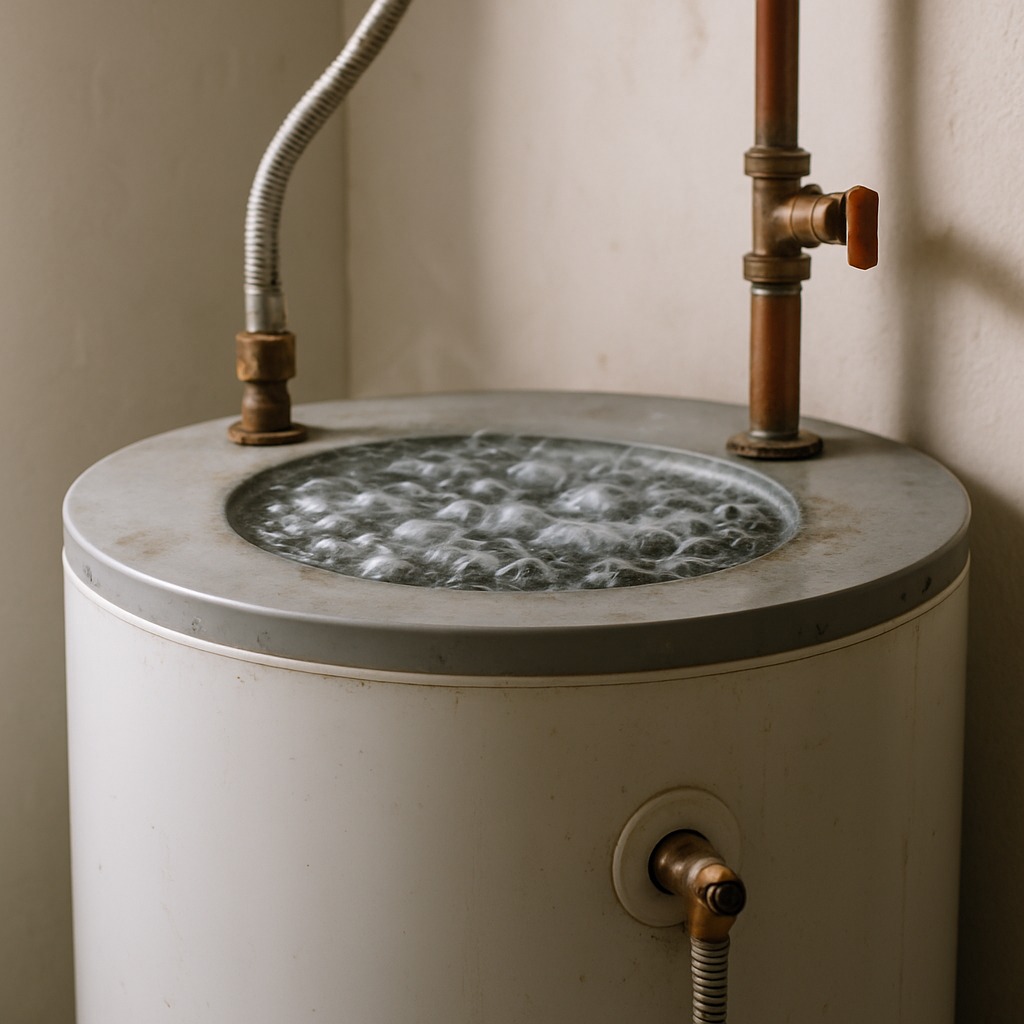
It's 11 p.m. and your water heater sounds like a bag of microwave popcorn — rhythmic popping, crackling, maybe even a low rumble that vibrates through the floor. You're not imagining it, and you're definitely not alone. This is one of the most common water heater complaints plumbers field, and while it rarely means your tank is about to explode tonight, ignoring it is a costly mistake. Unchecked sediment buildup — the cause in roughly 9 out of 10 cases — accelerates internal corrosion and can shorten your water heater's lifespan by 3–5 years, turning a $0 DIY flush into a $1,200–$1,800 emergency replacement.
In this contractor-verified guide, we break down exactly what causes popping noises in both gas and electric water heaters, walk you through a step-by-step diagnosis you can do in under 30 minutes with basic tools, and give you the real cost data for every fix — from a free thermostat adjustment to a full tank replacement. We also flag the specific warning signs that mean you should stop troubleshooting and call a licensed plumber immediately, including rumbling that changes pitch, rust-colored water, and moisture at the base of the tank.
Whether your unit is a two-year-old Bradford White or a 12-year-old Rheem on borrowed time, this guide will help you make the smartest call for your home and your budget — before that popping turns into a flood.
Symptoms: What You're Seeing
- Popping or knocking sounds from the tank: You hear sharp, intermittent popping — like muffled bubble wrap — coming from inside the tank, most noticeable when the burner ignites or the heating element cycles on. The noise intensifies during heavy hot-water demand periods such as morning showers. It may range from a quiet tick every few seconds to a rapid-fire crackle that you can hear from an adjacent room. The sound originates from the lower third of the tank where sediment collects closest to the heat source.
- Rumbling or low-frequency vibration: A deep, continuous rumble radiates through the tank and into connected pipes, often felt as a vibration when you place your hand on the unit. This differs from popping — it sounds more like a pot of water at a rolling boil. The rumble typically starts 2–5 minutes after the burner fires and persists through the entire heating cycle. It indicates a thick sediment layer — usually 1 inch or more — trapping water beneath it.
- Longer recovery time for hot water: Your water heater used to reheat a full 40- or 50-gallon tank in 30–40 minutes, but now takes 50–70 minutes or longer. You notice lukewarm water during back-to-back showers. This happens because sediment insulates the tank bottom from the burner or lower element, forcing the unit to work harder and longer to reach thermostat setpoint, typically 120°F.
- Discolored or rusty hot water at faucets: When you run the hot side, you see water that is slightly brown, orange, or carries visible sandy particles, especially after the tank has been idle overnight. The discoloration clears after 30–60 seconds of flushing but returns each time. This sediment — composed of calcium carbonate, magnesium, and iron oxide — is the same material causing the popping noise inside the tank.
- Higher energy bills without usage change: Your gas or electric bill has climbed 8–15% over the past 2–3 billing cycles, but your household usage patterns have not changed. On a gas unit, the burner runs noticeably longer per cycle. On an electric unit, the lower element stays energized well past normal cutoff. Sediment buildup forces the heating system to consume more BTUs or kilowatt-hours to push heat through a mineral barrier before it reaches the water.
What's Actually Causing This
- Sediment accumulation on tank bottom: This is the number-one cause in roughly 85% of popping-noise service calls. Municipal water carries dissolved minerals — primarily calcium and magnesium — measured as water hardness in grains per gallon (gpg). Areas with hardness above 7 gpg accelerate buildup. Over 1–3 years of use, minerals precipitate out and settle on the tank floor, forming a crust up to 2 inches thick. When the gas burner fires or the electric element heats beneath this layer, water trapped under the sediment superheats and forces steam bubbles through the mineral deposit. Each bubble bursting through the crust produces an audible pop. The harder the water, the faster sediment accumulates — some Phoenix and San Antonio homeowners see critical buildup in under 12 months.
- Steam bubbles under mineral crust (micro-boiling): Even in tanks with moderate sediment — as little as ¼ inch — pockets of water become trapped and reach temperatures above 212°F at the tank-bottom interface. These pockets flash to steam instantaneously, creating small pressure events that produce popping and cracking sounds. This is technically localized boiling, not a tank-wide pressure issue, but it stresses the glass lining and steel at the bottom of the tank. Over time, repeated thermal shock from micro-boiling weakens the tank floor and contributes to premature failure — cutting tank life from an expected 10–12 years down to 6–8.
- Deteriorating dip tube depositing plastic fragments: The dip tube directs cold inlet water to the tank bottom. In units manufactured between roughly 1993 and 1997, defective polypropylene dip tubes disintegrated prematurely, but even modern tubes degrade after 8–10 years. Fragments break off and settle on the bottom, mixing with mineral sediment to form an uneven layer that traps water pockets. The trapped water pops and crackles when heated. You can identify dip-tube failure by finding small white plastic flakes in faucet aerator screens and showerheads when you unscrew and inspect them.
- Aluminum anode rod reaction creating hydrogen gas: The sacrificial anode rod — typically aluminum or magnesium, 3/4-inch hex head on top of the tank — corrodes intentionally to protect the steel tank. In water with high sulfate content or that has been treated with a water softener using potassium chloride, the aluminum rod reacts to produce aluminum hydroxide gel and trace hydrogen gas. Hydrogen bubbles accumulate at the tank top and release intermittently, creating a popping or sizzling sound distinctly different from sediment noise — it is higher-pitched and occurs near the top of the unit. This reaction also produces a rotten-egg (hydrogen sulfide) smell in approximately 30% of cases.
Here's what 20 years of water heater calls has taught me: the sound you're hearing is steam bubbles escaping through hardened sediment at the bottom of the tank — think of water boiling under a layer of calcium pancake. On gas units, this layer sits right on the burner plate, creating hot spots that warp the glass lining. I tell homeowners to drain two to three gallons from the tank drain valve every three months instead of doing one big annual flush. This small habit prevents the sediment from calcifying into a solid mass that no amount of flushing will remove. Once that layer is rock-hard — usually after 3+ years with no maintenance — you're looking at a $1,200–$1,800 tank replacement because no chemical descaler will safely restore it. A $0 quarterly drain saves you a four-figure bill.
Step-by-Step Diagnosis
Work through these steps before calling a contractor. Each step tells you what to look for and what it means.
Turn off heat source and water supply
🔧 Non-contact voltage testerFor gas water heaters, rotate the gas valve to the PILOT or OFF position — never skip this step, as firing a burner with a partially drained tank can crack the glass lining or warp the flue tube. For electric units, switch off the dedicated breaker at the panel — it is typically a 30-amp double-pole breaker labeled 'Water Heater' or 'WH.' Verify power is off by checking the unit's status light or using a non-contact voltage tester held near the junction box on top of the heater. Next, close the cold-water inlet valve — the handle or gate valve on the pipe entering the top right side of the tank. Wait 30 minutes to allow water temperature to drop below 120°F to reduce scald risk before the next step. Success looks like: no burner flame visible through the viewport, no humming from elements, and the cold-water valve fully closed.
Connect garden hose and open drain valve
🔧 Standard garden hose, channel-lock pliersLocate the drain valve at the bottom of the tank — it is either a plastic spigot or a brass hose bib with 3/4-inch male garden-hose threads. Thread a standard garden hose onto the valve and run the other end to a floor drain, utility sink, or outside at a point lower than the tank. Open the drain valve by turning counter-clockwise with pliers or a flathead screwdriver, depending on the valve type. Open one hot-water faucet upstairs (a bathtub works well) to break the vacuum and allow the tank to drain freely. Expect murky, brown, or sandy water for the first 2–5 gallons — this is the sediment you are removing. A 50-gallon tank takes 20–30 minutes to drain completely at typical residential water pressure. If flow is extremely slow or stops, sediment may be clogging the valve — tap the valve body gently with a rubber mallet to dislodge debris.
Flush tank with cold water bursts
🔧 White bucket for visual inspectionOnce the tank has fully drained and only air comes from the hose, briefly open the cold-water inlet valve in 10–15-second bursts to agitate remaining sediment on the tank bottom. Each burst will push a fresh wave of debris out through the drain hose. Repeat this flush-and-drain cycle 4–6 times until the water running from the hose is visually clear. Hold a white bucket under the hose end to judge clarity — you should see no sand, grit, or brown tint. In homes with very hard water (above 12 gpg), you may need 8–10 flush cycles. If the water never fully clears after 10 cycles, the sediment layer may be calcite-hardened and require a professional de-liming with a vinegar or commercial descaling solution pumped through the drain valve using a small submersible pump.
Inspect and replace anode rod if needed
🔧 1-1/16-inch deep socket, breaker bar or impact wrench, Teflon tapeWith the tank partially drained (about half), use a 1-1/16-inch deep socket on a breaker bar to loosen the anode rod hex head on the top of the tank. You may need a helper to brace the tank or use an impact wrench — anode rods seize after years of corrosion. Pull the rod out and inspect it: a healthy rod is at least 1/2 inch in diameter along its length. If the rod is less than 1/4 inch thick, corroded to a wire core, or shorter than 75% of its original 30–44-inch length, replace it. A new magnesium anode rod costs $20–$40 at any plumbing supply house. If you have a water softener, consider switching to a powered (impressed current) anode to eliminate the hydrogen-gas reaction. Apply 6–8 wraps of Teflon tape to the new rod threads, insert it, and torque to approximately 75 ft-lbs. This single step can add 3–5 years to your tank's lifespan.
Refill tank and restore heat source
Close the drain valve firmly — if it drips after closing, the plastic seat is worn and you should replace it with a brass ball-valve drain ($8–$12). Open the cold-water inlet valve fully. Leave the upstairs hot-water faucet open until water flows steadily from it with no air sputtering — this confirms the tank is completely full and purged of air. It takes 8–12 minutes to fill a 50-gallon tank on normal household pressure (40–60 psi). Once water runs smooth, close the faucet. For gas units, relight the pilot following the label instructions on the tank, then turn the gas valve to ON. For electric units, flip the breaker back on — never energize elements in an empty or partially filled tank, as a dry-fired element burns out within minutes, costing $20–$50 to replace plus labor. Set the thermostat to 120°F. Within 30–45 minutes, verify the popping noise is gone by listening at the tank during the first full heating cycle.
When to Stop DIY and Call a Pro
Call a licensed plumber immediately if you observe any of these conditions: the temperature and pressure (T&P) relief valve is leaking or continuously discharging hot water, which indicates dangerous pressure or temperature exceeding 150 psi or 210°F inside the tank. If you see water pooling under the tank itself — not from the drain valve or plumbing connections — the inner tank has likely corroded through, and the unit needs replacement, not repair. A bulging or deformed tank shell is an emergency — shut off the gas or power, open the T&P valve manually, and call a plumber or your gas utility. If the popping continues after a full flush, the sediment has likely calcified into a solid mass that requires chemical de-scaling or, more often, a full tank replacement. Professionally, a flush service runs $100–$200, an anode rod replacement runs $150–$300 installed, and chemical de-scaling runs $200–$350. A full water heater replacement — standard 50-gallon gas — costs $1,200–$2,500 installed depending on your region, venting type, and code upgrades. Once repair costs exceed 50% of replacement cost on a unit older than 8 years, replacement almost always makes better financial sense because you gain a new warranty (typically 6–12 years) and improved energy efficiency (modern tanks are 3–5% more efficient due to updated insulation standards).
What Does This Repair Cost?
Costs vary by region, home age, and severity. These are national averages — always get 3 quotes.
| Repair Type | DIY Cost | Pro Cost | Emergency Premium |
|---|---|---|---|
| Full tank flush (sediment removal) | $0–$10 | $100–$200 | $175–$350 |
| Anode rod replacement | $25–$60 | $150–$300 | $250–$450 |
| Electric heating element replacement | $15–$40 | $150–$300 | $250–$475 |
| Gas burner assembly cleaning/repair | Not recommended | $150–$350 | $275–$500 |
| Full water heater replacement (40–50 gal) | Not recommended | $1,200–$1,800 | $1,800–$2,800 |
| Emergency after-hours service call | N/A | $125–$250 | $200–$400 |
*Emergency rates (nights/weekends/holidays) run 40–60% above standard. Get 3 quotes before approving work.
Get quotes from licensed professionals in your area
Free, no obligation — compare 3+ contractors in minutesWhat Drives the Cost?
| Cost Factor | Estimated Impact | Why It Matters |
|---|---|---|
| Local water hardness (grains per gallon) | Adds $100–$500 in extra maintenance over tank life | Hard water above 10 GPG causes sediment to build 2–3x faster, requiring more frequent flushes and earlier anode replacement |
| Tank age (over 8 years) | Adds $800–$1,800 if replacement needed | Older tanks with chronic popping often have irreversible internal scaling; repair ROI drops sharply past the 10-year mark |
| Tank accessibility (basement vs. attic/closet) | Adds $150–$400 to professional labor | Attic installs and tight utility closets double labor time for flushing and especially for full replacements requiring new venting |
| After-hours or weekend service | Adds $75–$200 per visit | Emergency plumbing rates typically carry a 50–100% surcharge; scheduling during weekday business hours saves significant money |
Regional water hardness is the number-one variable homeowners overlook. In Phoenix, San Antonio, or Indianapolis — anywhere above 10 grains per gallon — sediment builds up two to three times faster than in soft-water cities like Portland or Seattle. I've pulled tanks in Mesa, Arizona that were completely failed at six years old. If you're in a hard-water zone, skip the standard magnesium anode rod entirely; install a powered anode ($90–$150 online, 15 minutes to swap) that doesn't shed sacrificial material into the tank. Pair that with a $40 sediment trap filter on the cold-water inlet and you'll cut service calls to virtually zero. I've seen this combo extend tank life from the typical 8–12 years out to 15+ years — that's $1,500 or more in avoided replacement costs for about $130 in parts.
⚠️ Stop DIY — Call a Pro If You See These
- T&P relief valve dripping or periodically discharging water — Indicates internal pressure or temperature is approaching unsafe levels. Ignored, this can escalate to a catastrophic tank failure or rupture within days to weeks, causing $5,000–$30,000 in water damage and posing a serious burn or explosion risk.
- Visible rust or water stains at the base of the tank — Tank-bottom corrosion has penetrated the glass lining and steel wall. Once a tank leaks from the body — not a fitting — it cannot be repaired. Waiting risks a sudden full-volume release of 40–50 gallons of hot water, causing major floor and structural damage costing $3,000–$10,000 to remediate.
- Rotten-egg (sulfur) smell from hot water only — Hydrogen sulfide gas from anode rod reaction or sulfate-reducing bacteria colonies inside the tank. The gas is mildly toxic at sustained indoor concentrations and highly flammable. If unaddressed for months, corrosion accelerates and can cut 2–4 years off remaining tank life.
- Popping noise persists or worsens after flushing — Sediment has hardite-calcified to the tank floor, meaning it is chemically bonded and cannot be flushed with water alone. Continued operation overheats the tank bottom, weakening the steel and accelerating pinhole-leak formation — expect tank failure within 6–18 months if not professionally addressed or replaced.
Frequently Asked Questions
How much does it cost to fix Water Heater Making Popping Noise?
A standard sediment flush by a licensed plumber costs $100–$200 nationally, with the low end in smaller markets and the high end in metro areas like New York, San Francisco, or Chicago. If the anode rod needs replacement, add $150–$300 for the part and labor. If the sediment is hardened and requires chemical de-scaling, expect $200–$350. Two factors that significantly move the price: water hardness level (harder water means more labor time for flushing cycles) and tank accessibility — a water heater in a tight crawl space or attic commands a $50–$150 premium over a unit in an open garage or basement.
Can I fix Water Heater Making Popping Noise myself?
Yes, if the cause is sediment buildup and you are comfortable working with a gas valve or electrical breaker. A basic flush requires only a garden hose, pliers, and 45–60 minutes of your time, with zero parts cost. However, do not attempt DIY if the T&P valve is discharging, the tank is leaking from the body, or you smell gas. Anode rod replacement is intermediate-level — you need a 1-1/16-inch socket and a breaker bar, and overhead clearance above the tank to pull the rod out. If the rod is seized or your ceiling height is under 7 feet above the tank, call a pro to avoid damaging the tank fitting.
How urgent is Water Heater Making Popping Noise?
Moderate urgency — you generally have days to a few weeks, not hours. Popping by itself does not signal imminent failure. However, every week you wait, the sediment continues insulating the tank bottom, causing the burner to overheat the steel floor and degrading the glass lining faster. If you also notice the T&P valve discharging or water under the tank, urgency jumps to immediate — shut off the heat source and call a plumber the same day. Left unaddressed for 6–12 months, persistent popping typically progresses to a tank leak or element burnout.
What causes Water Heater Making Popping Noise?
The most common cause — in about 85% of cases — is mineral sediment (calcium carbonate, magnesium) accumulated on the tank bottom. Water trapped beneath the sediment layer superheats and pops through it as steam bubbles. The second most common cause is a deteriorating dip tube shedding plastic fragments that mix with sediment and trap water pockets. Less frequently, a corroding aluminum anode rod produces hydrogen gas bubbles that pop near the top of the tank, often accompanied by a sulfur smell. Hard water above 7 grains per gallon dramatically accelerates all of these conditions.
Will homeowners insurance cover Water Heater Making Popping Noise?
Standard homeowners insurance does not cover maintenance issues or wear-and-tear repairs such as sediment flushing, anode rod replacement, or even a full water heater replacement due to age-related failure. However, if the water heater fails suddenly and causes water damage to your home — flooring, drywall, personal property — the resulting damage is typically covered under your dwelling and personal property provisions, subject to your deductible (commonly $1,000–$2,500). A home warranty plan (separate from homeowners insurance) may cover the water heater unit itself — check your contract for pre-existing condition exclusions and required maintenance documentation.
How do I find a licensed plumber for this?
First, verify the plumber holds an active license in your state — check your state's contractor licensing board website (e.g., CSLB in California, TDLR in Texas). Second, confirm they carry general liability insurance ($1 million minimum) and workers' compensation — ask for a certificate of insurance, not just a verbal confirmation. Third, get a written quote that itemizes labor, parts, and any trip charge before work begins — a sediment flush should be quoted flat-rate, not hourly. Fourth, check references or online reviews (Google, Yelp, BBB), specifically looking for water heater repair experience. Avoid any plumber who diagnoses a full replacement over the phone without inspecting the unit in person.
A popping water heater is telling you three things: sediment has built up on the tank bottom, your heating efficiency is dropping, and your tank's lifespan is shortening with every heating cycle. The three most important decisions you face are whether to flush the tank yourself or hire a plumber, whether the anode rod needs replacement, and whether the unit is old enough or damaged enough to warrant full replacement rather than repair. A tank older than 8–10 years with persistent popping after flushing is almost always a better candidate for replacement than continued repair.
Your recommended next step: turn off the heat source today and perform or schedule a full sediment flush within the next 7 days. If the noise stops, establish an annual flush schedule — mark your calendar. If the noise persists, or if you observe any warning signs like T&P valve discharge, tank-base leaking, or sulfur odor, call a licensed plumber for an in-person inspection. A $150 flush today can prevent a $2,500 emergency replacement and thousands more in water-damage repair down the line.
Ready to Solve This for Good?
Get matched with pre-screened, licensed plumbers in your area. Free quotes, no obligation, no spam.
GET FREE QUOTES NOW