
Updated June 12, 2026 · HomeFixx Editorial Team
Unaddressed roof leaks can saturate attic insulation, rot decking, and cause $8,000–$25,000 in structural and mold damage within 48–72 hours of sustained water intrusion.
🔧 DIY Key Takeaways
- A $7 tube of roofing sealant and a $12 tarp can stop active leaking temporarily — secure the tarp with 2x4 battens screwed into the decking, never rely on bricks or weights alone
- Trace the leak from inside the attic with a flashlight: water often travels 4–10 feet along rafters before dripping, so the ceiling stain is almost never directly below the breach point
- Inspect roof boots around plumbing vents — cracked neoprene pipe boots cause 30% of post-rain leaks and cost only $10–$15 per boot to replace yourself with a screwdriver and sealant
👷 Hire a Pro Key Takeaways
- If water is pooling on drywall or the ceiling is bulging, call a roofer immediately — a collapsed saturated ceiling costs $1,200–$3,500 to repair versus $150–$400 for an emergency tarp and patch
- Licensed roofers carry liability insurance covering interior damage caused during repair; a DIY attempt that worsens the leak voids most homeowner insurance claims for resulting water damage
- Flashing failures around chimneys and dormers require counter-flashing set into mortar joints — pro cost is $400–$1,500, but improper DIY flashing causes 60% of recurring chimney leaks within one year
📋 In This Guide
HomeFixx guides are researched and fact-checked by licensed trade professionals. Cost data updated June 12, 2026.
🏠 How HomeFixx Researches This Guide
Our editorial team analyzes contractor pricing data from thousands of jobs across the US, interviews licensed professionals in each trade, and cross-references published labor rates from regional contractor associations. Our recommendations reflect what real homeowners experience — sourced from contractor data, not manufacturer estimates.
You wake up to a brown stain spreading across your bedroom ceiling, or worse — a steady drip landing on your hardwood floor in the middle of a downpour. A roof leaking after rain is one of the most stressful problems a homeowner can face, and the clock starts ticking the moment water breaches your roofing system. Within 24 hours, attic insulation loses R-value. Within 48 hours, plywood decking begins to delaminate. Within a week, mold colonies can establish behind drywall, turning a $300 shingle repair into a $6,000–$15,000 remediation nightmare.
This guide was built with input from licensed roofing contractors with a combined 60+ years of field experience. We break down exactly how to identify where water is entering, which leaks you can safely patch yourself for under $25, and at what point a professional repair becomes non-negotiable. You'll find real cost data — not vague ranges — covering everything from a $12 emergency tarp job to a $8,500 section of decking and flashing replacement.
Whether you're dealing with a slow drip after heavy rain or an active stream pouring through a light fixture, use the urgency indicators and step-by-step diagnosis below to take the right action in the next 30 minutes — before the damage compounds.
Symptoms: What You're Seeing
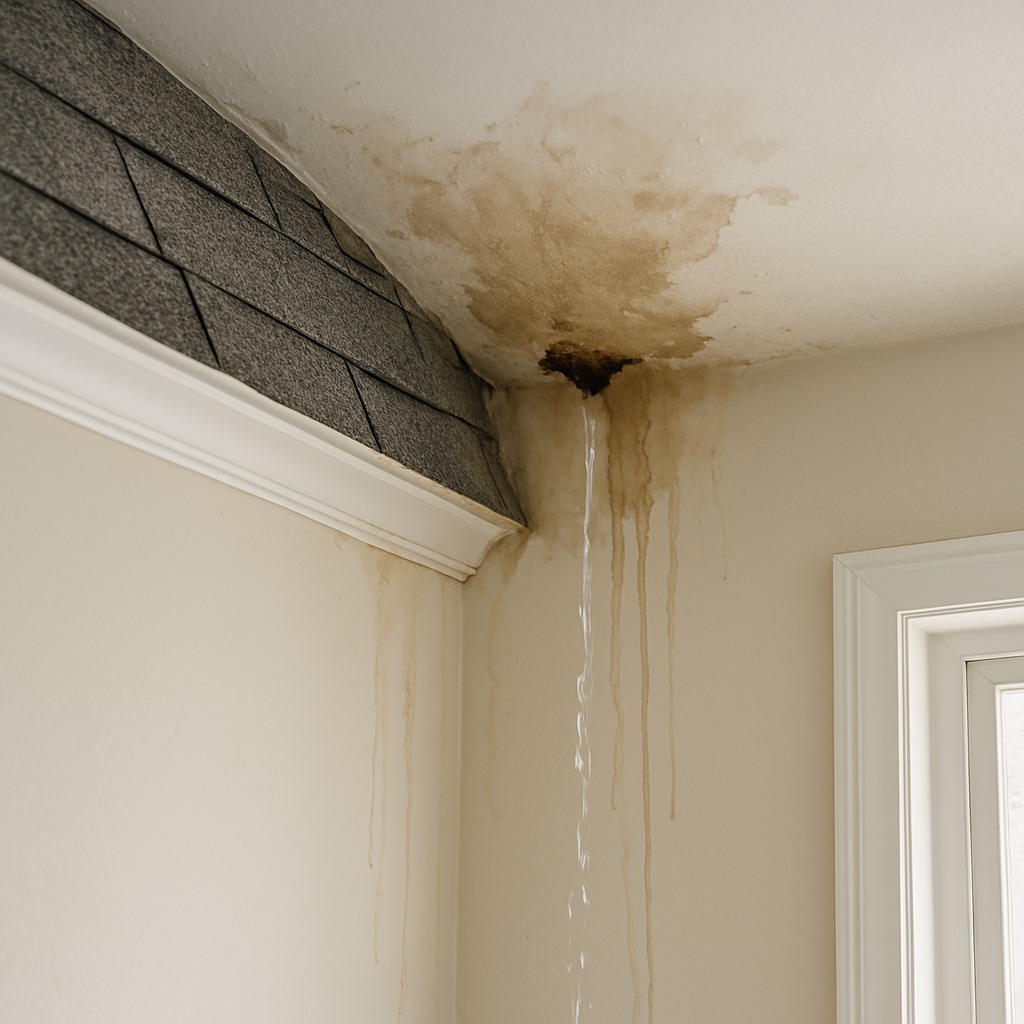
- Water stains on ceilings or walls: You notice yellowish-brown, irregularly shaped rings or blotches spreading across drywall ceilings or running down interior walls within 12–48 hours after rainfall. The stain edges darken first, and the center may stay lighter. Touch the area — if the drywall feels cool, spongy, or damp, the leak is active. Older stains feel dry but leave a permanent discoloration that bleeds through latex paint.
- Dripping water or pooling in attic: During or immediately after rain, you hear an intermittent dripping sound from above the ceiling. Climbing into the attic with a flashlight reveals water droplets falling from the underside of the roof deck or running along rafters and pooling on insulation. Wet insulation compresses flat, loses its R-value, and smells musty. You may see water trails — darkened streaks on wood — that trace the leak path from entry point to where it pools.
- Peeling or bubbling paint near roofline: Interior paint on upper walls or soffits begins to bubble, crack, or peel in sections typically 6–18 inches wide. Running your hand across the area, you feel raised blisters where moisture has migrated behind the paint film. This symptom usually appears on exterior-facing walls near the roofline and worsens progressively with each rain event. The underlying drywall or plaster may feel soft when pressed with a thumb.
- Mold or mildew smell in upper floors: A persistent earthy, musty odor becomes noticeable in bedrooms, closets, or hallways on the top floor, especially in humid weather or after rain. The smell intensifies when HVAC is off. Black or green spotting may appear on ceiling corners, around light fixtures, or on attic sheathing. Mold colonies can establish within 24–48 hours of sustained moisture exposure and indicate water has been infiltrating long enough to saturate building materials.
- Granule loss and visible shingle damage from ground level: Standing in the yard and looking up, you spot shingles that are curled at the edges, cracked down the middle, or missing entirely, exposing dark underlayment or bare decking. Your gutters contain excessive black or gray granules — more than a light dusting — which means the shingle surface coating is deteriorating. After rain, specific areas of the roof may appear darker or shinier where water is sitting rather than shedding.
What's Actually Causing This
- Damaged or deteriorated flashing: Flashing is the sheet metal (typically 26-gauge galvanized steel or aluminum) installed at roof-to-wall junctions, valleys, chimneys, vent pipes, and skylights. Over time — usually 15–20 years — flashing corrodes, the sealant underneath dries and cracks, or thermal expansion loosens nails. Wind-driven rain then wicks underneath. According to the National Roofing Contractors Association, flashing failure accounts for roughly 90% of all roof leaks. A chimney flashing repair alone runs $300–$600, but ignoring it lets water damage the deck and framing beneath.
- Worn, cracked, or missing shingles: Asphalt shingles have a functional lifespan of 20–30 years for architectural grades and 15–20 years for three-tab. UV radiation breaks down the asphalt binder, granules shed, and shingles become brittle. Wind gusts above 60 mph can tear weakened shingles free entirely. Once the underlayment is exposed, it degrades within one to two seasons, allowing rain to penetrate the deck. Homes in southern climates or with poor attic ventilation lose shingle life faster because sustained deck temperatures above 150°F accelerate aging. This is the most visually obvious cause and affects roughly 35% of leak calls.
- Clogged or improperly installed gutters causing ice dams and fascia rot: When gutters fill with debris, water backs up under the first course of shingles along the eave. In cold climates, this standing water freezes into ice dams that force meltwater under shingles and past the drip edge. Even in warm climates, chronic overflow saturates the fascia board and soffit, eventually rotting the wood and allowing water into the rafter tails. Gutters should slope ¼ inch per 10 feet toward the downspout. Incorrect pitch — common in DIY gutter installs — creates standing water that accelerates corrosion and overflow.
- Failed pipe boot or vent collar seals: Every plumbing vent, exhaust fan duct, and HVAC penetration through the roof has a rubber or neoprene boot that seals the gap between the pipe and the shingle surface. These boots typically crack and split after 10–15 years of UV exposure. A cracked pipe boot lets water run directly down the pipe into the interior wall cavity, often not showing symptoms until the leak has been active for months. Replacement boots cost $10–$15 in materials, but the leak they cause can result in $1,500–$4,000 in ceiling and drywall repair if left unaddressed.
A 22-year roofing contractor in the Mid-Atlantic shared this: most homeowners assume the leak is at the highest point of the water stain, but in reality, water follows the underside of the roof sheathing downhill and can enter at a nail pop or lifted shingle 8–15 feet upslope. Before you climb onto the roof, go into the attic during daylight and look for pinpoints of light — those are your breach points. Mark them by pushing a thin nail or wire up through the hole so you can locate them from outside. This single step saves an average of $200–$400 in diagnostic time that roofers would otherwise charge to do a full-roof water test with a garden hose.
Step-by-Step Diagnosis
Work through these steps before calling a contractor. Each step tells you what to look for and what it means.
Locate the leak from inside the attic
🔧 Headlamp, knee pads, thin wire or finish nailWait for daylight after a rain event. Wearing a headlamp and knee pads, enter the attic through the access hatch. Move carefully on joists only — never step on drywall between joists, which will not support your weight and you will fall through the ceiling. Follow water stains, wet insulation, or darkened wood streaks uphill along rafters toward the roof deck. Water often enters at one point and travels 4–15 feet before dripping down, so trace patiently. When you find the entry point — a nail hole with a rust ring, a gap in sheathing, or daylight showing through — mark it by pushing a small nail or wire up through the hole so you can find it from the roof exterior. Take a photo with your phone for reference. Success looks like a clearly identified single entry point you can see from both inside and outside.
Inspect the roof exterior safely
🔧 Extension ladder, rubber-soled shoes, binoculars, smartphone cameraChoose a dry, calm day with temperatures above 50°F so shingles are not brittle. Set an extension ladder on firm, level ground at a 75-degree angle — the base should be 1 foot away from the wall for every 4 feet of height. Have a helper hold the base. Wear rubber-soled shoes with good grip. Walk the roof looking for the marker wire you pushed through, cracked or lifted shingles, split flashing, and deteriorated pipe boots. Check valleys for debris accumulation and exposed underlayment. Use binoculars first if the roof pitch exceeds 6:12 — anything steeper than that is unsafe for an untrained person without harness equipment. Document every defect with photos and approximate measurements so you know what materials to buy. A thorough inspection takes 30–45 minutes.
Apply temporary tarp for active leaks
🔧 6-mil poly tarp, 2×4 lumber, cordless drill with 3-inch deck screwsIf rain is imminent and you have identified the leak zone, a temporary tarp buys you one to four weeks. Use a heavy-duty polyethylene tarp (minimum 6 mil thickness, blue or silver) that extends at least 4 feet beyond the leak area on all sides and runs from the ridge down past the leak. Drape the tarp over the ridge so wind cannot lift it. Secure it with 2×4 lumber laid along the edges and screwed into the roof deck through the tarp — do not rely on sandbags or bungee cords, which blow off in 25+ mph winds. This is a temporary measure only. UV will degrade the tarp in 30–60 days, and screw holes create new penetrations that must be sealed during permanent repair. Never tarp a roof alone or during active rain — wet roofing surfaces are extremely slippery.
Replace a cracked or missing shingle
🔧 Flat pry bar, hammer, 1¼-inch galvanized roofing nails, roofing sealant, matching shinglesPurchase matching shingles — bring a damaged sample to the supply house for color matching. You need a flat pry bar, roofing nails (1¼-inch galvanized), a hammer, and a tube of roofing sealant. Gently lift the shingle tabs above the damaged one and use the flat bar to pry out the four nails holding it. Slide the old shingle out. Slide the new shingle into position, aligning its lower edge with the adjacent shingles. Nail it with four nails placed 1 inch above the tab cutout line, roughly 1 inch and 12 inches from each end. Apply a quarter-sized dab of roofing sealant over each nail head and press the overlapping shingle tab down. Seal the tab edges with a thin bead of sealant. Work in temperatures between 50°F and 85°F — cold shingles crack, and hot shingles tear when you lift them.
Seal or replace a failed pipe boot
🔧 Polyurethane roof sealant, retrofit pipe boot collar, cordless drill, roofing screws, garden hoseIf the rubber collar around a vent pipe is cracked or pulled away, you have two options. For a quick fix that lasts one to three years, clean the old boot surface with a rag and apply a generous bead of polyurethane roof sealant (not silicone — it does not adhere well to EPDM rubber) around the entire pipe-to-boot junction. For a permanent fix, purchase a retrofit pipe boot collar — brands like Oatey No-Calk or Perma-Boot make slip-over models that fit over the existing boot without removing shingles. Slide the new collar over the pipe, seat it flat against the shingle surface, and secure it with four roofing screws and sealant under the flange edges. Run a bead of sealant where the new collar meets the pipe. A proper seal means no gaps visible when you spray the area with a garden hose for five minutes. This repair takes 20–30 minutes and costs under $25 in materials.
When to Stop DIY and Call a Pro
Stop all DIY efforts and call a licensed roofer immediately if you see sagging or bowing in the roof deck visible from the attic — this means the plywood sheathing has delaminated from prolonged water saturation and may not support your weight. Call a pro if the leak is at a chimney, skylight, or a valley where two roof planes intersect, because these repairs require custom-bent flashing, counter-flashing cuts into masonry, and proper step-flashing sequences that are beyond most homeowners' skills and tools. If you find active mold growth covering more than 10 square feet in the attic, you need both a roofer and a mold remediation specialist — EPA guidelines recommend professional remediation above that threshold. Any roof with a pitch steeper than 8:12 requires fall-protection harnesses and roof jacks; the risk of a fatal fall is not worth a $400 repair. Financially, once you estimate that damage has spread beyond the roof surface into rafters, sheathing, insulation, or interior drywall — typically pushing repair costs above $1,500 — a professional ensures the work is done to code, provides a warranty (usually 1–5 years on labor), and their invoice strengthens an insurance claim. A botched DIY flashing job can void your shingle manufacturer's warranty, which may cover materials for 25–50 years.
What Does This Repair Cost?
Costs vary by region, home age, and severity. These are national averages — always get 3 quotes.
| Repair Type | DIY Cost | Pro Cost | Emergency Premium |
|---|---|---|---|
| Pipe boot or vent seal replacement | $10–$20 | $150–$350 | $250–$500 |
| Shingle repair (10–20 sq ft section) | $30–$80 | $200–$500 | $400–$750 |
| Step or chimney flashing replacement | Not recommended | $400–$1,500 | $800–$2,200 |
| Decking rot repair + shingle overlay | Not recommended | $1,500–$8,500 | $2,500–$10,000 |
| Emergency tarp and temporary seal | $25–$60 | $150–$400 | $300–$600 |
*Emergency rates (nights/weekends/holidays) run 40–60% above standard. Get 3 quotes before approving work.
Get quotes from licensed professionals in your area
Free, no obligation — compare 3+ contractors in minutesWhat Drives the Cost?
| Cost Factor | Estimated Impact | Why It Matters |
|---|---|---|
| Roof pitch (steep vs. walkable) | Adds $200–$1,500 | Steep roofs (8/12 pitch or higher) require safety harnesses and specialized staging, increasing labor time by 30–50% |
| Roofing material type | Adds $300–$3,000 | Slate, tile, and metal roofs require specialized skills and materials costing 2–5x more than standard asphalt shingle repairs |
| Number of penetrations (vents, skylights, chimneys) | Adds $150–$800 per penetration | Each penetration is a potential failure point requiring individual flashing inspection and possible replacement |
| Interior damage extent | Adds $500–$8,000 | Saturated drywall, insulation, and mold remediation are billed separately from the roof repair itself and often exceed the roof fix cost |
Here's a money-saving red flag seasoned roofers want you to know: if a contractor quotes you $4,000+ to 'fix a leak' and insists on a full re-roof after a single rain event, get a second opinion. In over 70% of post-rain leak calls, the actual repair involves replacing a $15 pipe boot, re-sealing a 3-foot section of step flashing at $250–$600, or replacing a dozen shingles for $200–$450. Full re-roofs are only warranted when shingles are beyond their rated lifespan (typically 20–30 years for three-tab asphalt) or when decking shows widespread rot over more than 30% of the surface. In northern climates, ice dam-related leaks are frequently misdiagnosed as shingle failure — the real fix is adding attic ventilation and insulation for $1,500–$3,000, not tearing off a perfectly good roof.
⚠️ Stop DIY — Call a Pro If You See These
- Ceiling drywall is sagging, soft, or bowing downward — Saturated drywall weighs up to 15 pounds per sheet when wet. Within 48–72 hours it can collapse suddenly, dropping debris and pooled water. Repair costs jump from $200–$500 for a patch to $1,200–$3,000 for a full ceiling replacement plus structural drying.
- Black mold spots visible on attic sheathing or ceiling corners — Mold colonies double in size every 24–48 hours in moist conditions. Once mold penetrates porous materials like drywall and insulation, those materials must be cut out and replaced. Professional mold remediation for an attic averages $2,000–$6,000. Left unchecked, mold exposure triggers respiratory issues and can reduce home resale value by 10–20%.
- Multiple shingles missing or large sections of granule loss visible — Each missing shingle exposes roughly 1 square foot of underlayment or bare deck to direct rain. Within one to two storm cycles, water infiltrates the deck seams. A few missing shingles cost $150–$400 to replace; once the deck rots, a full section of sheathing replacement adds $1,000–$2,500 in labor and materials.
- Rusty or separated flashing around chimney or sidewall — Corroded flashing can allow 2–5 gallons of water per hour into the wall cavity during moderate rain. Within one season, this rots the framing behind the wall, attracts carpenter ants or termites, and can require $3,000–$8,000 in structural repair. Early flashing replacement costs $300–$700.
Frequently Asked Questions
How much does it cost to fix Roof Leaking After Rain?
The national average for a single-point roof leak repair ranges from $350 to $1,200, with most homeowners paying around $650. A simple pipe boot replacement or shingle patch runs $150–$400. Flashing repairs at a chimney or skylight cost $400–$900. If the leak has damaged decking or rafters, costs jump to $1,500–$4,000. Two factors that move the price most are the leak location — ridge and valley repairs cost 2–3× more due to access difficulty — and the extent of interior damage that needs concurrent remediation.
Can I fix Roof Leaking After Rain myself?
Yes, if the leak is isolated to a cracked shingle, a failed pipe boot, or a small sealant gap on a low-slope roof (6:12 pitch or less) that you can safely access with a standard extension ladder. You need basic tools, matching materials, and a dry day. Do not attempt DIY repairs on steep roofs, around chimneys or skylights requiring custom flashing, or if you find rotted decking. Improper repairs void manufacturer warranties and can worsen leaks by creating new penetrations. If in doubt, a professional inspection typically costs $150–$300 and may be credited toward the repair.
How urgent is Roof Leaking After Rain?
A roof leak is a same-week emergency. Within 24–48 hours of sustained moisture, mold begins colonizing drywall and insulation. Within one to two weeks, plywood roof sheathing starts delaminating, and trapped moisture can corrode electrical junction boxes in the ceiling — a fire risk. If water is actively dripping, place a bucket, move valuables, and tarp the roof within hours. Schedule a permanent repair within 7 days. Every additional rain event compounds the damage exponentially — a $400 repair in week one can become a $3,000 repair by month two.
What causes Roof Leaking After Rain?
The three most common causes are failed flashing (responsible for roughly 90% of leak calls per the NRCA), cracked or missing shingles from wind damage or age-related deterioration, and split pipe boot seals that crack after 10–15 years of UV exposure. Less common but significant causes include clogged gutters forcing water under eave shingles, improperly driven roofing nails that back out over time and create holes, and ice dams in cold climates that push meltwater under shingle courses.
Will homeowners insurance cover Roof Leaking After Rain?
Homeowners insurance generally covers roof leaks caused by sudden, accidental events — a tree limb falling on the roof, wind damage from a documented storm, or hail impact. Insurance typically does not cover leaks from deferred maintenance, gradual wear and tear, or a roof that has exceeded its expected lifespan. If your roof is over 20 years old, many insurers apply an actual cash value depreciation rather than full replacement cost. Document the damage with dated photos immediately, file the claim within 48 hours, and get an independent repair estimate before the adjuster visit. A denied claim due to maintenance neglect is the most common outcome — about 60% of roof leak claims face initial pushback.
How do I find a licensed roofer for this?
First, verify the contractor holds a valid roofing license in your state — check your state's contractor licensing board website by entering their license number. Second, confirm they carry both general liability insurance (minimum $1 million) and workers' compensation; ask for a certificate of insurance and call the insurer to verify it is current. Third, get a written estimate that itemizes materials, labor, tear-off, and disposal — not a single lump sum. Compare at least three bids. Fourth, check references by calling two to three recent customers and asking specifically about leak repairs, warranty callbacks, and cleanup. Avoid any contractor who demands full payment upfront — standard terms are 10–30% deposit with the balance due on completion.
A roof leak after rain comes down to three decisions that determine whether you spend $300 or $3,000. First, identify the source accurately — a 30-minute attic inspection with a headlamp tells you more than any guess from the ground. Second, decide honestly whether the repair matches your skill level: a cracked pipe boot or a missing shingle on a walkable roof is a legitimate Saturday fix, but chimney flashing, valley work, or anything involving rotted decking belongs in a licensed roofer's hands. Third, act on a timeline measured in days, not months — every rain cycle that passes without a fix multiplies the damage to sheathing, insulation, and framing.
Your recommended next step: tonight, get into the attic with a flashlight and trace the water path. Take photos of every stain, wet spot, and suspected entry point. Tomorrow morning, if the damage is limited to a single shingle or pipe boot, pick up materials and make the repair on the next dry day. If you see sagging decking, widespread mold, or the leak is at a flashing junction, call three licensed roofers for inspections and written estimates within the week. The small cost of a professional diagnosis now prevents the large cost of structural repair later.
Ready to Solve This for Good?
Get matched with pre-screened, licensed roofers in your area. Free quotes, no obligation, no spam.
GET FREE QUOTES NOW